Road trips have a unique way of revealing the true character of a destination. The freedom to stop at an unexpected viewpoint, wander through a forgotten village, or simply follow a road that looks interesting often leads to the most memorable travel experiences.
This guest article comes from Khalid Al-Hitmi, one of our long-time users and a valued Premium Member. Khalid is also the founder of RoadDrive, a platform built for travellers who share a passion for overland journeys and discovering the world’s most scenic drives.
In this insightful guide, Khalid takes us beyond South America’s famous highways and into a collection of lesser-known routes that deserve far more attention. From the red-rock canyons of northern Argentina and the high-altitude deserts of Chile to remote fjord crossings in Patagonia and hidden roads through Colombia and Bolivia, these are journeys that reward curiosity, patience, and a willingness to travel at a slower pace.
Rather than focusing on the continent’s most celebrated routes, Khalid highlights ten underrated drives that showcase South America’s extraordinary diversity, rich cultures, and breathtaking landscapes. For travellers seeking adventure beyond the guidebooks, this is an invitation to discover the roads that most visitors never see.
As Khalid himself writes:
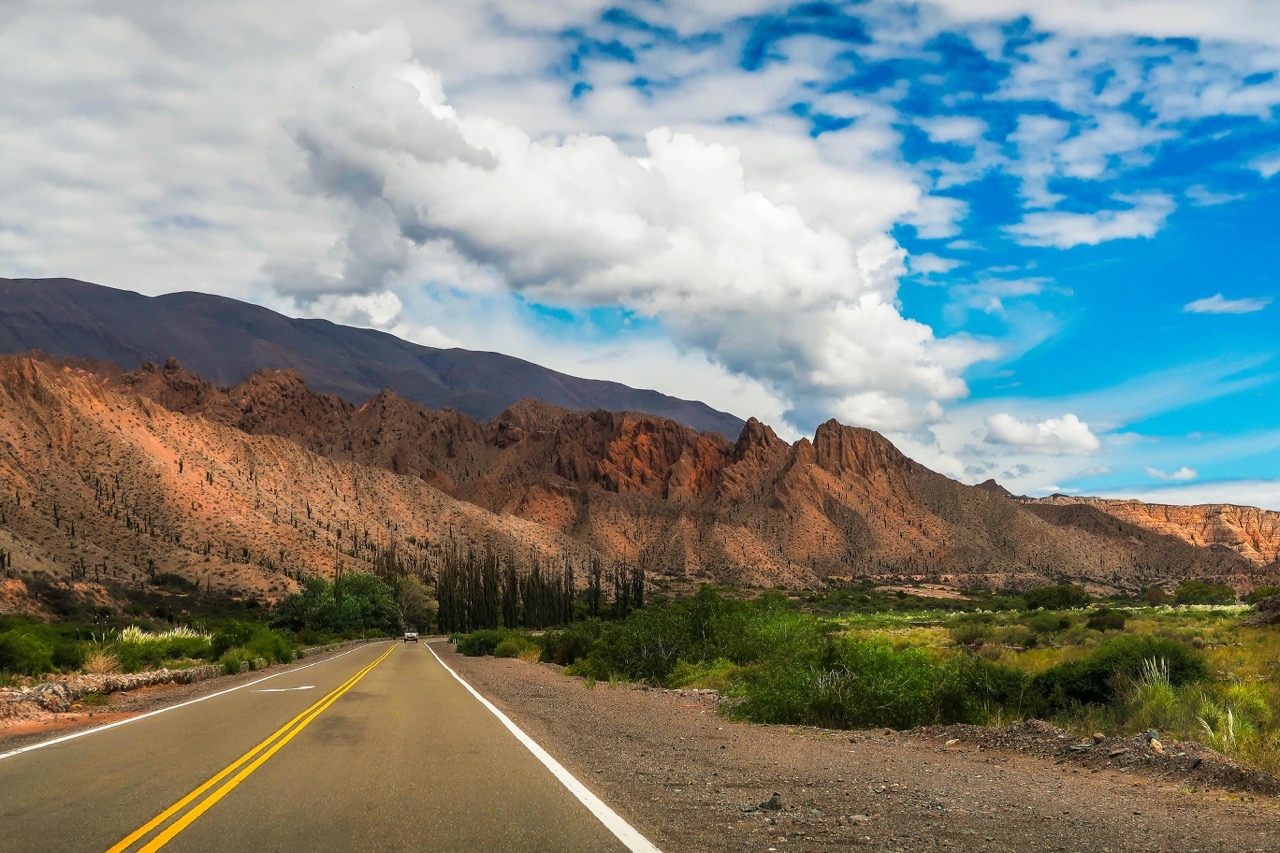
There is a moment, somewhere on Argentina’s Ruta 68, when the red rock walls of the Quebrada de las Conchas close in around you. The road bends, the canyon opens, and you realise you haven’t seen another vehicle in twenty minutes. It is the kind of silence that air travel never gives you.
South America rewards drivers in ways most travellers never discover, simply because most travellers never try. While flying connects the major hubs, it skips the transitional landscapes that define the continent. Trains rarely reach them, and tour buses stick to rigid, well-worn circuits. Beyond the famous highways lies a second tier of drives that are just as remarkable, often more so, and almost completely overlooked.
This is a curated guide to ten of those extraordinary routes.

Why South America Is the Most Underrated Road-Trip Continent
A few distinct factors explain why South America rewards drivers more than almost anywhere else on Earth.
Distances demand it. Vast regions like Patagonia, the Andes, the Amazon basin, the Atacama, and the Pampas make Western Europe feel small by comparison. Flying between these destinations strips away the very landscapes that make them remarkable. On this continent, more so than anywhere else, the journey truly is the destination.
The contrasts are unmatched. The geographical drama change rapidly within manageable driving distances. A single Chilean route can carry you from an arid desert to a glacial fjord, while a single Argentine drive can transition from a red-rock canyon to a serene alpine lake.
The roads are empty. Once you leave the major metropolitan areas, traffic quickly thins out. Drivers can experience long stretches of highway without encountering a single oncoming vehicle—a luxury that is increasingly difficult to find in the modern world.
The middle ground is the magic. The true appeal of a South American road trip lies in what happens between the main stops: the small towns, roadside grills, mountain shrines, and unmarked viewpoints. This vibrant roadside culture disappears the moment you board an Airplane.
The Famous Ones (Quickly Acknowledged)
Before we begin, a brief nod to the iconic routes that have already earned global recognition:
The Carretera Austral in Chilean Patagonia spans 1,240 kilometers of fjords, glaciers, and temperate rainforest. Ruta 40 in Argentina stretches over 5,000 kilometers from end to end, making it the longest highway in the country. The Death Road in Bolivia remains a classic cycling-tourist descent from the heights of La Paz down to the subtropical Yungas.
These routes deserve their fame. However, this article focus on the spectacular drives that come next.
The 10 Underrated Drives
1. Salta to Cafayate, Salta, Argentina
Argentina’s Ruta 68 carves through one of the most striking landscapes on the continent. Over roughly 190 kilometers, the road moves from the colonial city of Salta into the Quebrada de las Conchas, where wind and water have sculpted the deep-red rock walls into dramatic formations known as the Amphitheatre and the Devil’s Throat.
The journey ends in Cafayate, a quiet wine town sitting at 1,700 meters elevation, famous for its high-altitude Torrontés production. To get the most out of this drive, stop early and linger longer; it is a route you can rush through in three hours or savor over three days.
Best season: March to May, after the summer rains have cleared.
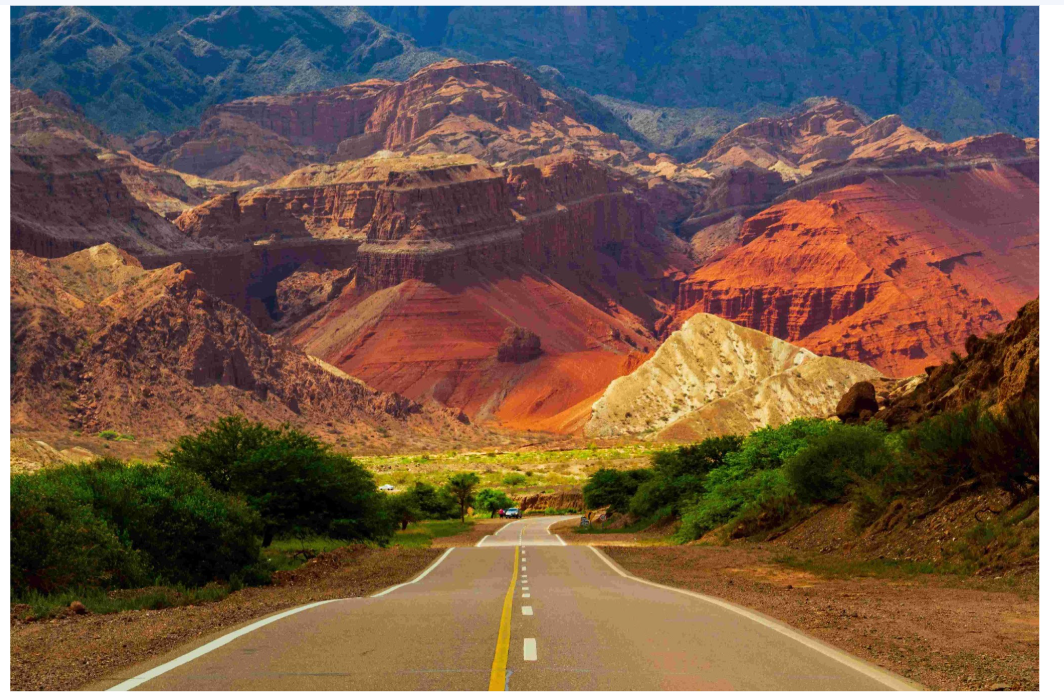 Quebrada de las Conchas road, Valle de Cafayate, Argentina. Photo by Guille Conema/Shutterstock.com
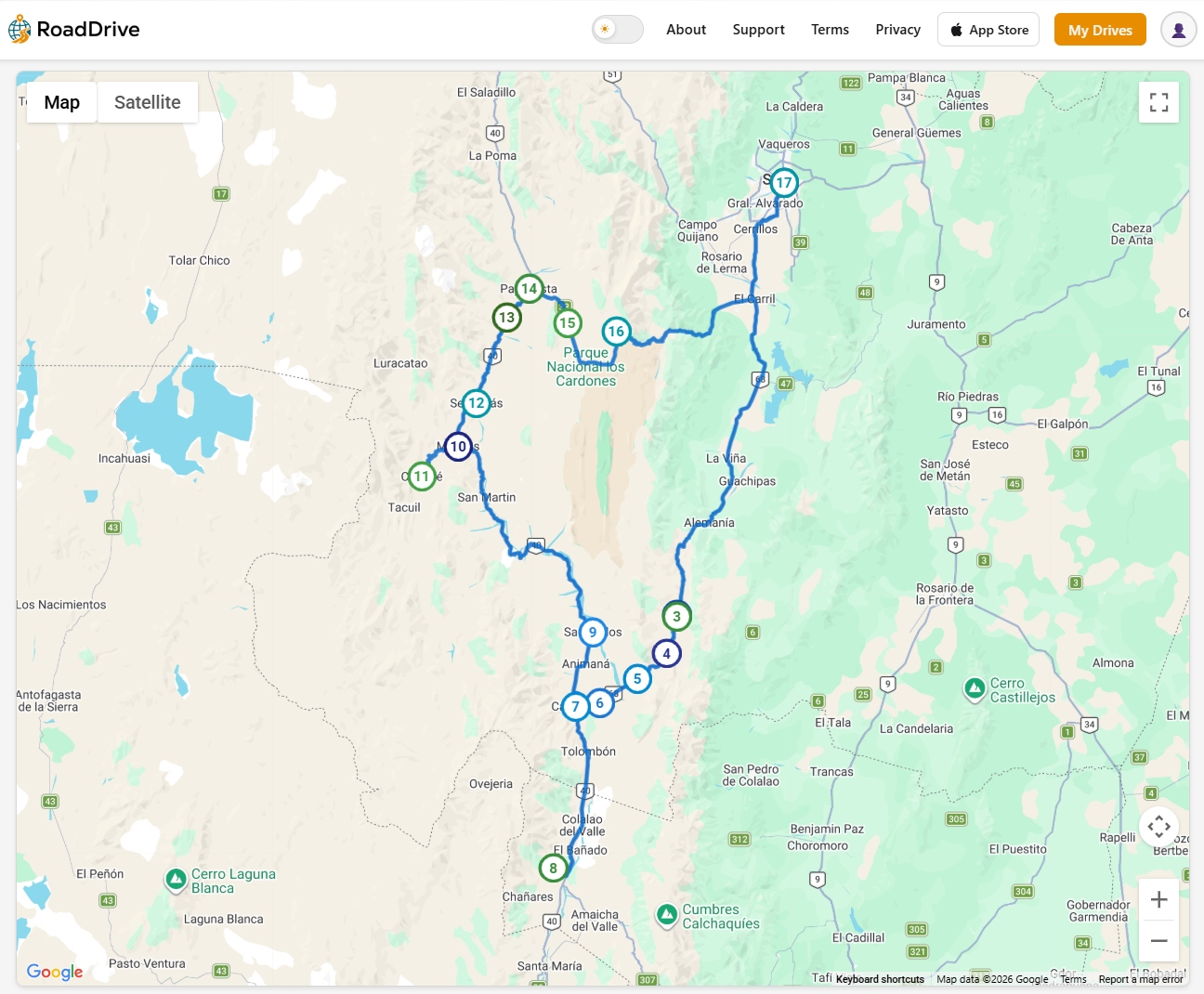 Route map of the Salta Loop drive.
2. The Sacred Valley Loop, Cuzco, Peru
Most travellers experience the Sacred Valley purely as a transit corridor between Cuzco and Machu Picchu, missing the immense value of the road itself.
Driven counterclockwise from Cuzco through Pisac, Ollantaytambo, Maras, and Moray, the loop becomes a masterclass in ancient geography. It offers direct access to Inca engineering, salt terraces clinging to mountain walls, and circular agricultural laboratories carved deep into the earth. Navigating the valley in your own vehicle, away from the rigid schedule of tour buses, reveals a completely different side to the region.
Practical note: Acclimatize in Cuzco for at least two days before driving at these high altitudes.
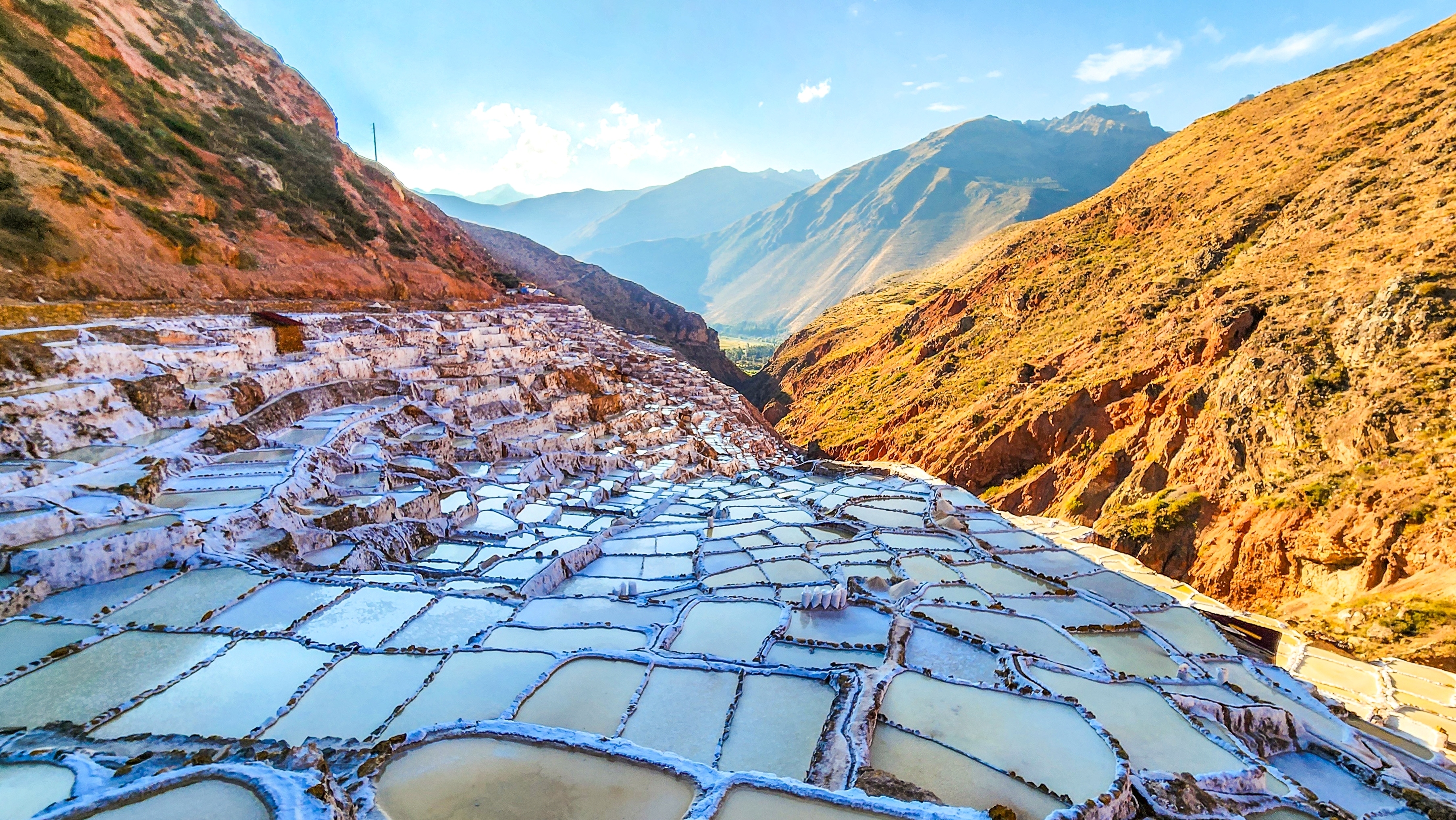
Traditional salt evaporation ponds of Maras, Sacred Valley, Peru. Photo by Javier Gogna/Shutterstock.com
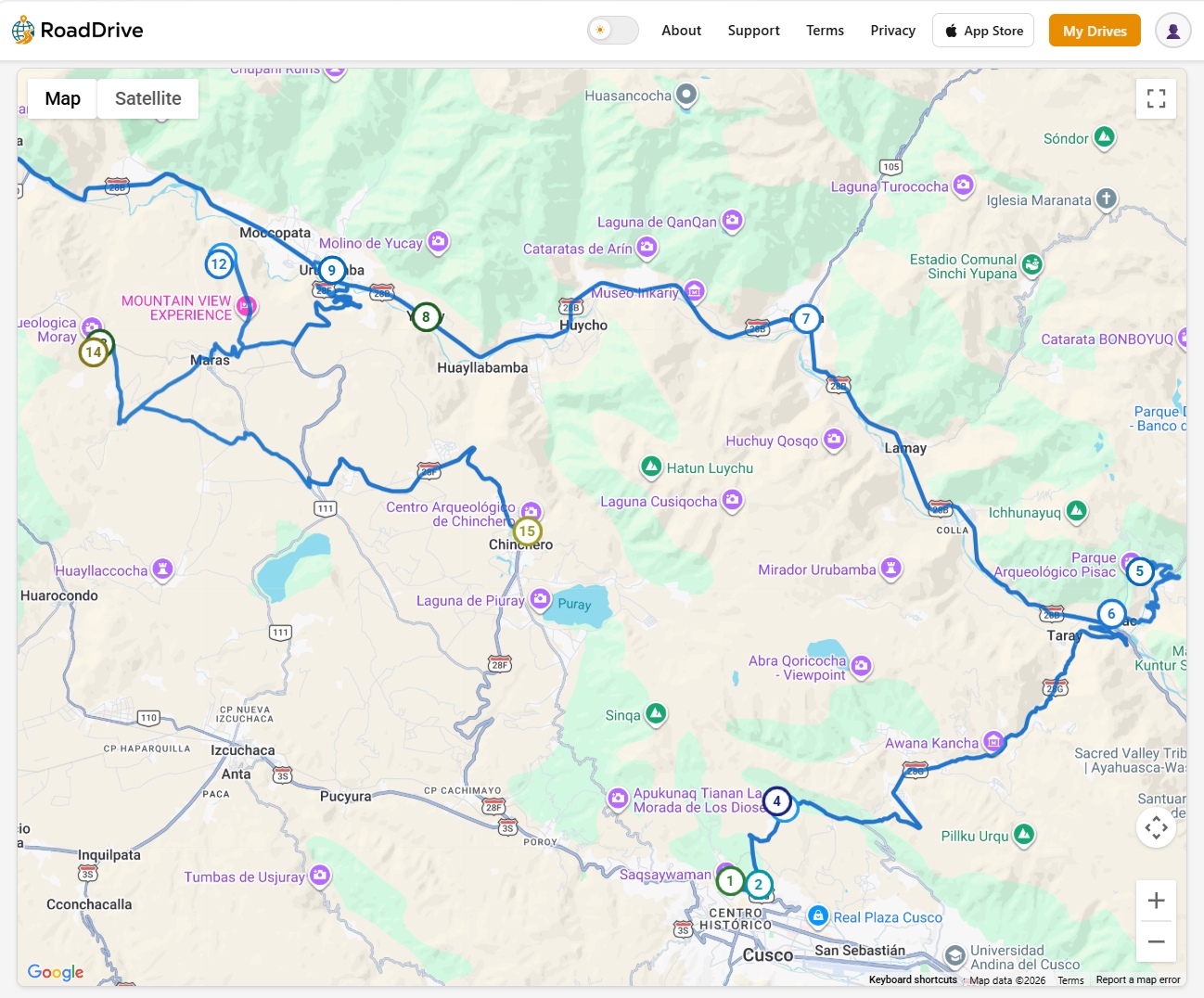
Route map of the Sacred Valley Loop drive.
3. Ruta de los Siete Lagos, Neuquén/Río Negro, Argentina
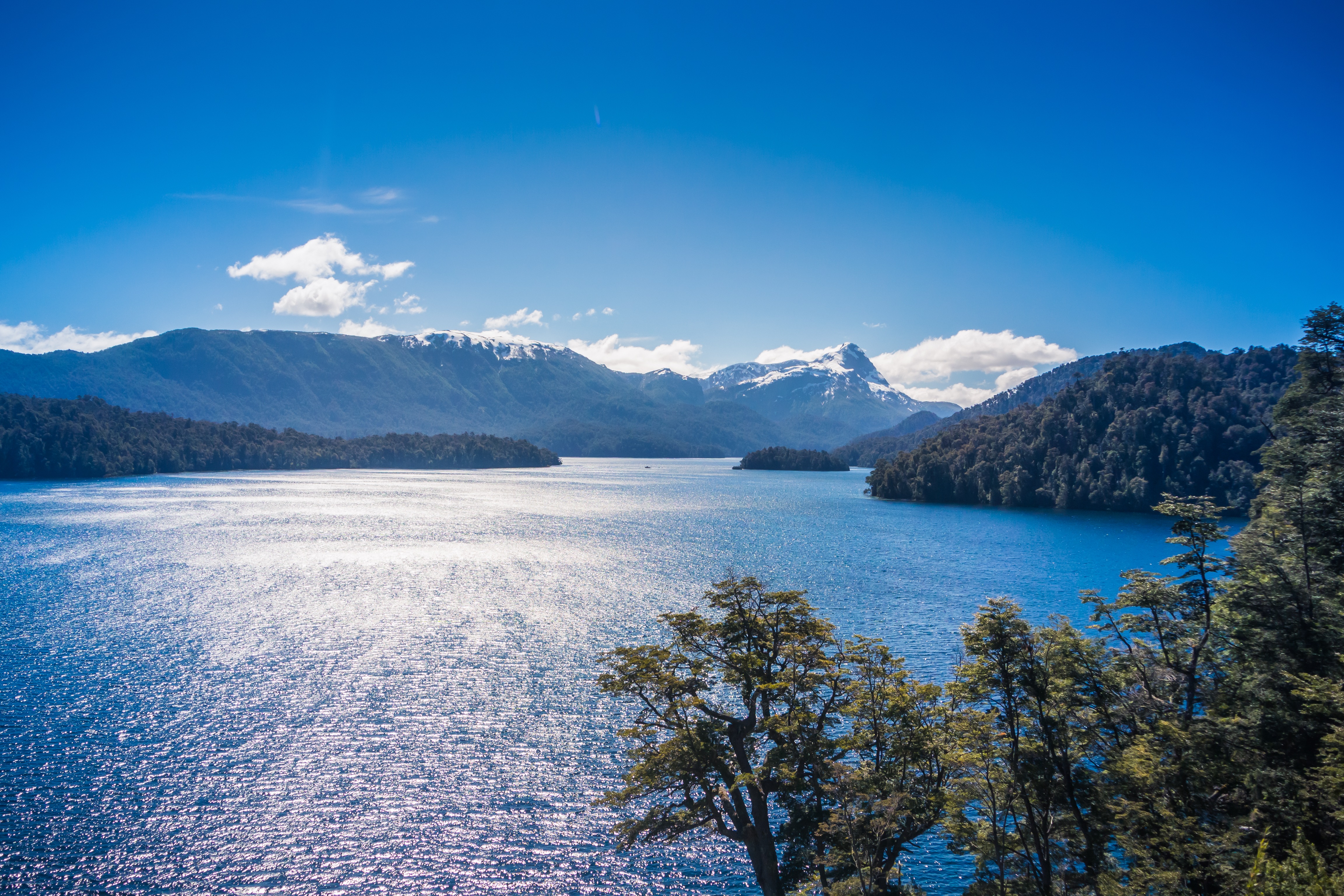
The Route of the Seven Lakes connects San Martín de los Andes to Bariloche through approximately 110 kilometers of alpine scenery. Seven distinct glacial lakes punctuate the journey, each framed by dense forests and jagged Andean peaks.
It is a drive explicitly built for slow travel, featuring designated pull-offs at every viewpoint and quiet picnic areas at each lake. Few highways make the act of driving feel like such a reward in itself. This is the side of Patagonia most international travelers miss: a region often described as the South American Switzerland.
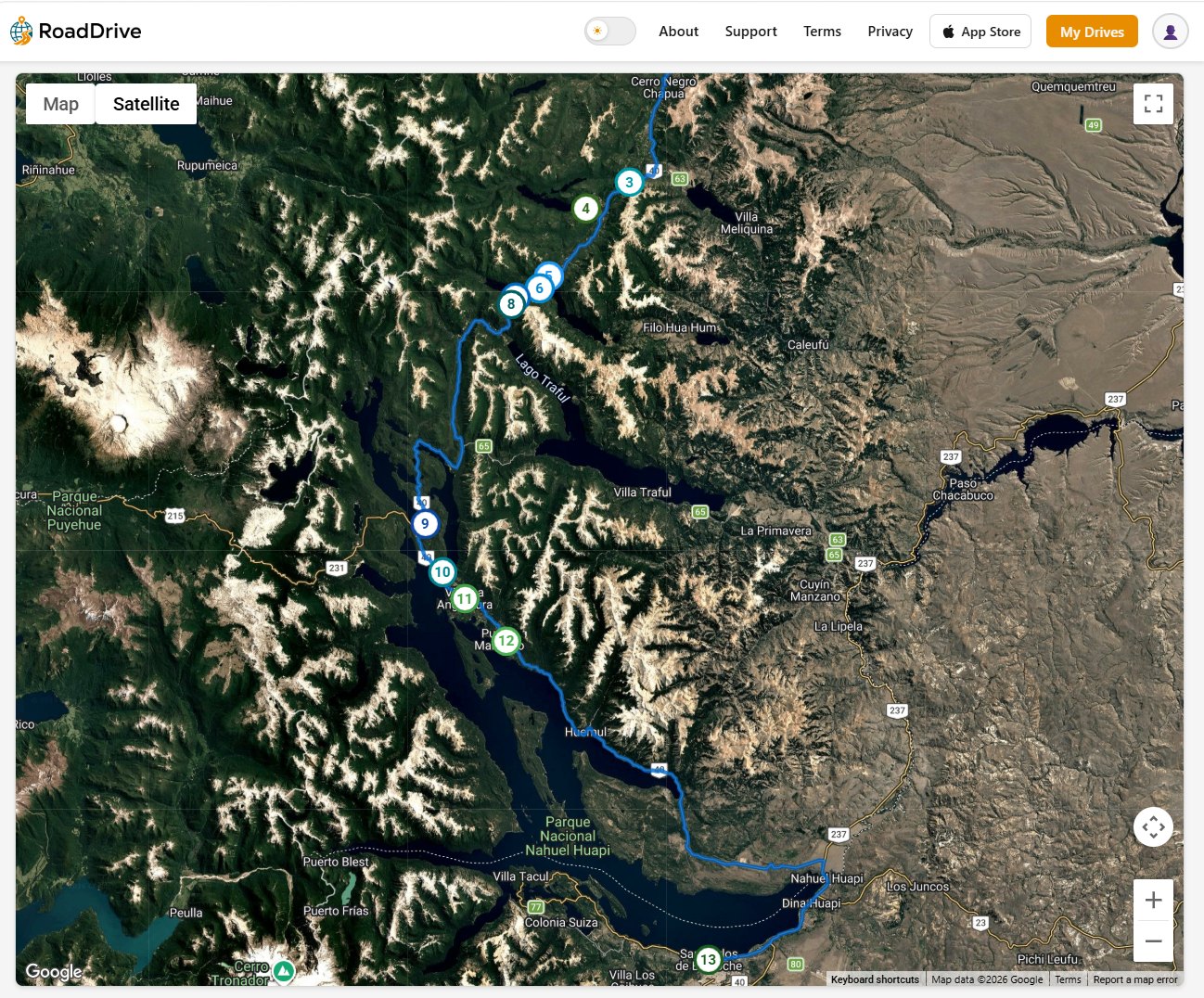
Route map of the Seven Lakes drive.
4. Camino del Pacifico, Manabí, Ecuador
Ecuador’s Pacific coast is one of the great forgotten drives of the continent. The road from Manta to Salinas weaves past quiet fishing villages, active surf breaks, roadside ceviche stands, and beach towns that remain entirely off the mainstream tourist radar.
The route features no single iconic landmark or signature viewpoint. Instead, its charm lies in a continuous, relaxed rhythm where the destination matters far less than the drive itself.
5. The Lençóis Maranhenses Approach, Maranhão, Brazil
The drive from Barreirinhas into Lençóis Maranhenses National Park in northeast Brazil leads to a landscape unlike anywhere else on Earth. White sand dunes stretch across 1,500 square kilometers, and during the rainy season, the spaces between them fill with thousands of seasonal, turquoise lagoons fed by rising groundwater.
The approach is demanding and requires a high-clearance four-wheel-drive vehicle. However, the moment you crest the final dune and see the vast network of lagoons stretching to the horizon, it becomes clear why this area is considered one of the natural world’s unique wonders.
Best season: July to September, when the lagoons are at their peak capacity.
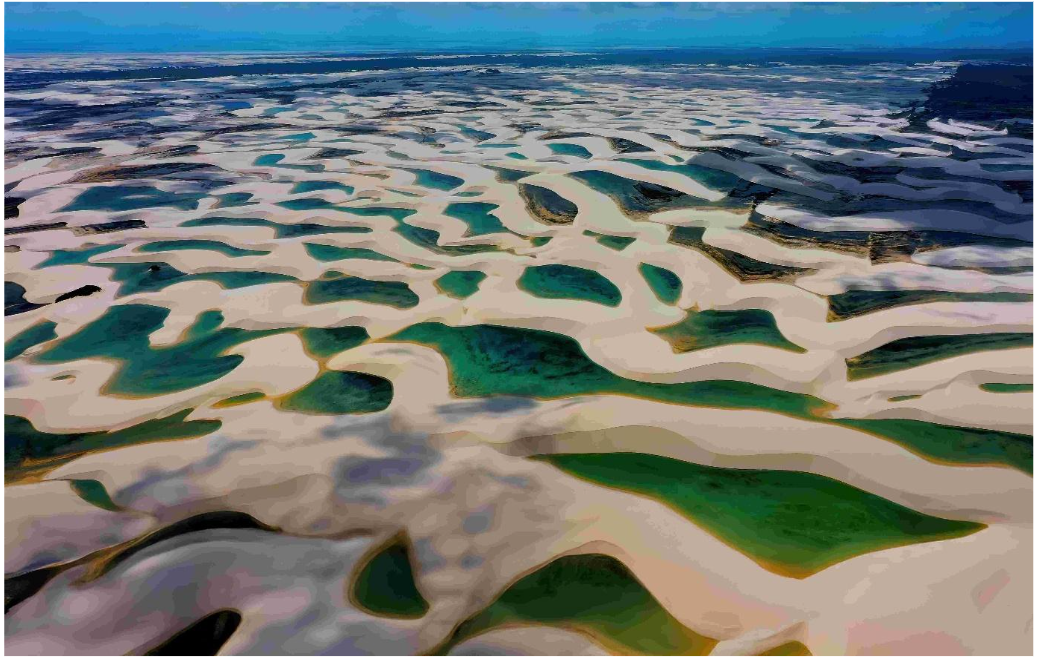
Lençóis Maranhenses National Park, Maranhão, Brazil. Photo by Frame Craft 8/Shutterstock.com
6. The Atacama High Road, Antofagasta, Chile
From the oasis town of San Pedro de Atacama, this route climbs steeply to the El Tatio Geysers at 4,300 meters elevation. The road guides you through the highest geothermal field on Earth, set against an otherworldly backdrop of volcanic Andean peaks.
Because the geysers are at their most active just before dawn, travellers typically leave San Pedro at 4:00 AM. The mountain drive in the dark is an intense, unforgettable experience, rewarded at sunrise by the sight of steam rising from a thousand vents into the freezing morning air.
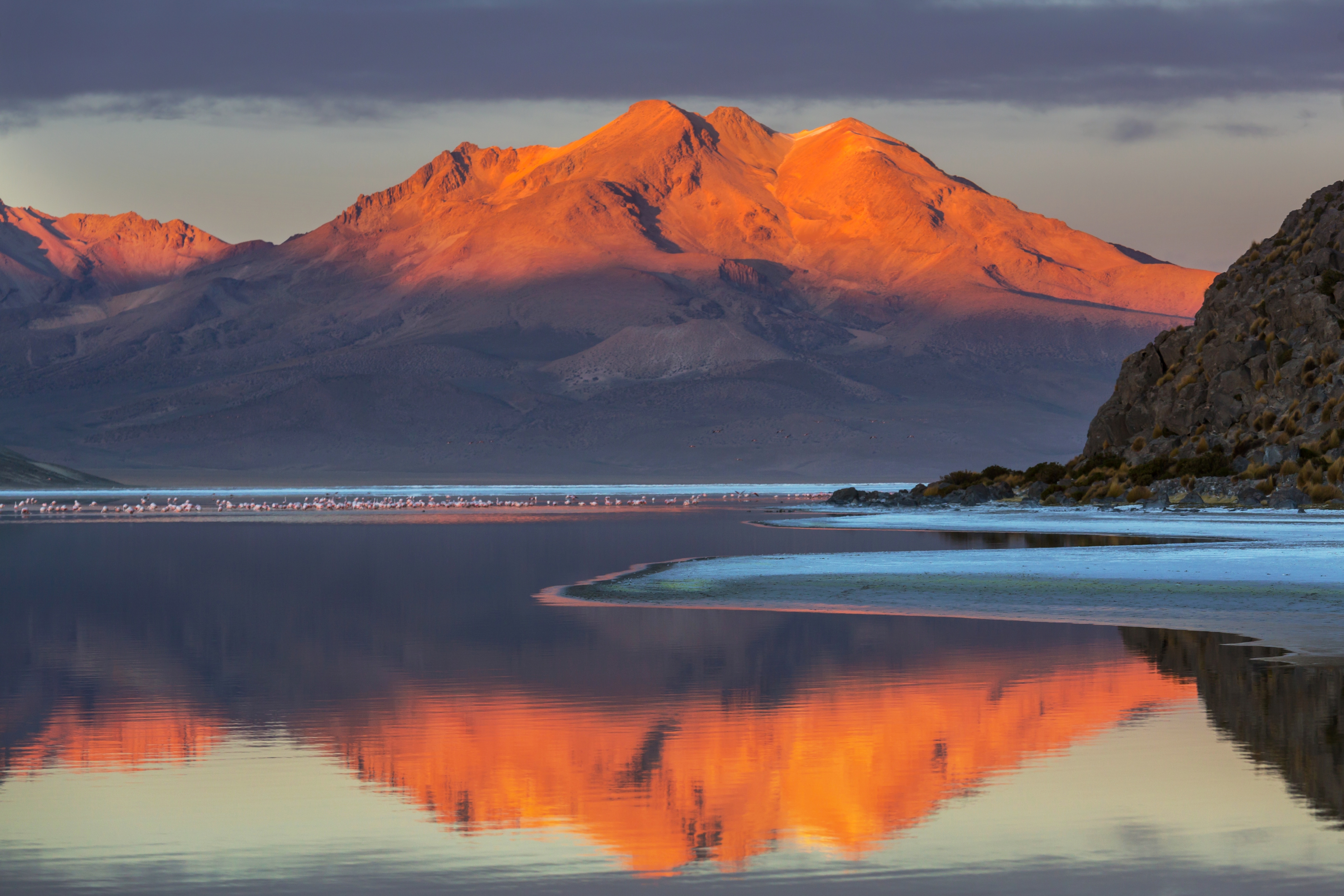
High-altitude landscapes of the Atacama Desert, Chile. Photo by Galyna Andrushko/Shutterstock.com
7. Desierto de la Tatacoa, Magdalena River Basin, Colombia
Few travellers realise Colombia contains an arid desert environment, and fewer still make the effort to drive to it. Located roughly four hours south of Bogotá, the Tatacoa Desert presents a striking landscape of red and grey eroded clay canyons that feel entirely removed from the rest of the country’s geography.
The colors of the clay labyrinth shift constantly with the daytime sun. By night, the desert’s isolation and lack of light pollution make it one of South America’s premier stargazing destinations, supported by a local astronomical observatory.
8. Sucre to Potosí, Chuquisaca/Potosí, Bolivia
This route links two historic UNESCO World Heritage cities across approximately 160 kilometers of colonial Andean highlands. The road climbs steadily from 2,800 meters to over 4,000 meters, winding through remote mountain villages and mining hamlets that have changed very little over the last five centuries.
Potosí was once the wealthiest city in the Americas, funded by the immense silver reserves of Cerro Rico—the mountain that largely financed the Spanish Empire. Driving this highway offers a quiet, profound journey through the economic history of the continent.
9. The Patagonian Fjords Crossing, Patagonia, Chile
This is a remote, complex route that most overland travellers do not realise is possible. By combining isolated stretches of highway with a network of local roll-on/roll-off vehicle ferries, the crossing connects Chiloé Island to the northern end of the Carretera Austral via short hops between fjord islands.
Marine wildlife, ancient forests, and dramatic coastal scenery pass within meters of your vehicle, effectively turning the ferries into moving viewpoints. It is one of the rare places globally where you can watch a glacier calve directly into the water from the comfort of your driver’s seat.
Practical note: Booking ferry tickets well in advance is essential during the peak summer season.
10.Quebrada de Humahuaca, Jujuy, Argentina
The Quebrada de Humahuaca in Argentina’s far north is a UNESCO-listed valley that has served as a vital cultural and trade route for over 10,000 years. The drive from Jujuy to La Quiaca climbs along the Rio Grande through layered rock formations of striking complexity, including the famous Hill of Seven Colors at Purmamarca and the fourteen-color strata of the Hornocal range near Humahuaca.
Indigenous Quechua and Aymara cultures remain deeply integrated into the villages along the highway. Local roadside markets sell regional foods, coca leaves, and hand-woven textiles, creating a rare space where immense geological wonder and living history exist side by side.
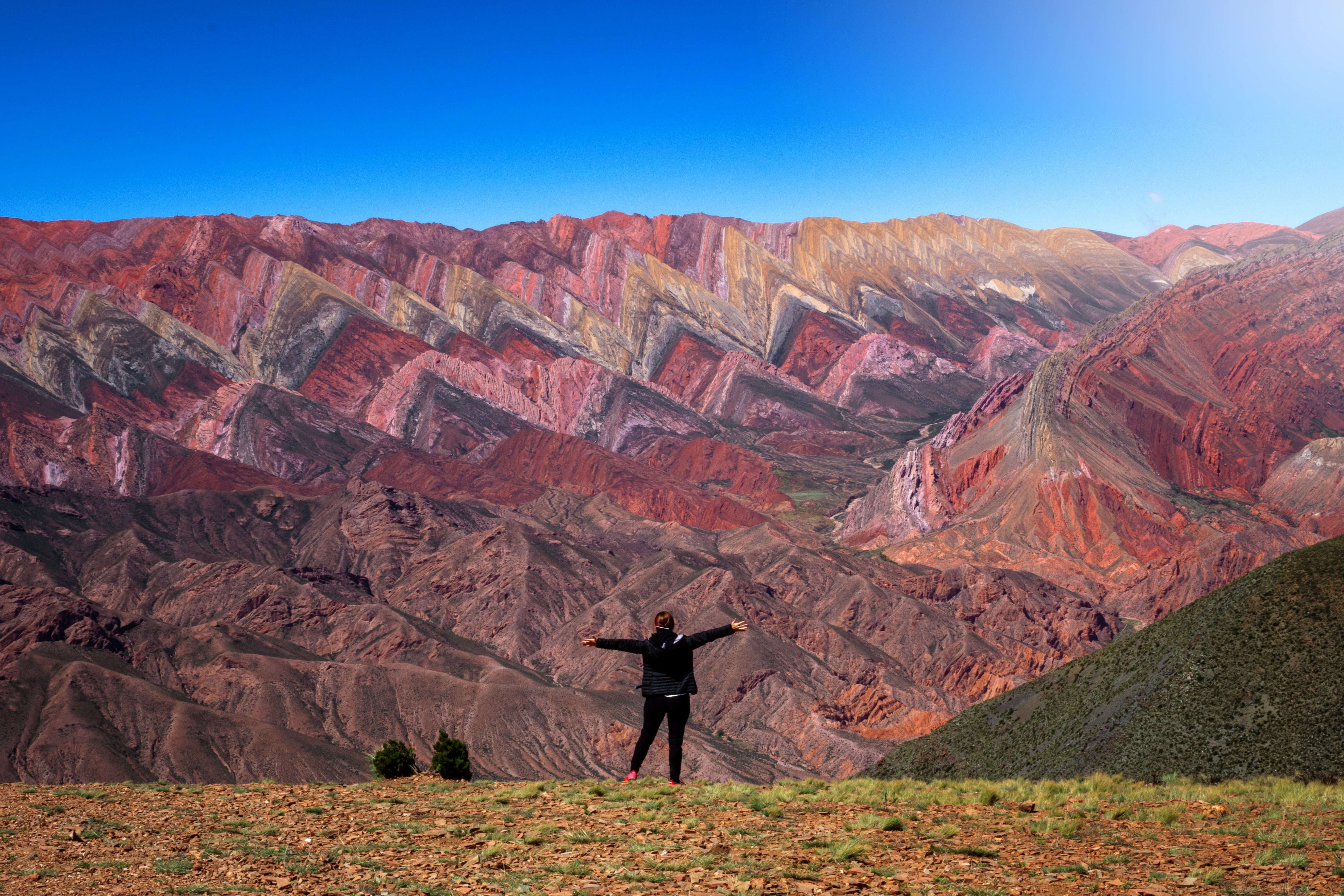
The Hornocal, Hill of fourteen colours, Jujuy, Argentina. Photo by Nadia Acosta/Shutterstock.com
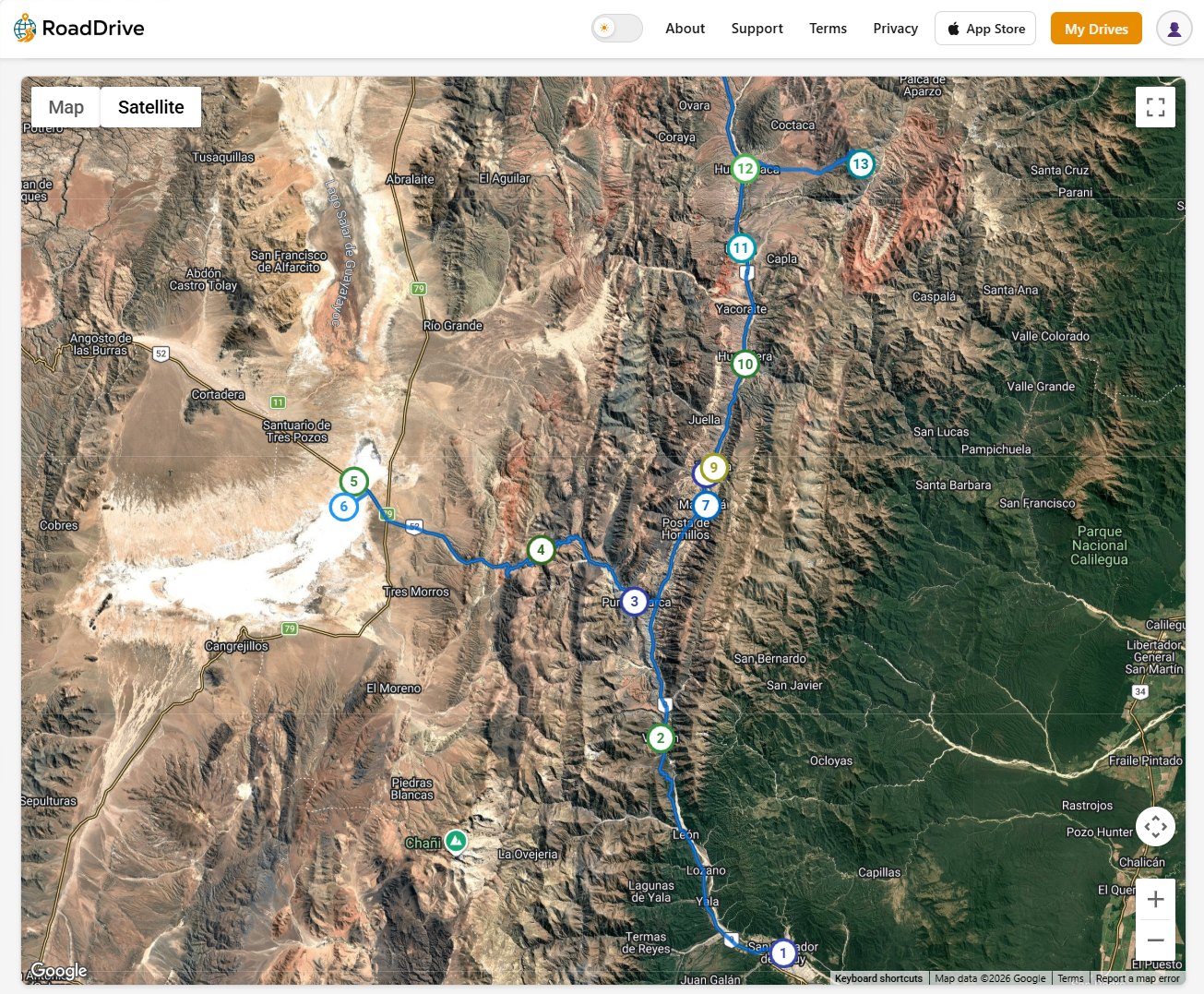
Route map of the Quebrada de Humahuaca drive.
Why South America Rewards Slow Travel
A few practical realities apply to every route featured on this list:
Acclimatize to altitude. Several of these drives climb well above 3,000 meters. Spend at least 48 hours adjusting to the elevation before tackling demanding mountain passes.
Choose your season carefully. Patagonia is best visited during the austral summer (November to March). The Atacama remains dry year-round, while high Andean routes are safest during the dry winter season (May to September).
Plan your fuel stops. In remote areas like Patagonia, the Atacama, and the Bolivian highlands, fuel stations can easily be over 300 kilometers apart. Fill your tank at every available opportunity.
Drive exclusively in daylight. Livestock on the road, sudden mountain weather, and changing road conditions make driving at night hazardous. Furthermore, the main reward of driving in South America is visual, making daytime travel essential.
Border crossings are manageable. Standard crossings are generally efficient. Ensure you carry an International Driving Permit, your passport, any required rental car cross-border permits, and plenty of patience.
The Real Lesson
The most famous drives in South America have earned their reputations for good reason—they are genuinely remarkable.
However, the routes on this list offer something the famous highways often lack: solitude, the thrill of genuine discovery, and the ability to experience a country at its own natural pace rather than the hurried rhythm of mass tourism.
That is the fundamental case for slow travel, for renting a vehicle in South America, and for exploring the secondary drives that have not yet been smoothed over by commercial guidebooks and group tours. The world features many great highways, but South America holds an unmatched collection of truly spectacular, empty roads. The choice is simply whether you are willing to take the road less mapped.
This article was prepared by the RoadDrive team, who have mapped scenic drives across South America and beyond, with continued expansion underway. RoadDrive is a road trip discovery and planning platform that curates the world’s most spectacular drives. The app is available on the App Store.