Probably every great traveller and especially a NomadMania has, as a separate goal, the task of visiting the chain of Caribbean islands.
In June 2025, I began thinking about how to visit these islands. At first, I wanted to travel between the islands by air-plane. But several problems immediately appeared. First, not all islands had direct flights between them often you had to return to your original departure point. Second, the cost of flights. Then the cost of hotels. And another issue was that flights on some routes didn’t operate daily, meaning you would have to stay on one island for quite a long time just to catch the next flight.
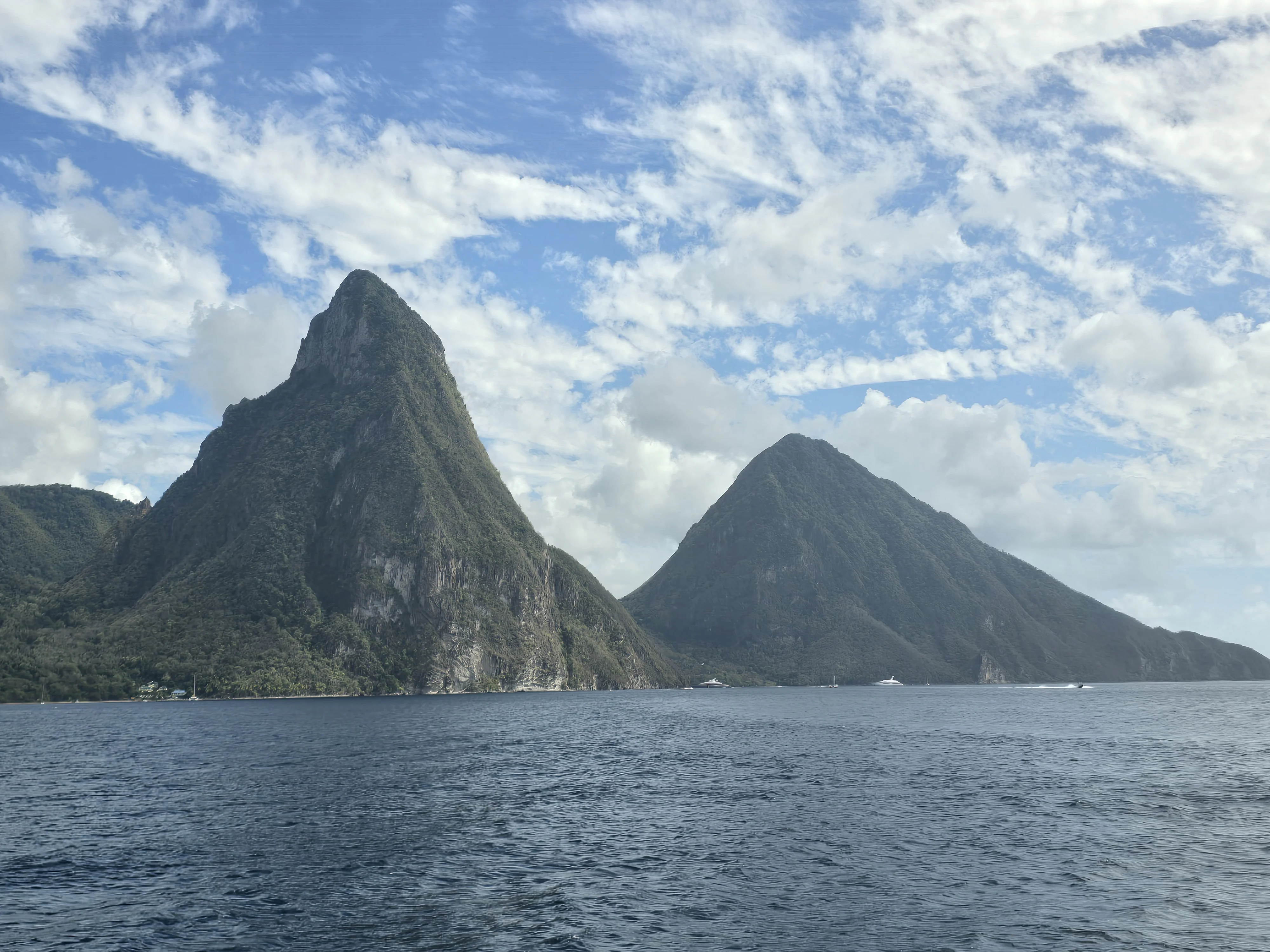
That’s when the idea came to me to design and organise a route through these islands by yacht. In the initial version of my plan, the following islands were included UN and UN+ countries:
- Martinique
- Dominica
- Guadeloupe
- Antigua
- Barbuda
- Saint Kitts
- Nevis
- Montserrat
- Saint Lucia
- Saint Vincent
- The Grenadines
- Grenada
- Barbados
And I set the goal of visiting these islands within three weeks. The plan was as ambitious as it was crazy. Next came the search for a suitable service and yacht. After a month of communicating with different services realising it was impossible to contact captains directly or even representatives in Martinique with yachts facing complete silence from some companies and answering countless questions about why I wanted such a route, I finally managed to sign a contract with one service. A catamaran was chosen as our vessel.
Then NomadMania introduced the ability to publish personal trips that could be shared with other travellers. Thanks to Orest, who helped create my listing and explained how everything would work. My listing became the very first one in this category after the section opened. We filled the first catamaran in just 10 days.
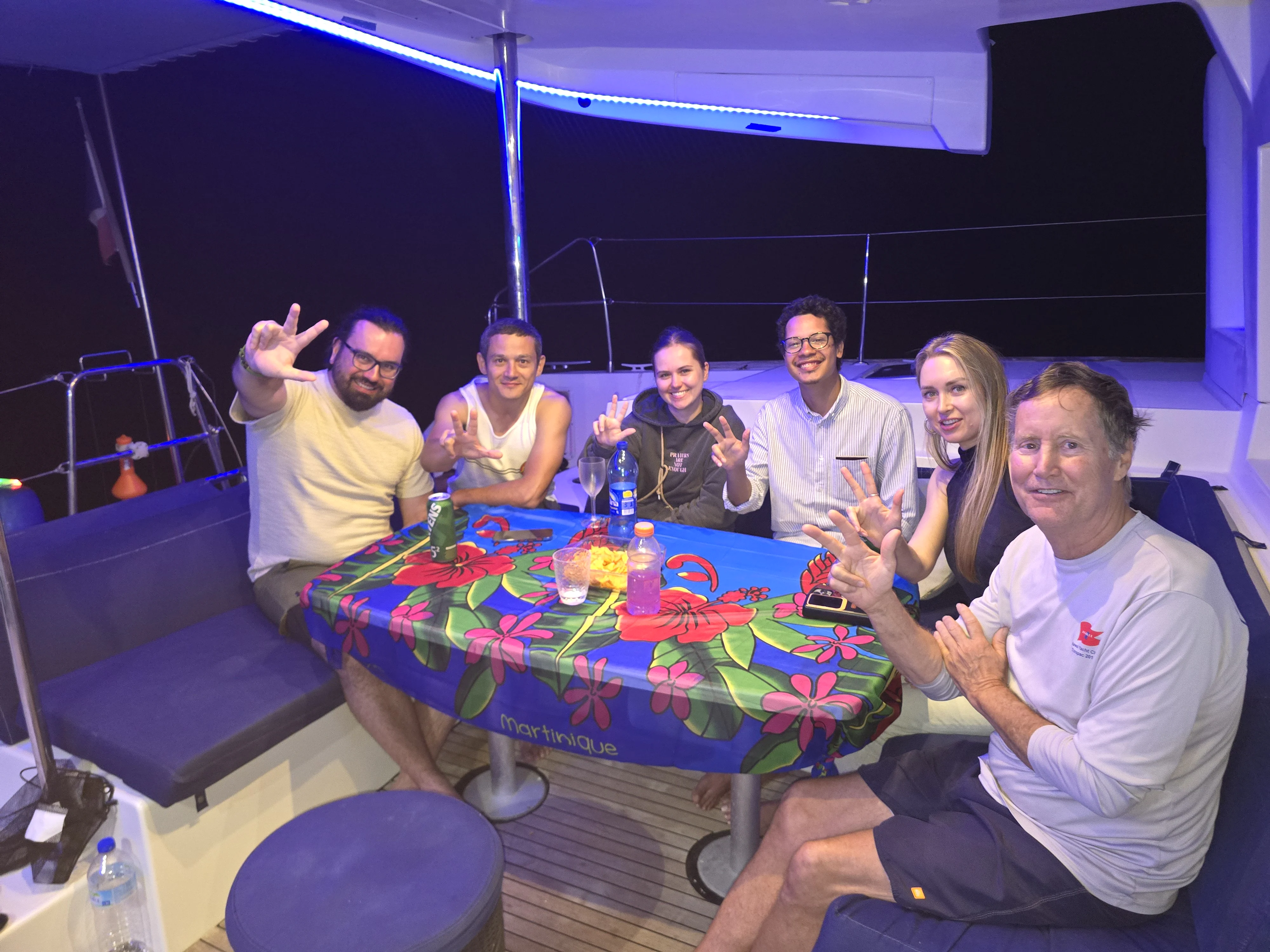
We even considered filling a second one, but for various reasons we couldn’t fully assemble a second crew in time. On the first catamaran, four other crazy travellers joined me:
- Andriel Souza
- His girlfriend Sonia Gawron
- Slava Evzhenkov
- Jimmy P
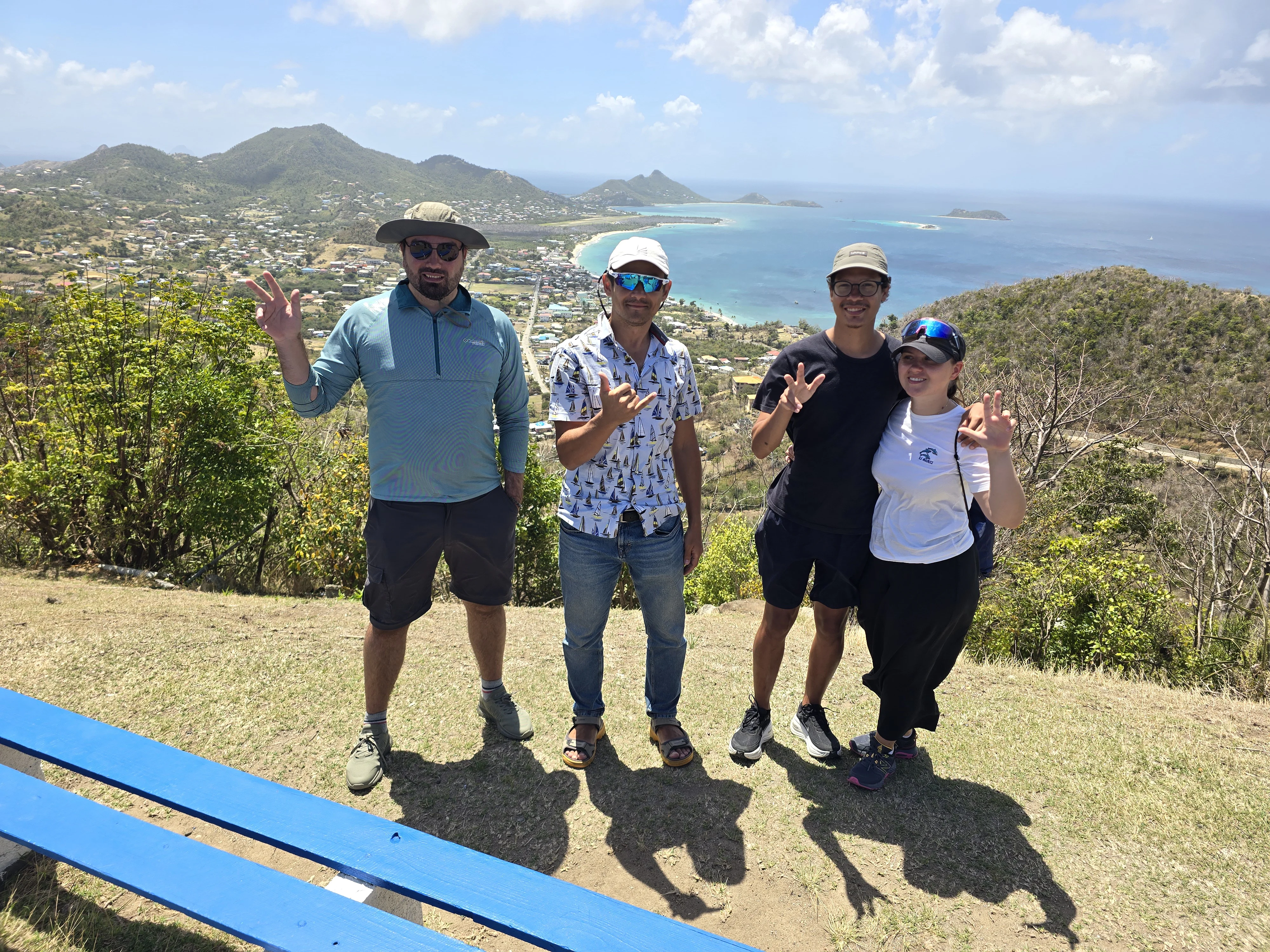
Then followed seven months of preparation and communication with the representative in Martinique. The first question after I explained our route was: “Tell me honestly what are you planning to transport?” Many people didn’t understand why anyone would try to visit so many islands in three weeks when they could simply visit one or two islands, relax on the beach, scratch their belly, and drink cold beer. Each time, I had to explain the NomadMania philosophy. During those seven months, we also had to constantly adjust the route.
One day in November, the representative wrote to me saying that after consulting with the captain, they decided to remove three countries from the program to make it easier for us. But I had to return again to the main idea of the journey: Countries mattered, not relaxation. During planning adjustments, they removed Barbuda from the list because visiting it would have required too much time, preventing us from reaching other islands. I agreed to this step.
Then followed detailed discussions about food, fuel, refuelling stops, meeting points, and all the small details that are critical for such a complex journey. And finally on February 20, more than seven months after signing the contract we were scheduled to board the catamaran. Andriel, Sonia, and Slava arrived on February 19 and had time to explore Martinique. Jimmy and I arrived on February 20, and I went straight to inspect the catamaran. We met at a café, had cocktails, and boarded the catamaran.

Day 1 – February 21
We departed from Martinique from the dock Le Marin at 11:00 AM. We refueled, and the captain collected our passports to complete customs and immigration procedures. Captain Yves always took care of this in advance. He would send our documents electronically, and whenever we landed ashore, he personally handled entry and exit procedures.
He was a true professional. After refueling, we began our journey full of energy and eager for adventure. By the evening of the first day, we reached the bay of Saint-Pierre, still on Martinique, on the northwest coast. I told the captain that it was important for us to be at Dominica by 1 PM the next day so we would have enough time to explore the island properly. Not yet knowing the strength of the waves we went to sleep.
Day 2 – February 22
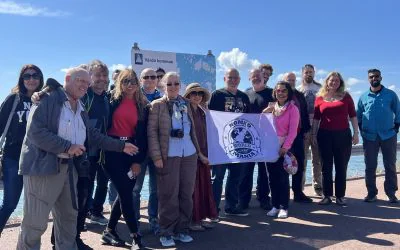
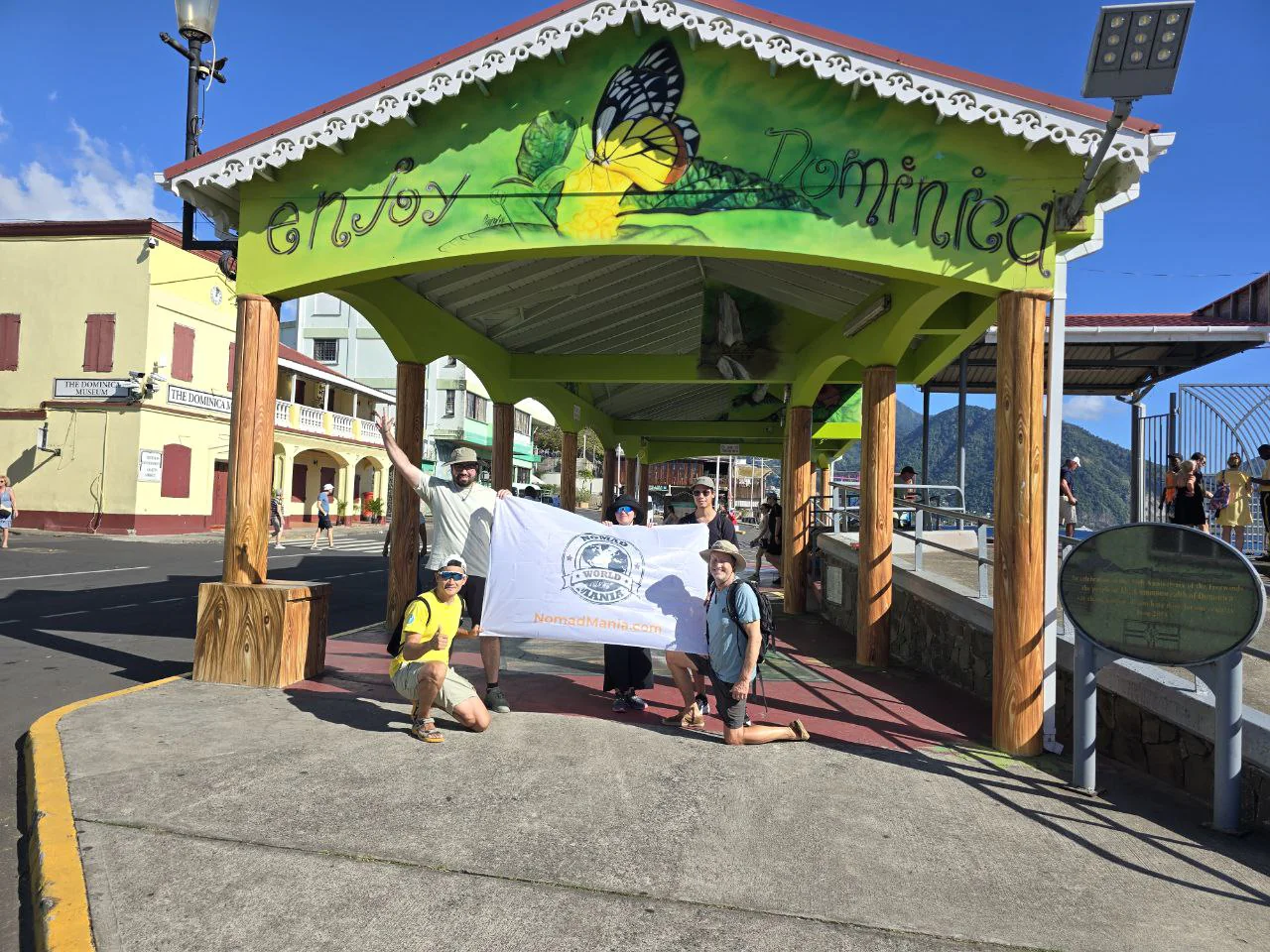
The captain started the boat at 7 AM. The wind was favorable, we stayed on schedule, and our speed was about 8–9 knots. By 1 PM, we had already reached the shores of Dominica. Our catamaran had an inflatable dinghy for landing ashore. But near Dominica, a sea taxi approached us and transported us to land. We arranged for pickup at 6 PM, then took a taxi and began walking through the town. We took our first group photo with the NomadMania flag.
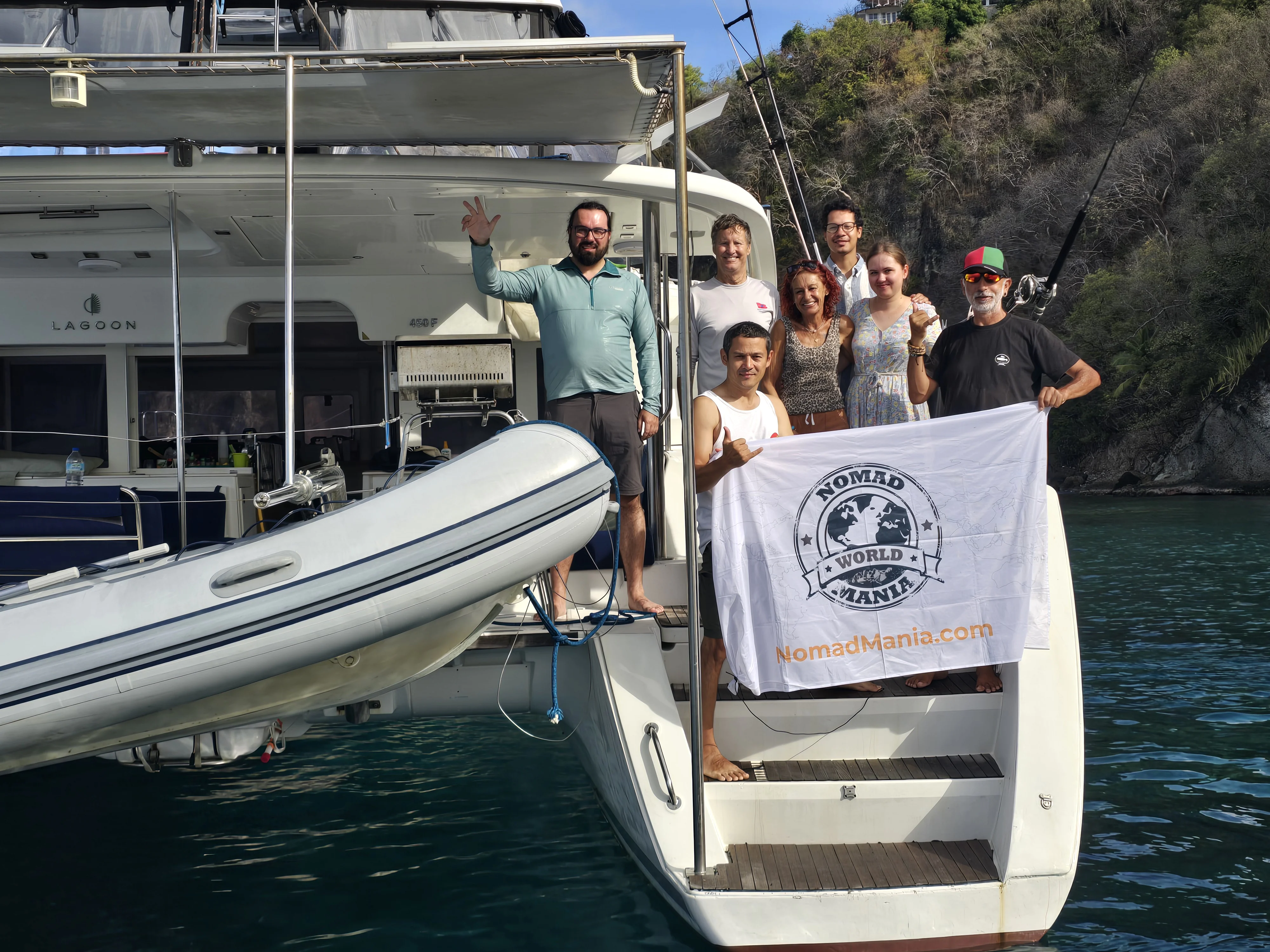
The photo was taken near the exit of a cruise ship that had just docked. Many passengers were boarding and disembarking and looked at our flag with curiosity. Then we went to explore a UNESCO site in the center of the island. I want to note right away that my main strategic goal was to reach the islands at any cost.
But once we landed, Andriel handled most of the detailed planning. He told us which NomadMania locations were best to visit, how much time we had, where to go first, and what to leave for later. For this, I want to express special gratitude to him. He greatly helped in planning routes within the islands themselves.
Also, Andriel strictly followed NomadMania rules regarding visits. If we wanted to mark a place but hadn’t spent enough time there for it to count, he would say we couldn’t mark it and would beat us with a stick if we did. Just kidding he didn’t beat us with a stick, only with his hand 😄 After returning to the catamaran, we had dinner and went to sleep.
Day 3 – February 23
We started sailing again at 7 AM. The wind was favourable once again, and we reached the shores of Guadeloupe by about 1 PM. This time, we used the dinghy to land ashore. I want to note that we almost never docked in marinas. First, it would have taken too much time. Second, it was expensive. And third, there were not always available spots.
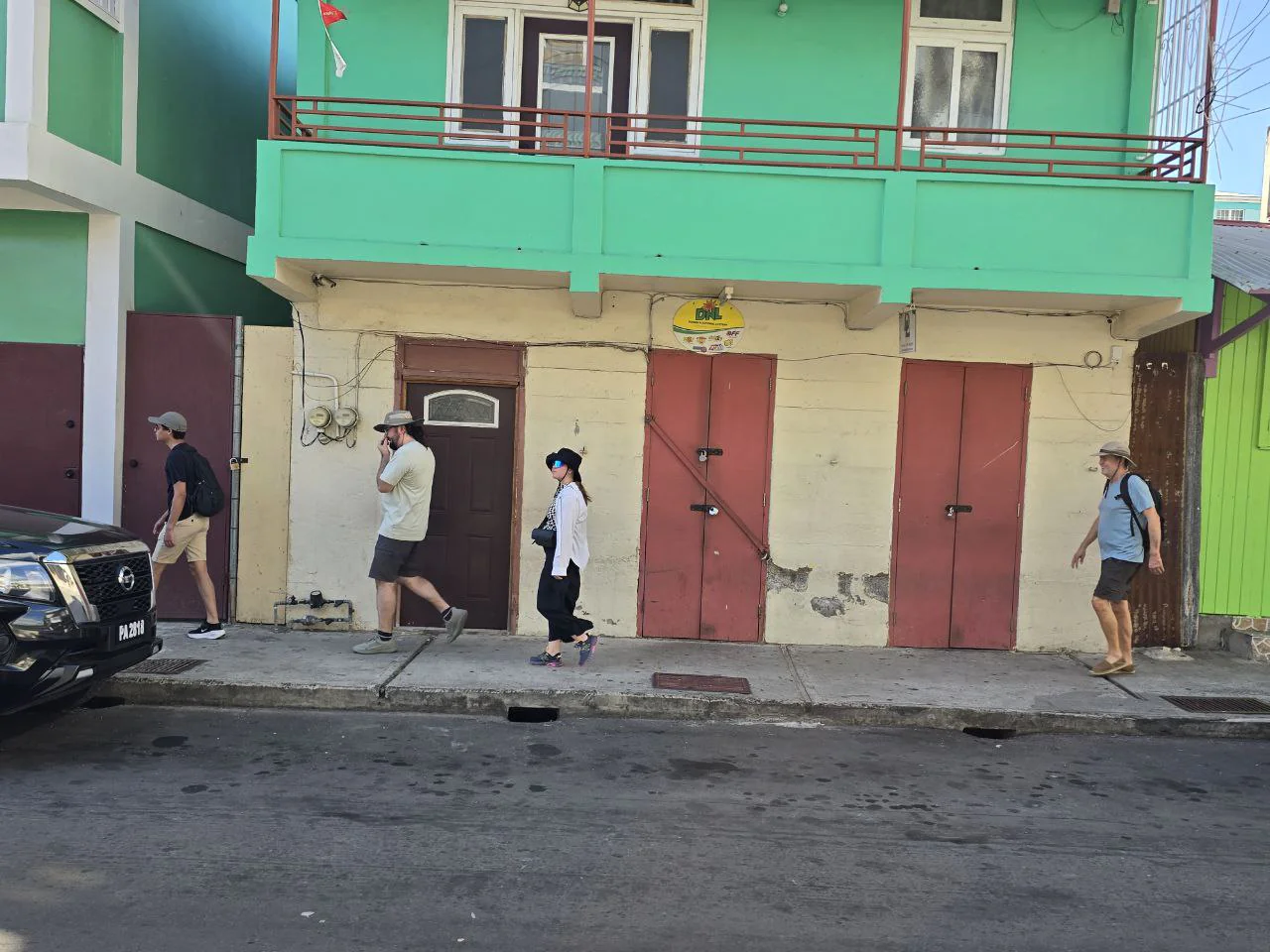
So instead, we either used moorings or dropped anchor. The captain warned us that the centre of Guadeloupe was not entirely safe, but since there were many places of interest there, we went anyway. Some of the streets were at the same time a bit frightening, yet also very colourful and atmospheric.
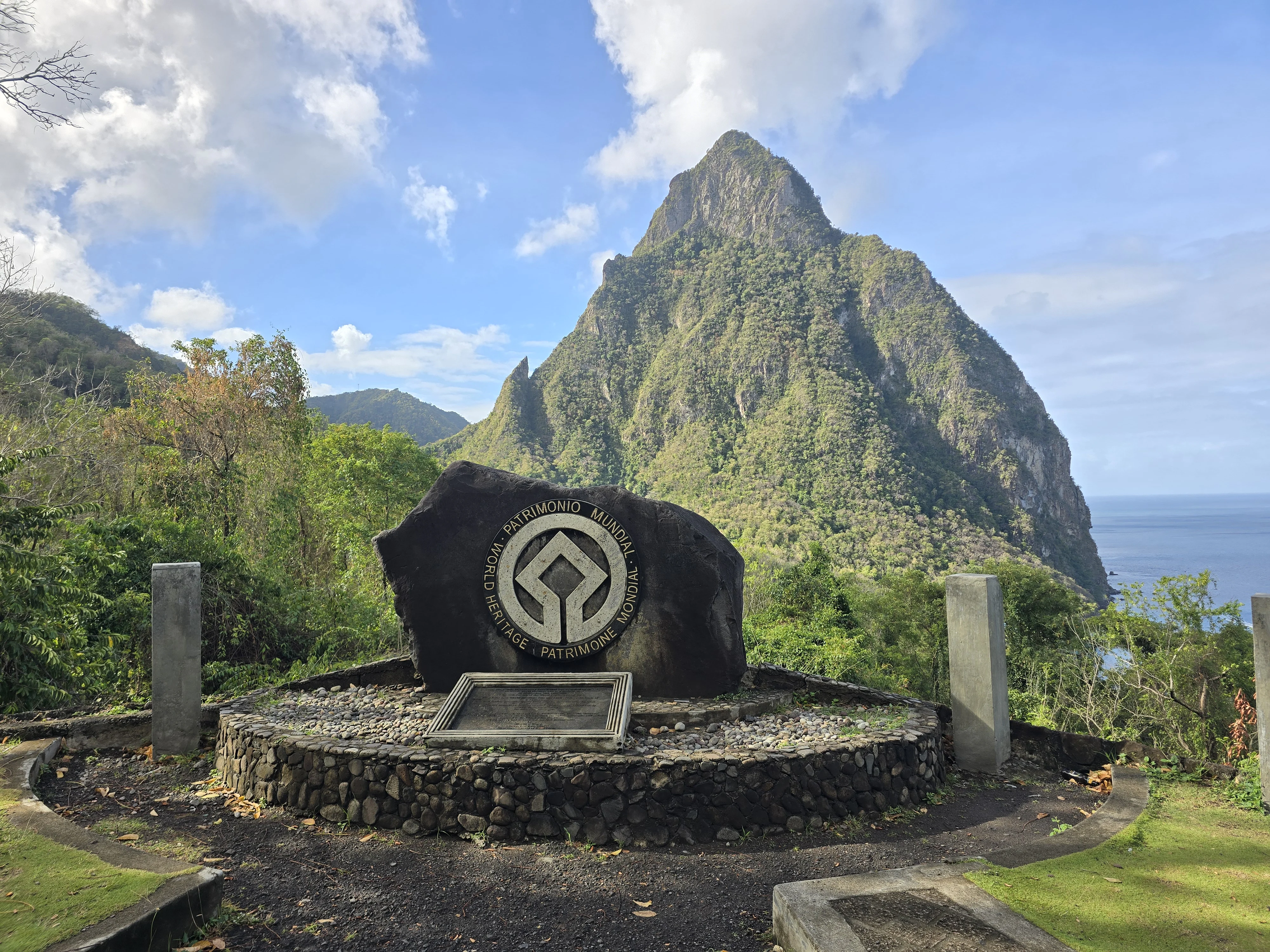
When returning to the catamaran, we saw a rare sports catamaran in the harbour one that could practically fly above the water. In Guadeloupe, we again saw the same cruise ship that had previously been in Martinique. We realised that it was following roughly the same route as us. We stopped in the bay of Pointe-à-Pitre, had dinner, discussed plans for the next day, and went to sleep.
Day 4 – February 24
According to our ideal plan, we were supposed to reach the eastern corner of the island in one hour, round it, and then reach Antigua in 5–6 hours. That meant arriving around 2–3 PM, giving us enough time to explore the island. We started our journey at 6 AM. And this is where the first unexpected situation happened. The wind blew in the exact opposite direction. The section that was supposed to take 1 hour ended up taking 6 hours. The waves were only about 1 meter, but because we were moving against the current, they created a strong rocking effect.
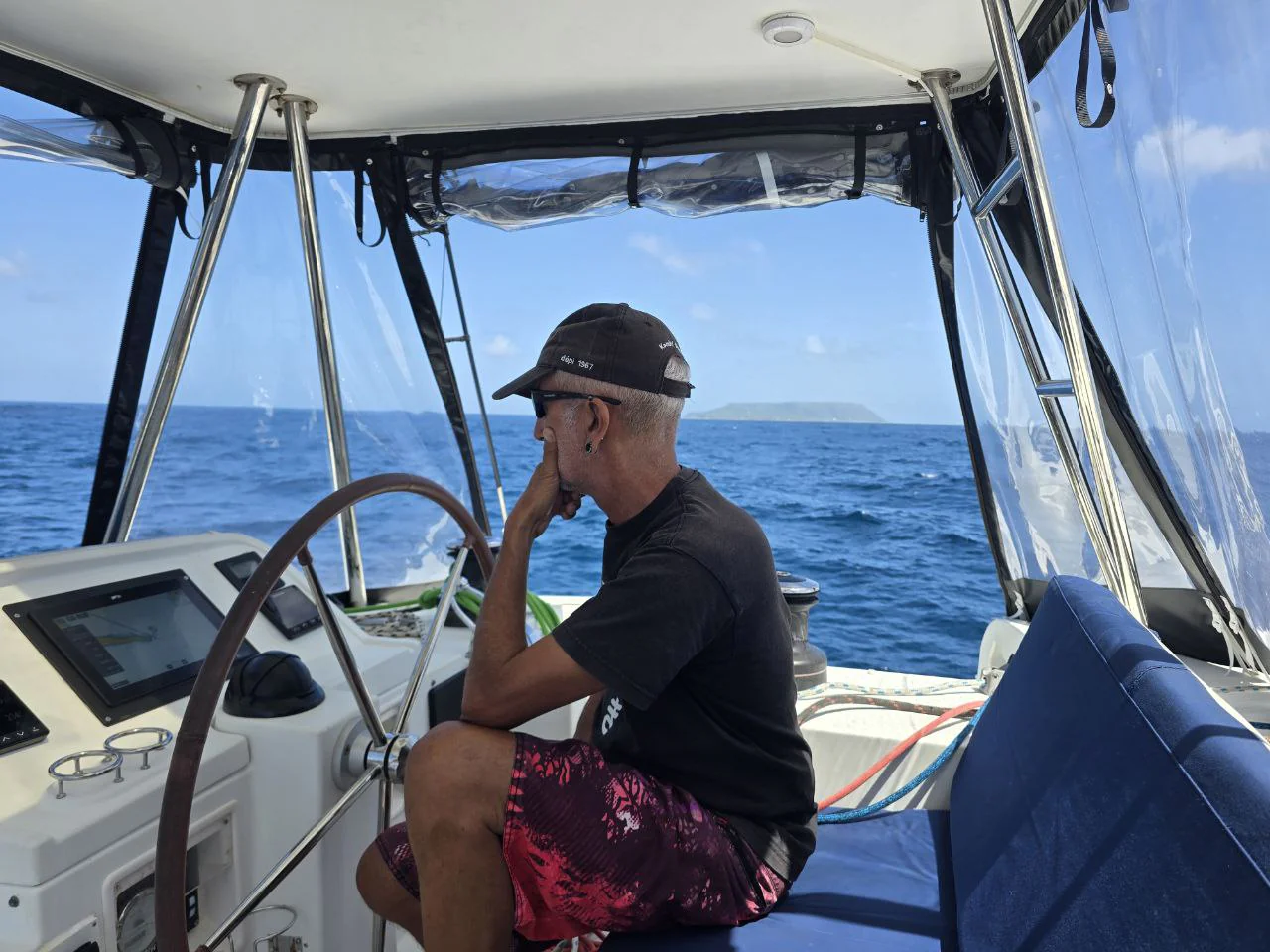
After rounding the southeast coast, the wind was still against us. Instead of the expected 5–6 hours, it took us another 10 hours to reach Antigua. At this point, the captain probably wondered what kind of crazy people he had gotten involved with. In total, instead of 6–7 hours, it took 16 hours to reach Antigua. We were exhausted. This was our first long crossing. The waves were about 2 meters high. That evening, we discussed plans for the next day. I understood that we were already falling behind schedule. Every day, we had debates with the captain. I told him: “Give us paddles we’ll row if needed but we must reach the islands in the plan.”
Day 5 – February 25
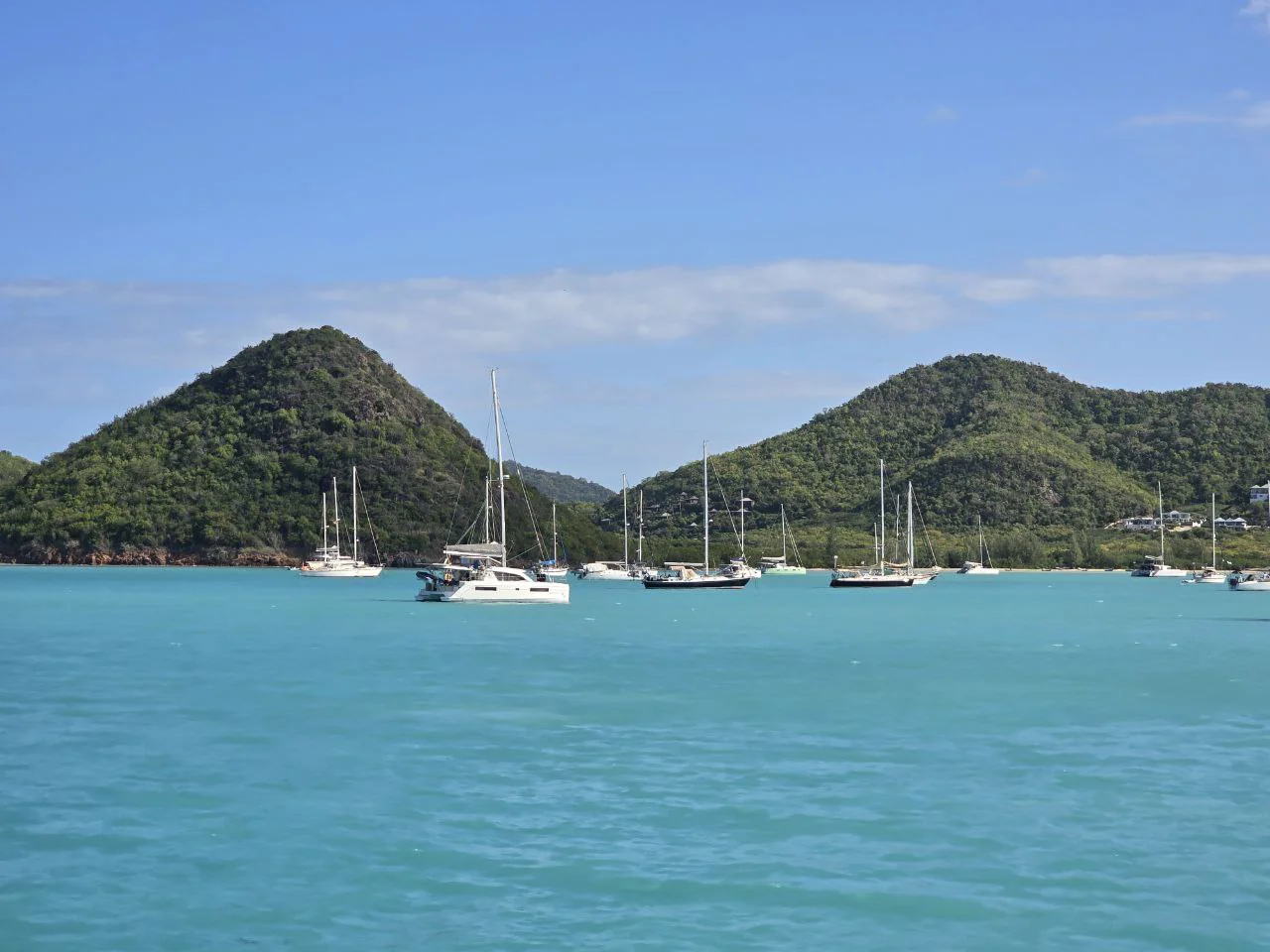
When we woke up in the morning, the coast of Antigua appeared before us in all its beauty. The sun was shining. Turquoise water surrounded nearby yachts. The island’s coastline was lush and green. After landing ashore, we rushed to the port where ferries departed for Barbuda. We really wanted to visit it but discovered that the ferry departed only at 6 AM and returned the next day. I tried to arrange a private motorboat to take us to Barbuda. But locals said that the waves were very high that day, and no one was willing to make the trip.
There was also a helicopter option, but it was extremely expensive. And since two cruise ships had arrived in Antigua, there was only one available flight, and the return would be possible only the next day. So we sat in a bar on the shore, drank cola and beer, and then headed to Fort James.
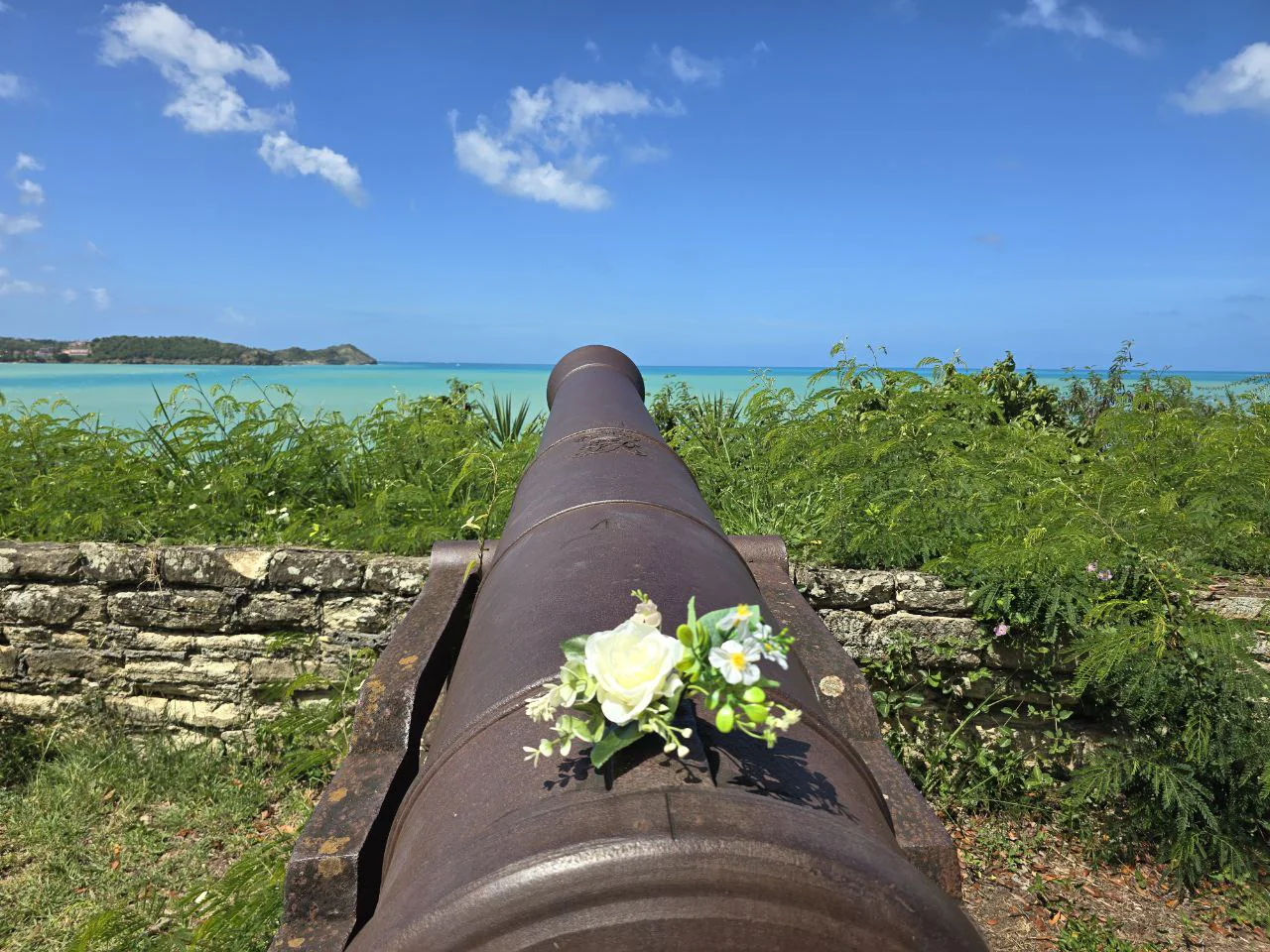
After that, we walked through the city center. Later, Sonia and Jimmy returned to the catamaran, while Andriel and I went to a mobile service shop to buy a local SIM card, which would later help us stay connected on the islands. After that, we visited the UNESCO World Heritage Site: Antigua Naval Dockyard and Related Archaeological Sites That evening, everyone returned to the catamaran. Our next island was supposed to be Saint Kitts.
We were already one day behind schedule. So I made a decision: We would fly to Saint Kitts. I bought plane tickets for everyone and told the captain: We would fly in the morning, and he would sail to Saint Kitts by catamaran, and we would meet there in the evening.
Day 6 – February 26
We woke up early in the morning. We sent the captain and hostess ahead to Saint Kitts on the catamaran, while we went to the airport. The flight was supposed to last 30 minutes, but after just 17 minutes, we were already landing in Saint Kitts. And here we encountered a problem we had never anticipated. The previous day in Antigua, two cruise ships had arrived, causing minor taxi shortages. To prevent the same problem in Saint Kitts, we tried to book a rental car online, but none were available. We didn’t understand why and decided to look for one after landing.
On the plane which had only 12 passengers we met another NomadMania traveller: Artem Studziński
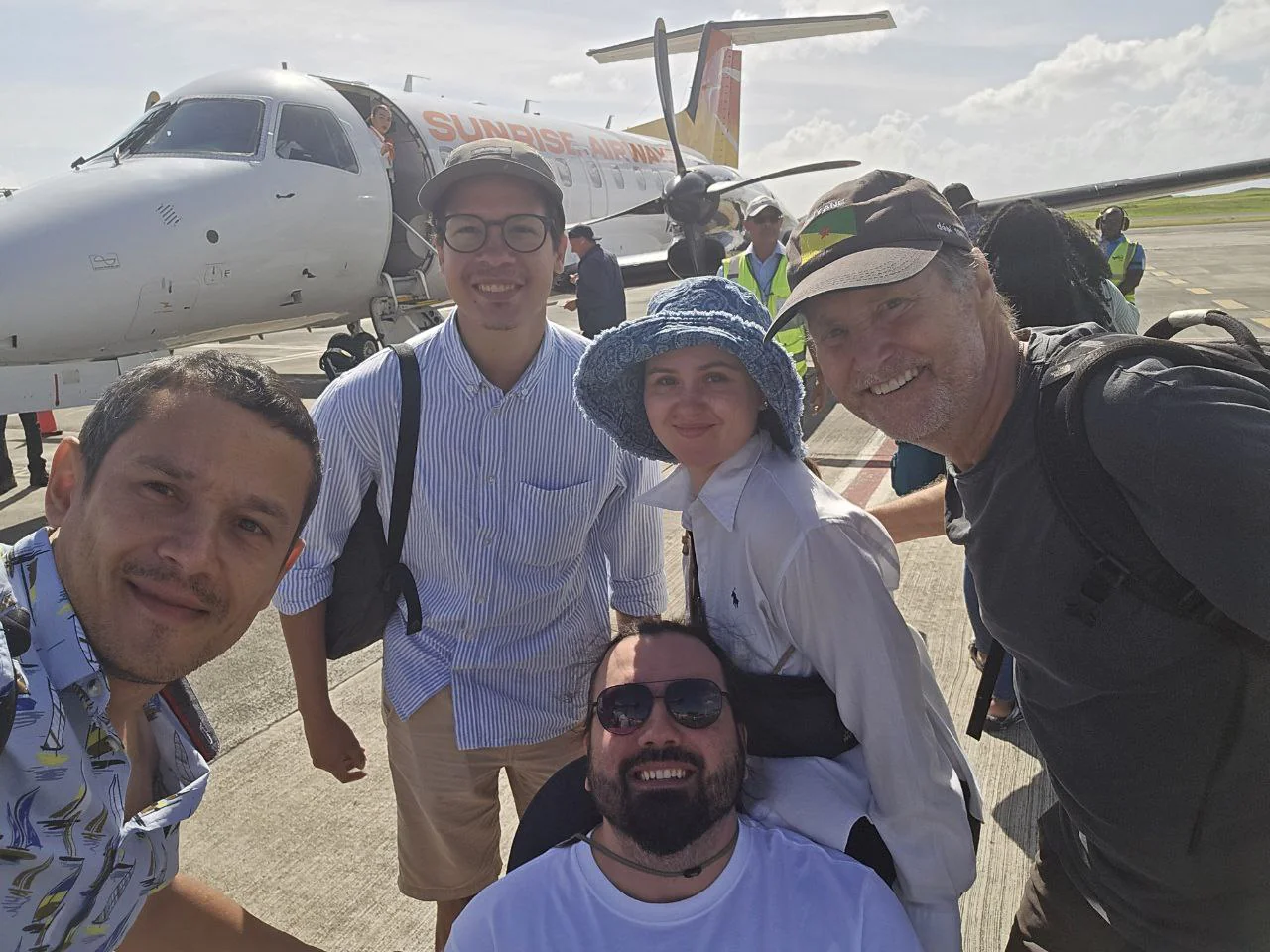
We went through immigration together and started chatting. When I asked if he used NomadMania, he said: “Of course.” He shared his profile, we talked for about five minutes, and then he headed into town. We tried to call a taxi. Surprisingly, there were no taxis at the airport, and we waited 30 minutes for one to arrive 😳 Through an airport employee, we finally managed to call one. The driver said he could only take us into town, because he had another booking afterwards. We agreed.
Once in town, we visited one car rental agency no cars available. Second agency same situation. Third agency still nothing. We had no idea what was happening. Then, when we reached the waterfront, we saw the reason: Three cruise ships had docked in Saint Kitts. Locals also told us that U.S. Secretary of State Marco Rubio had arrived that day, along with leaders of Caribbean countries. Because of that, no rental cars were available, and all taxis were busy. I want to apologise to Jimmy.
We were younger and could walk back and forth searching for a car but it was harder for him. Also, because our arrival dates depended on weather, I couldn’t book transportation too far in advance we might not have arrived on time.
The city center was 40–60 minutes away on foot, and we were losing time. All taxis were occupied. And then, suddenly, a local resident noticed that no taxis were stopping for us. He pulled over and asked what we needed. We explained that we were tired and wanted to take a tour of the island. He said he would drive to a taxi stand and send someone. A few minutes later, a taxi arrived—and behind it, the same helpful man. I don’t know his name, but I’m very grateful for his help. The taxi driver told us he also had another booking in three hours, so he agreed to give us a half-island tour. We drove around the island, then walked through the central streets and watched local dances.
Day 7 – February 27
In the morning, we woke up early again. Our plan for the day included visiting the island of Nevis, which lies very close to Saint Kitts. We boarded a ferry that connects the two islands. The journey itself was quite short and comfortable.
When we arrived in Nevis, we immediately felt that the atmosphere there was completely different from Saint Kitts. It was quieter, calmer, and more relaxed. We began walking through the town. The architecture was charming small buildings, peaceful streets, and very friendly locals. There was noticeably less tourism compared to the neighbouring island. We visited several historic sites and simply enjoyed the calm rhythm of the island. One of the highlights was seeing the birthplace of Alexander Hamilton, one of the founding fathers of the United States.
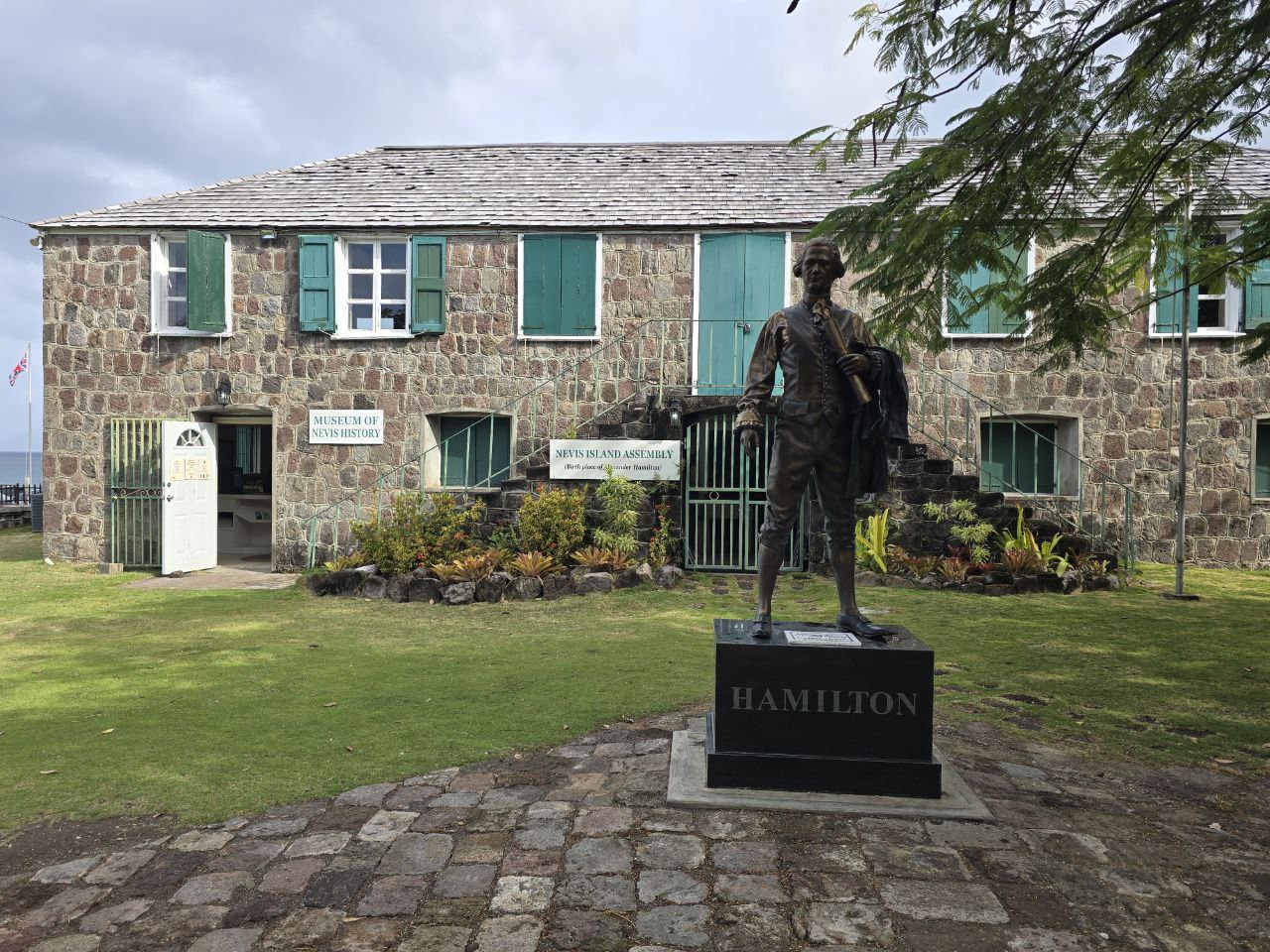
It was interesting to stand in a place connected to such an important historical figure. After spending several hours exploring Nevis, we returned to Saint Kitts by ferry. Later that afternoon, we met up again with the captain and hostess, who had arrived by catamaran. We discussed our plans for the following days and reviewed the schedule again. We were still slightly behind, but we were determined to continue according to plan.
Day 8 – February 28
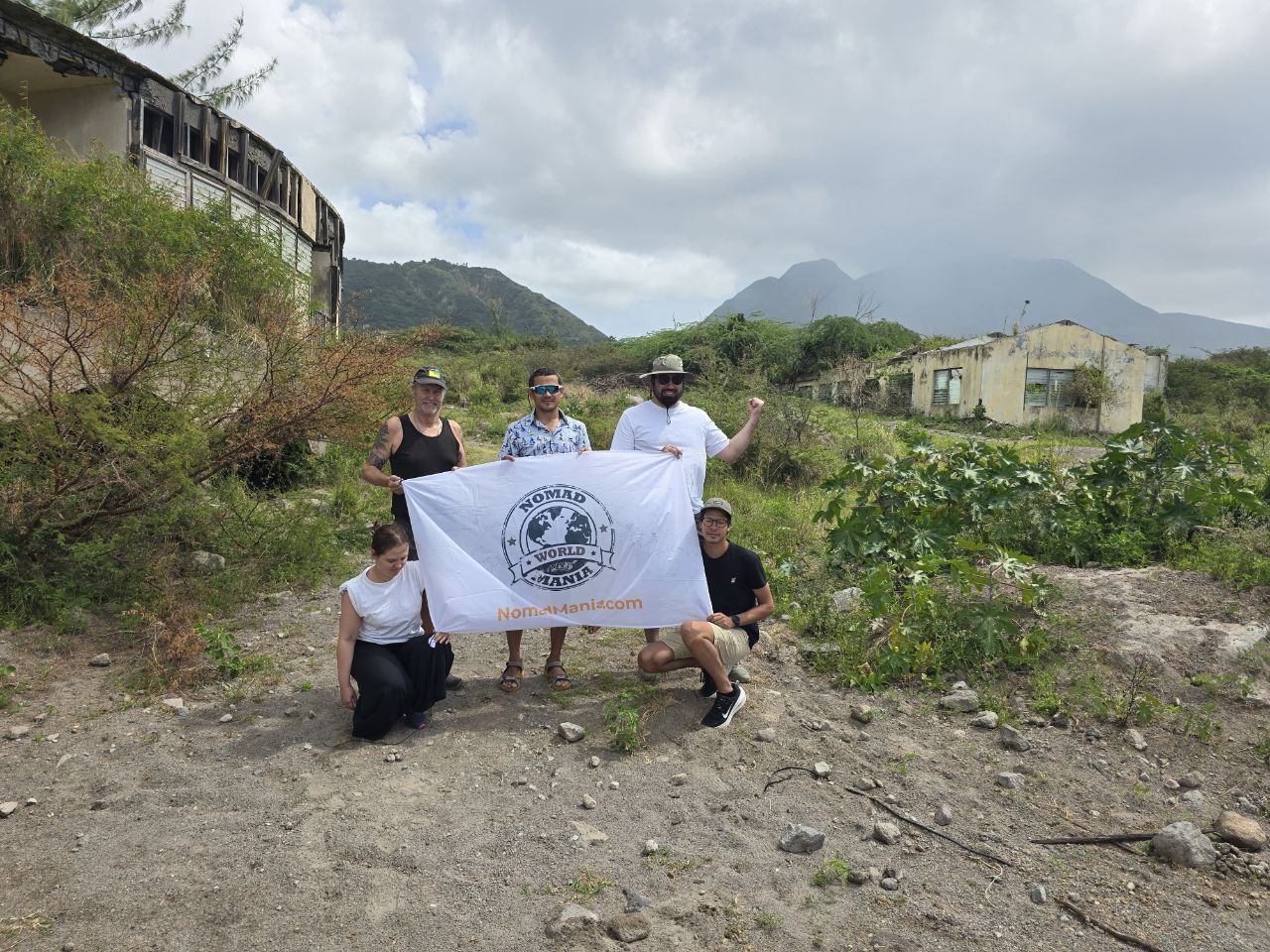
That morning, we set sail again. Our next destination was the island of Montserrat. This island was especially interesting to us because of its unique history and volcanic activity. The sailing conditions that day were not ideal. The waves were stronger, and the wind direction made navigation more difficult. Despite that, we continued forward. As we approached Montserrat, we could see signs of its volcanic past. Some areas of the island were still visibly affected by earlier eruptions. This created a very unusual and dramatic landscape.
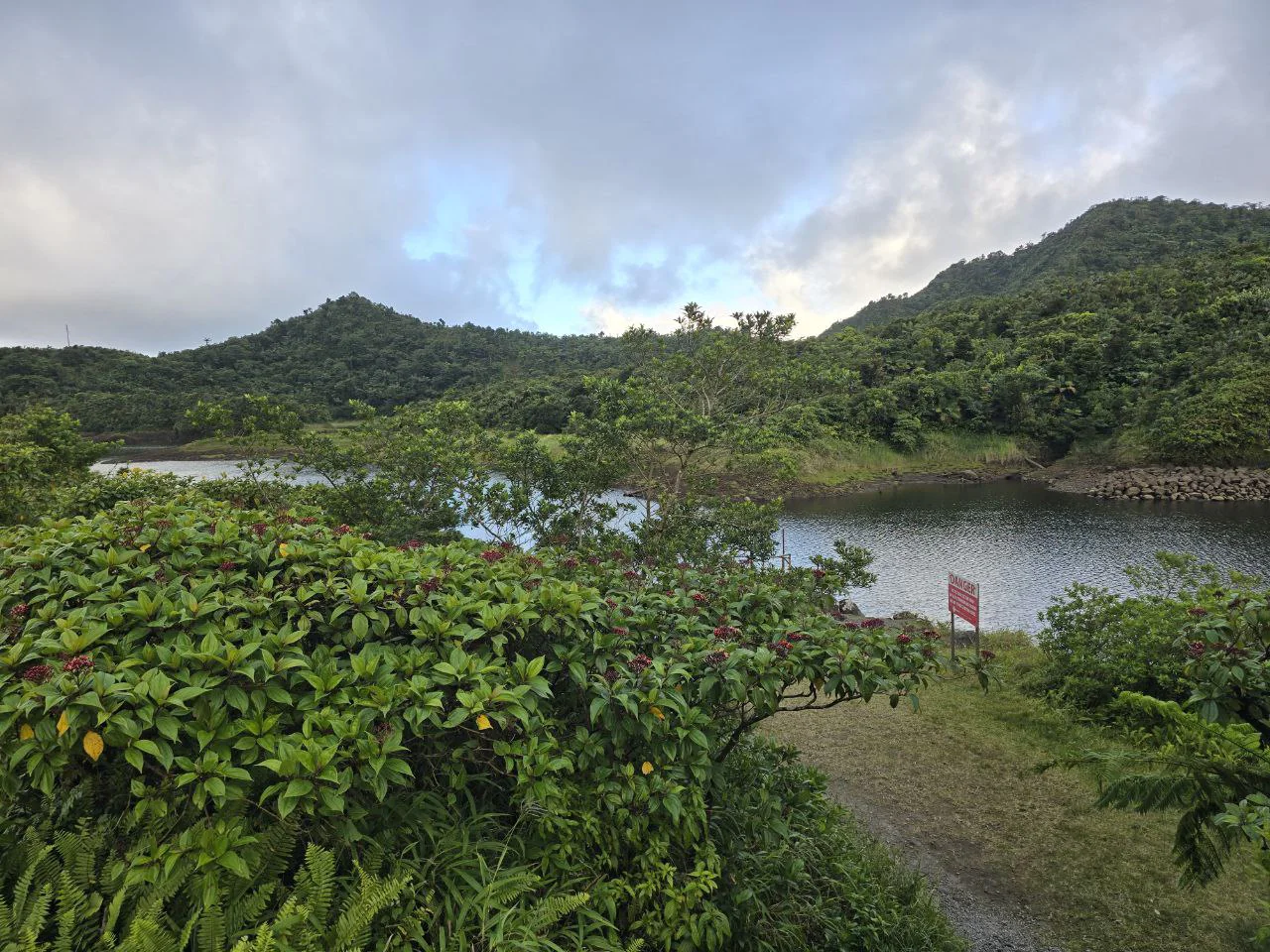
Part of the island had been abandoned after the volcanic eruption, and we were told that certain areas were still restricted. We anchored near the island and prepared to go ashore. Once on land, we explored the surroundings carefully. It felt almost surreal to walk in places where nature had dramatically changed the environment. We saw buildings that had been partially destroyed or abandoned due to volcanic activity. It gave us a strong impression of how powerful nature can be. After spending time exploring Montserrat, we returned to the catamaran. That evening, we prepared for the next leg of the journey. None of us yet knew that the following day would bring one of the most difficult moments of the entire trip.
Day 9 – March 1
The Engine Failure. This day began like many others. We woke up early and prepared to continue our journey. The sea conditions were moderate at first, and everything seemed normal. We began sailing toward our next destination. But sometime later, we noticed something unusual. The engine began making strange noises. At first, it did not seem serious. However, after a short time, the problem became more obvious. The engine stopped working completely. We were now at sea with no functioning engine. This was one of the most stressful moments of the entire journey. Without the engine, our ability to manoeuvre the catamaran became very limited.
We relied entirely on the sails. The captain worked quickly to diagnose the problem. We tried restarting the engine multiple times but it would not start. At that moment, we realised that this situation could become dangerous if conditions worsened. The waves were increasing, and the wind direction was not ideal. We discussed possible solutions and considered our options.
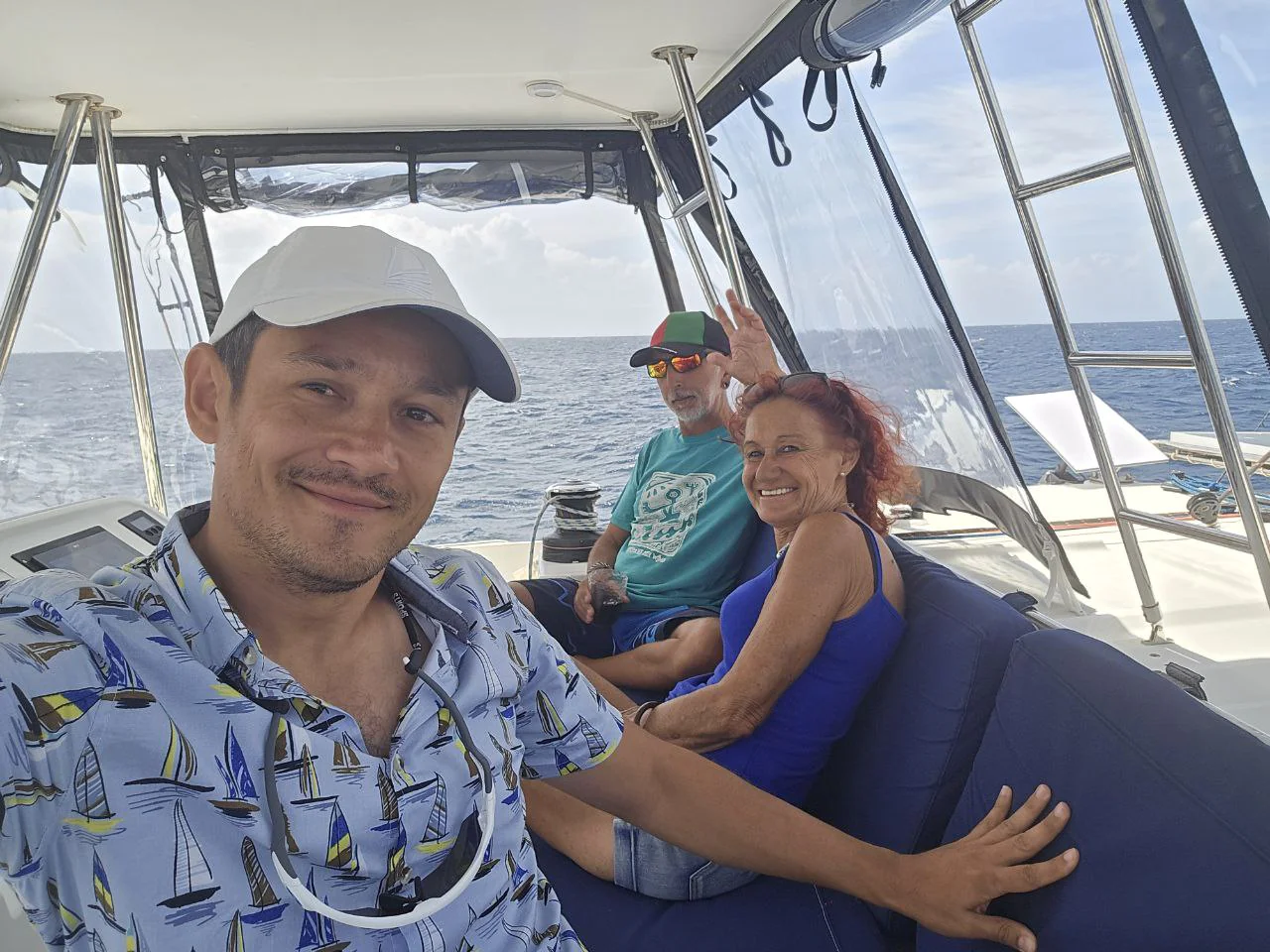
The captain contacted technical support to seek advice. Meanwhile, we continued moving slowly under sail. The uncertainty made everyone nervous. We understood that delays were now unavoidable. At the same time, we remained focused and calm, trusting the captain’s experience. Eventually, after repeated attempts and adjustments, the captain managed to partially restore the engine’s functionality.
Although it was not operating perfectly, it was enough to continue moving safely. This moment brought enormous relief to everyone onboard. We were exhausted but grateful that the situation had been resolved without a full emergency. That evening, we talked about how unpredictable sea travel can be and how quickly conditions can change. It was a powerful reminder that even the best plans can be disrupted.
Day 10 – March 2
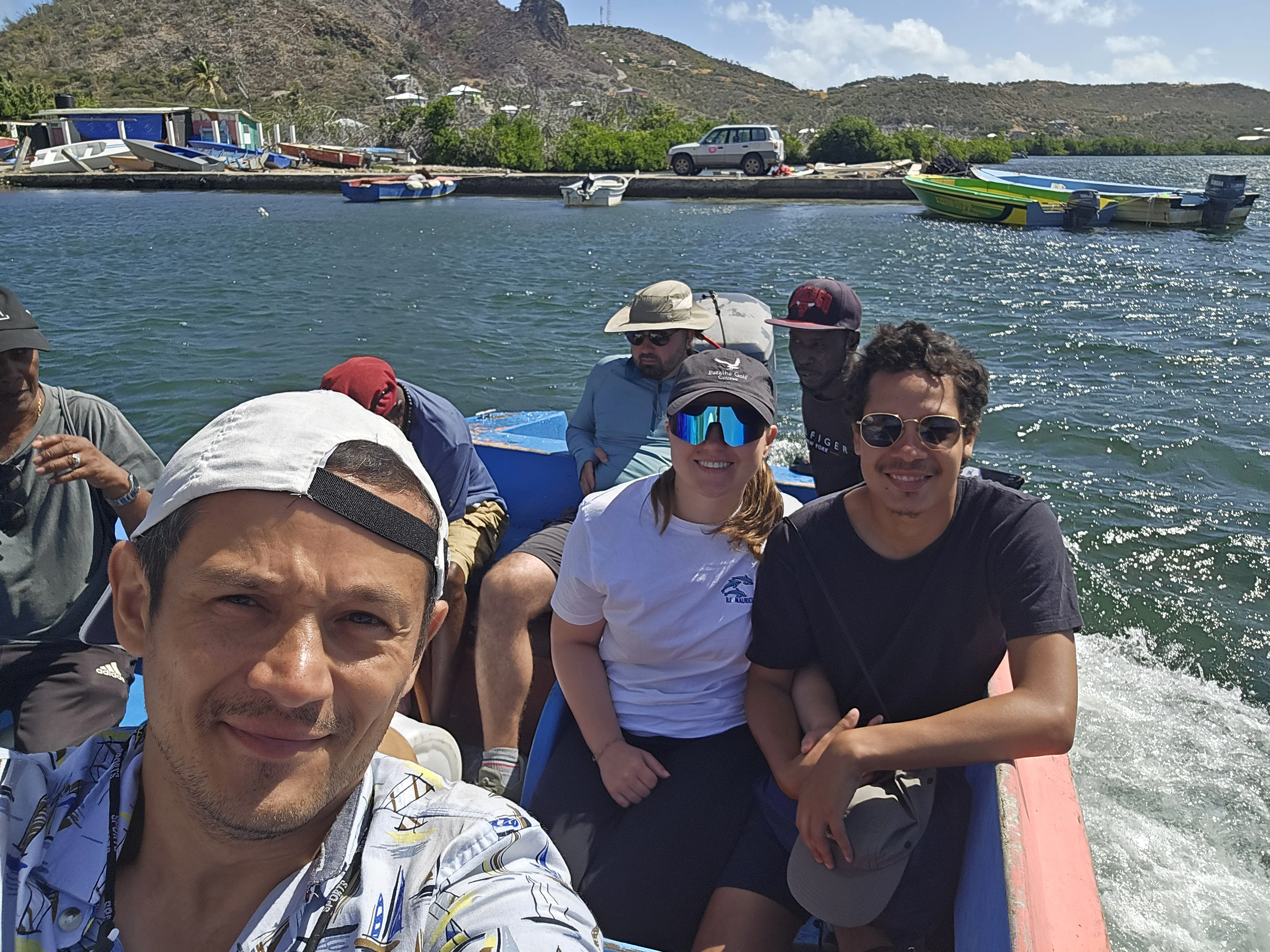
After the stressful situation with the engine the previous day, we woke up feeling slightly tired but relieved that we could continue. The weather conditions were acceptable, though not perfect. Our next destination was another island on our planned route. We set sail early in the morning. Despite the earlier engine issues, the catamaran was moving steadily again, though we remained cautious and attentive to any unusual sounds. Everyone onboard was more alert than before. We had already learned that things could change very quickly at sea. During the journey, the waves varied in strength, but overall the conditions allowed us to continue safely.
By midday, we were approaching our destination. As we got closer to the island, we could see the coastline becoming clearer lush vegetation, small bays, and scattered settlements. We anchored offshore and prepared to go ashore. Once on land, we walked through the town and visited several notable places. As usual, time was limited, so we tried to move efficiently from one location to another. We took photos, observed local life, and briefly explored the central areas.
Despite being in a hurry, we tried to appreciate the atmosphere of the island. Later in the afternoon, we returned to the catamaran. That evening, we once again reviewed the schedule. We were still behind, and it was becoming increasingly difficult to keep up with the original plan. Nevertheless, we decided to continue pushing forward.
Day 11 – March 3
We started the day very early. The goal was to reach the next island without losing additional time. The wind that morning was inconsistent, making navigation more complicated. At times, the catamaran moved quickly. At other times, progress slowed significantly. The crew remained focused on maintaining the best possible course. Everyone onboard had now adapted to the routine of early mornings, constant movement, and tight schedules. Fatigue was starting to accumulate. Still, motivation remained strong. As we approached the next island, we noticed that the harbour area was quite busy.
There were several yachts already anchored, and manoeuvring required careful attention. We successfully anchored and prepared to disembark. Exploring the island followed a familiar pattern:
– Quick walk through the main streets
– Visiting important landmarks
– Taking photos
– Returning to the boat as efficiently as possible
Time management had become our constant challenge. That evening, we discussed the upcoming route again. We realised that weather conditions would likely continue to affect our progress. Still, turning back or skipping destinations was not something we wanted to do. We remained committed to completing the planned route.
Day 12 – March 4
By this point, the rhythm of the journey had become physically demanding. We woke up early once again. Sleep was often short, and movement between islands required constant energy. That morning, the sea conditions were moderate. Not as rough as previous days but not calm either. We set sail toward the next destination. During the crossing, we spent time discussing logistics and reviewing maps. Navigation planning had become a daily necessity. We carefully tracked distances and travel times, trying to estimate whether we could still catch up with the original schedule.
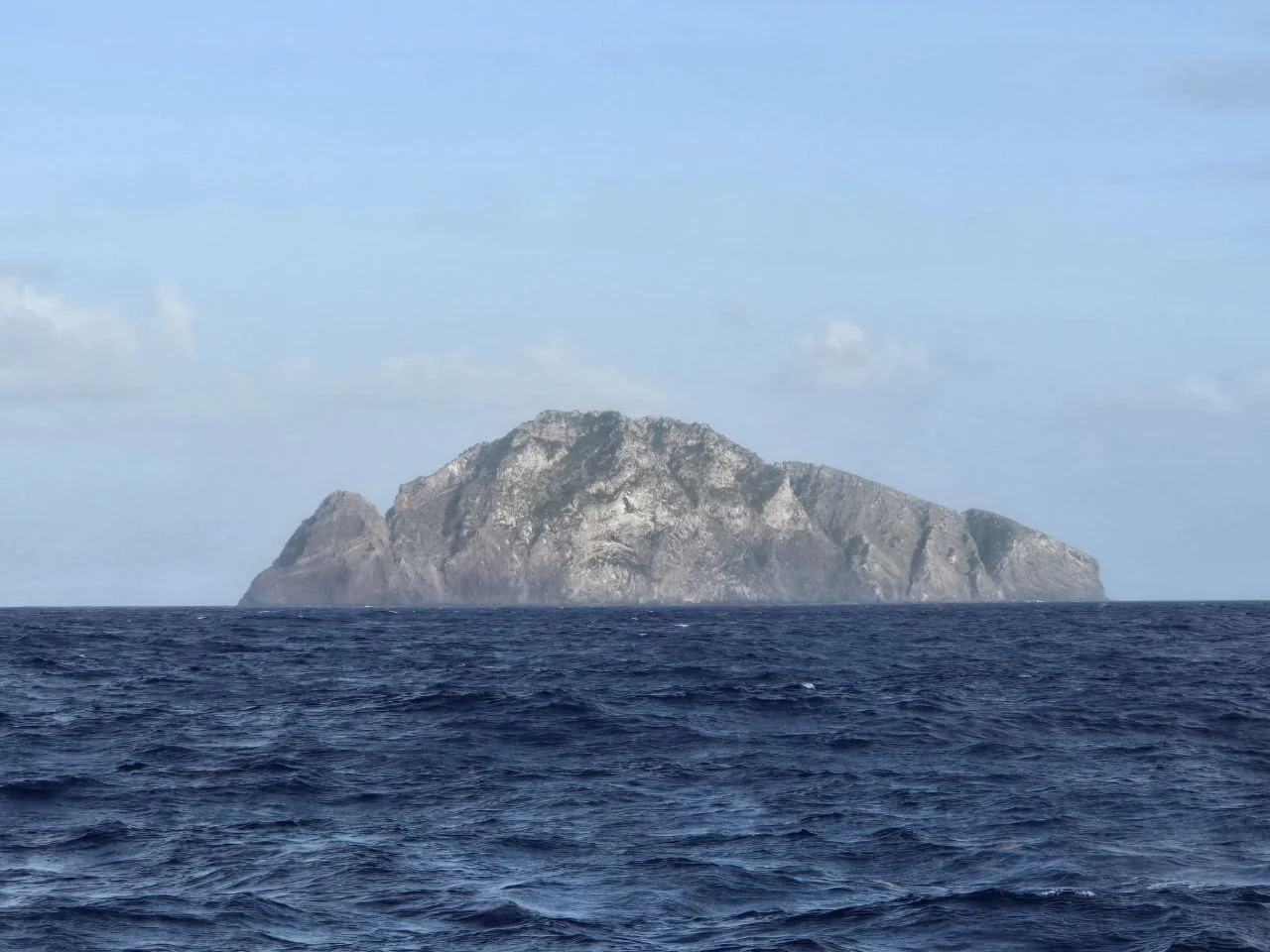
As we approached land, the coastline revealed another unique landscape. Each island had its own distinct character different terrain, architecture, and atmosphere.
We landed ashore and followed the usual routine of exploring the main areas. Despite fatigue, curiosity continued to drive us forward. Every new island offered something different to see and experience. Later that day, we returned to the catamaran. That evening, fatigue was noticeable among everyone onboard. Still, there was also a sense of determination. We had already overcome technical problems, difficult weather, and logistical challenges. And we knew that more challenges were still ahead.
Day 13 – March 5
We woke up early again. By now, the routine of constant travel had become exhausting, but we were determined to continue. The sea conditions that morning were slightly calmer than on previous days, which gave us some relief. We set sail toward the next island according to plan. Although physically tired, we had already adapted mentally to the demanding rhythm of the journey. During the crossing, we spent time discussing the remaining route. At this stage, careful planning was essential. We needed to balance time, fuel, weather conditions, and physical endurance.
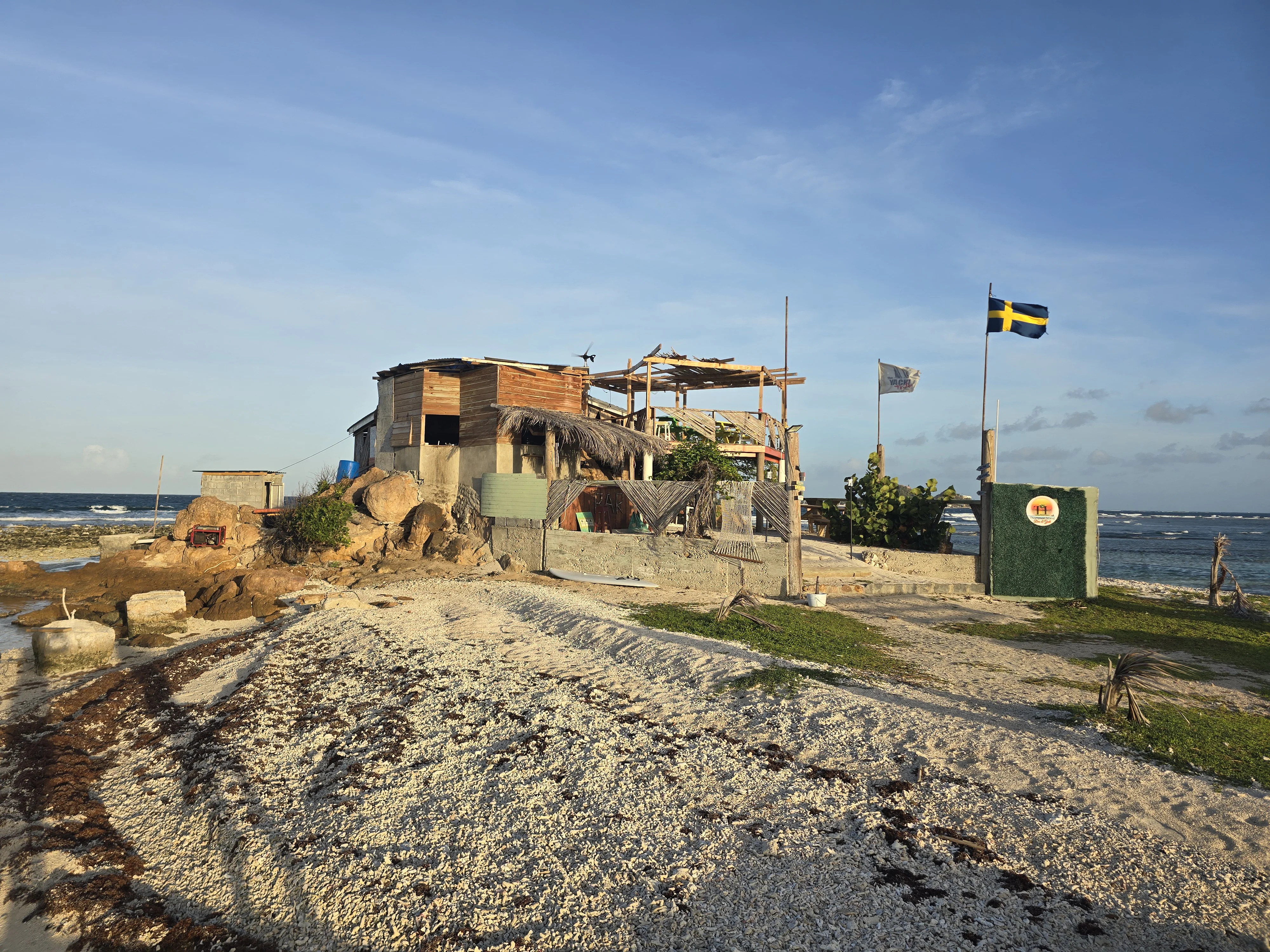
Every decision mattered. As we approached the island, the coastline gradually became visible. There were small bays, green hills, and scattered settlements along the shore. We anchored offshore and prepared to go ashore. Once on land, we followed our now familiar routine:
-Walk quickly through the central streets
-Visit important locations
-Take photographs
-Return to the boat
Despite limited time, we tried to capture at least a basic impression of each place. Later that afternoon, we returned to the catamaran. That evening, we once again reviewed the schedule. The reality was clear we were still behind. But we continued pushing forward. Skipping islands was still something we wanted to avoid.
Day 14 – March 6
This day began similarly to the previous ones. We woke early and prepared to depart. The weather conditions were moderate, though not entirely stable. Wind direction changed several times during the morning. This forced the captain to adjust the sails repeatedly. Navigation required patience and concentration. At times, progress was slower than expected. Fatigue was now noticeable among everyone onboard. Still, there was also a strong sense of persistence.
We had invested too much effort to stop now. During the journey, we continued to monitor the engine carefully after the earlier failure. Fortunately, it remained operational. However, everyone remained cautious. By midday, we approached another island. As usual, we anchored offshore. Landing ashore followed the same fast-paced routine.
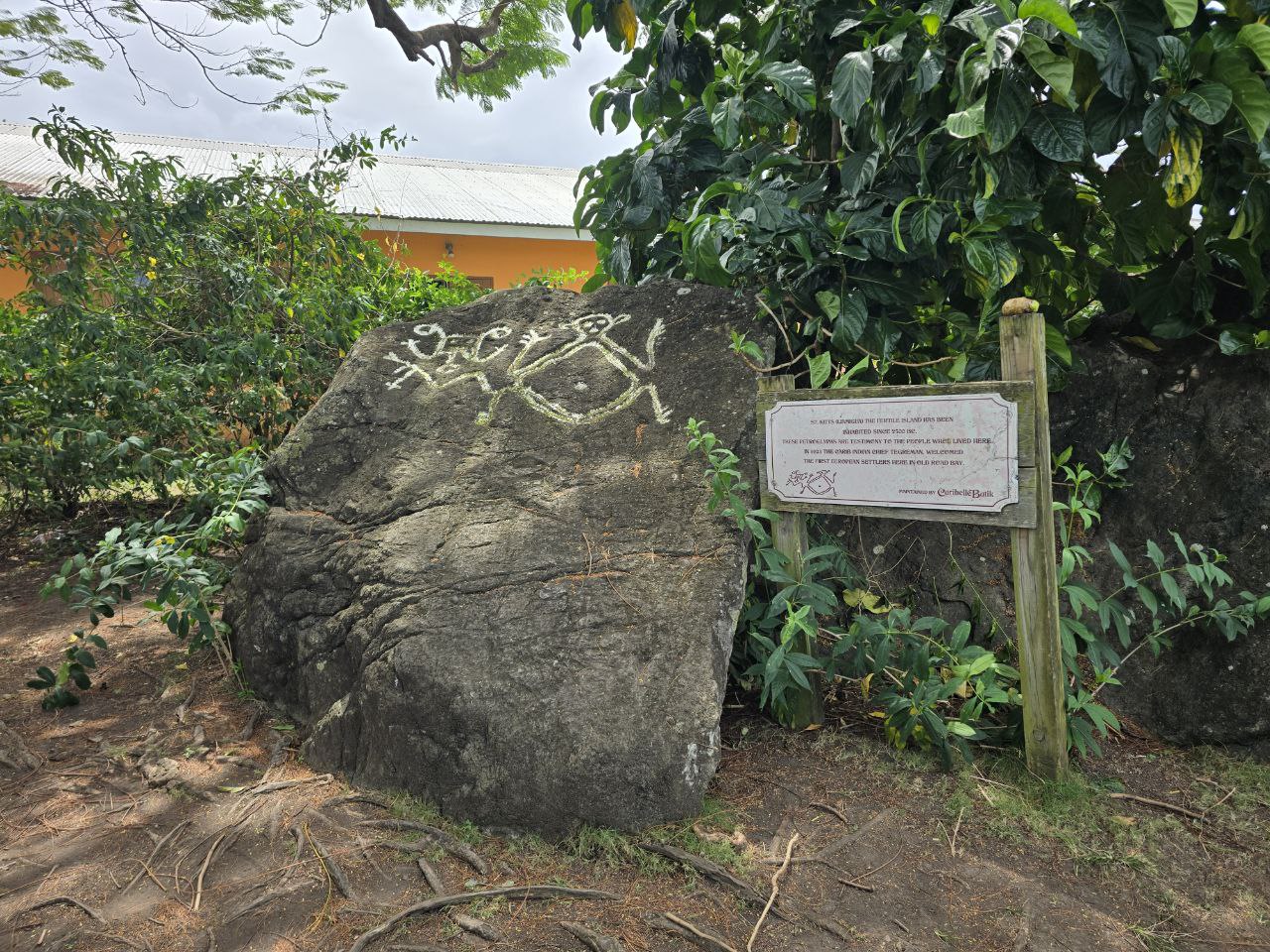
There was little time for long exploration. Instead, we focused on visiting key areas and documenting our presence. Each island visit became more about efficiency than leisure. Later that afternoon, we returned to the catamaran. That evening, we discussed the next stage of the journey. The remaining distance was still significant. We understood that the coming days would be equally demanding.
Day 15 – March 7
This day brought renewed physical fatigue. Sleep had been limited for several consecutive nights. Still, we woke early and continued according to plan. The sea conditions were slightly rougher again. Waves increased, and the wind became less predictable. Despite this, we continued sailing. By now, we had developed confidence in handling difficult conditions. Still, tension remained. Every unexpected sound or movement reminded us of the earlier engine failure. As we moved closer to our next destination, the coastline slowly appeared on the horizon. Seeing land after long hours at sea always brought relief. We anchored offshore and prepared to go ashore.
The routine once again repeated:
– Quick exploration
– Short walk through central areas
– Documentation of the visit
– Return to the boat
Although physically tired, we remained motivated. Each completed island brought us closer to finishing the planned route. That evening, the mood onboard was mixed. Fatigue was heavy but determination remained strong. We understood that we had already passed many difficult moments. And yet, the journey was not over.
Day 16 – March 8
We woke up early again, as usual. By now, physical fatigue had become a constant companion. Still, the routine continued wake up, prepare the catamaran, and set sail. The sea that morning was moderately rough. The wind direction forced us to adjust the sails several times. Although this had become routine, it still required careful attention from the captain and the crew. We were now in the phase of the journey where endurance mattered as much as planning. Every day followed a tight schedule, leaving little room for rest.
As we sailed toward the next island, the familiar rhythm continued: Watching the horizon, checking distances, and estimating arrival times. Navigation discussions had become part of everyday life onboard. When land finally appeared, there was always a small sense of relief. Even though the visits were short, stepping on land provided a psychological break from the sea. We anchored offshore and prepared to go ashore. On land, we followed the same fast-paced routine:
– Walking through the main areas
– Visiting notable places
– Taking photographs
– Returning quickly to the catamaran
Time pressure remained constant. Later that day, we returned onboard and began preparing for the next departure. That evening, fatigue was especially noticeable. Still, morale remained stable. We were moving steadily toward the final stage of the journey.
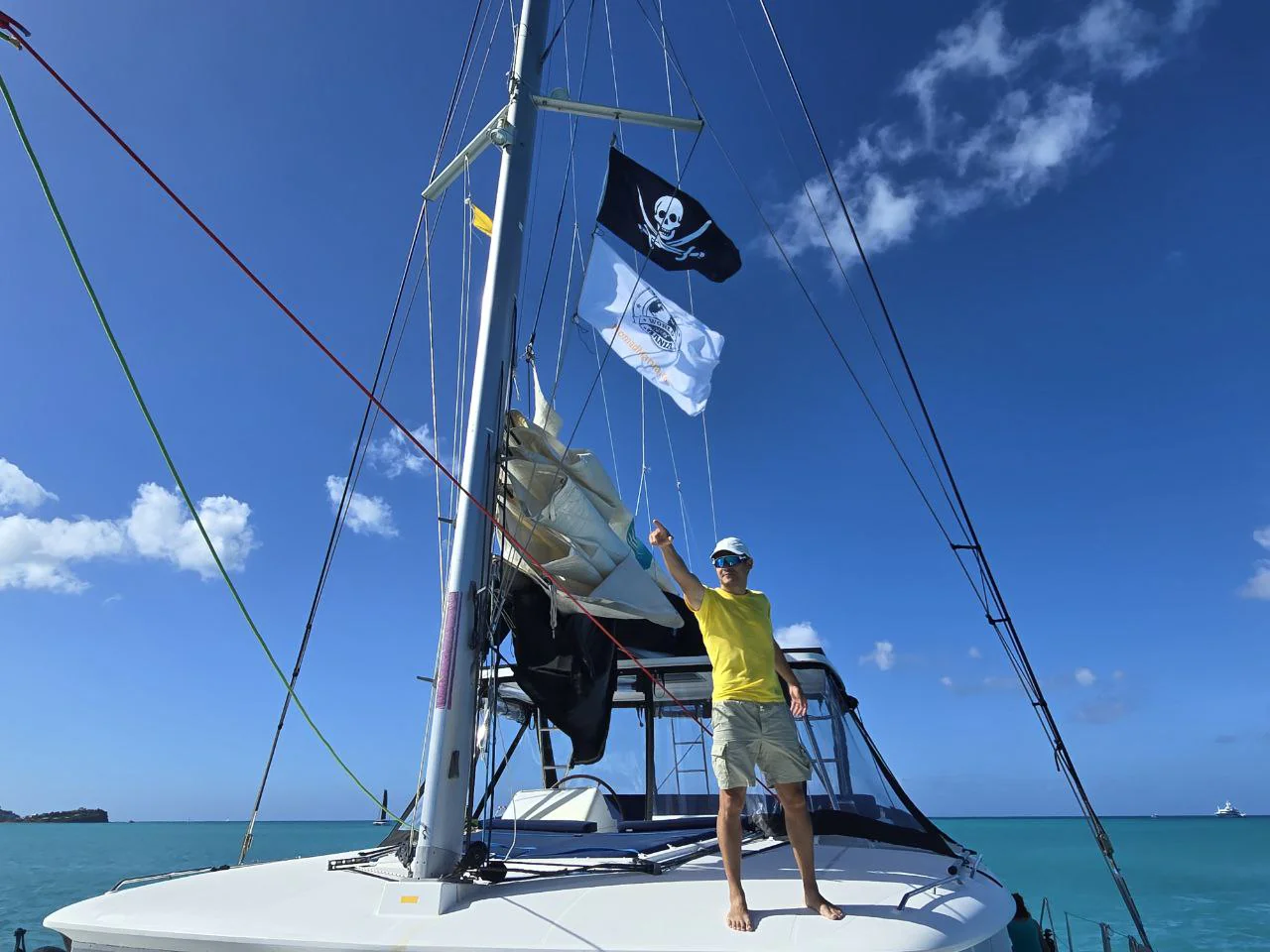
Day 17 – March 9
The morning began with preparation for another crossing. Sleep had again been limited. Despite this, we maintained the routine. Weather conditions were variable that day. At times, the wind was favourable. At other times, it slowed our progress significantly. This unpredictability forced constant adjustments. We had learned to accept delays as part of sea travel. Still, every lost hour increased pressure on our schedule. During the crossing, conversations often focused on logistics.
We reviewed remaining distances and estimated arrival times repeatedly. By now, everyone onboard had developed a deeper understanding of navigation challenges. When we approached the island, the coastline once again came into view. Even after many similar arrivals, each island still felt unique. We anchored offshore and went ashore. The exploration followed the familiar structure:
– Brief walk
– Observation of the surroundings
– Photo documentation
– Return to the boat
Physical exhaustion was now clearly visible among everyone. Yet mentally, we remained committed. Later that evening, we gathered again to review the upcoming route. The number of remaining islands was decreasing. That fact alone gave us renewed motivation.
Day 18 – March 10
This day marked the beginning of what felt like the final stretch. We woke up early once again. The sea conditions were manageable, though not entirely calm. As we sailed, the mood onboard shifted slightly. There was a growing sense that the journey was approaching its conclusion. Still, many tasks remained. Navigation planning continued as usual. We checked weather forecasts and reviewed distances. Careful timing was still critical. As the coastline of the next island appeared, we prepared for another short visit. By now, landing procedures had become highly efficient. Everyone knew their role. We explored the island quickly, documenting our presence and observing local surroundings.
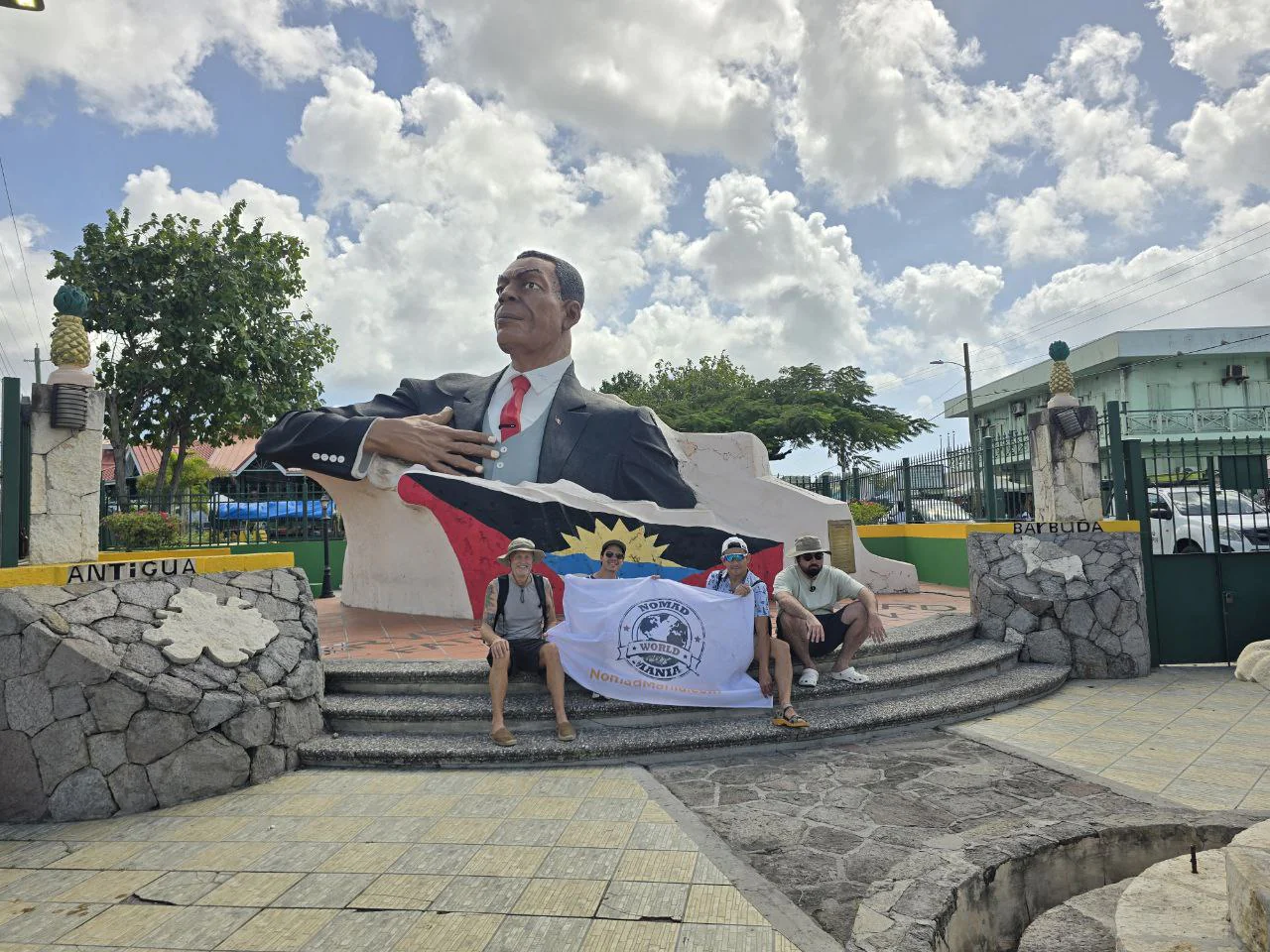
Despite exhaustion, curiosity remained alive. Every island still brought something new to observe even during short visits. Later that afternoon, we returned to the catamaran. That evening, discussions focused on the remaining islands and final logistics. We were close but not finished. The final phase would still require effort and concentration.
Day 19 – March 11
We woke up early once again. By now, exhaustion had accumulated to a noticeable level, but we were close enough to the end of the journey that stopping was not an option. The sea conditions that morning were relatively stable. This gave us hope that we might make up some lost time. We prepared the catamaran and set sail according to plan. As we moved forward, the routine felt almost automatic. Everyone knew their responsibilities. We monitored navigation, watched the horizon, and tracked our progress carefully. Time remained the most valuable resource. As we approached the next island, the coastline appeared clearly.
Even after many similar arrivals, there was still a sense of satisfaction in reaching each destination. We anchored offshore and went ashore. The visit followed the same efficient pattern:
– Walking through central areas
-Visiting key locations
-Taking photos
-Returning quickly to the catamaran
Despite physical fatigue, the determination to complete the route remained strong. Later that day, we returned onboard and prepared for the next departure. That evening, we reviewed the remaining route once again. The number of destinations left was now small. This realisation gave us renewed motivation.
Day 20 – March 12
The morning began with familiar preparation routines. Fatigue was now constant, but we had learned to function despite it. The weather conditions were moderate. Wind direction shifted slightly during the crossing, forcing adjustments. Still, overall progress remained steady. As we sailed, conversations increasingly focused on finishing the journey. We discussed how much had already been accomplished. There were moments of reflection about the difficulties we had faced:
-Long sailing hours
-Unexpected delays
-Engine failure
-Logistical challenges
Each obstacle had tested our patience and endurance. When land appeared ahead, we prepared for another brief visit. We anchored offshore and went ashore. The exploration followed the same fast-paced structure as before. Time pressure still existed, but mentally we were already thinking about the finish. Later that afternoon, we returned to the catamaran. That evening, the atmosphere onboard felt slightly lighter. There was a growing sense of anticipation. We were getting closer to completing what had seemed nearly impossible at the beginning.
Day 21 – March 13
This day marked one of the final stages of the journey. We woke up early, as usual. By now, the routine felt deeply ingrained. Preparation, departure, navigation everything followed a familiar rhythm. Sea conditions were manageable. Not perfectly calm, but stable enough for steady progress. We continued sailing toward the next destination. During the crossing, we reflected on how much had changed since the first days. At the beginning, everything felt uncertain. Now, despite fatigue, confidence had grown. We had gained valuable experience.
When the coastline appeared, we prepared for another quick landing. We explored the island efficiently, following the routine we had practiced many times. Even though visits were brief, each one still felt meaningful. Later that day, we returned to the catamaran. That evening, we held another planning discussion. Only a small number of destinations remained. The finish line was finally within reach.
Day 22 – March 14
We woke up early once again. This morning felt different. There was a strong awareness that the journey was approaching its conclusion. Although fatigue remained, there was also a sense of excitement. We prepared the catamaran and set sail toward one of the final destinations.
The sea conditions were manageable. Not calm, but cooperative enough to allow steady progress. As we sailed, conversations naturally shifted toward reflection. We talked about the beginning of the journey and how uncertain everything had felt at that time. Now, despite all the difficulties, we were still moving forward. When the coastline appeared ahead, it brought a familiar sense of relief.
We anchored offshore and prepared to go ashore. The visit followed the established routine:
-Quick walk
-Visiting central areas
-Taking photos
-Returning to the catamaran
Even though these visits were brief, each one represented another completed step. Later that afternoon, we returned onboard. That evening, we reviewed the remaining plan. There were very few destinations left. The finish line was now very close.
Day 23 – March 15
We woke early again. This was one of the final operational days of the journey. Physically, everyone was tired. Mentally, however, motivation was strong. We prepared for departure and set sail toward the next island. The crossing proceeded without major difficulties. Weather conditions were stable enough to allow consistent movement. As we approached land, the familiar pattern repeated once again. We anchored offshore and went ashore. The exploration was brief but purposeful. We moved quickly through the main areas and documented the visit. By now, everything felt highly organised.
Every movement was efficient. Later that day, we returned to the catamaran. That evening, discussions focused almost entirely on completion. We calculated distances, reviewed fuel levels, and estimated final timings. There was a quiet sense of anticipation onboard.
Final Day – March 16
This day marked the completion of the planned journey. We woke early once again. Despite exhaustion, there was excitement in the air. We prepared for the final movements of the expedition. As we sailed, there was a strong sense of closure. Every challenge we had faced now felt like part of a larger story. When we reached the final destination, it felt like a major achievement. We anchored and completed the final landing. Standing on land that day felt different from all previous arrivals. This time, there was no rush.
There was only relief and satisfaction. The journey had been completed.
Conclusions and Reflections
Looking back on the journey, several important lessons became clear. First, sea travel requires flexibility. No matter how carefully plans are made, weather conditions can change unexpectedly. Schedules may shift. Unexpected problems such as engine failures can occur at any time. Second, physical endurance is essential. Long days, short sleep, and constant movement create significant fatigue. Mental resilience becomes just as important as physical strength. Third, teamwork plays a critical role. Success depends on cooperation between all participants. Clear communication and mutual support are essential.
Fourth, logistical planning must always include backup options. Transportation shortages, weather delays, and mechanical problems can disrupt even the best-prepared schedules. Having alternatives available is extremely valuable.
Overall Impression
Despite numerous challenges including difficult weather, technical problems, and tight schedules the journey was successfully completed. It required: Careful planning ,Constant adjustment, Physical endurance, Strong determination Each island visited represented a step forward. Each obstacle overcome strengthened confidence. In the end, the experience proved that even complex and demanding travel goals can be achieved through persistence and teamwork.