Probably the goal of any serious traveler, and especially a NomadManian, is to visit all Caribbean island nations. In June 2025, I began thinking about how to visit many of these islands. Initially, I wanted to travel it all by plane. But several problems immediately arose. First, not all islands offered direct flights; often, you had to return to your departure point. Second, there was the cost of flights. Also, the cost of hotels.
Another reason was that some routes didn’t fly every day, and you had to stay on one island long enough to be able to fly back. Then I came up with the idea of planning and organizing a route through these islands by yacht. The following islands, UN countries and UN+ states were included in the initial development of my plan:
Martinique, Dominica, Guadeloupe, Antigua, Barbuda, Saint Kitts, Nevis, Montserrat, Saint Lucia, Saint Vincent, Grenadines, Grenada, Barbados.

I set a goal to visit these islands in three weeks. The plan was as ambitious as it was crazy. Then began the search for a suitable service and yacht. After a month of contacting various services, realizing the impossibility of directly contacting captains or even direct representatives in Martinique with yachts, facing complete disregard from some services, and answering a ton of questions about why I chose this particular itinerary, I finally signed a contract with one of the services.
A catamaran was chosen as the means of transport. Next, Nomadmania introduced a Trip Sharing tool – the ability to publish personal travel stories that could be shared with other travelers. Thanks to Orest for helping me create my ad and explaining how it would work. Thus, my ad became the first in this category after the section opened.
The first catamaran was fully booked in just 10 days. We were already considering booking a second catamaran, but due to various reasons, we were unable to fully assemble the second catamaran by the booking confirmation deadline. Four more crazy travelers joined me on the first catamaran.
Andriel Souza, his girlfriend Sonia Gawron, Slava Evzhenkov, and Jimmy P.
Next came seven months of tour planning and communication with the representative in Martinique. The first question after I outlined our itinerary was, “Tell me honestly, what do you want to bring?” Many didn’t understand why we needed to visit so many islands in three weeks when we could just visit one or two, chill, lie on the beach, scratch our bellies, and sip a cold beer. I had to explain the philosophy of Nomadmania every time.
During these seven months, we also had to constantly adjust the itinerary. One day in November, the representative wrote to me that they had consulted with the captain and decided to remove three countries from the itinerary to simplify our itinerary. We had to return to the main idea of this trip: the countries are important, not the vacation. When adjusting the plan, they removed Barbuda from the list of islands because it would have required a lot of time on this itinerary, and we wouldn’t have had time to visit the other islands. I agreed to this step. Next came detailed discussions about food, fuel, refuelling, meeting points, and all the other small details that are essential for such a complex journey.
And so, on February 20th, more than seven months after signing the contract, we were scheduled to board the catamaran. Andriel, Sonya, and Slava arrived on February 19th and had time to see Martinique. Jimmy and I arrived on February 20th, and I immediately went to check out the catamaran. We met at a café, had a cocktail, and boarded the catamaran.
Day 1 – February 21
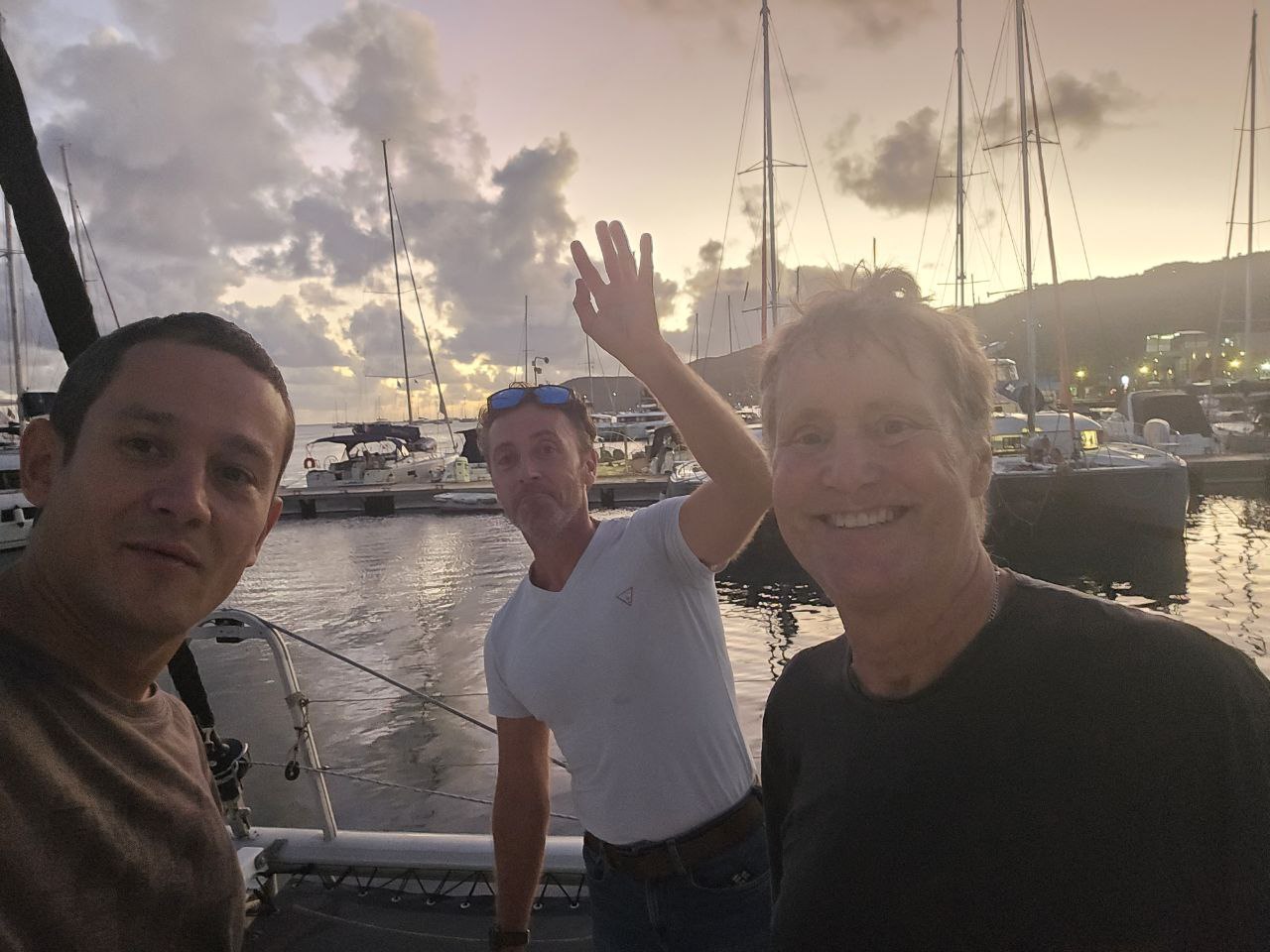
We departed Martinique from Le Marin dock at 11:00 a.m. We refueled, the captain took our passports, and went through the Custom + Migration process. Captain Yves always took care of this in advance, sending our documents over the computer, and upon disembarking, he always went himself and completed the entry and exit procedures. He’s a true professional. And so, having refueled, we set off on our journey, full of energy and eager for adventure.
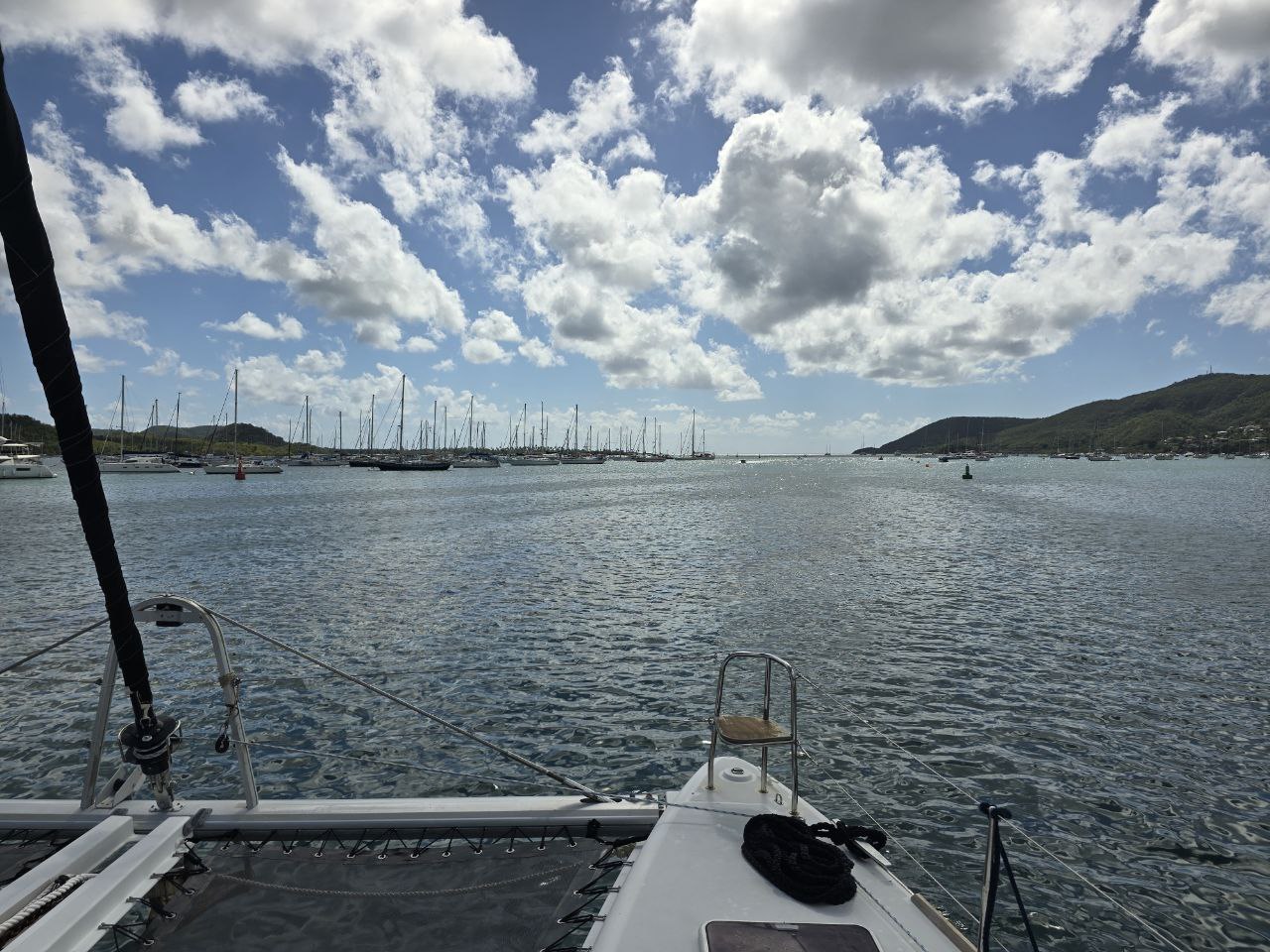
By the evening of the first day, we had reached St. Pierre Bay on the same island of Martinique, off the northwest coast. I told the captain it was important for us to be off Dominica by 1 PM the next day so we could fully explore the island. Having not yet experienced the strength of the waves, we went to bed.
Day 2 – February 22
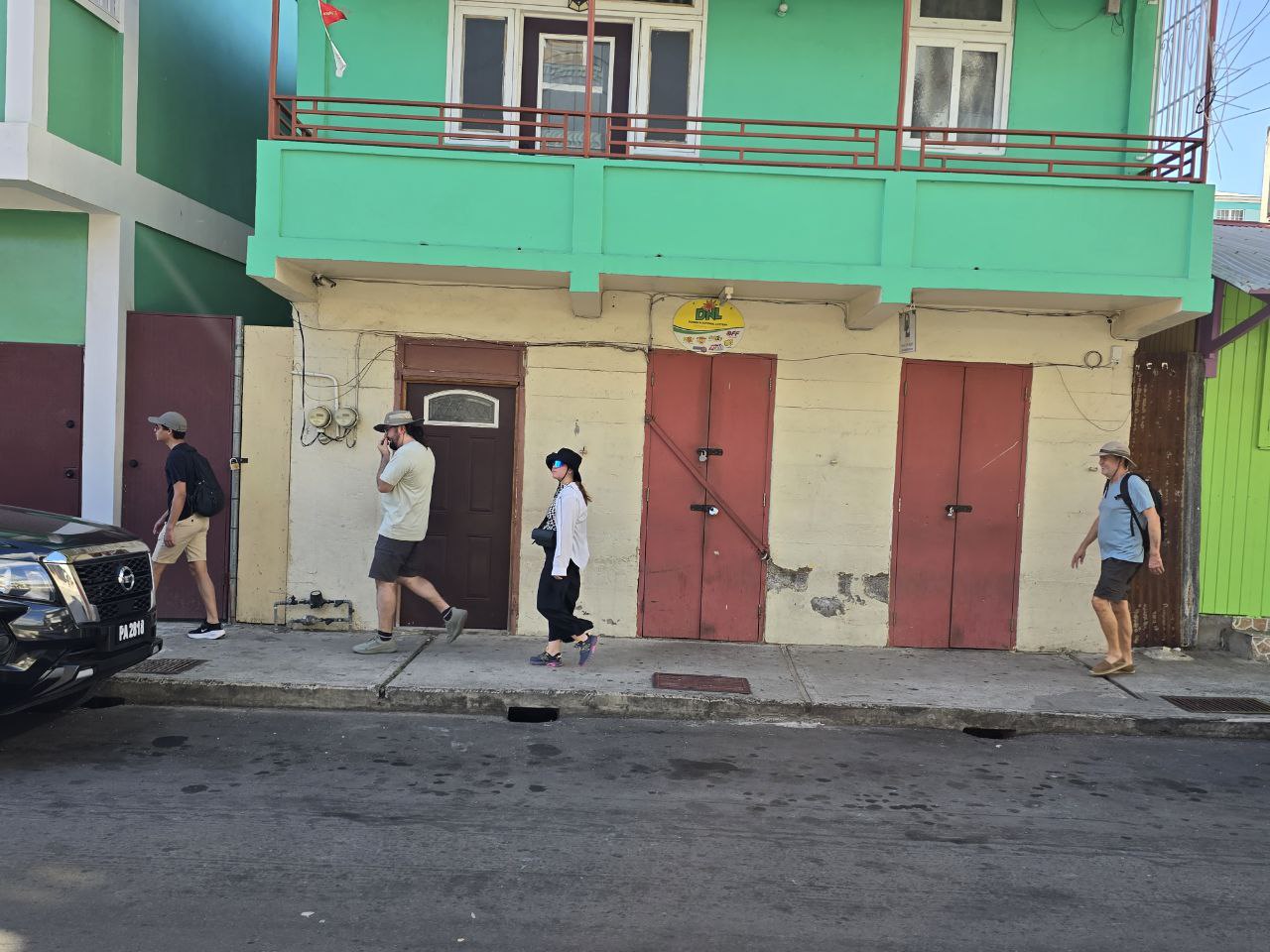
The captain started the boat at 7 AM. The wind was favorable, and we followed plan, sailing at about 8-9 knots. By 1 PM, we were off the coast of Dominica. Our catamaran had an inflatable dinghy for disembarking. But as we approached Dominica, a sea taxi representative approached us in a motorboat and took us ashore. We agreed to pick us up at 6 PM, hailed a taxi, and went for a stroll around the city.
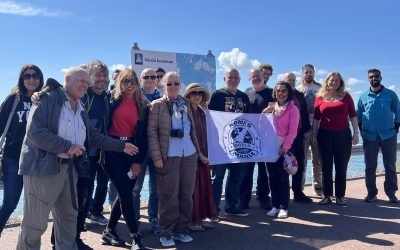
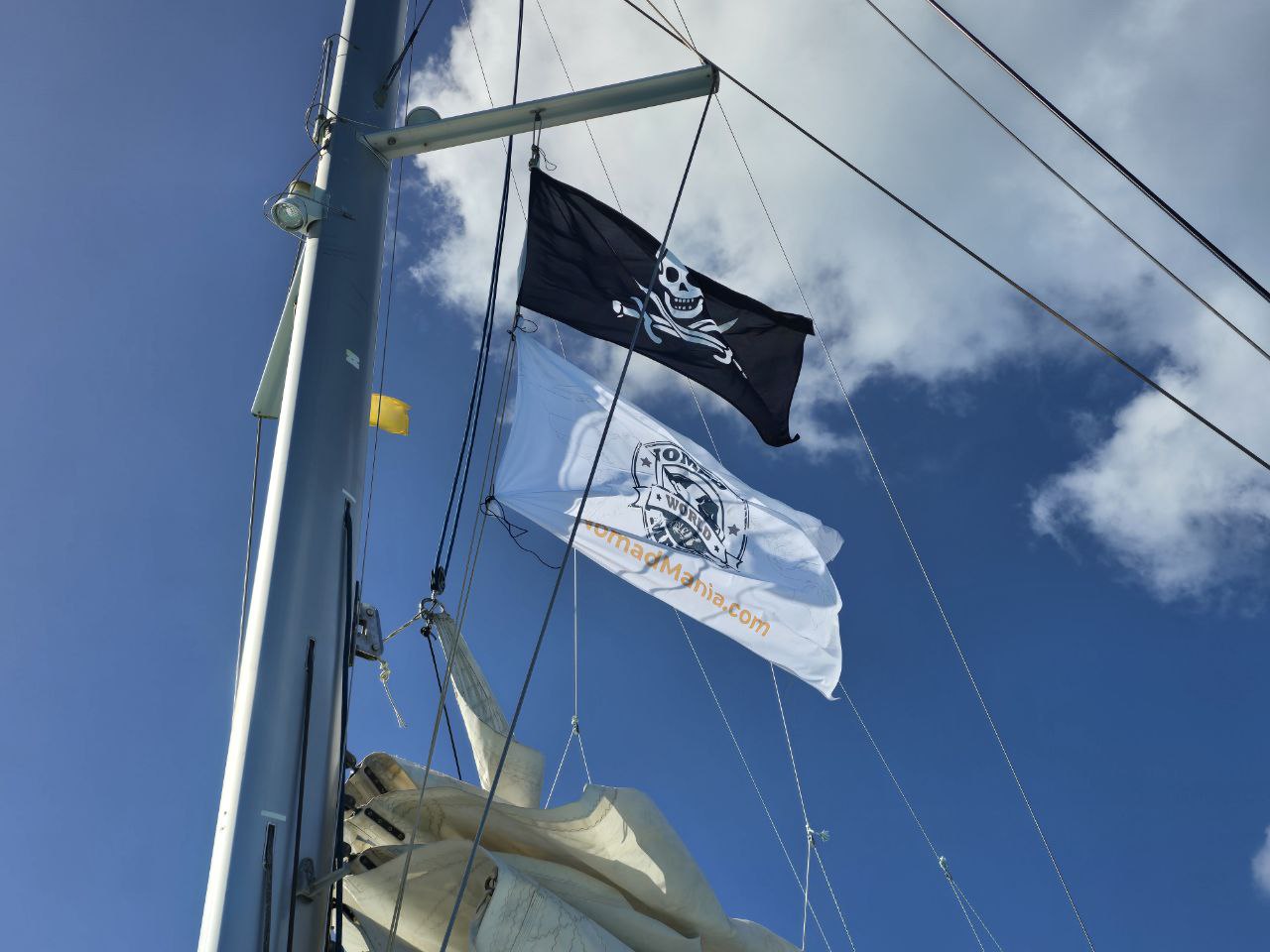
We took our first photo together with the Nomadmania flag.
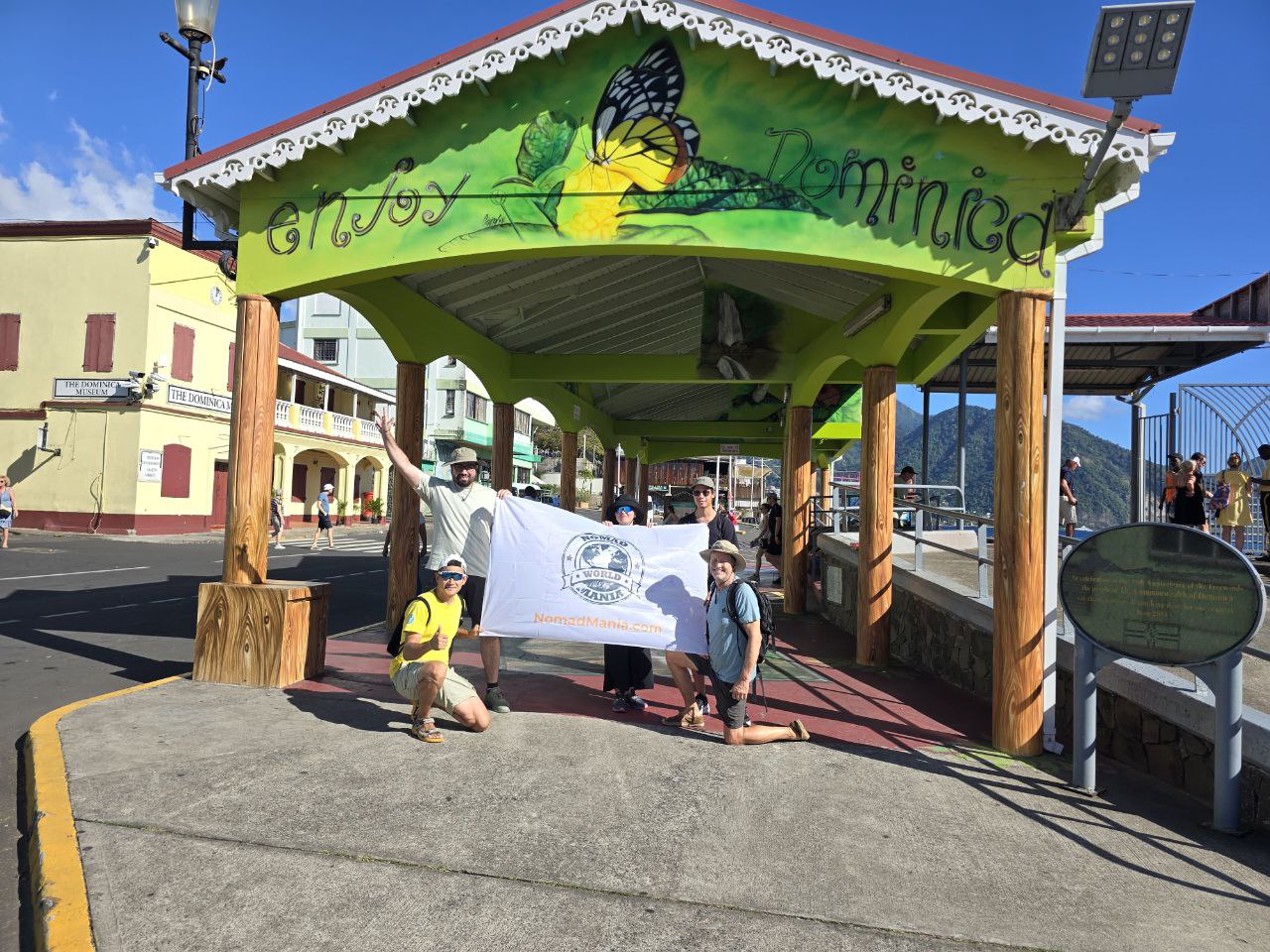
The photo was taken at the cruise ship’s exit. It was just moored. Many people were getting on and off, looking at our flag in amazement. Then we went to explore the UNESCO site in the center of the island.
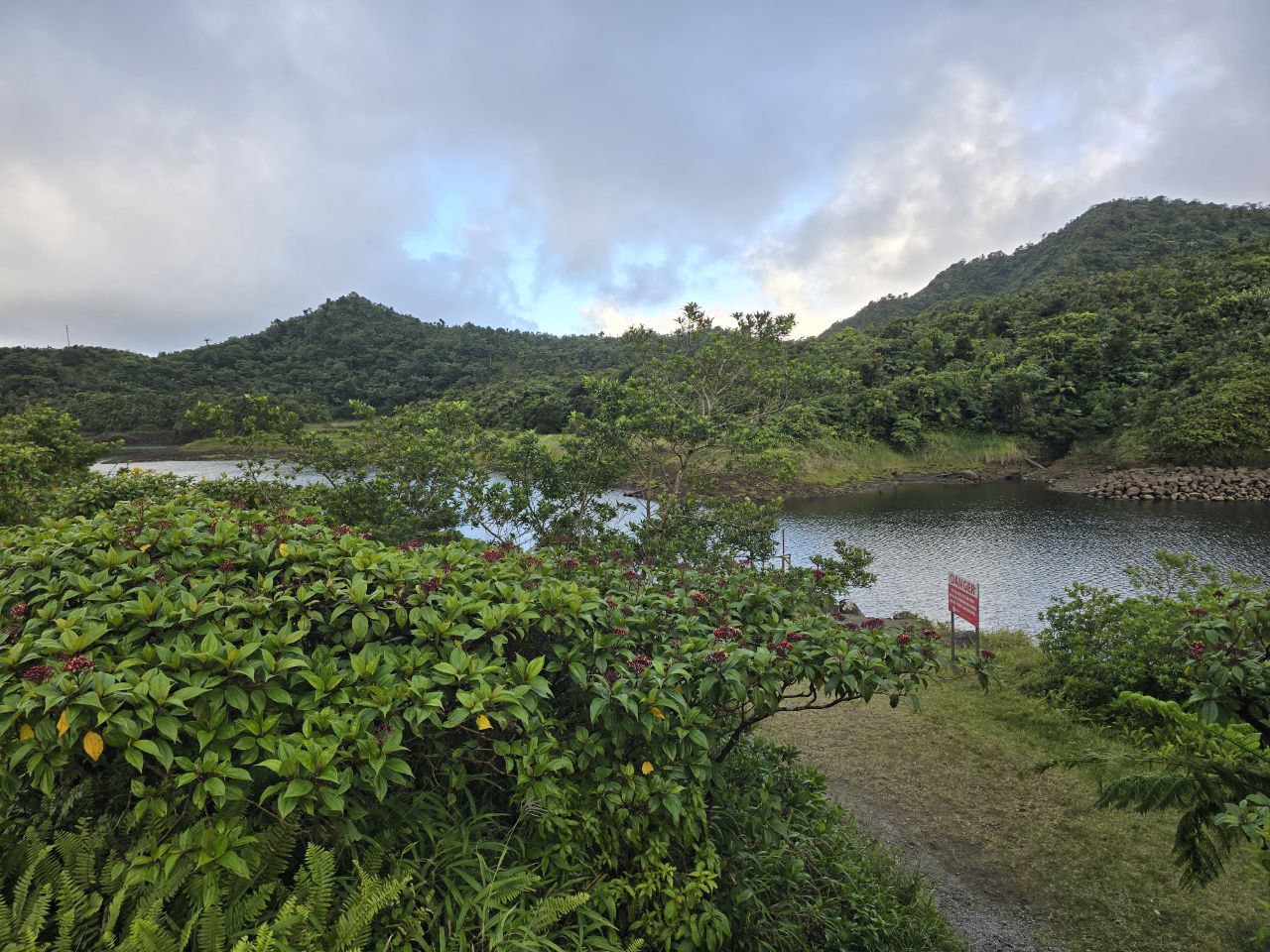
I’d like to point out right away that my strategic goals were to reach the islands at any cost. Once we reached the islands, Andriel did most of the work. He advised us on which Nomadmania sites were best to visit, what we had time for, where to go first, and what to leave for later. I’d like to express my special gratitude to him for this.
He was very helpful in planning routes within the islands themselves. I’d also like to point out that Andriel strictly adhered to the Nomadmania rules regarding visiting sites. If we wanted to mark a place but hadn’t spent enough time there for it to count, Andriel said we couldn’t mark it and hit us with a stick if we did. Okay, just kidding, he didn’t hit us with a stick, just with his hand. Returning to the catamaran, we had dinner and went to bed.
Day 3 – February 23
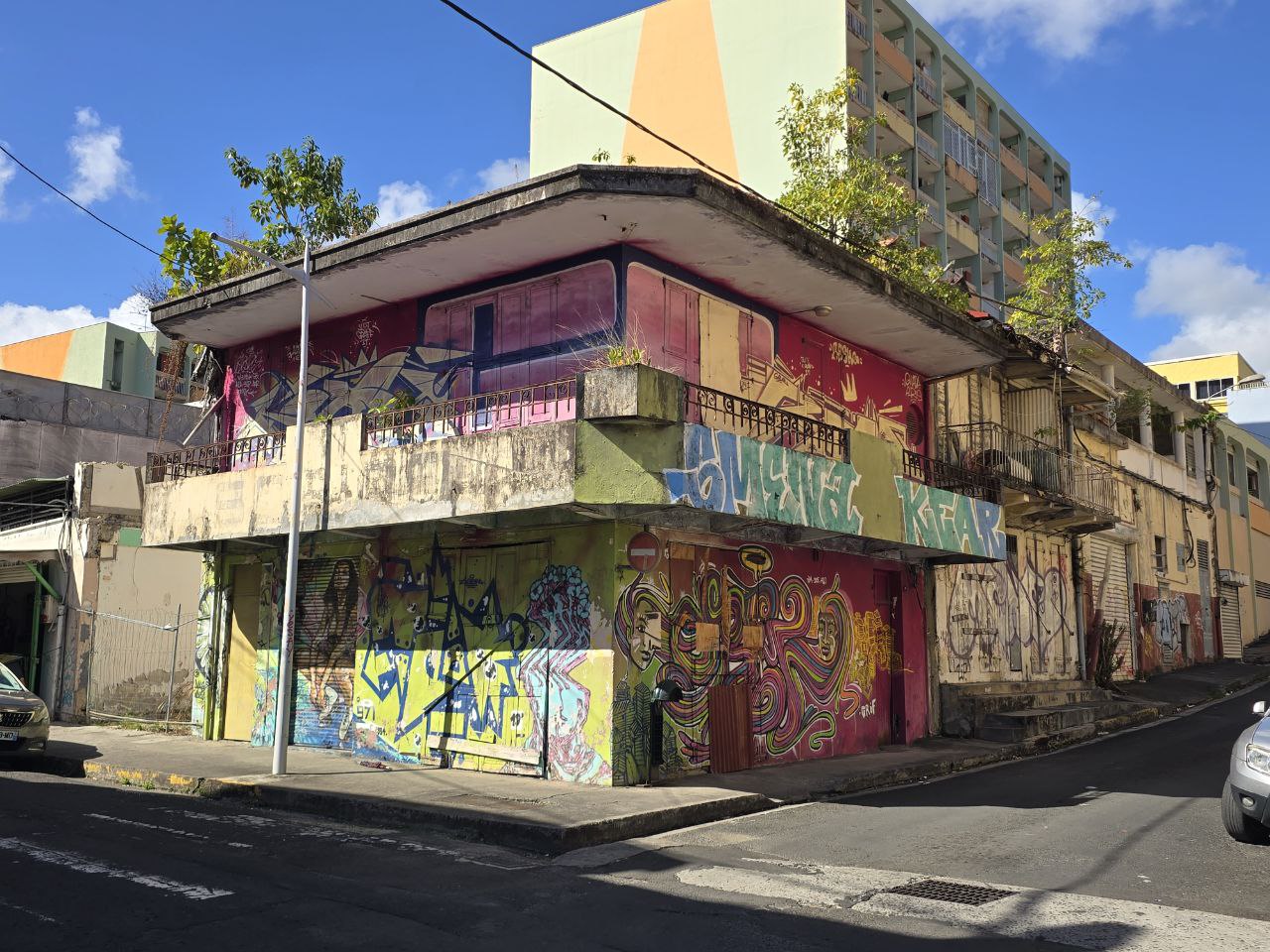
We set sail again at 7:00 AM. The wind was favorable again, and we also reached the shores of Guadeloupe by 1:00 PM. This time, we used a dinghy to disembark. I’d like to point out right away that we almost never docked. Firstly, it would have taken a lot of time, and secondly, it cost money, and there weren’t always spaces. So we either used moorings or dropped anchor. The captain said that central Guadeloupe wasn’t entirely safe, but given the many objects there, we went there anyway.
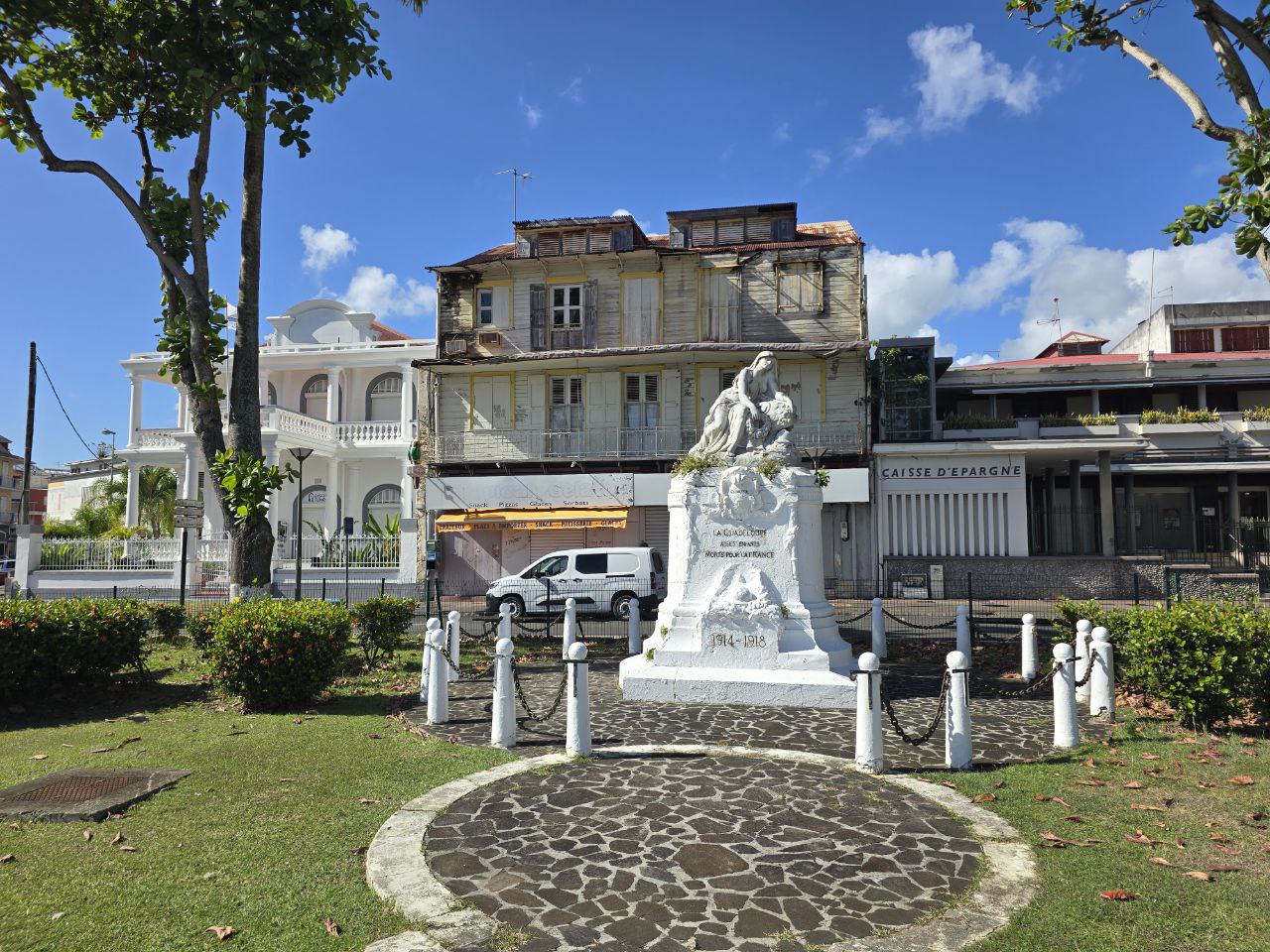
Some streets were a little scary and at the same time very colorful.
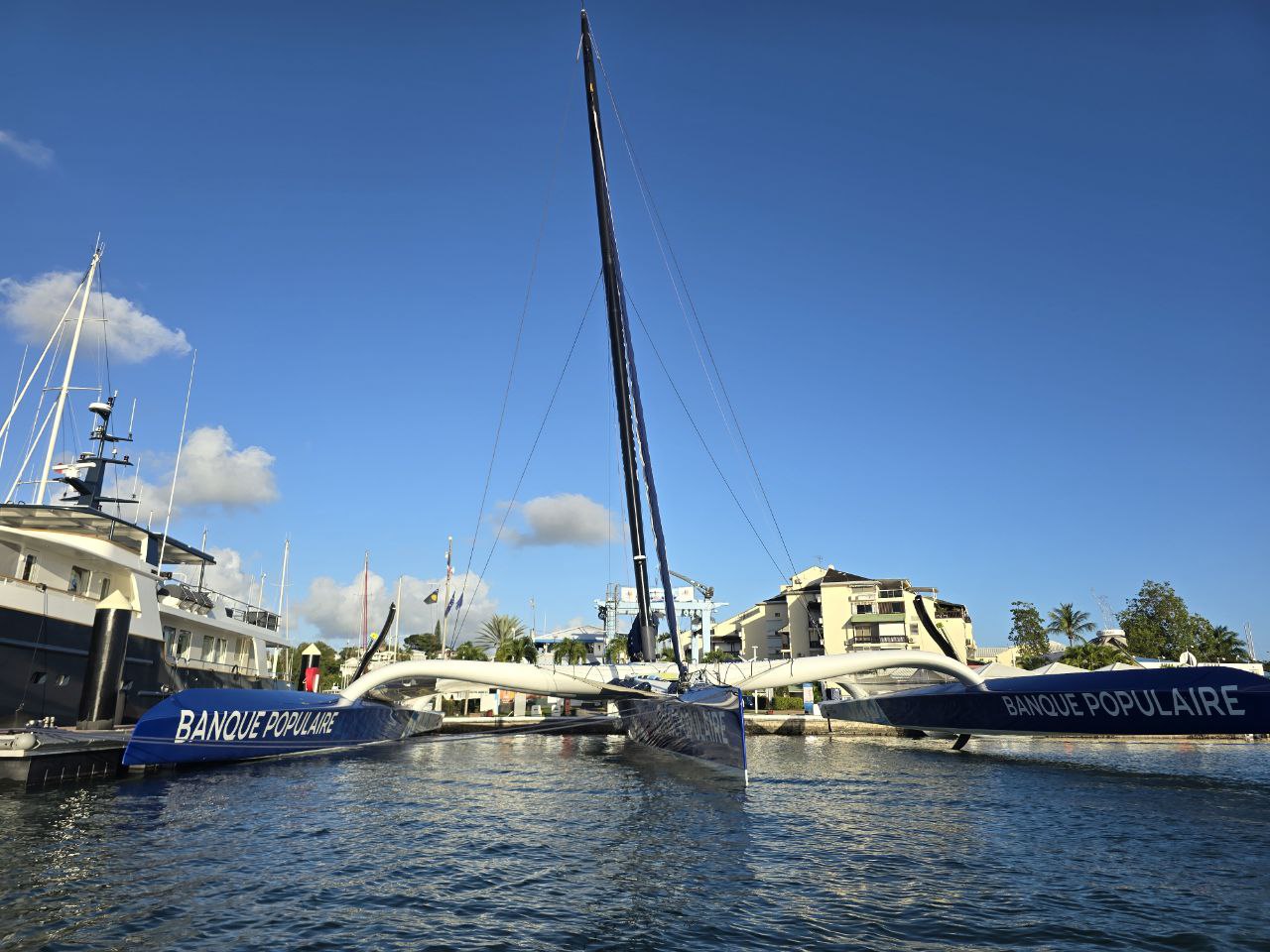
On our way back to the catamaran in the port, we saw a rare sports catamaran that can literally float in the air.
In Guadeloupe, we met the same cruise ship that had previously been in Martinique. We realized it was on our route. After stopping at Pointe-à-Pitre Bay, we had dinner, discussed plans for the next day, and went to bed.
Day 4 – February 24
Our ideal plan was to reach the eastern corner of the island in an hour, round it, and reach Antigua in 5-6 hours. That meant arriving on the island by about 2:00 PM, or 3:00 PM at the latest, to have time to explore it. On this day, we set out at 6:00 AM. And then, the first unexpected situation occurred. The wind was blowing completely against us.
And the section we were supposed to cover in an hour took us 6 hours! The waves were only one meter, but since we were sailing against the current, they had a very seasick effect. Having rounded the south-eastern coast of the island, the wind was no longer completely against our movement, but it was still against our direction, and instead of the expected 5-6 hours, we sailed to the shores of Antigua for another 10 hours.
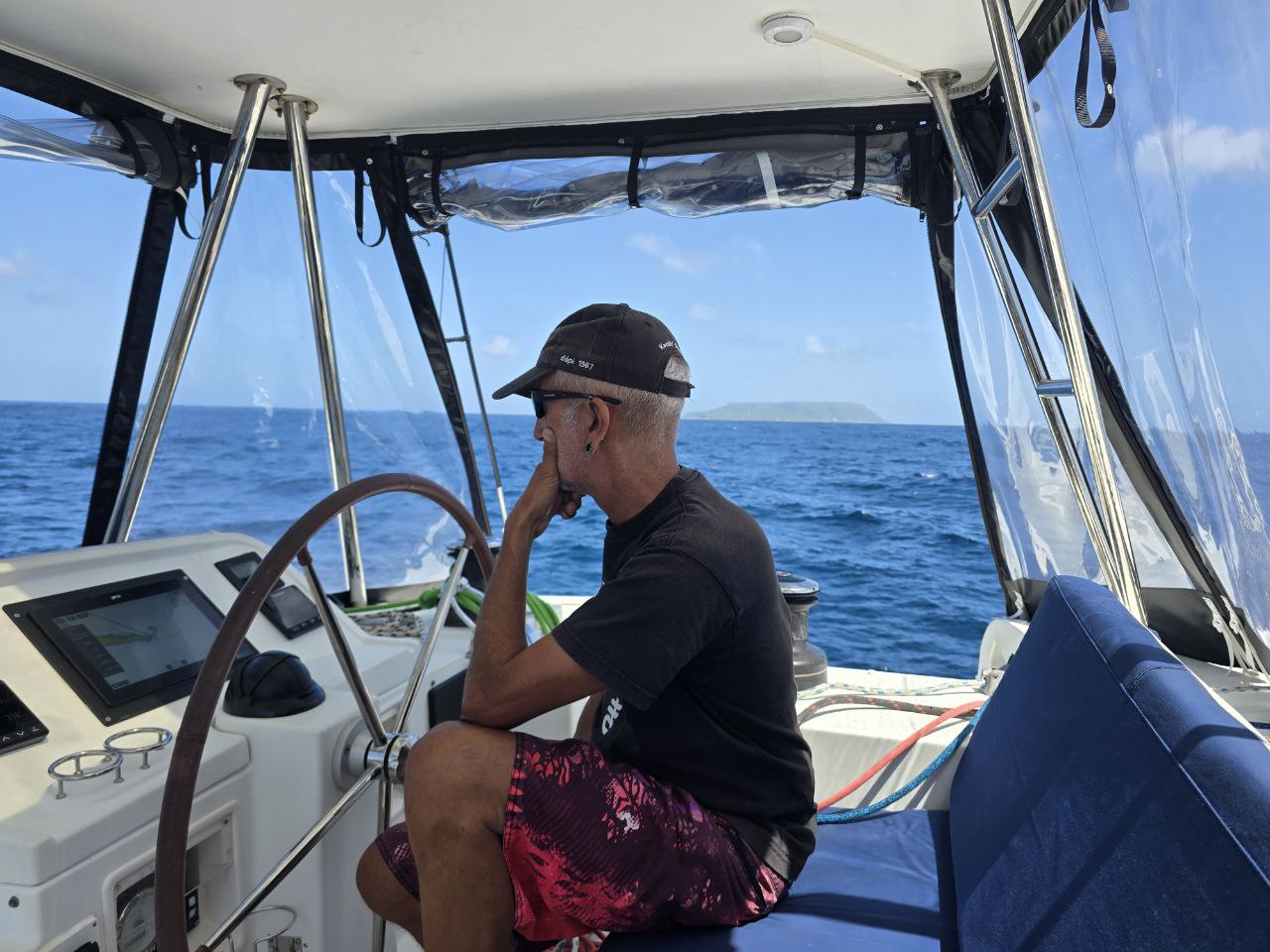
Here the captain wonders what kind of lunatics he’s dealing with. As a result, instead of the expected 6-7 hours, it took us 16 hours to reach the shores of Antigua. We were exhausted; this was our first long passage. The waves were about two meters high. That evening, we discussed plans for the next day. I realized we were starting to fall behind schedule.
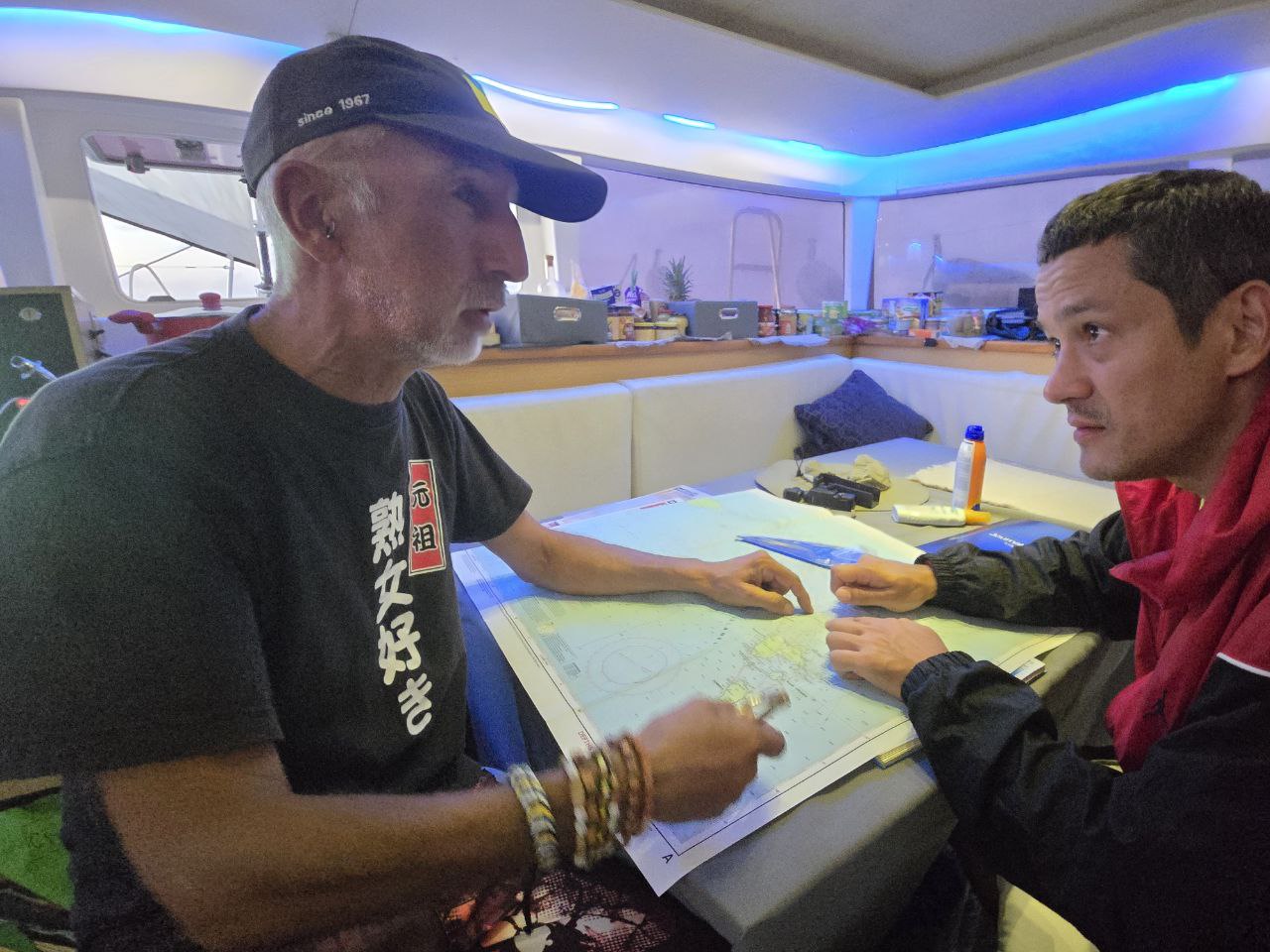
Every day we had debates with the captain. I said, “Let him give us the oars, we’ll agree to row, but we have to reach the islands we’ve planned.”
Day 5 – February 25
When we woke up in the morning, the Antigua coastline was revealed in all its glory. The sun was shining, turquoise waters lapped the nearby yachts, and the island’s shores were lush with greenery.
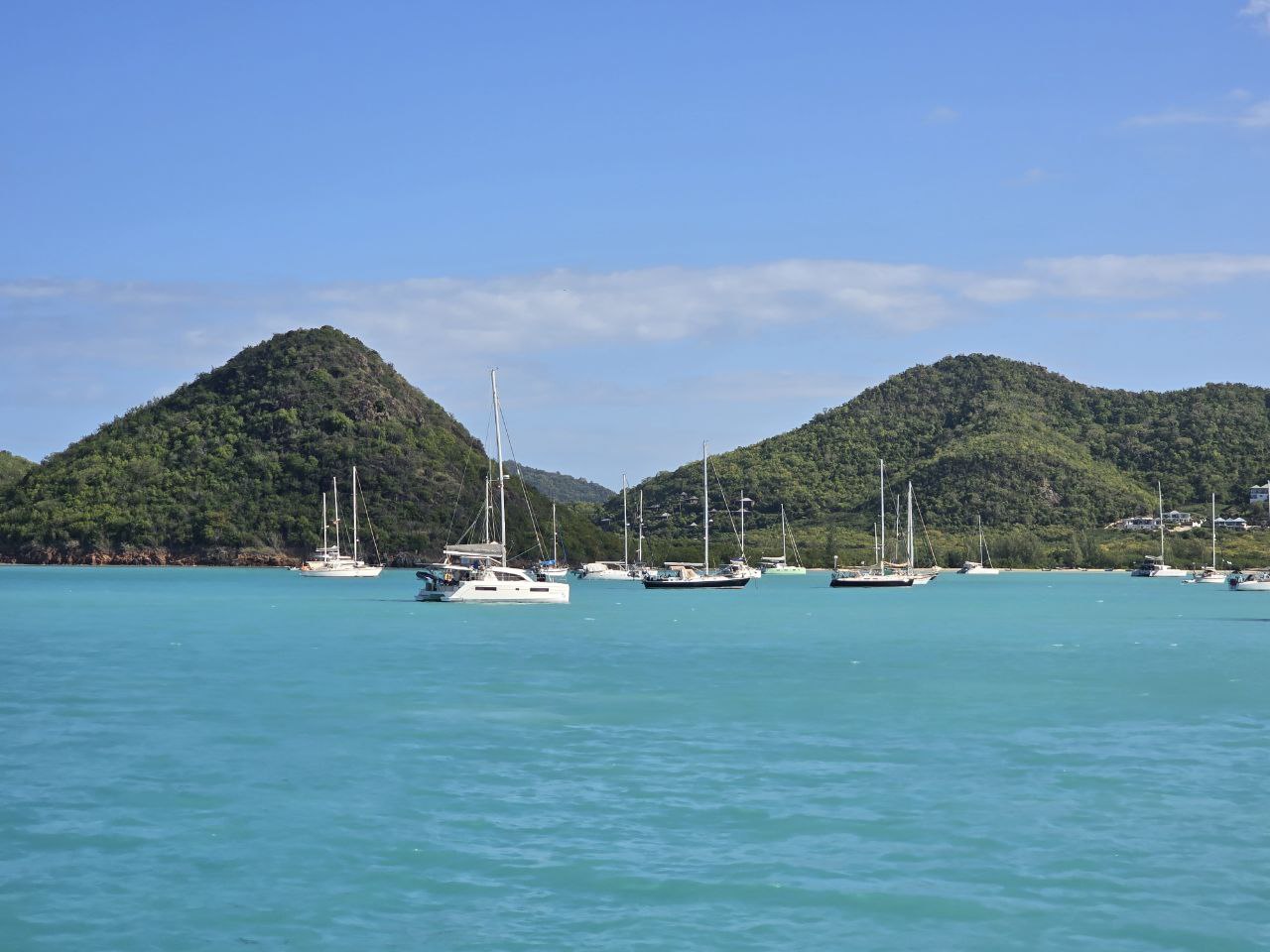
After disembarking, we headed to the port where the ferry departed for Barbuda. We really wanted to visit, but it turned out the ferry only left at 6 a.m. and returned the next day. I wanted to arrange for a motorboat to take us to Barbuda, but the locals said the waves were very high today and everyone was refusing to go. A helicopter was also an option, but considering it was very expensive, and two cruise ships had arrived in Antigua, there was only one flight left to Barbuda, and the return flight wouldn’t be possible until the following day. We sat at a bar on the beach, drank cola and beer, and headed to Fort James.
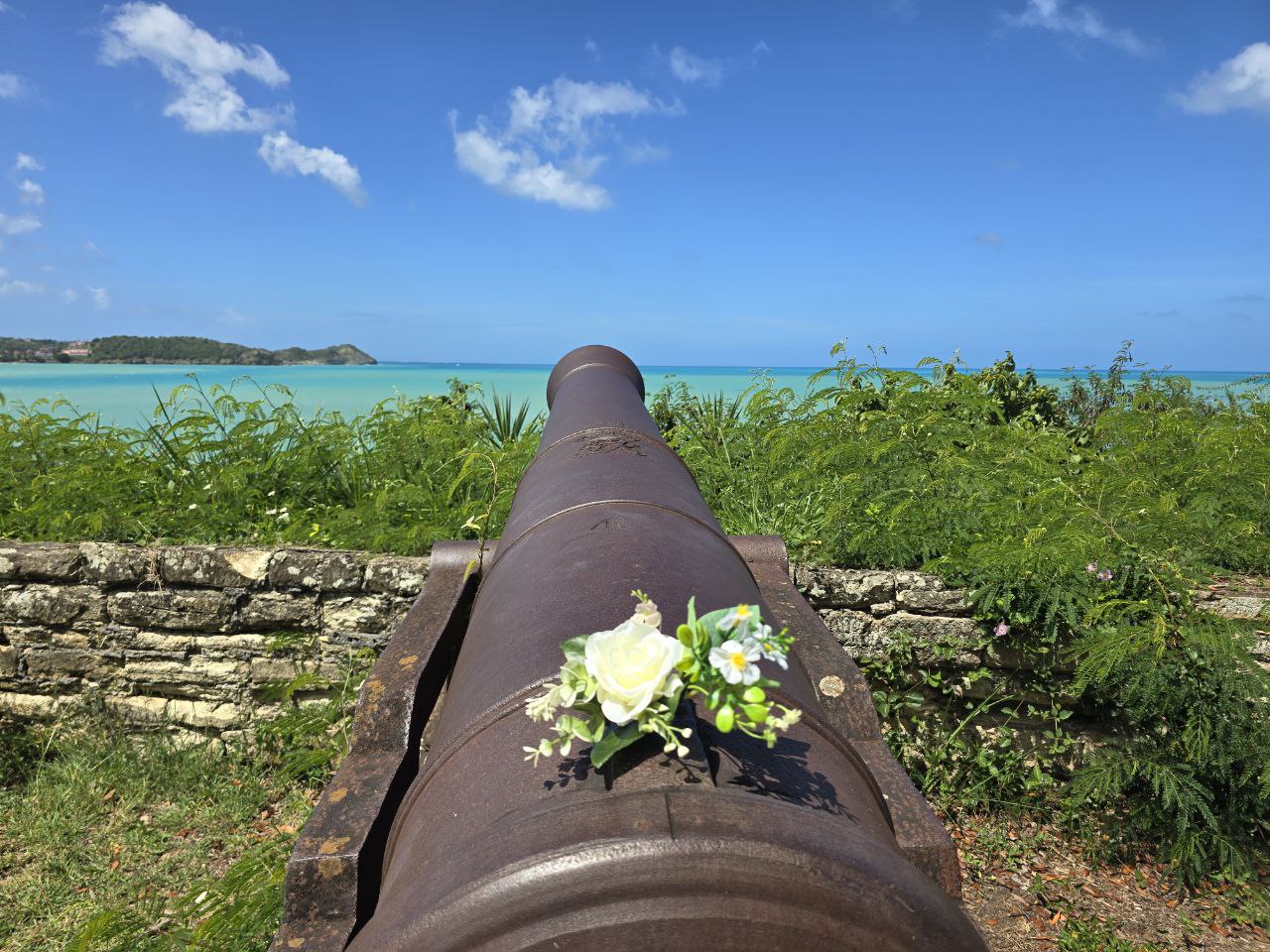
After that we walked around the city center.
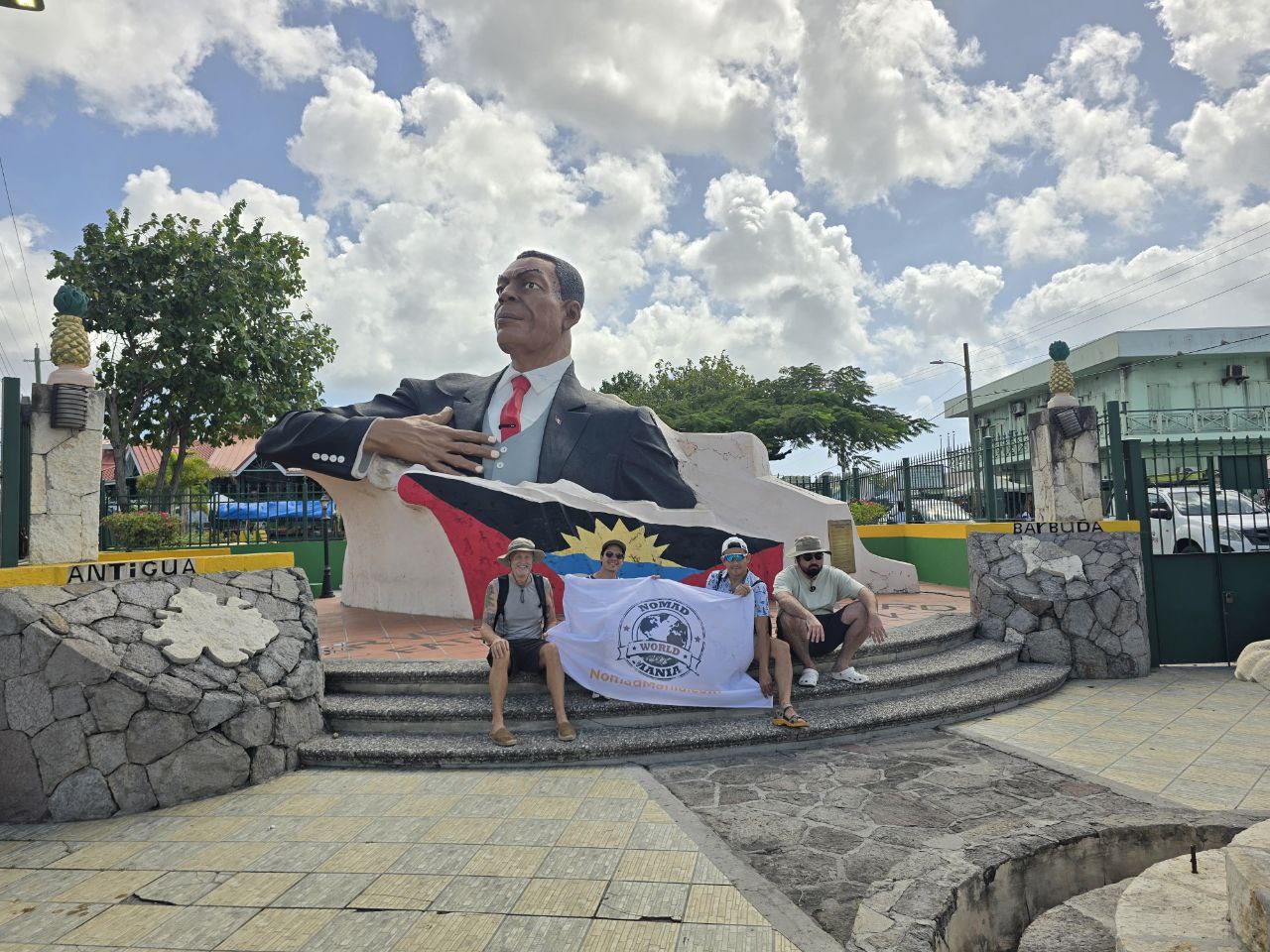
Afterwards, Sonya and Jimmy returned to the catamaran, while Andriel and I stopped at a mobile phone store and picked up a local SIM card, which would help us get service on the islands in the future. Afterwards, we went to the WHS Antigua Naval Dockyard and Related Archaeological Sites.
In the evening, everyone returned to the catamaran. Our next island was supposed to be St. Kitts. We were a day behind schedule. I decided to fly to St. Kitts. After buying everyone’s plane tickets, I told the captain that we were leaving in the morning, and he was going to St. Kitts on the catamaran and that we would meet in the evening.
Day 6 – February 26
We woke up early in the morning, sent the captain and hostess on the catamaran to St. Kitts, and then went to the airport.
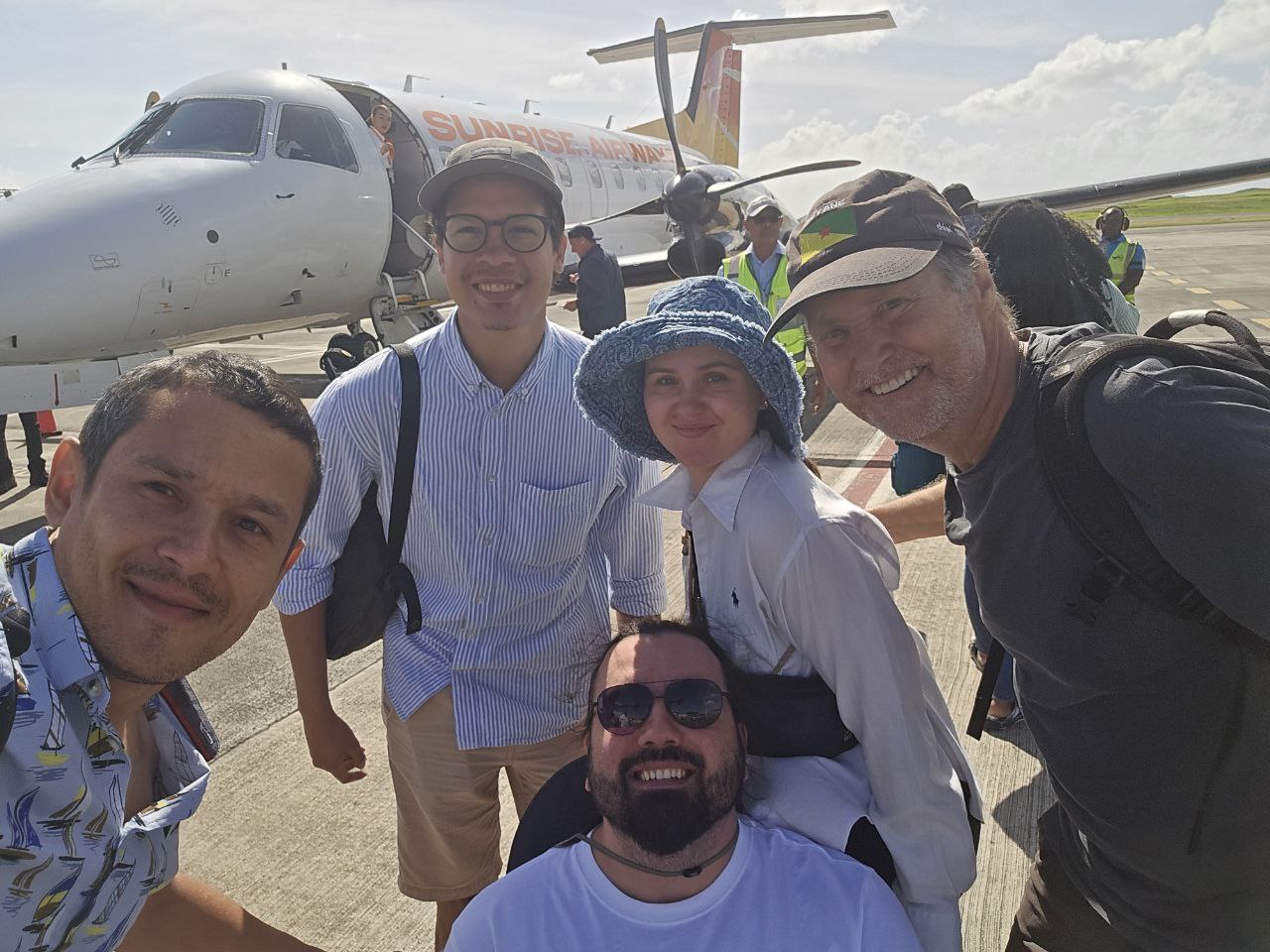
The flight was supposed to be 30 minutes, but we landed in St. Kitts after just 17 minutes. And then we encountered a problem we hadn’t previously suspected. There had been two cruise ships in Antigua the day before, and taxis were already a bit of a problem. To prevent this from happening again in St. Kitts, we tried to book a car online to rent one, but there were no available cars. We didn’t understand the reason and decided to find a car on site when we arrived on the island.
On the plane, which had only 12 people, we met another Nomadmanian – Artem Studziński
We went through immigration together and got chatting. When I asked if he was on Nomadmania, he said sure and shared his profile. After chatting for another five minutes, he headed into town. We decided to call a taxi. Surprisingly, there were no taxis at the airport, and we waited 30 minutes for the next one. 😳
We called a taxi through a woman at the airport. The driver said he could only take us to the city, and then he had another order. We agreed. Once in town, we went to one car rental agency, but there were no cars available. We went to a second, same thing. We went to a third, no cars at all. We had no idea what was going on.
Only when we got to shore did we see three cruise ships docking in St. Kitts. The locals also told us that US Secretary of State Marco Rubio and all the Caribbean leaders were arriving that very day. So, there weren’t any available rental cars, and the taxis were all booked. I apologize to Jimmy.
We were younger and could walk back and forth looking for a car, but it was harder for him. Also, given the uncertainty of our arrival date due to the weather, I couldn’t book a car much in advance because we might simply not arrive on the island on our desired date.
It was about a 40- to 1-hour walk to the city center. We were wasting time. All the taxis were booked. Then, suddenly, a local, seeing no taxis stopping near us, drove up in his car and asked what we needed. We explained that we were tired and wanted to take a tour of the island. He said he’d go to the taxi stand and send someone to us.
A couple of minutes later, a taxi driver did indeed pull up, and this guy was behind us in the car. I don’t know his name, but I’m very grateful to him for helping us out of such a difficult situation. The taxi driver said he also had another order in three hours. So he agreed to give us a tour of half the island.
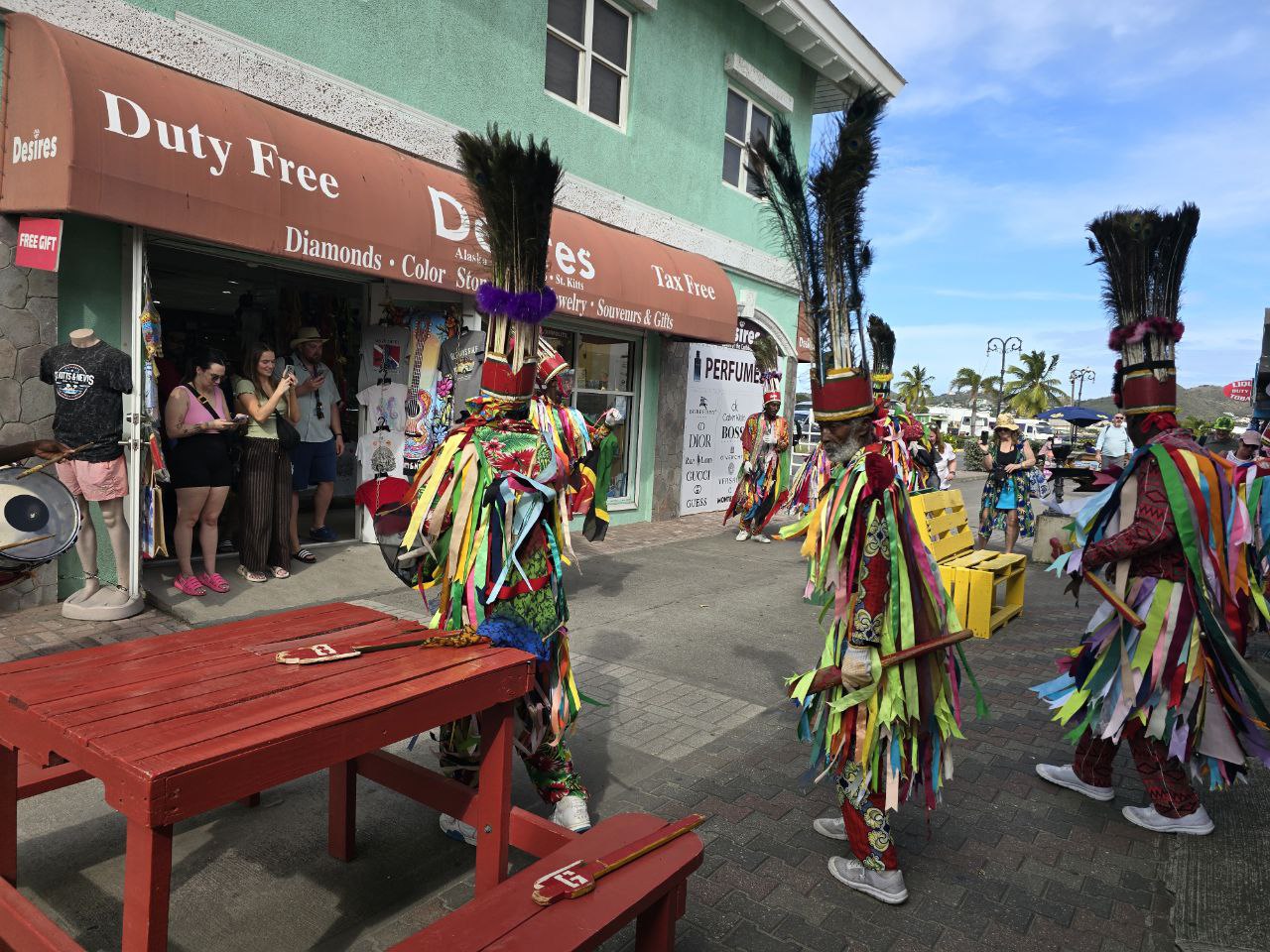
After driving around the island, we got off in the center, walked along the central streets, and saw some local dances.
Our catamaran arrived around 4 PM. Andriel and I were walking along the shore when he spotted our catamaran, which was parked nearby. Thinking we’d be able to board the catamaran anytime soon, we headed to the bay. But while customization and migration had previously taken an hour and a half, on St. Kitts the entire process took three and a half hours.
After completing all the procedures, around 7 PM, we all went to the bar, had a drink, chatted, and boarded the catamaran at 8 PM. We had dinner and discussed the next day’s plan. Little did we know what challenges we’d face the following day.
Day 7 – February 27
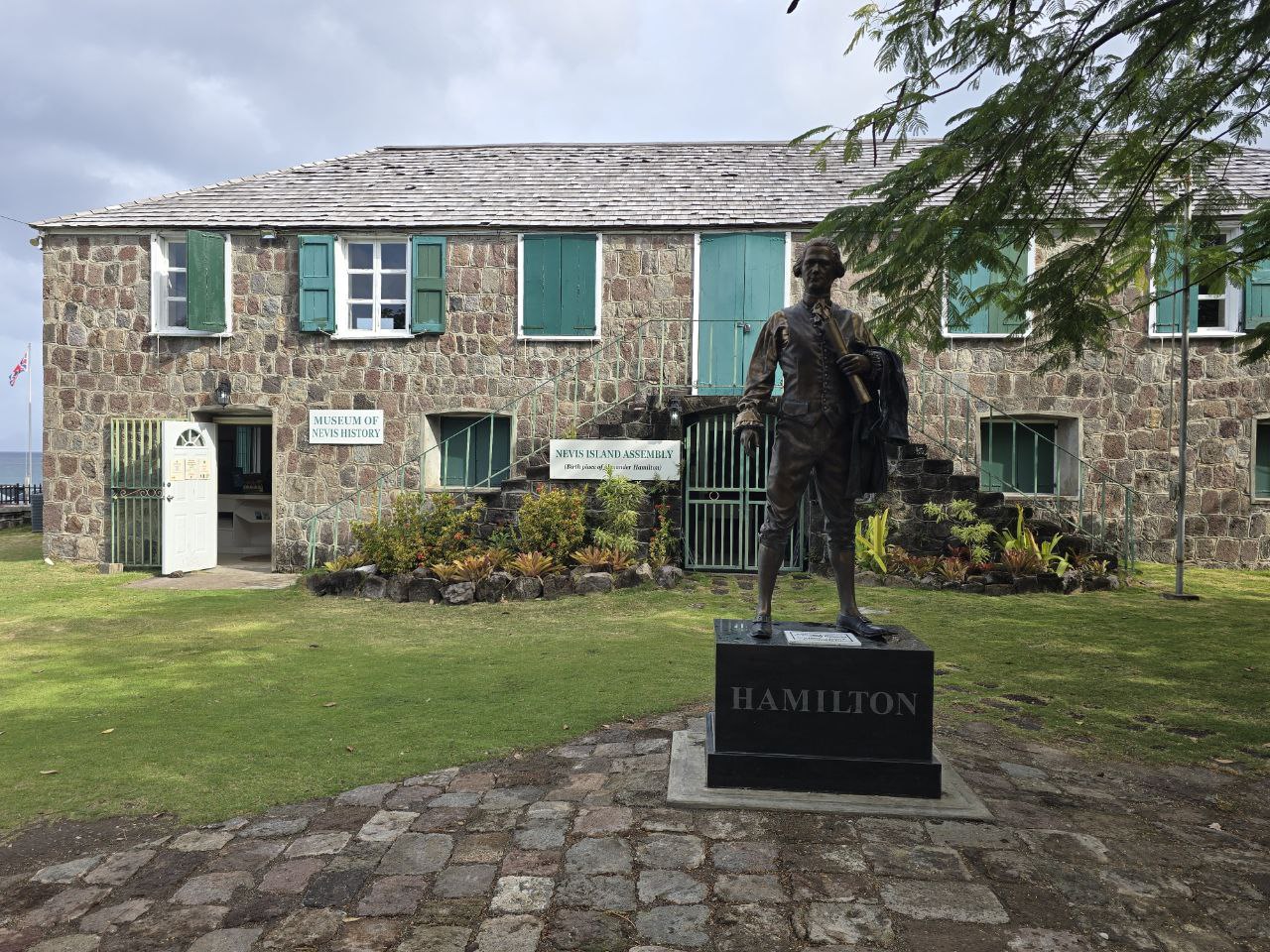
We set out at 7 AM in the morning, and before 9 AM we had already landed on the island of Nevis. We walked around the island and visited the Alexander Hamilton Museum.
Around 11 or 12 PM, we boarded the catamaran and began our journey to Montserrat. Our journey was expected to take about five hours. The wind was against us, but we used two engines and kept moving in the right direction. We expected to reach the island by 5 PM.
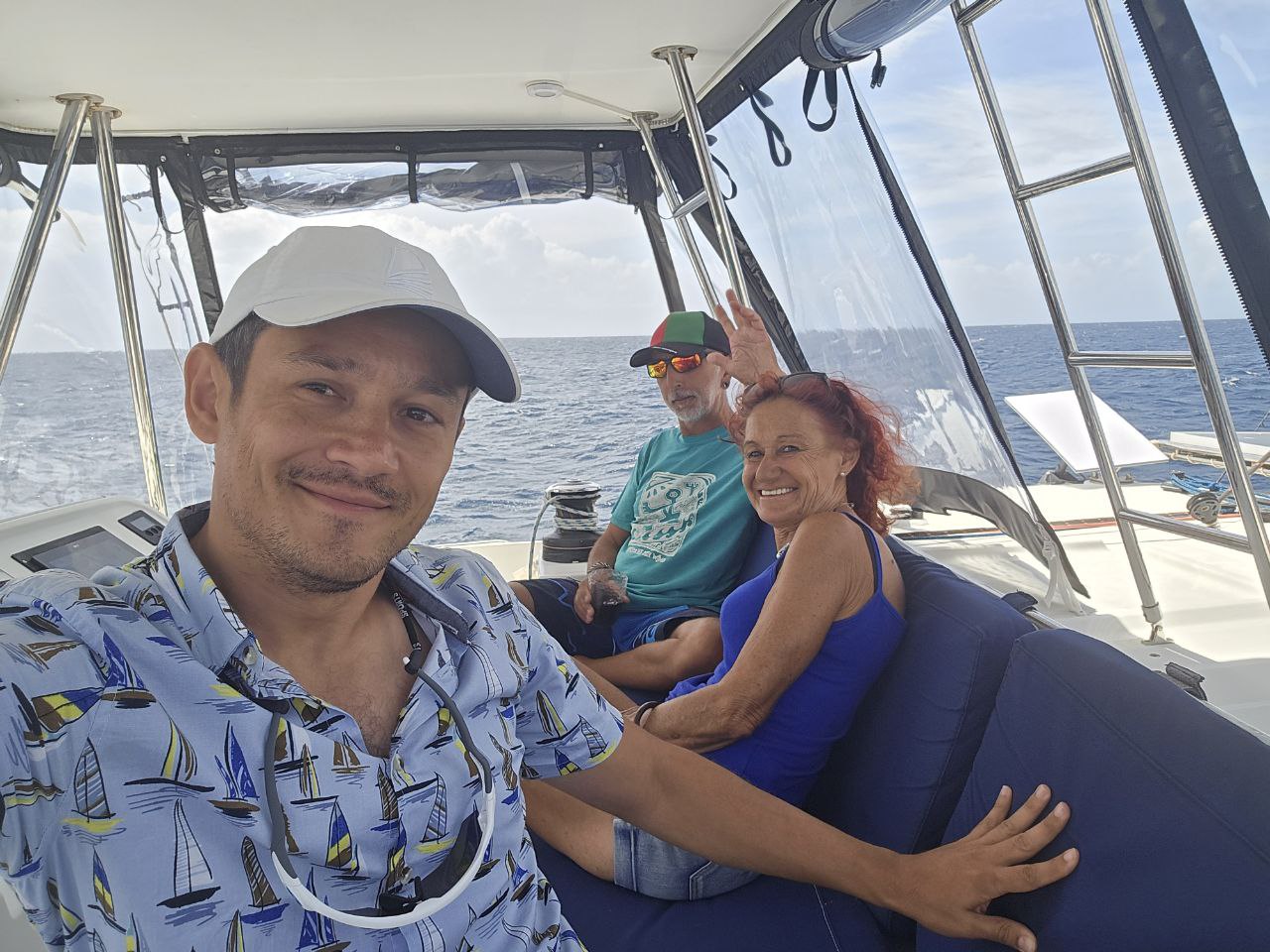
Halfway through the journey, we reached Redonda Island, which is located between Nevis and Montserrat but belongs to Antigua and Barbuda and is a DARE site near Nomadmania. We entered the island’s waters. Andriel said that unless we landed there, we wouldn’t be able to count it as a DARE site, but the captain said it was completely uninhabited and had reefs, so landing there was prohibited.
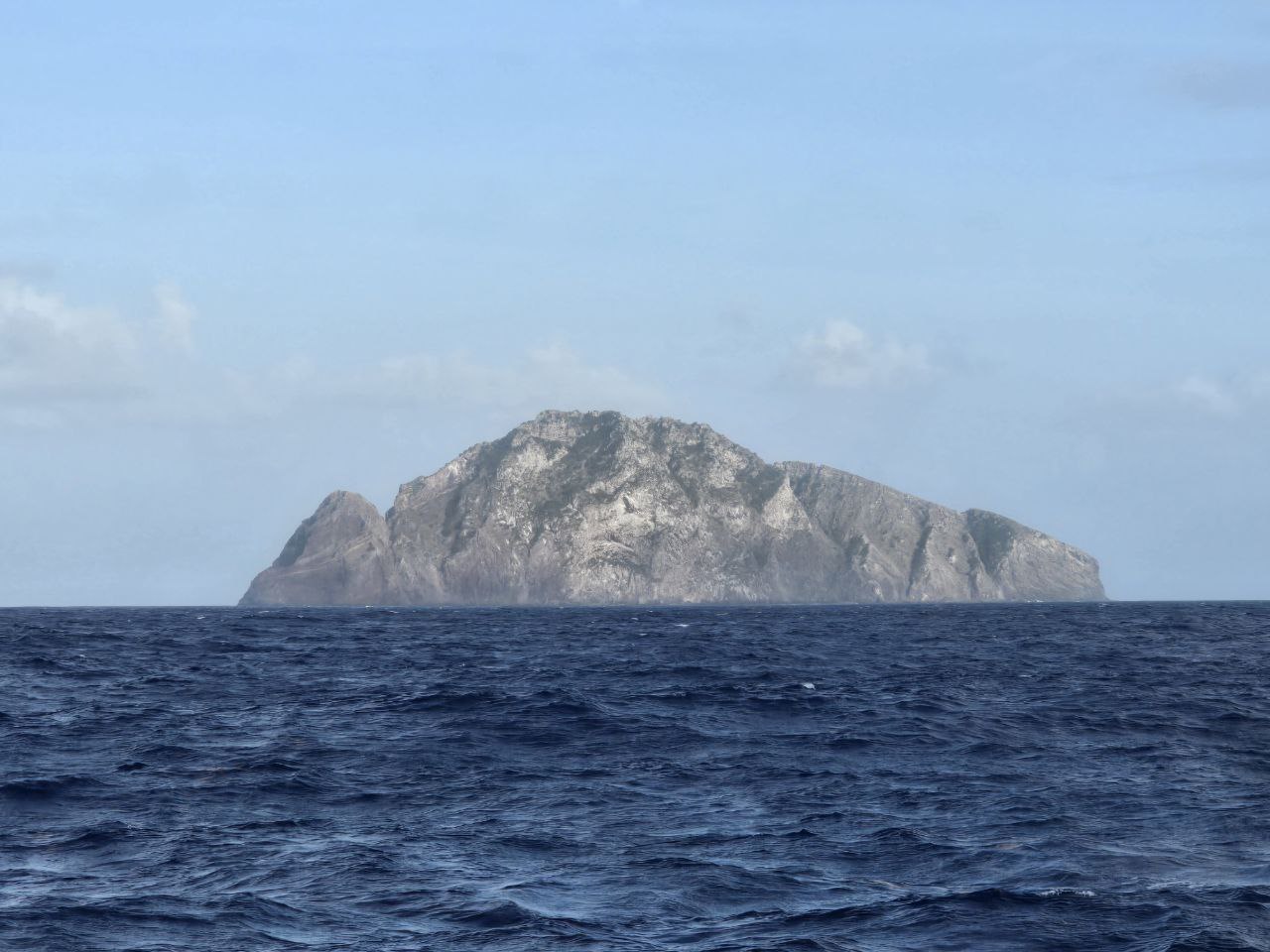
We were a couple of hours from Montserrat. I was sitting with the captain in the wheelhouse, joking around, when suddenly he said, “This is big shit.” One of our two engines had stalled. We tried to start it, but it only ran for a minute and then died again. The problem was that the wind was from the northwest, we were heading south, and we were a catamaran, not a yacht, which could operate on one engine. The catamaran couldn’t maintain its direction with one engine, and we started drifting out to sea.
The captain quickly ran to the engine, opened the compartment, cleaned the filter, I stood by the engine, and the captain began trying to start the engine. A couple of times the engine seemed to start, but it would stall again after a couple of minutes. The captain tried in vain to push the ignition button, trying to start the engine, and during one of these attempts, the starter burned out. Now we definitely couldn’t start the second engine. Our catamaran continued to drift out to sea, and the navigator flashed red, indicating a deviation from course.
The captain tried to turn the catamaran around to head in a different direction, perpendicular to the current, and then align the ship back toward the island so we’d drift toward the desired location. He could repeat this maneuver several times if necessary. We circled around Redonda Island for about an hour, but the wind and current were so strong that even a small turn would immediately spin the catamaran around and carry us out to sea.
The captain said that if we didn’t find a solution, he’d be forced to turn the catamaran around to return to Nevis, heading downwind. Then we could be back in Nevis in two to three hours. But that would jeopardize our entire itinerary. Because once we returned to Nevis, they wouldn’t be able to fix us, and we’d have to return to St. Kitts, go through immigration again, find a repairman, get the boat repaired, and then set off again in our intended direction. In the best-case scenario, we would have lost five days, maybe even a week. I was panicking. I could have immediately forgotten about some of the islands on my itinerary.
Ultimately, the captain found a solution: he lowered the staysail to an angle that would catch the headwind. Briefly, the single engine slowly propelled us forward, the wind and current blew us in the opposite direction. Upon reaching a certain drift angle, the staysail allowed us to catch the wind, we were swung in the direction we needed, the catamaran would briefly level out in the desired direction, and then the process would repeat: the catamaran would drift, the staysail would tuck back onto the desired course, and so on.
Thus, we covered the section of the route we should have covered in a couple of hours in about seven hours, and only approached Montserrat Island by 10 p.m. Completely exhausted, we went to bed.
Day 8 – February 28
Waking early in the morning, we saw the shores of Montserrat Island by daylight. Jimmy really wanted to get to this island. Jimmy had proven himself a true sea dog all this time. Even in the worst seas, he could stay in the cabin, and the seas are always worse in the cabin than on deck. He didn’t take motion sickness pills. He was a strong guy. And so, we were moored 200 meters from the shore, 7:30 in the morning. We had already arranged with the guide to give us a tour.
The captain launched the dinghy and… our dinghy’s engine broke down. It wouldn’t start. We were so close to the shore and couldn’t disembark. After two powerful volcanic eruptions near Montserrat, the former capital was buried under ash and lava.
They had moved to the north of the island, but there was still no dock built there for catamarans and yachts. We couldn’t even moor at the dock with one working engine. Besides, it was Saturday, and everyone was resting. I saw a boat with fishermen sailing 50 meters away from us and started waving and shouting at them.
The fishermen, for which we were very grateful, approached our catamaran. I explained the situation, and they towed us to the dock. They also helped fix our dinghy’s engine.
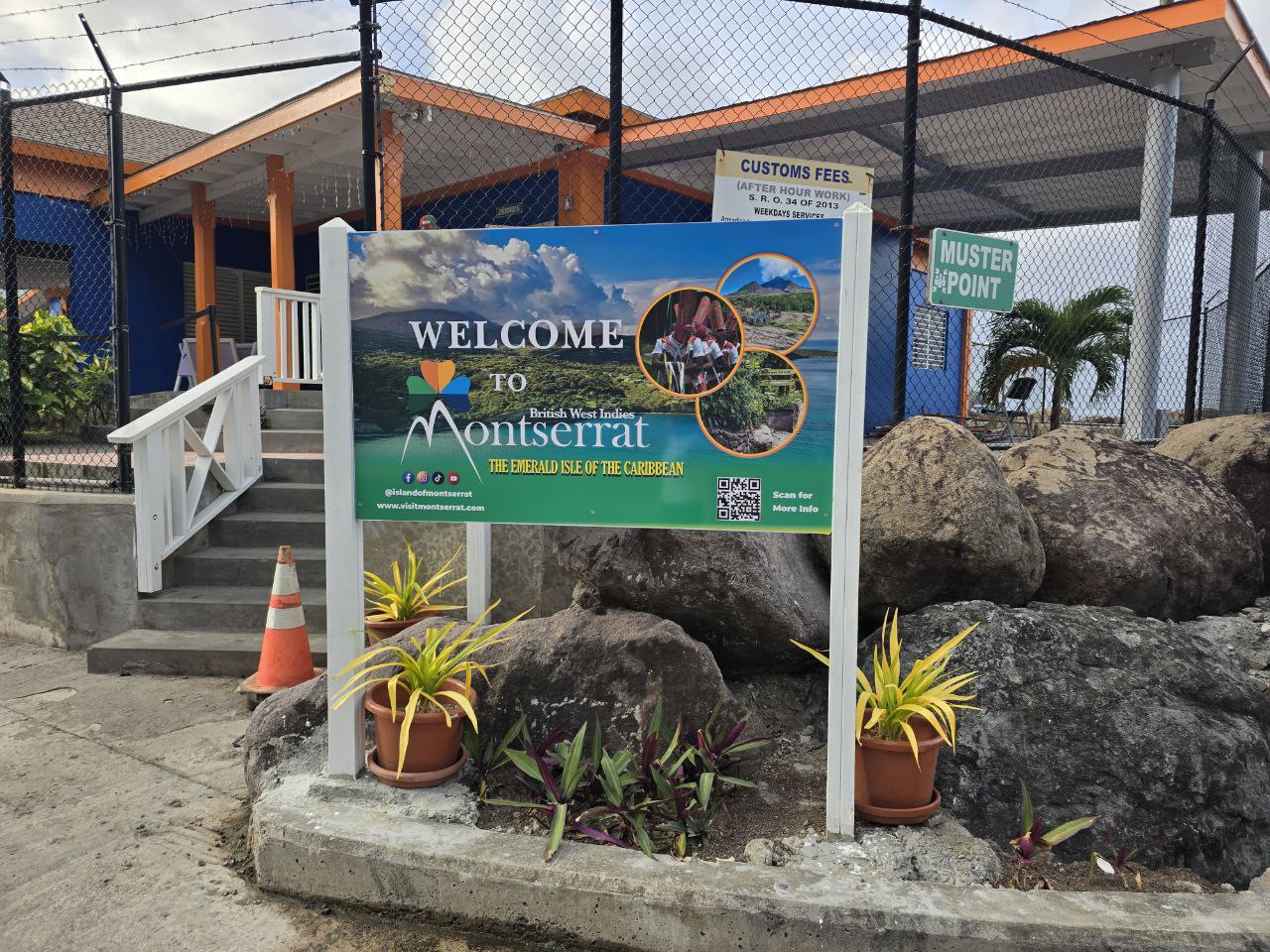
We cleared passport control. A guide arrived, the one we’d arranged the day before while still on the catamaran. And then we set off on a tour of the island. We drove through the part of the island where people had moved after the eruptions. We hired an authorized guide and, having received permission from the authorities, entered the closed city of Plymouth. After the devastating eruption of the Soufrière Hills volcano in 1995-1997, the capital, Plymouth, was abandoned, turning into a ghost town. The city was covered in sand and ash.
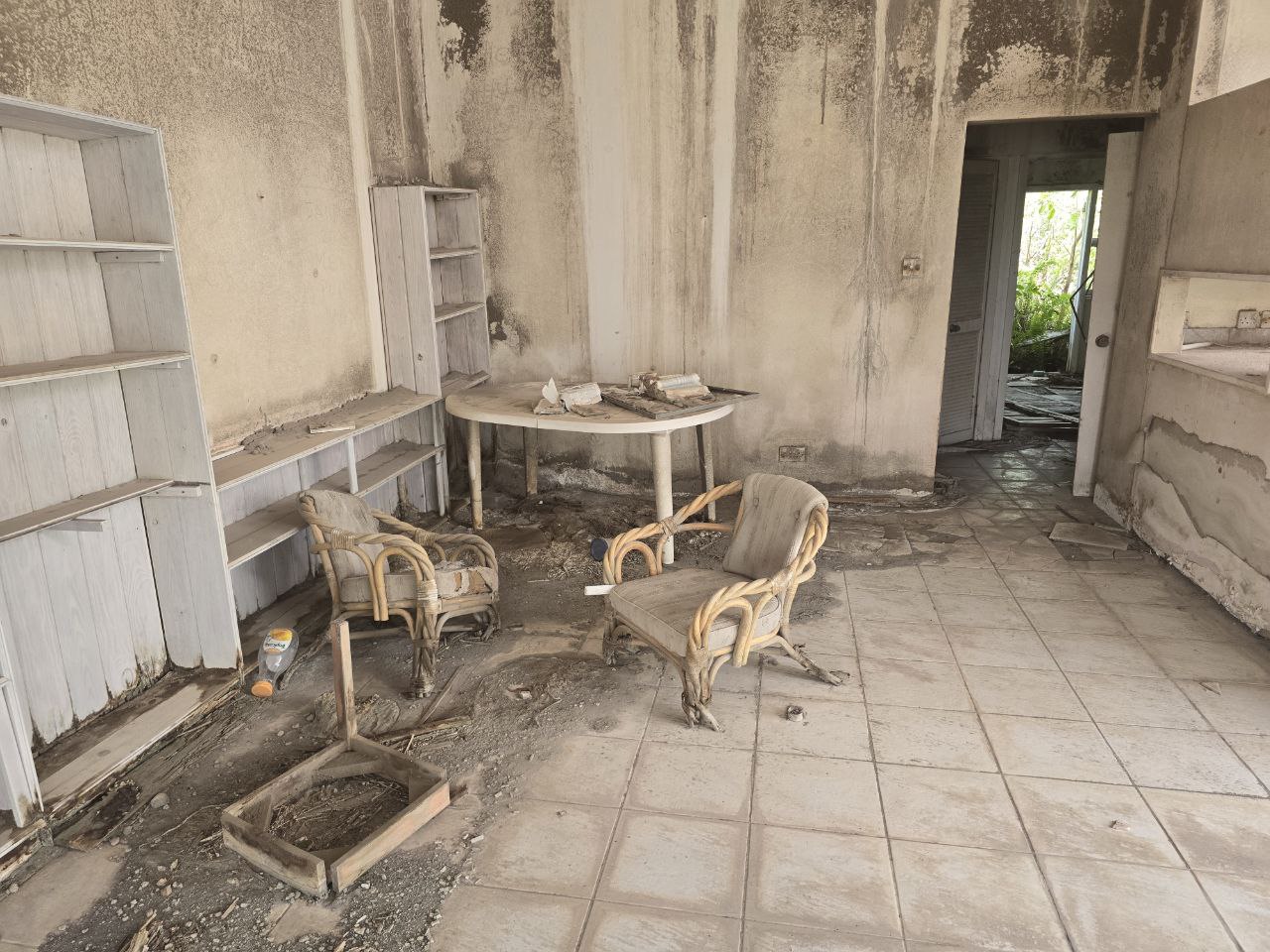
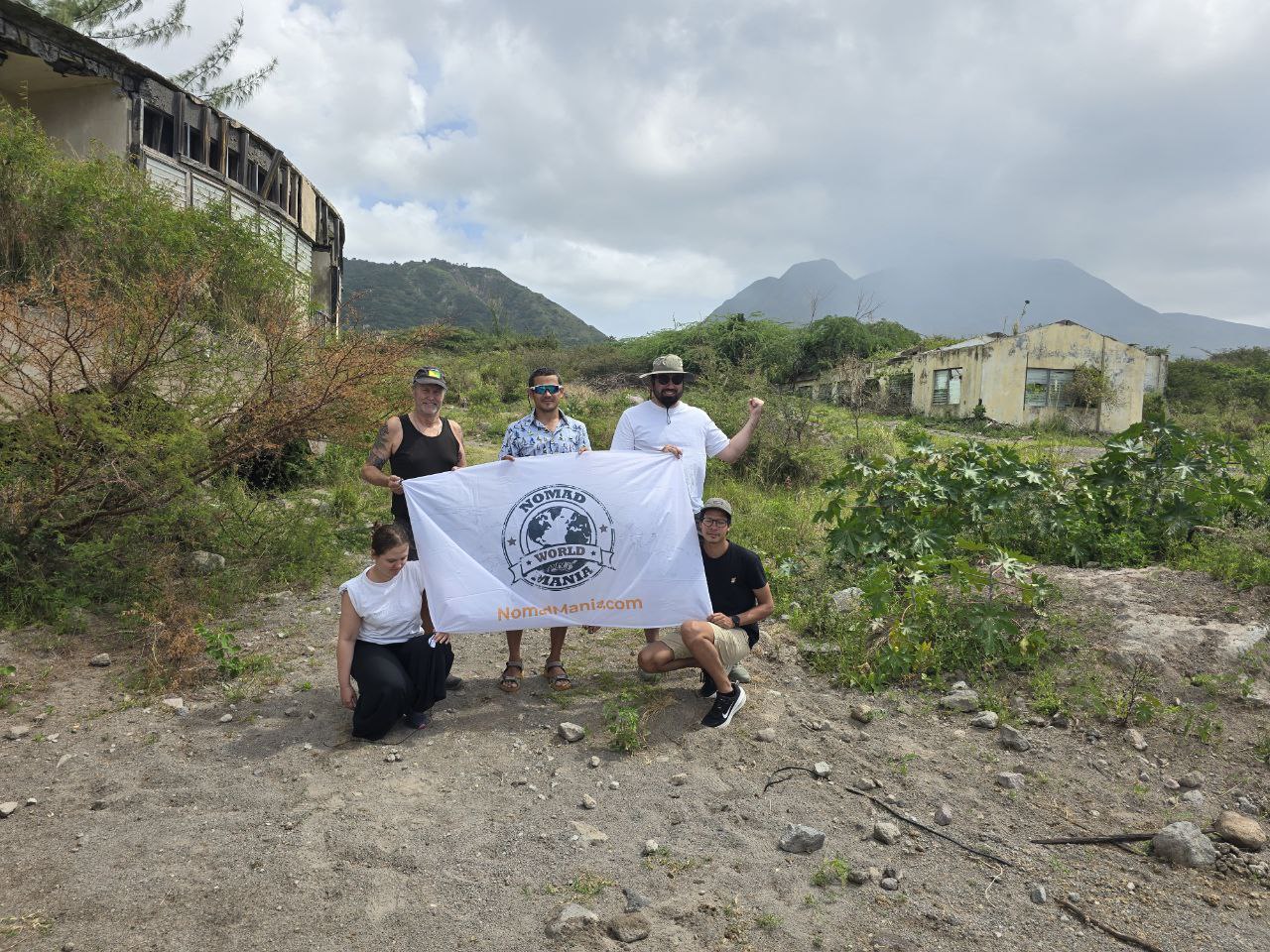
Some houses weren’t completely covered in sand and are still accessible. Our traditional photo with the Nomadmania flag.
Back in port, we boarded the catamaran, a difficult journey ahead of us. We had to reach Martinique for repairs and continue on to the southern part of our route. We began heading toward Guadeloupe. The wind direction was the same as the day before. We used the same propulsion technique. We lowered the sail, which constantly pulled us in the right direction, and the single working engine continued to move us toward the next island. According to our plan, we were supposed to be at Guadeloupe by 10 PM.
And that day, our deck lights went out. The captain hung a headlamp from a hatch on the deck ceiling, and using it as deck lighting, we ate dinner. We were supposed to anchor at the northern end of the island, on the western side. But due to strong winds and the impossibility of entering the marina because only one engine was working, the captain continued south.
The same problem arose with other possible mooring points. Due to the strong winds and the inoperability of one engine, we couldn’t approach the mooring line for mooring. The captain continued south. We went to bed at midnight. But it wasn’t until 5:00 AM on March 1st that we heard the engine finally shut down.
Day 9 – March 1st
Waking up at 10:00 AM, we realized we were almost as far south as the island of Guadeloupe, in the Basse-Terre marina. We saw a yellow flag. A yellow flag means that we plan to moor only in transit and will not go ashore. This allows us to save time and avoid the custom + immigration procedure, but in this case, we cannot remain near the island for more than 24 hours. We had breakfast and went to get some more sleep.
Around 1:00 PM, we set off for Dominica. The wind didn’t change direction, so we continued on the same course. The sail kept us on course, and one engine propelled our boat to the next island.
That day, the power in our cabins went out. This unit supplied water to the showers. Now we couldn’t shower or charge our phones in the cabins. Only the navigational power and the cockpit power worked. We charged our phones there. By 10:00 PM, we reached the shores of Dominica, raised the yellow flag, ate dinner again by flashlight, and went to bed.
Day 10 – March 2
After breakfast, we began our journey to Martinique. We spent the entire day at sea.
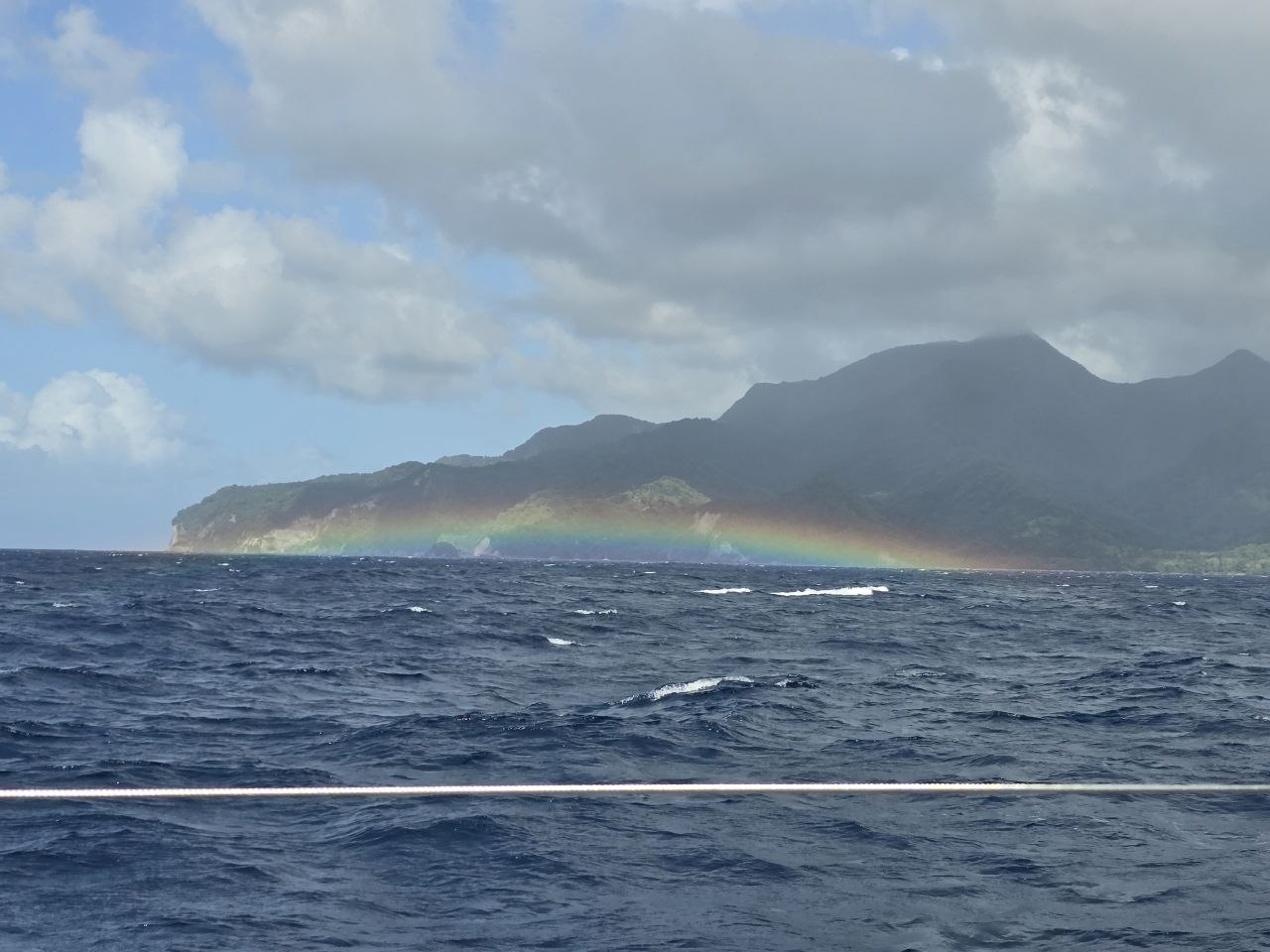
By evening, we reached the shores of Martinique. We reached the Saint-Pierre marina and dropped anchor. We were scheduled to make repairs the following day and begin our journey to the southern Caribbean islands the following day.
Day 11 – March 3
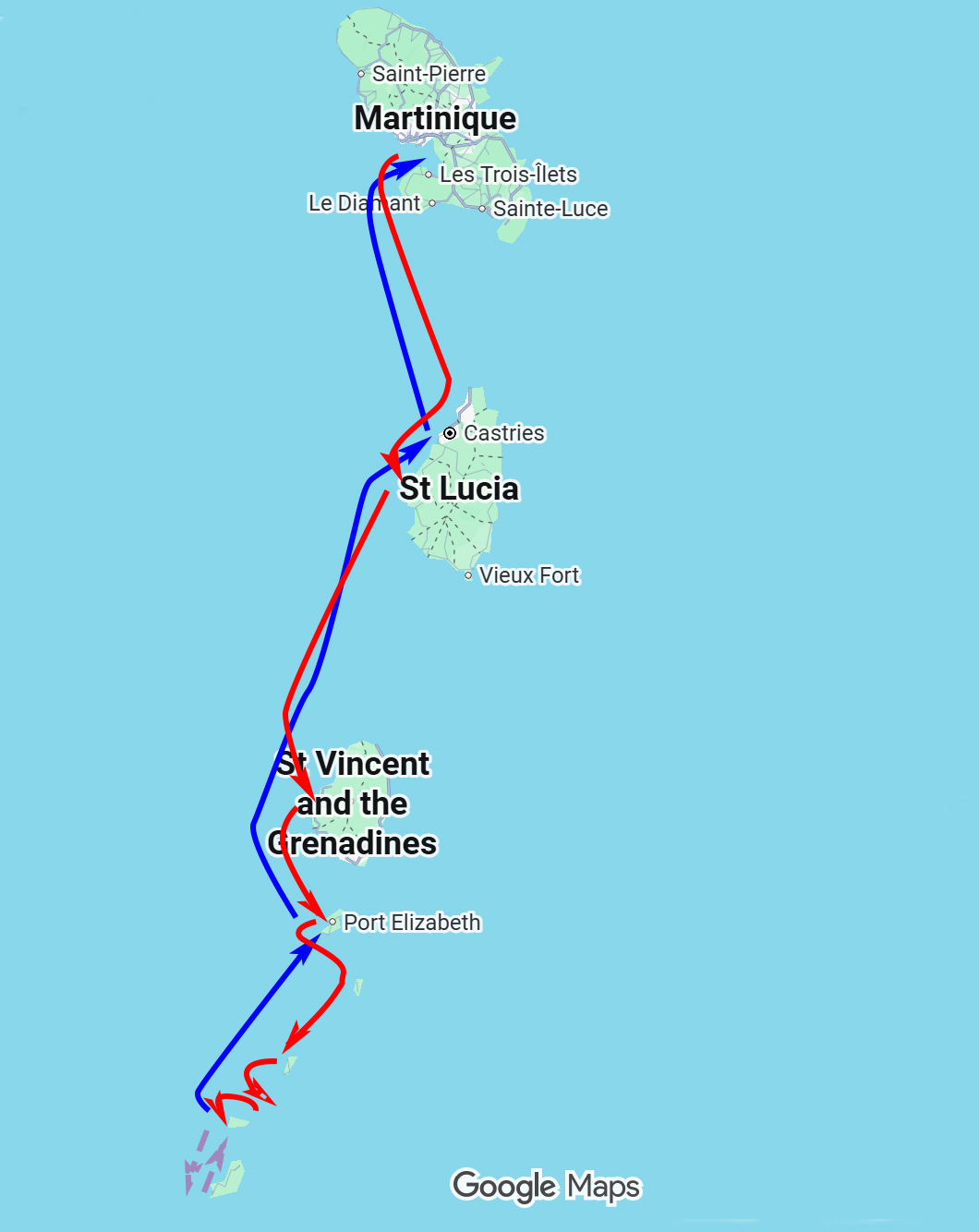
Because the wind hadn’t changed direction even though we were already off the coast of Martinique, we couldn’t sail along the coast to dock at Le Marin. We were being blown out to sea again. So we sailed two hours toward Saint Lucia from Martinique to be able to take the correct route afterward. Then we turned around and sailed back toward Martinique at the correct angle. We repeated this procedure three times, and our journey, instead of five hours, took nine. But even after we were almost to Le Marin, we couldn’t enter the port.
There were too many yachts there, the wind was strong, and we still only had one engine running, so there was a high risk of collision. So we dropped anchor as close to the port of Le Marin as possible, hoisted the dinghies to shore, and finally, after four days at sea, we set foot on dry land. Disembarking at 6 PM, we went to a nearby bar to relax.
Afterward, the remaining passengers returned to the catamaran, and I went to the capital, Fort-de-France, where I booked a hotel for the night so I could explore the city the next day. I didn’t have time to sightsee on the first day because I had to pick up the catamaran and its passengers. But since the catamaran had to spend the entire next day in dock, undergoing numerous inspections and repairs, I decided to spend the day in the capital.
Day 12 – March 4
I walked around Fort-de-France, the capital of Martinique.
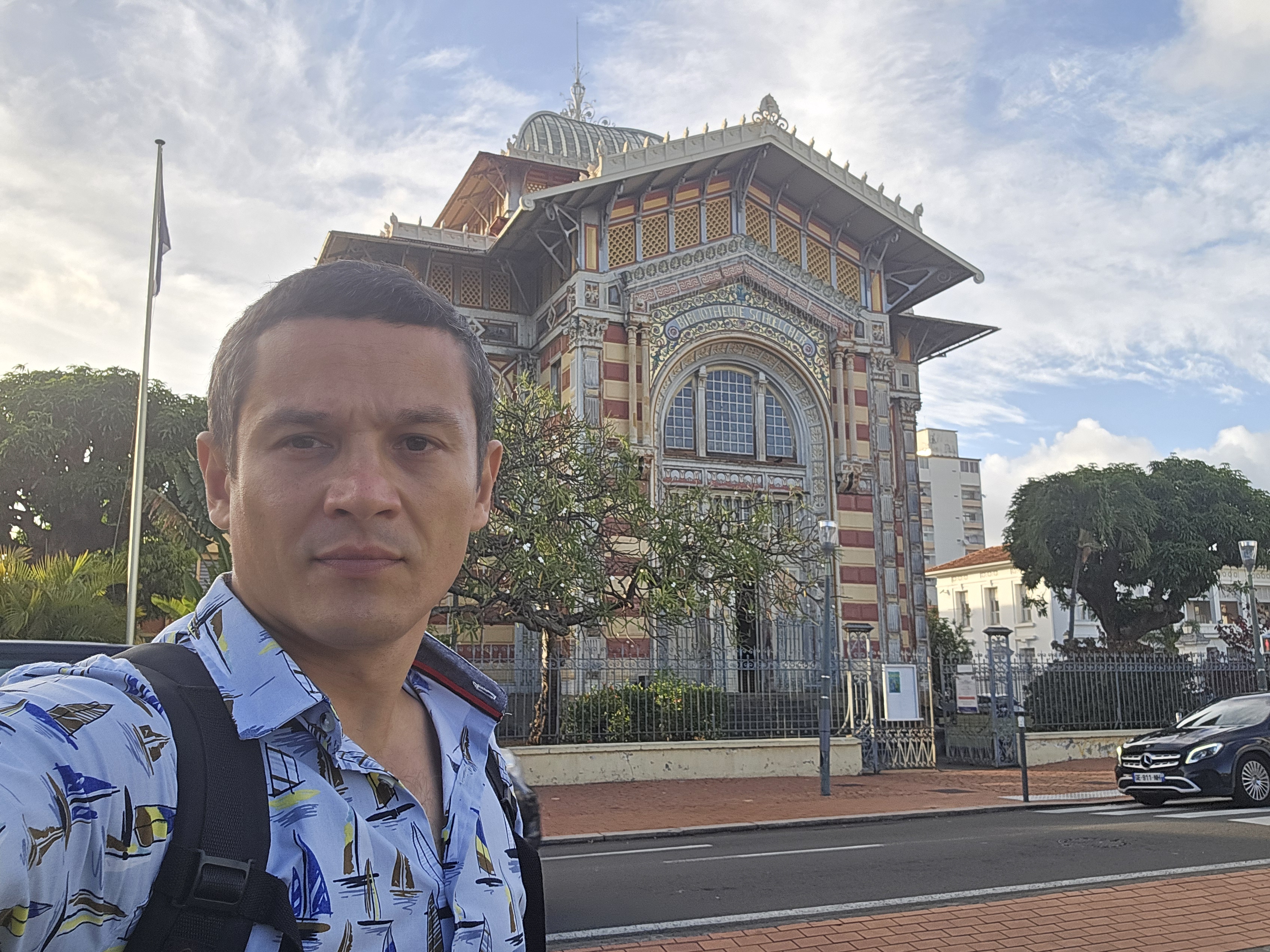
The guys from the catamaran called and said everything was fixed and tomorrow we could begin our journey to the shores of the islands of the southern Caribbean archipelago.
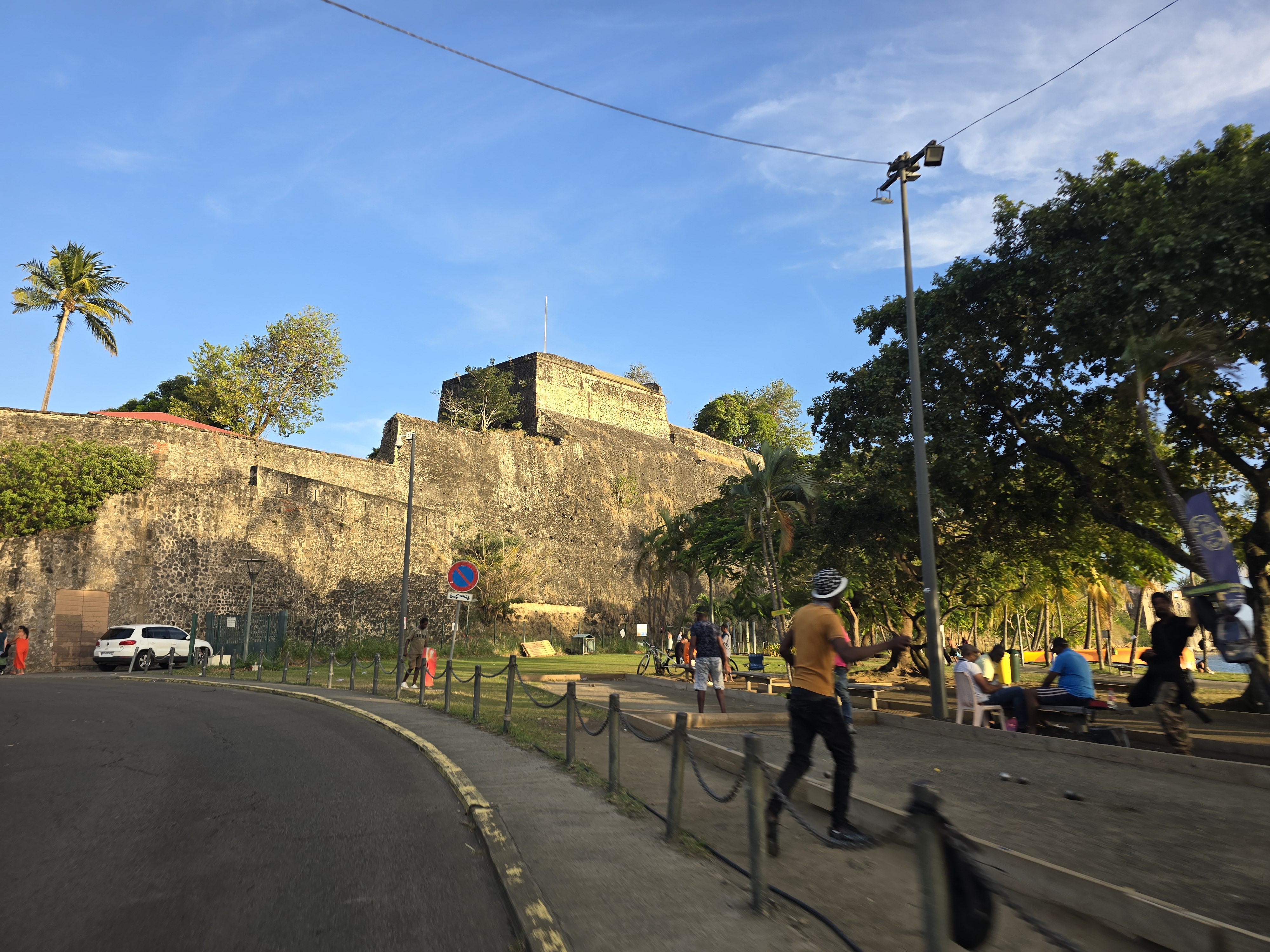
Day 13 – March 5
We set off at 9 a.m. This time, the wind was blowing in our favor. We opened both sails and headed toward St. Lucia. We accelerated to almost 12 knots. At one point, I saw some killer whales playing and following our catamaran for about 10 minutes.
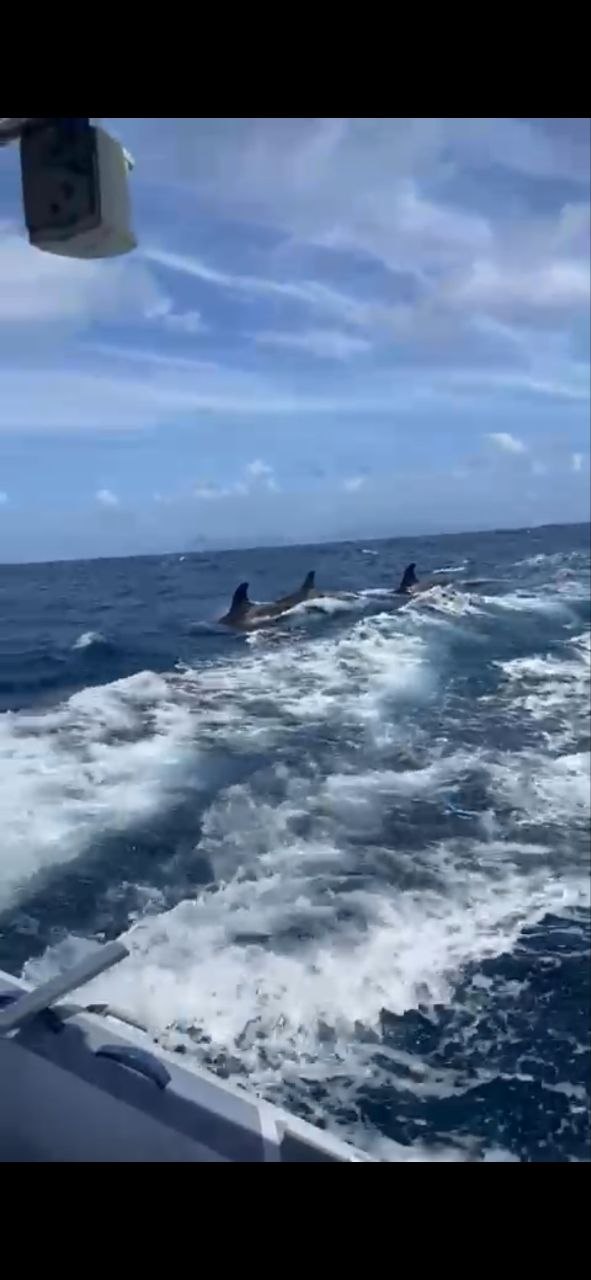
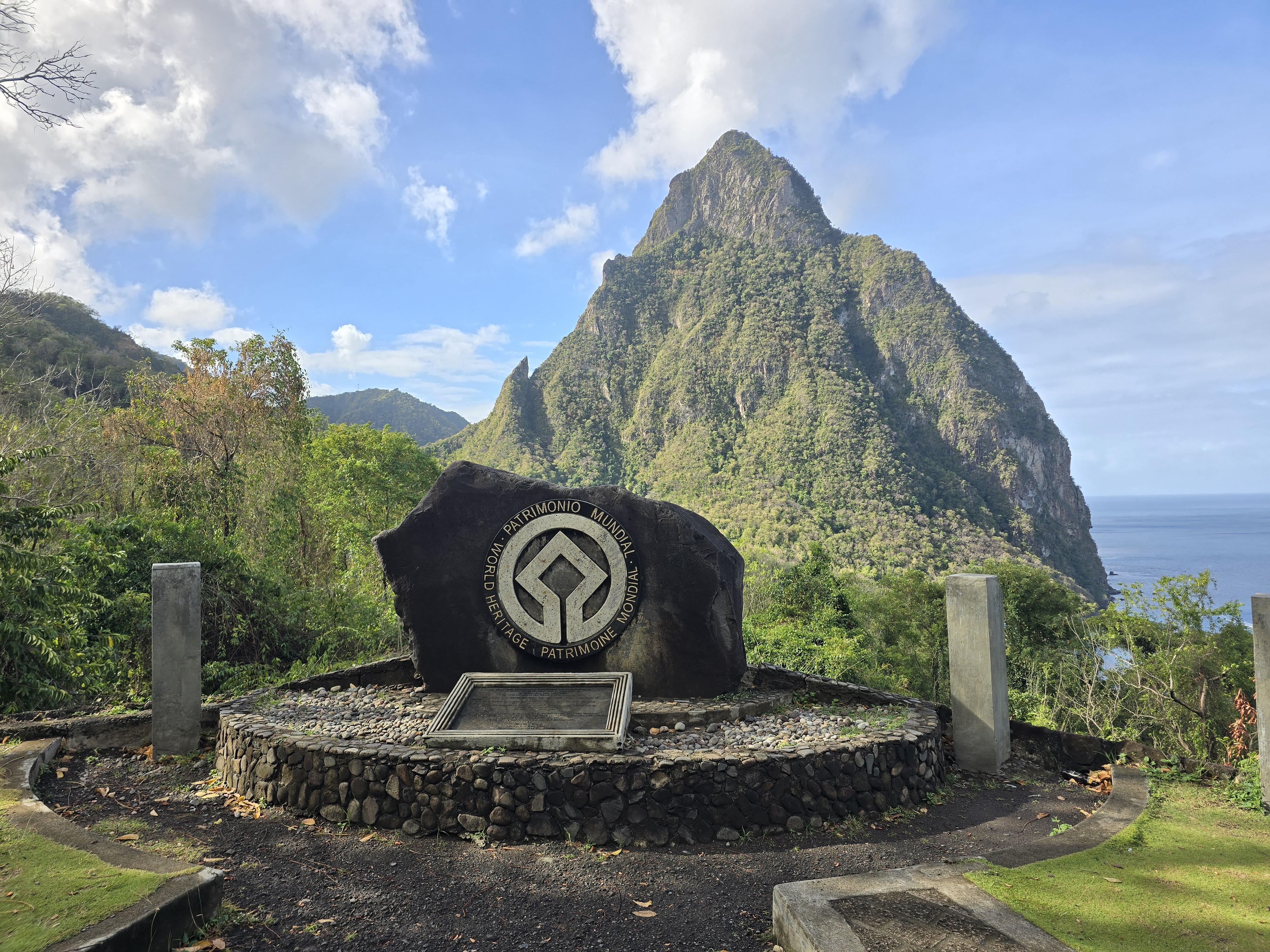
Around one o’clock in the afternoon we reached the shores of St. Lucia, first we passed by the capital Castries and called at the port of Soufriere, where the two famous Pitons mountains depicted on the flag of St. Lucia are located.
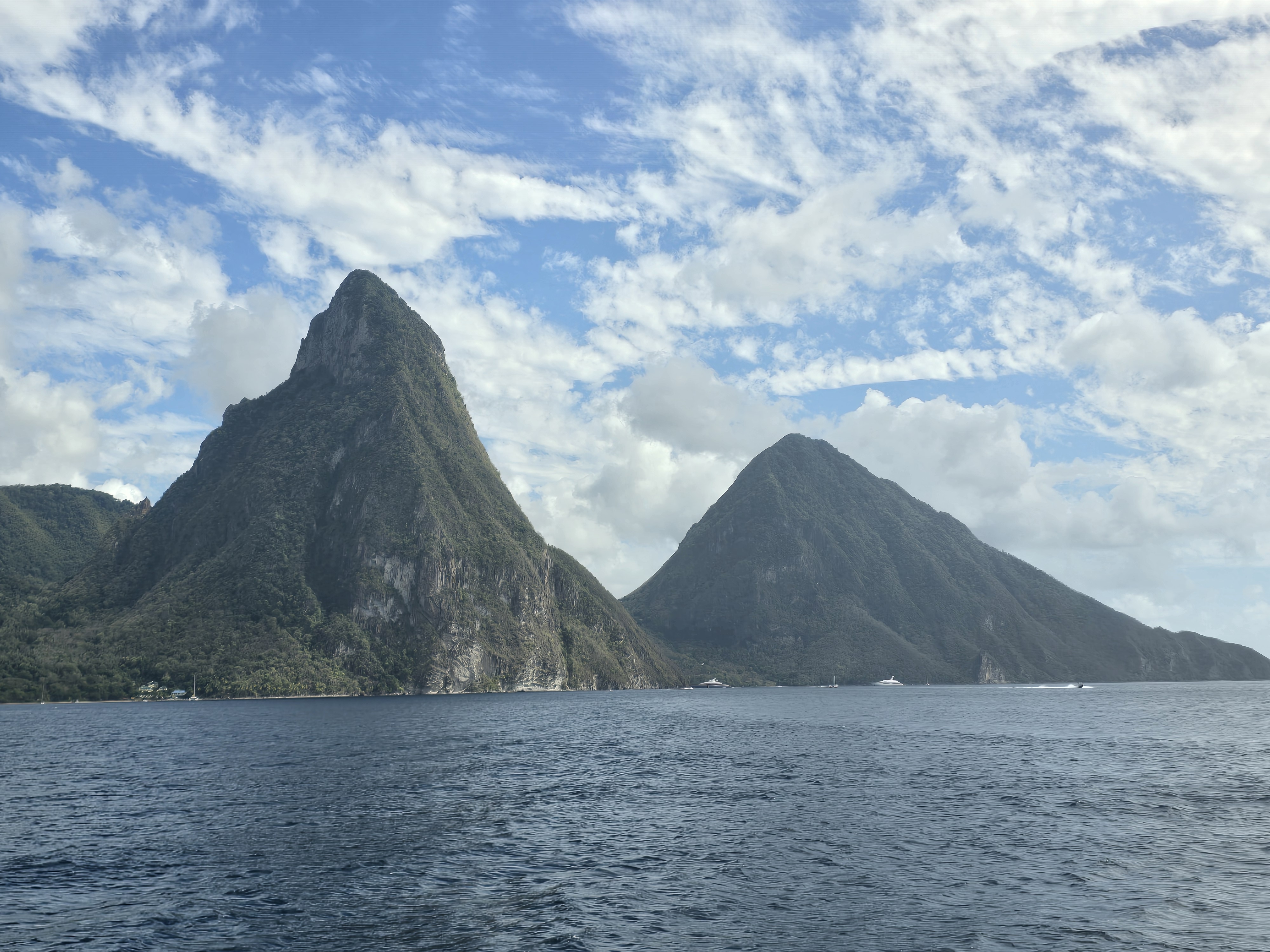
Incidentally, the captain said that for the first time in his 19 years on the island, he’d made the crossing between Martinique and St. Lucia so quickly, in just three and a half hours. We swam in the bay while the captain drove around and completed the custom and migration process. In the evening, Andriel and I decided to go ashore and stroll around the town before sunset.
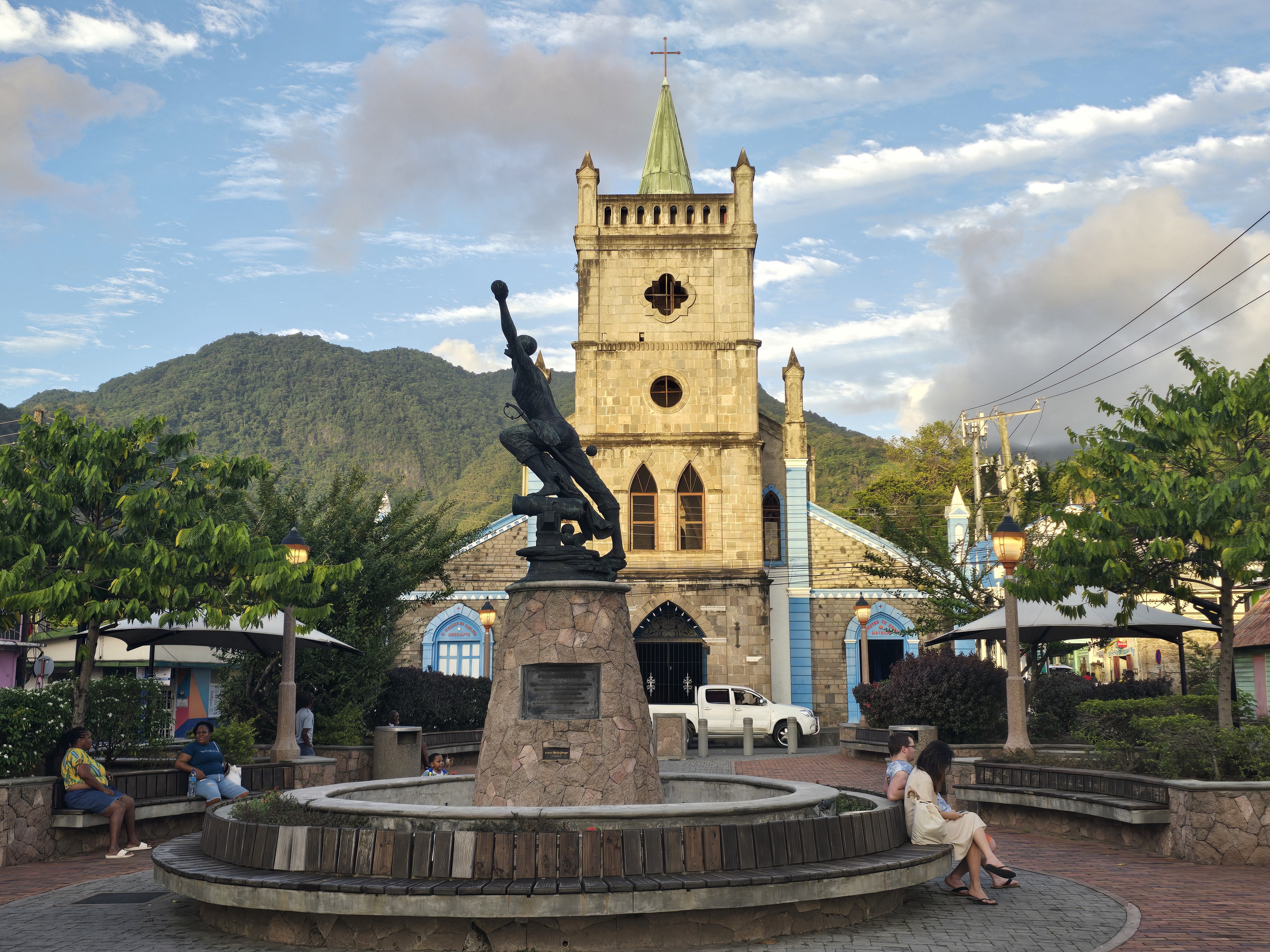
Before heading back, we decided to stop by a local bar. Andriel remembered that a friend of his from Nomadmania had traveled through these same islands. Elizabeth Makei
We weren’t supposed to run into her because we were supposed to go to St. Lucia earlier, but a breakdown delayed us for two days, so she could have been on that island too. Andriel texted her, and it turned out she’d landed at the airport in the southern part of the island two hours earlier and was now at a hotel a five-minute walk away. Andriel and I went to her hotel, chatted, and suggested having dinner on our catamaran. Thus, another chance and interesting meeting occurred.
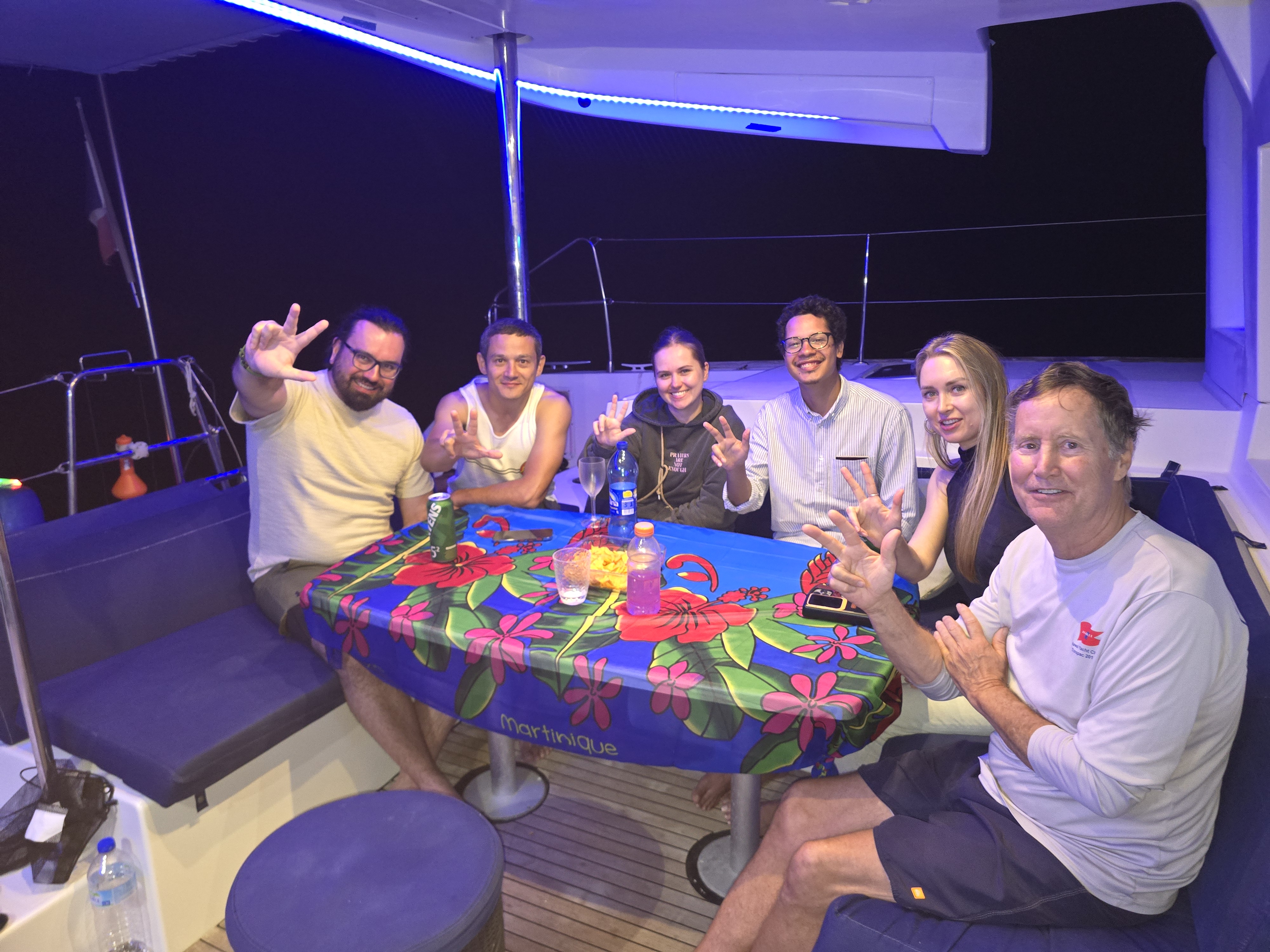
After dinner, Elizabeth returned to the hotel, and we agreed to all go together to the UNESCO World Heritage site for the Patrimonio Mundial in the morning.
Day 14 – March 6
In the morning, Jimmy said he wanted to stay on this island longer and relax on one of the beaches. We understood; Jimmy was a true sea dog the entire time; he didn’t take any motion sickness pills and stayed in his cabin the whole time. We fully supported him. Before Jimmy disembarked, we took a group photo of everyone on this crazy journey—the Nomadmania participants, as well as the captain and hostesses.
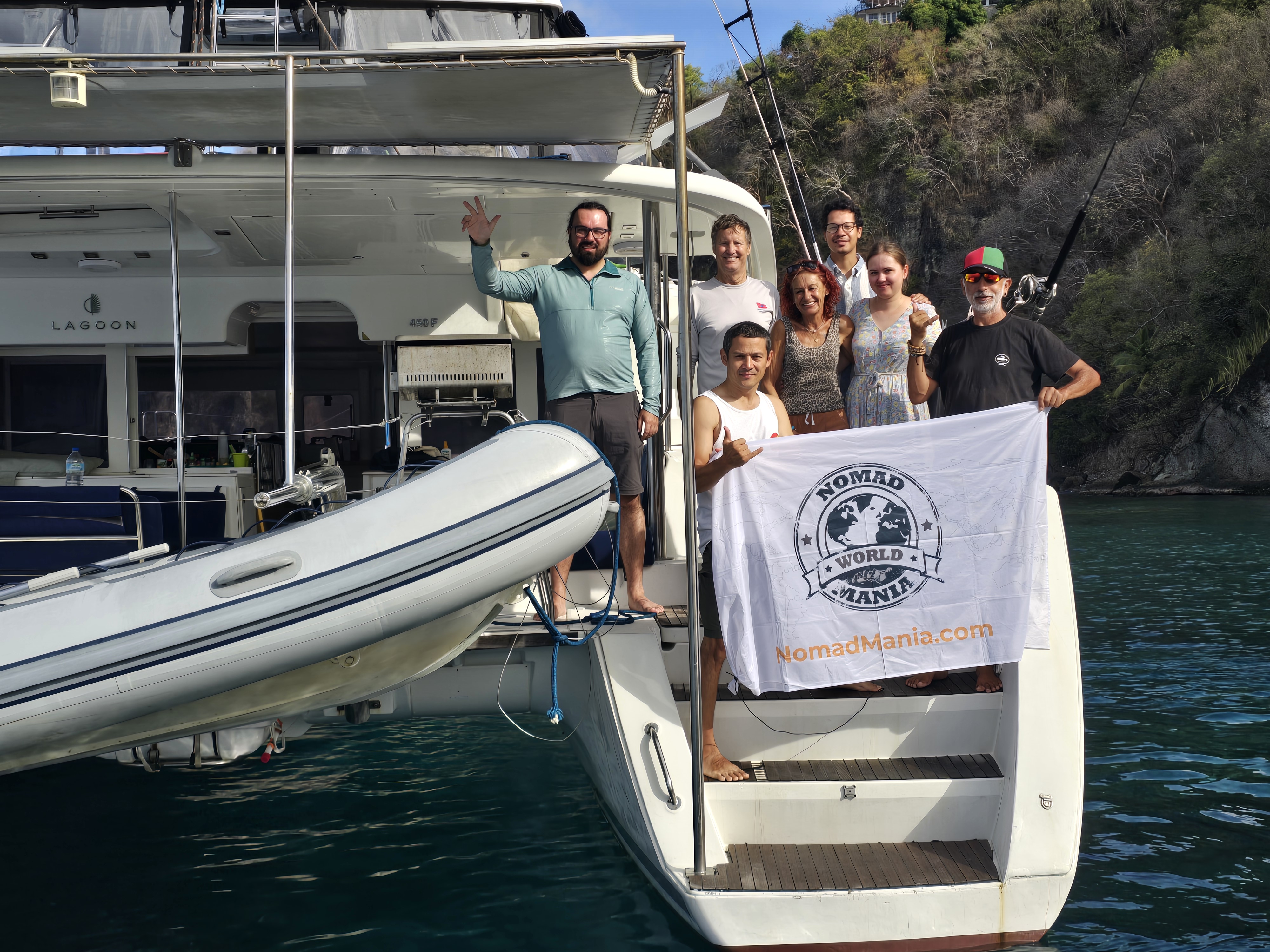
Jimmy disembarked from the island and went to his hotel, and we met up with Elizabeth again and went on a tour of the island.
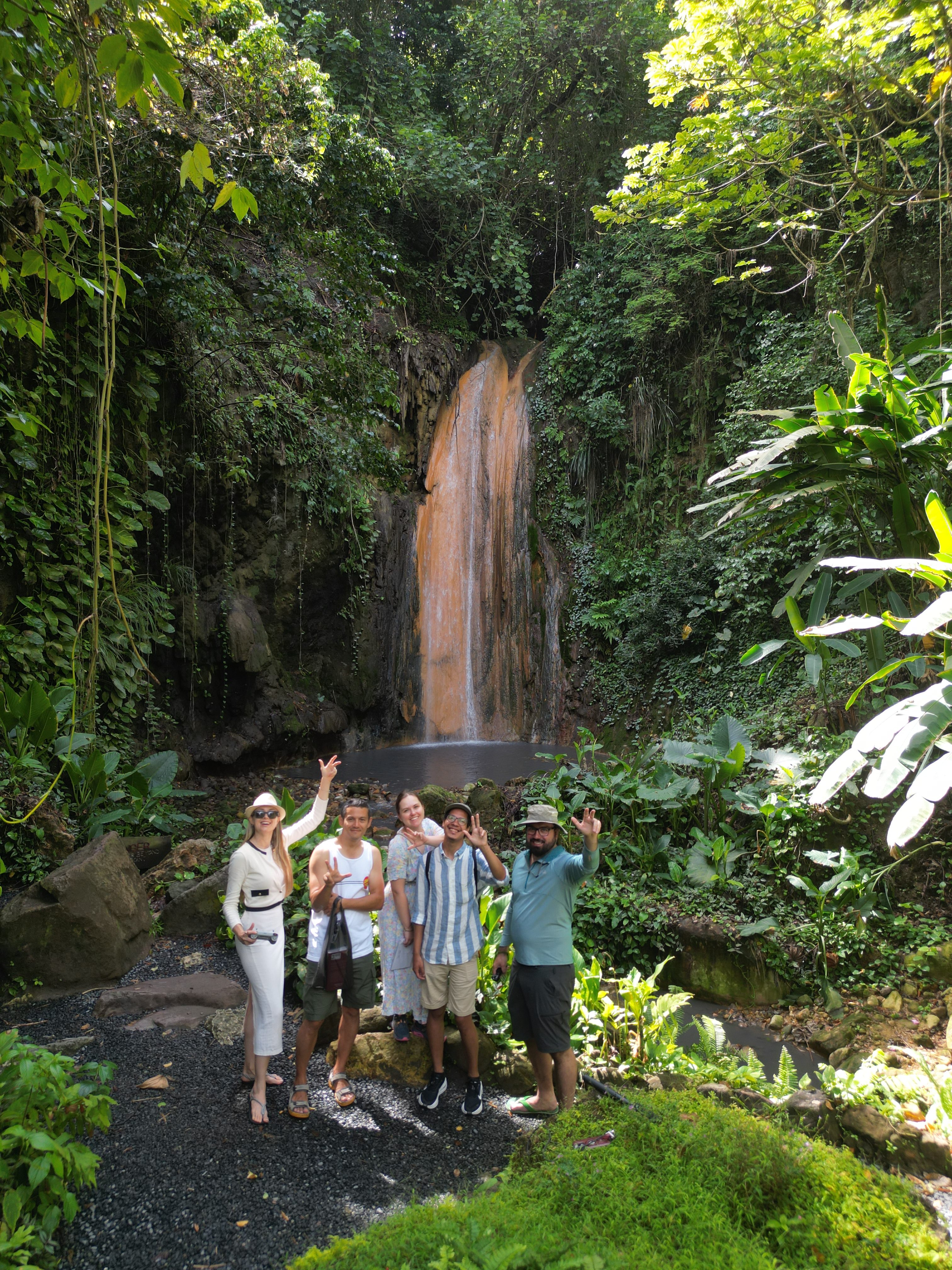
After walking around the island, we decided to go to the Botanical Garden, where Elizabeth took a photo of us together.
After that, she had to go to the airport and fly to another island. We said goodbye to her. When we returned to the port, we saw Jimmy again; he had just finished the migration process. We said goodbye to Jimmy and returned to the catamaran.
Day 15 – March 7
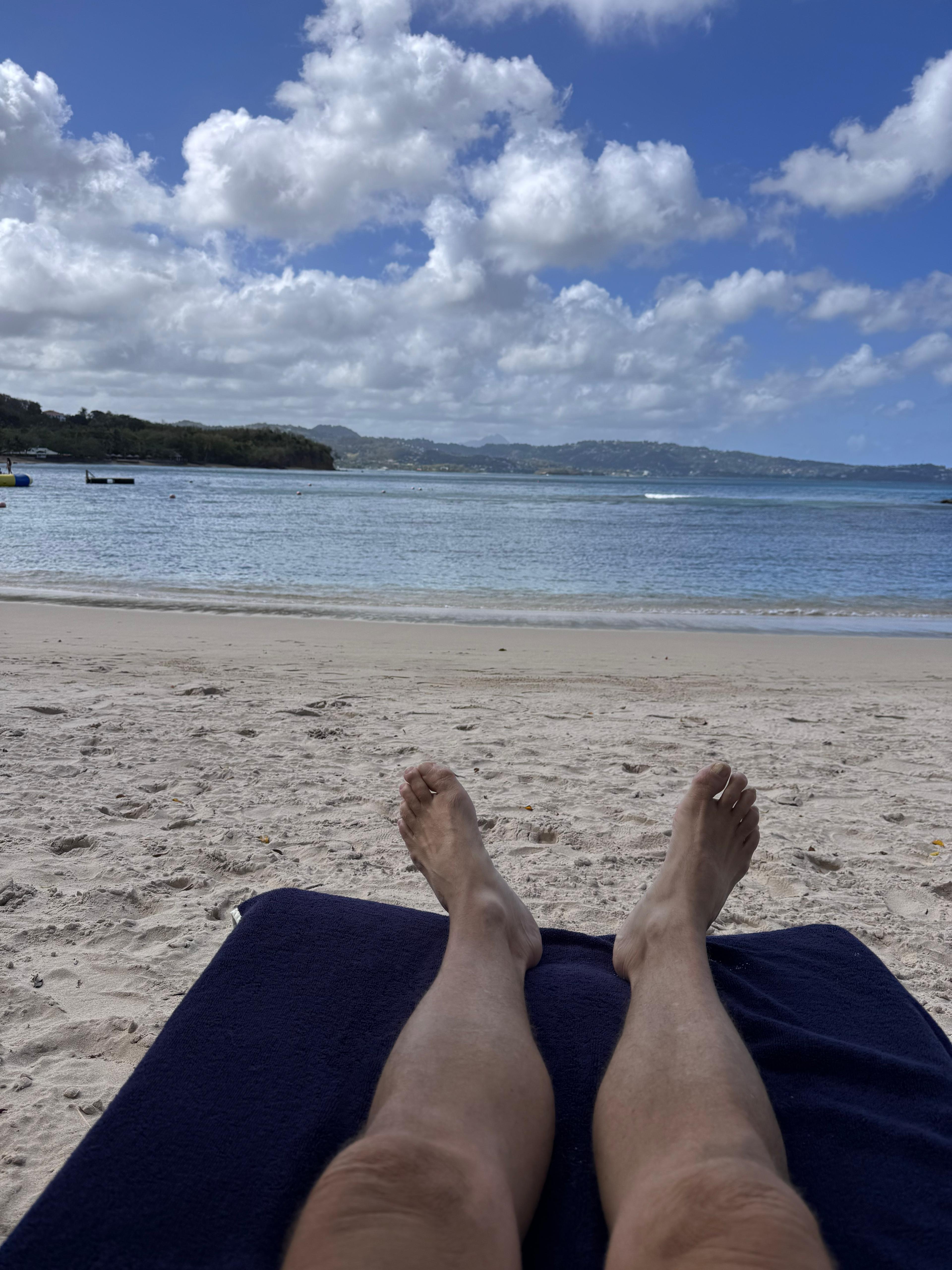
Early in the morning, we set out on our journey toward Saint Vincent and the Grenadines. The wind was favorable again, and we quickly reached Saint Vincent Island. Jimmy sent a photo of his vacation in Saint Lucia.
We just landed on the island of Saint Vincent in the town of Cumberland.
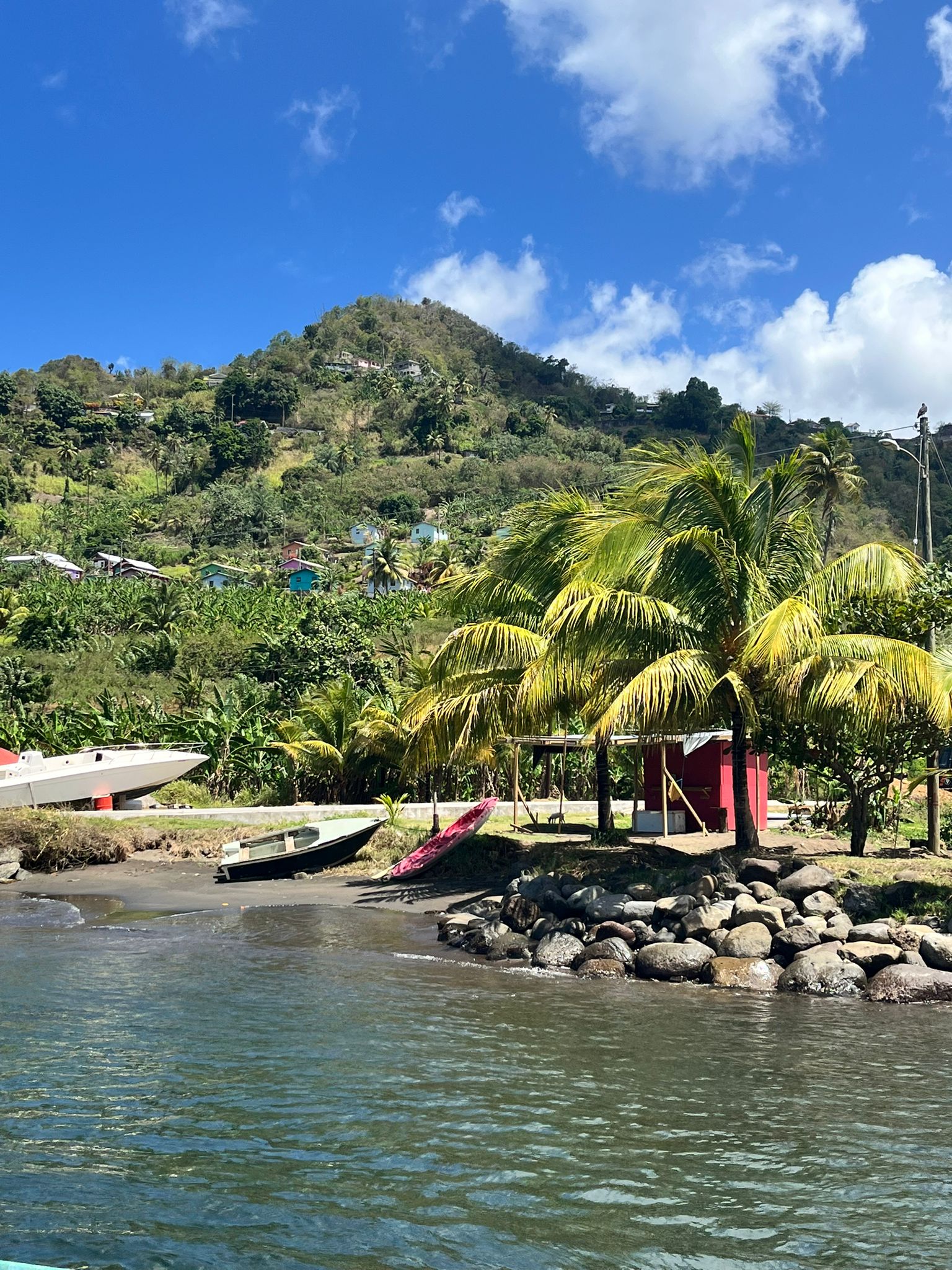
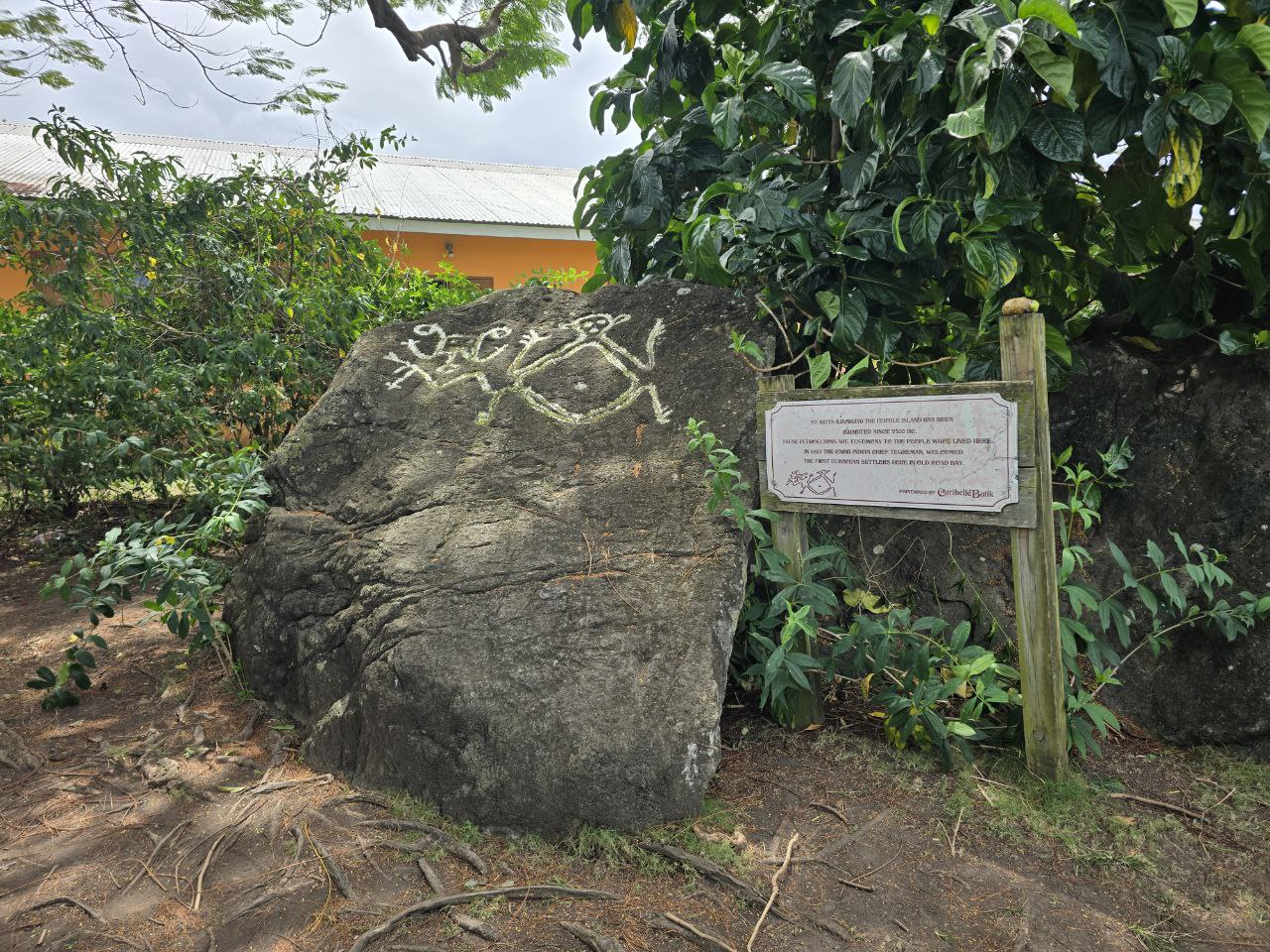
We went ashore, visited the waterfalls, and drove through small villages. Then Sonya and Slava decided to stay on the catamaran, while Andriel and I decided to stop by the petroglyphs on the rocks of the people who once lived here.
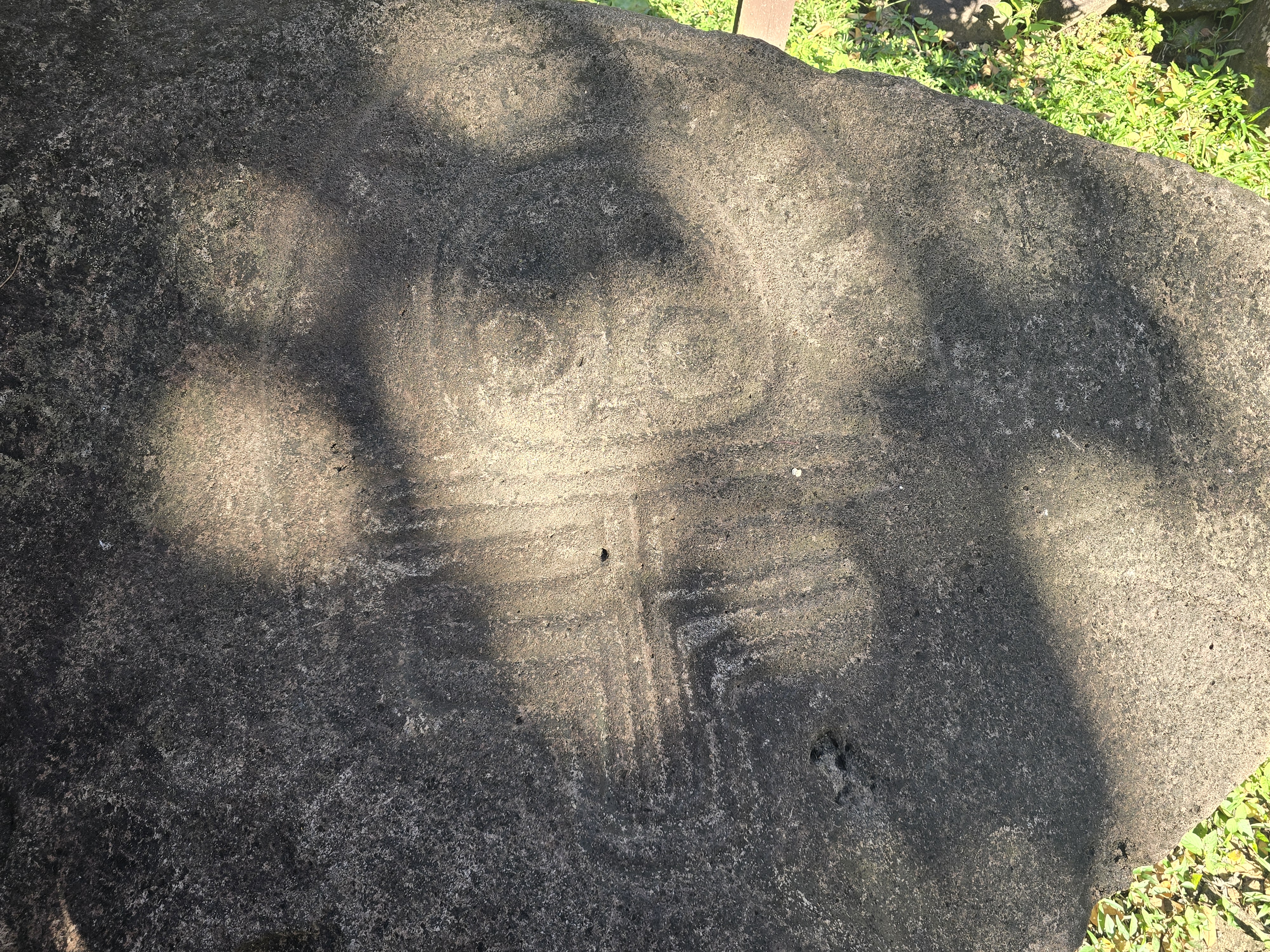
Then we went with a local guide to the island’s capital, Kingstown.
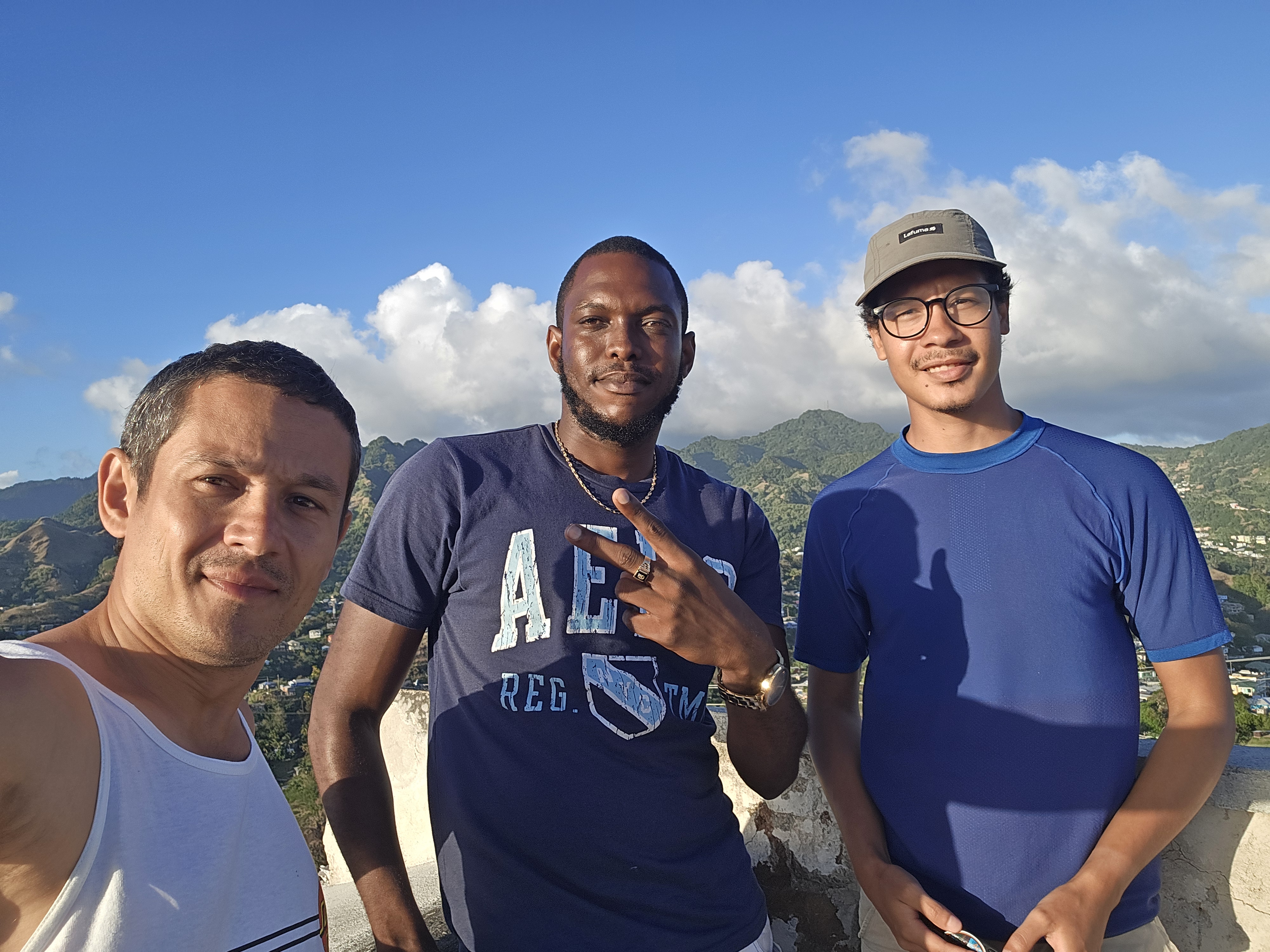
In the evening, we reunited with Slava and Sonya and went to the village where they filmed the movie “Pirates of the Caribbean”
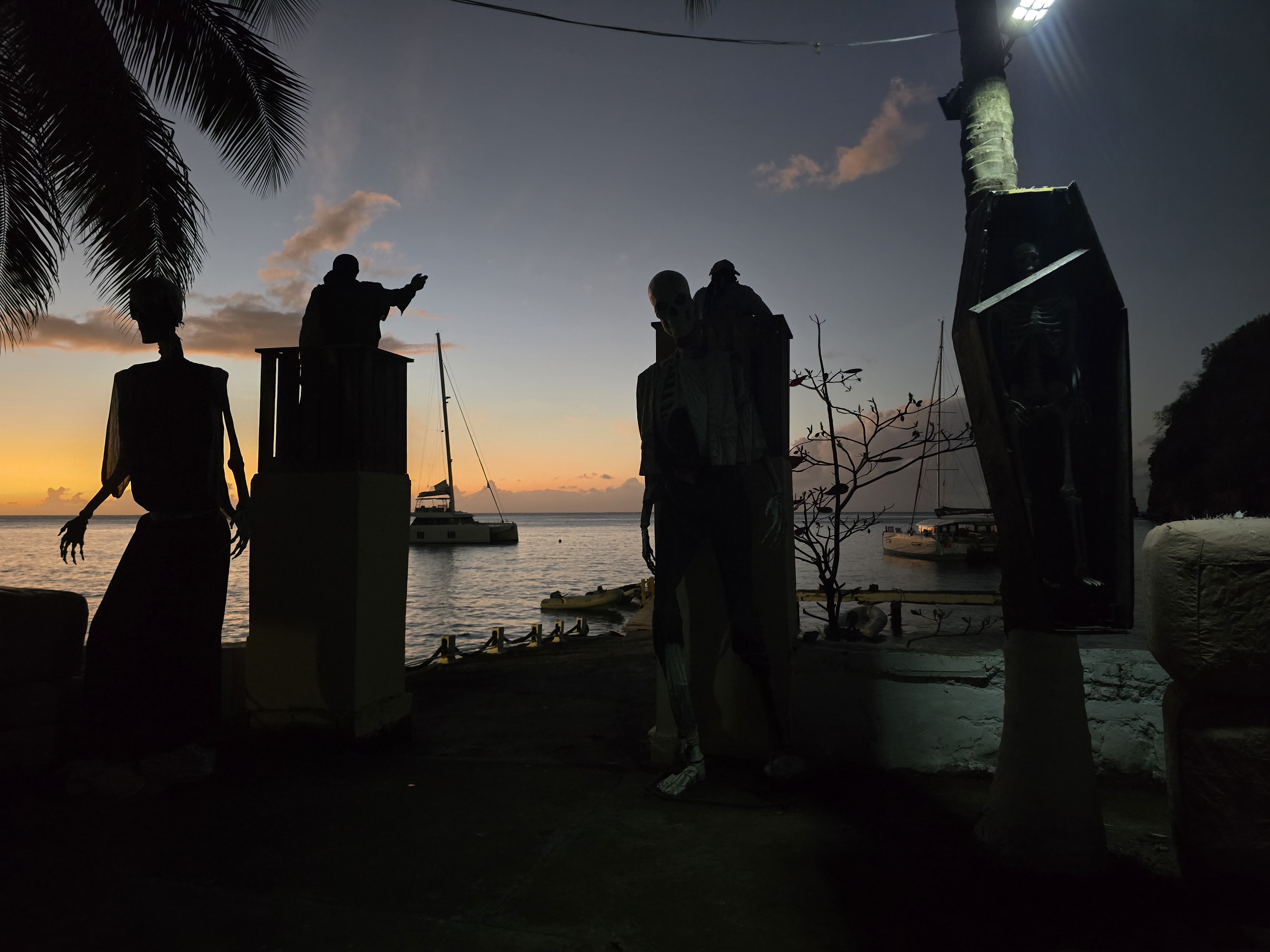
In the evening, we stopped at a local bar, ordered some Sun Set 84-proof rum, and decided to feel like real pirates. The captain also said they make the best Mojito in the world there.
Day 16 – March 8
In the morning, we set out for Bequia Island. We reached it very quickly. This was already the Grenadines archipelago.
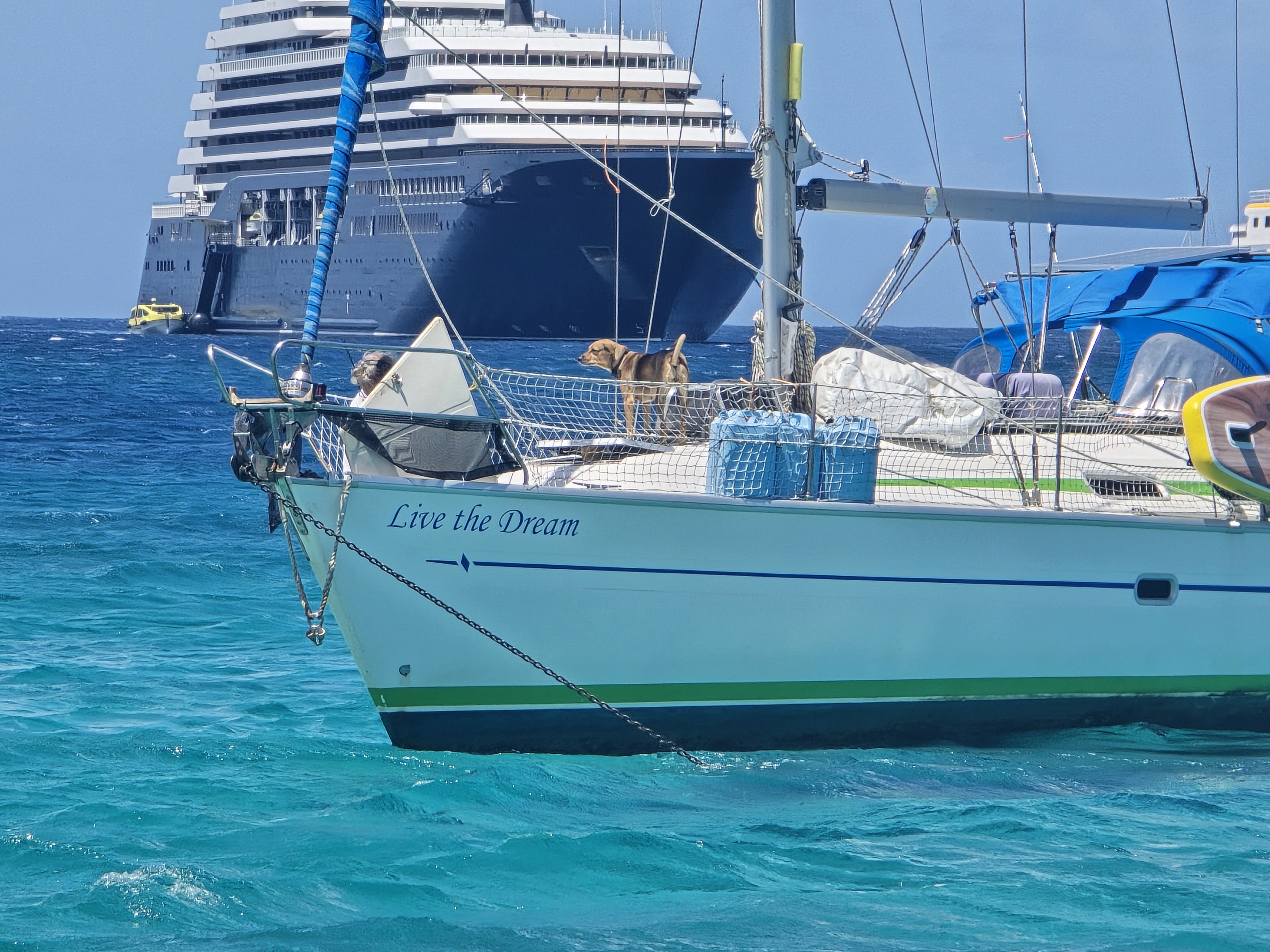
We went ashore and walked around the island.
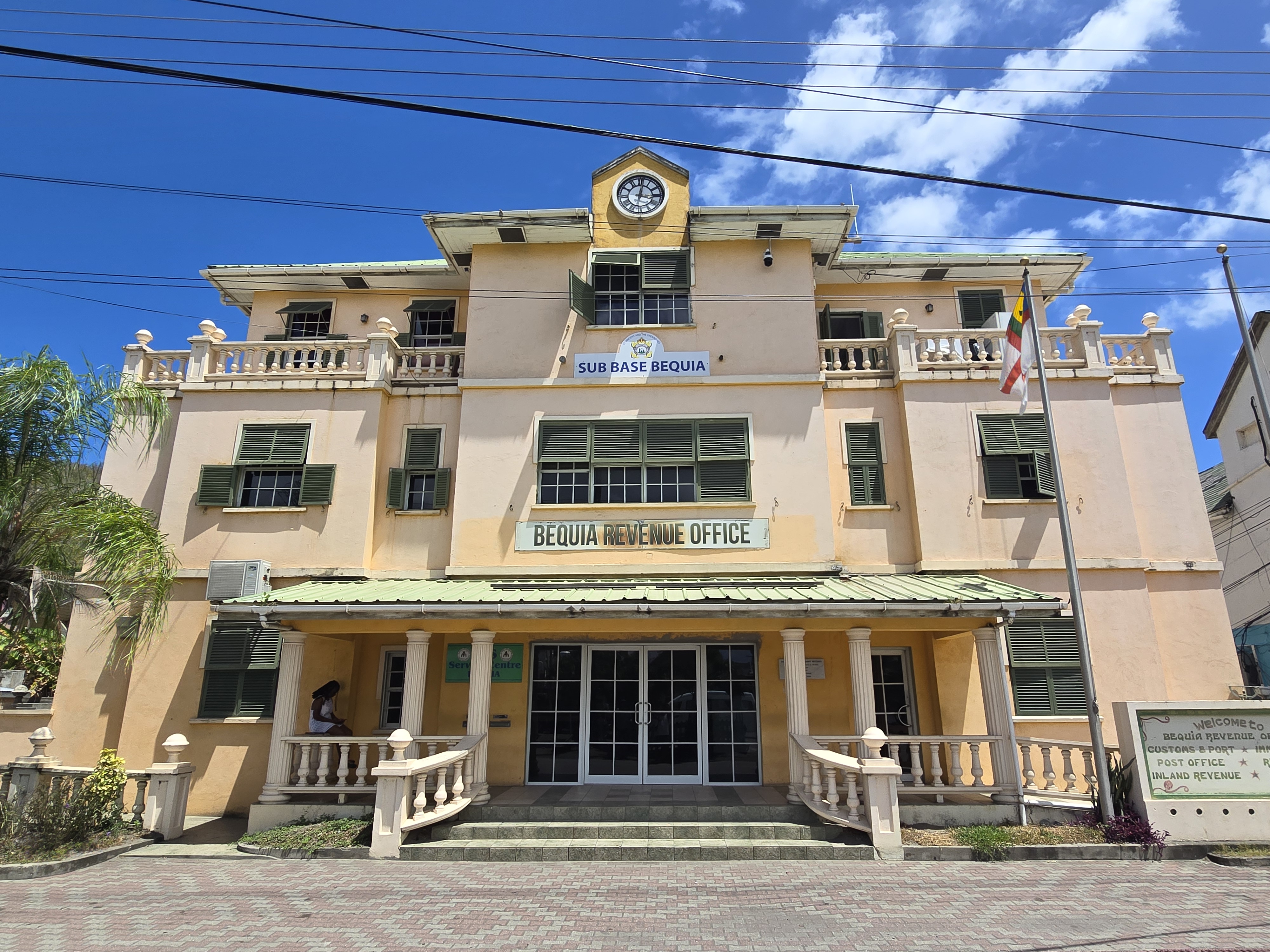
After that, we continued south. We passed Mustique Island in the waters. It was purchased by a private owner, so it’s now a private island, known primarily as a celebrity vacation spot. We weren’t allowed to stop there without an invitation, so we continued south and reached Mayreau Island. The captain and hostess had many friends there, so we had dinner right there that evening. Incidentally, while we were eating, there was a small tremor from the volcano; the entire table shifted a couple of centimeters, but it was barely noticeable
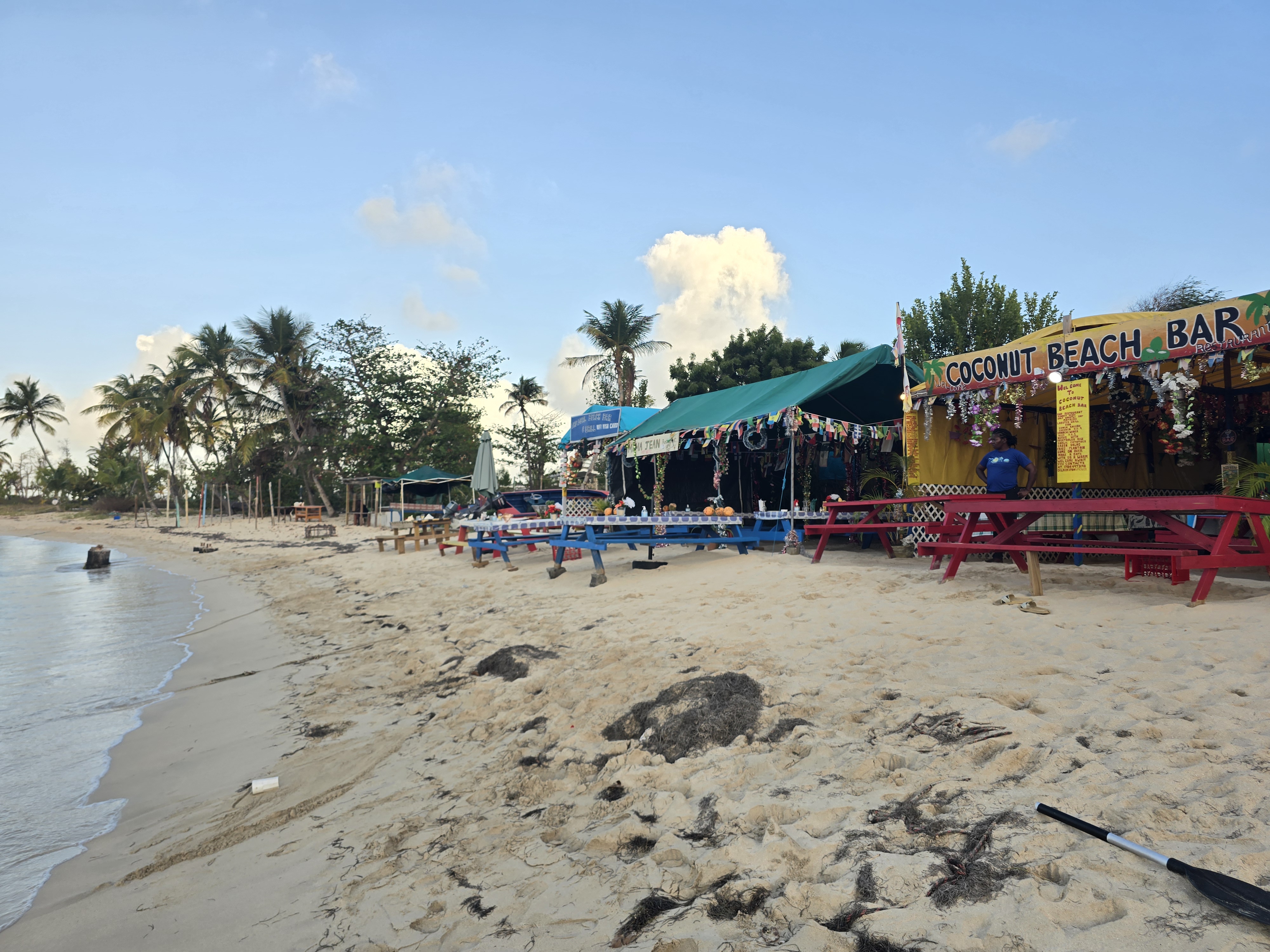
Day 17 – March 9
We dedicated this day entirely to visiting the Tobago Cays National Park. We cruised from one island to the next, swam with turtles, and saw lots of fish and rays.
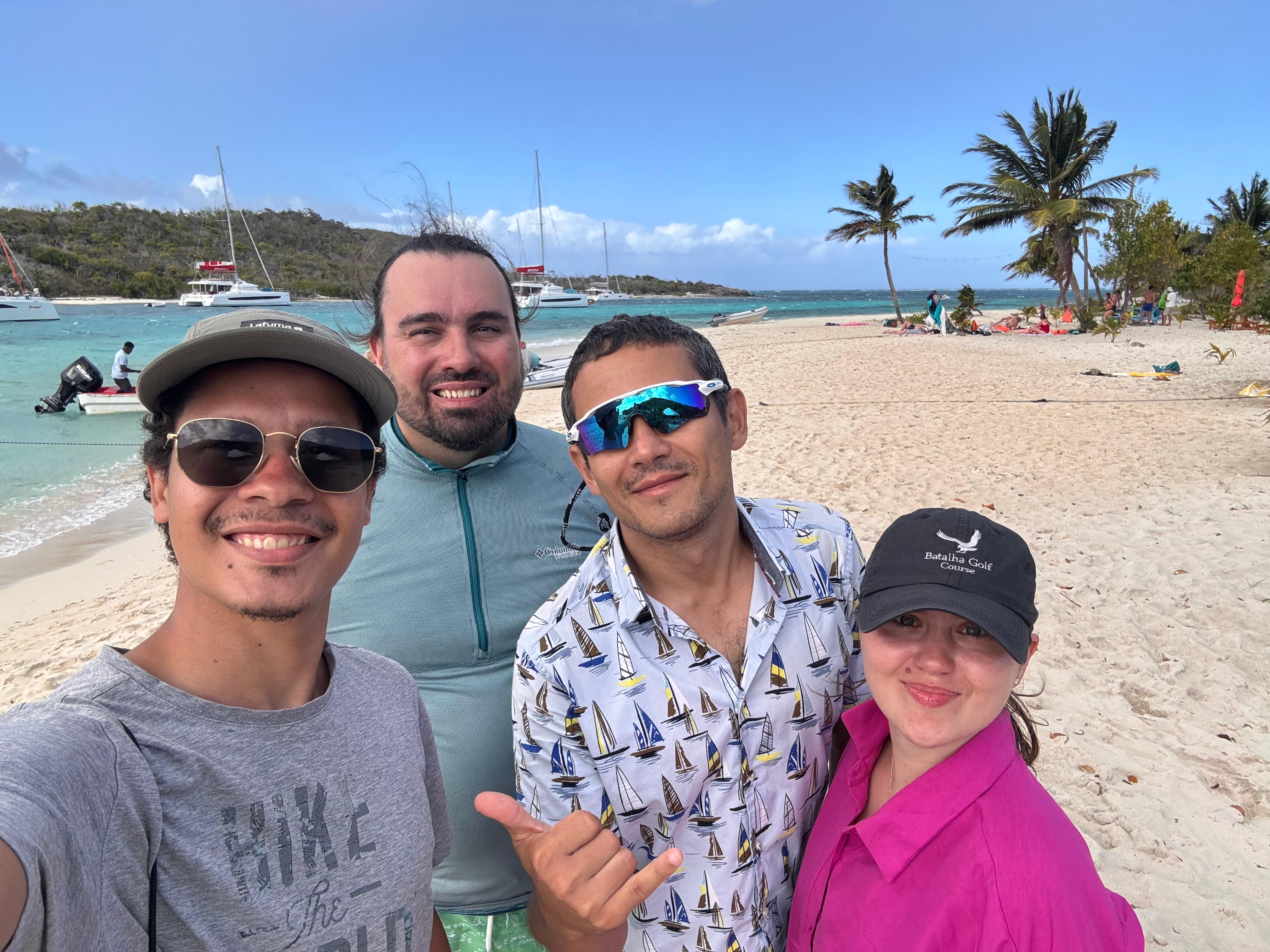
In the evening we arrived at Union Island and sat in a bar located on a separate small island.
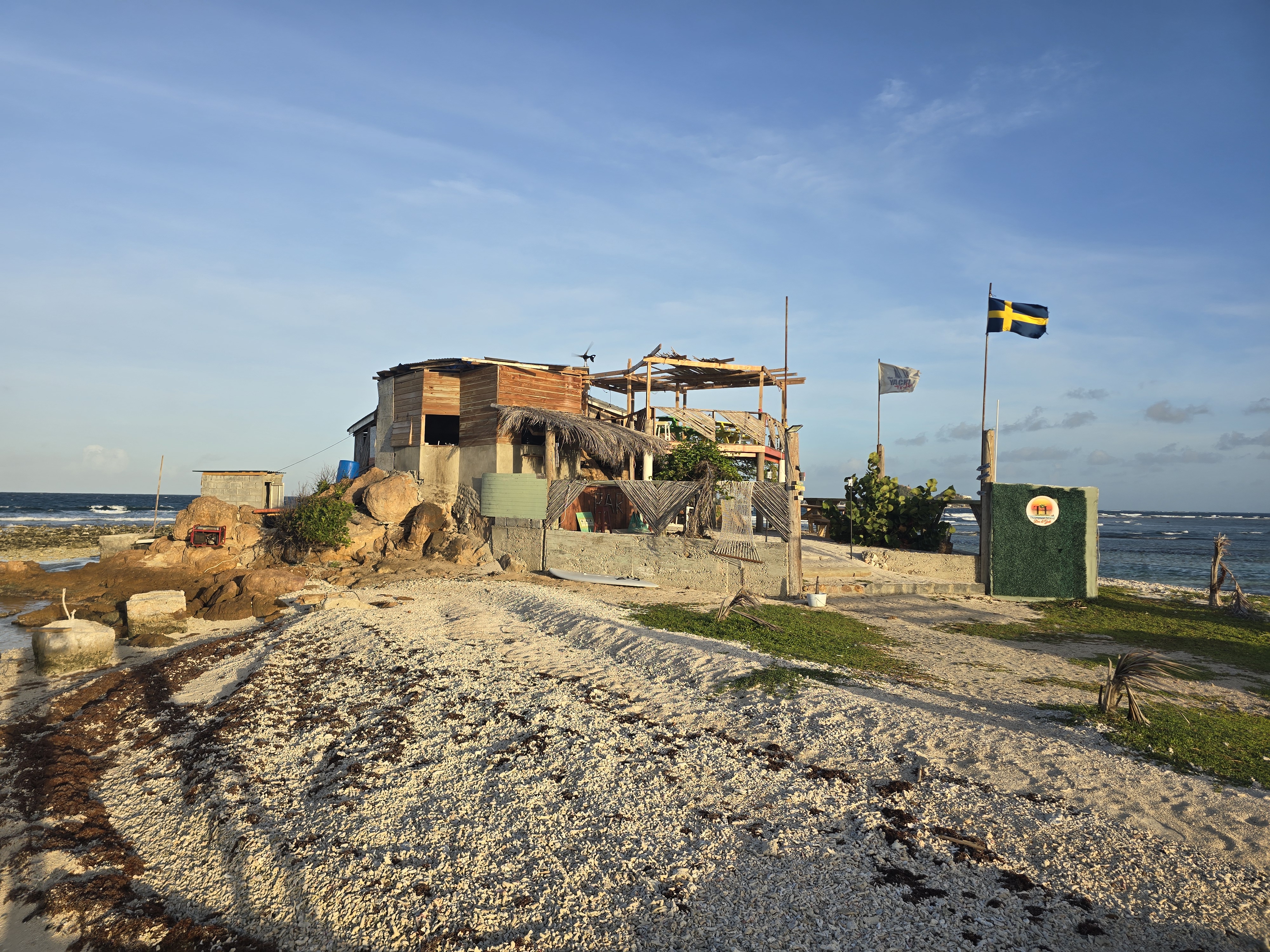
After leaving the bar, we headed to Union Island itself and walked along the local streets.
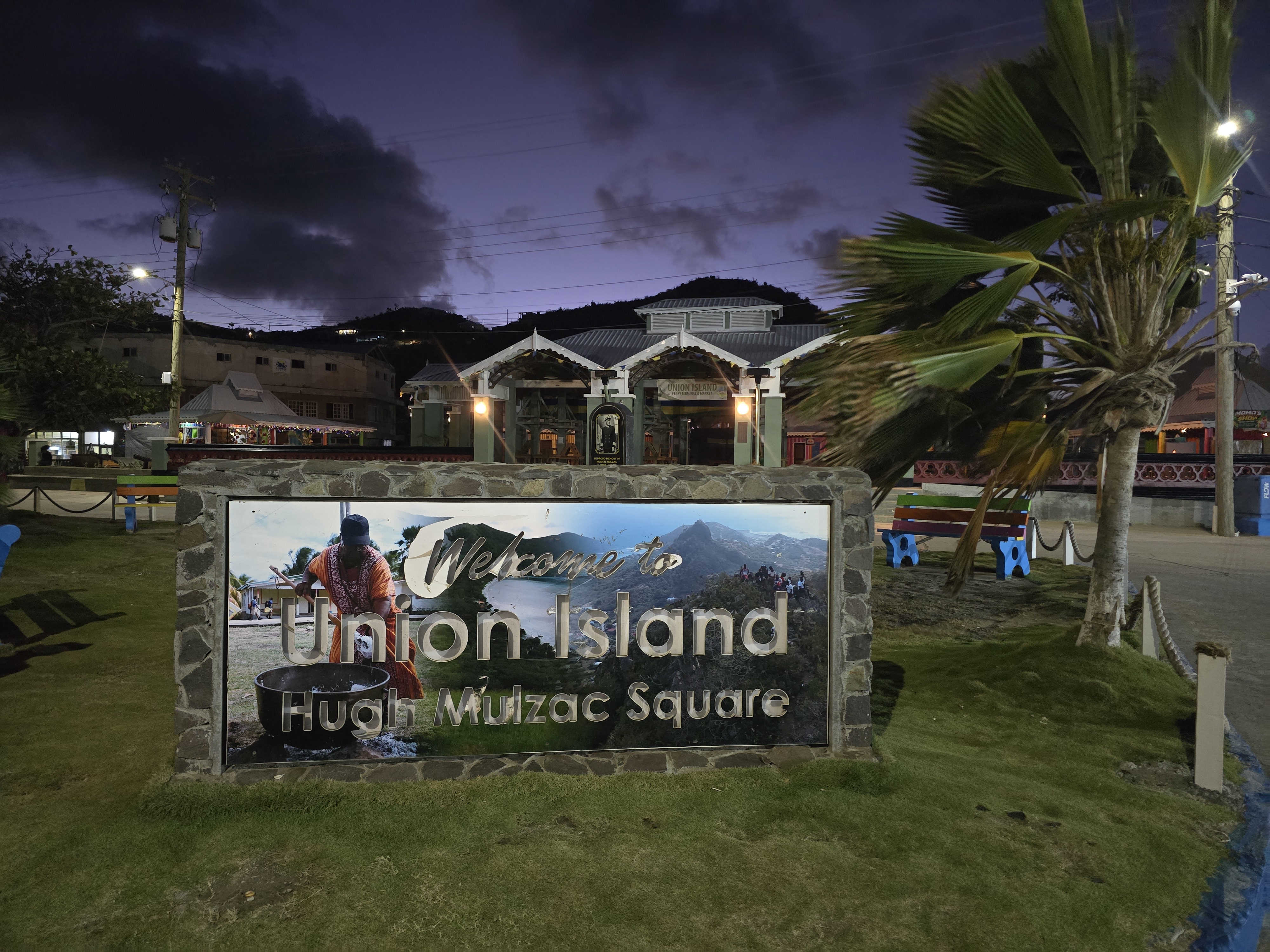
And we returned to the catamaran. That evening, we had a farewell dinner. Slava, Andriel, and Sonya would be returning to Martinique because they had a flight from Martinique. But I had a flight from Barbados, and I needed to get there quickly to stay on schedule. So it was decided that the next day, we would go to Grenada, and from there, I would depart.
Usually, the crew ate separately from us, but this time we insisted on gathering together. We shared memories, reliving the trials we’d faced along the way. During the voyage, there were times when I argued with the captain. But that evening, we forgot all the grudges. The captain said it was the first time in his life that he’d been on such a long and wild journey. He said it was hard and he was even glad he’d survived the ordeal, but he also said he’d never repeat it again. We sat around for a bit longer and then went to bed because we had a lot to do tomorrow.
Day 18 – March 10
Rising early in the morning, we went to the immigration office on Union Island to check out. I said goodbye to the captain and hostess. I looked at the catamaran that had been my home for 18 days. The beauty sat in the sun, rocking gently on the coastal waves.
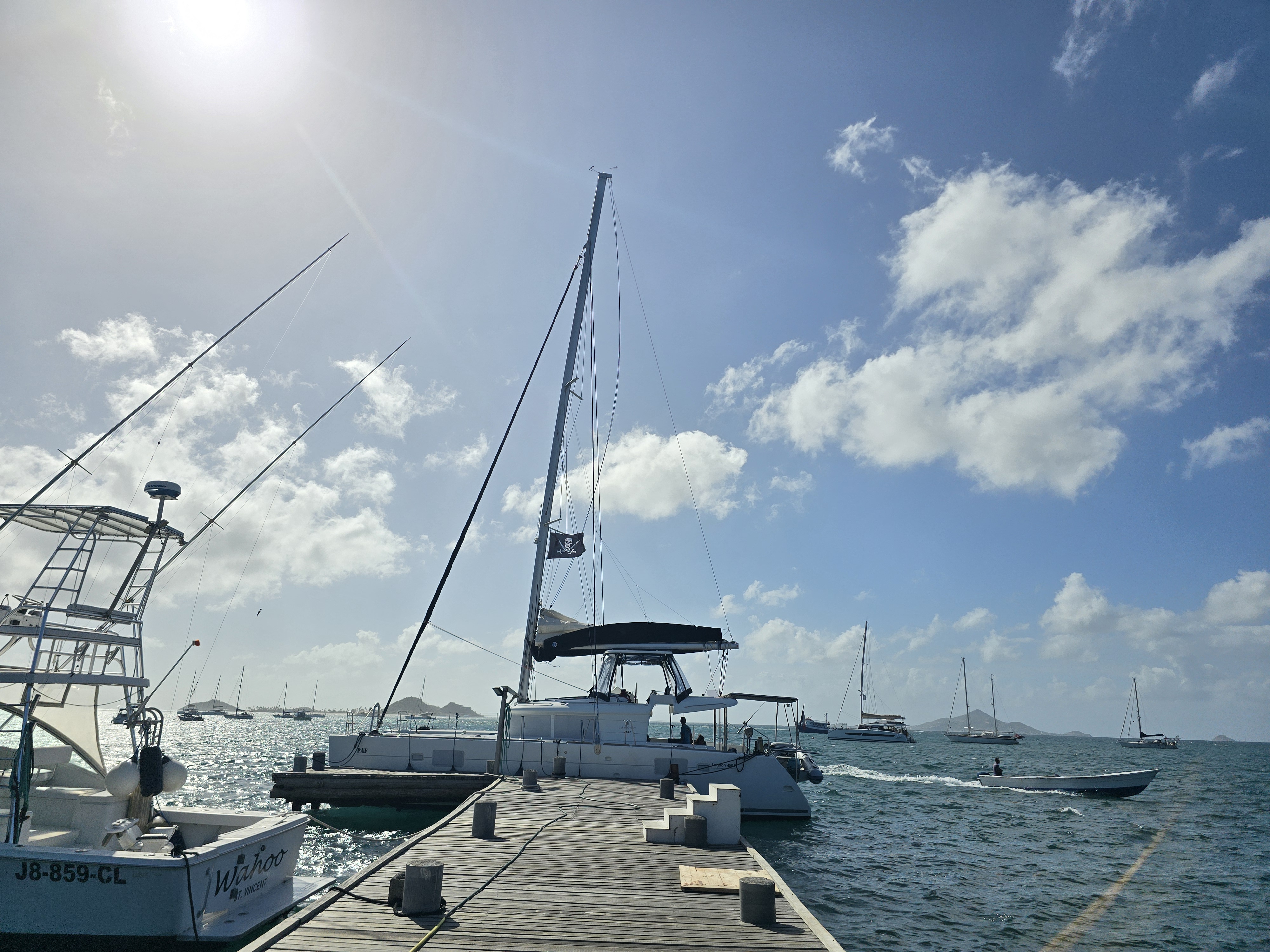
After checking out on Union Island, we took a taxi to the other end of the island, where motorboat taxis departed for Carriacou Island. This is an island in Grenada, which was on our initial list of destinations. We took one of these boats and headed to Grenada.
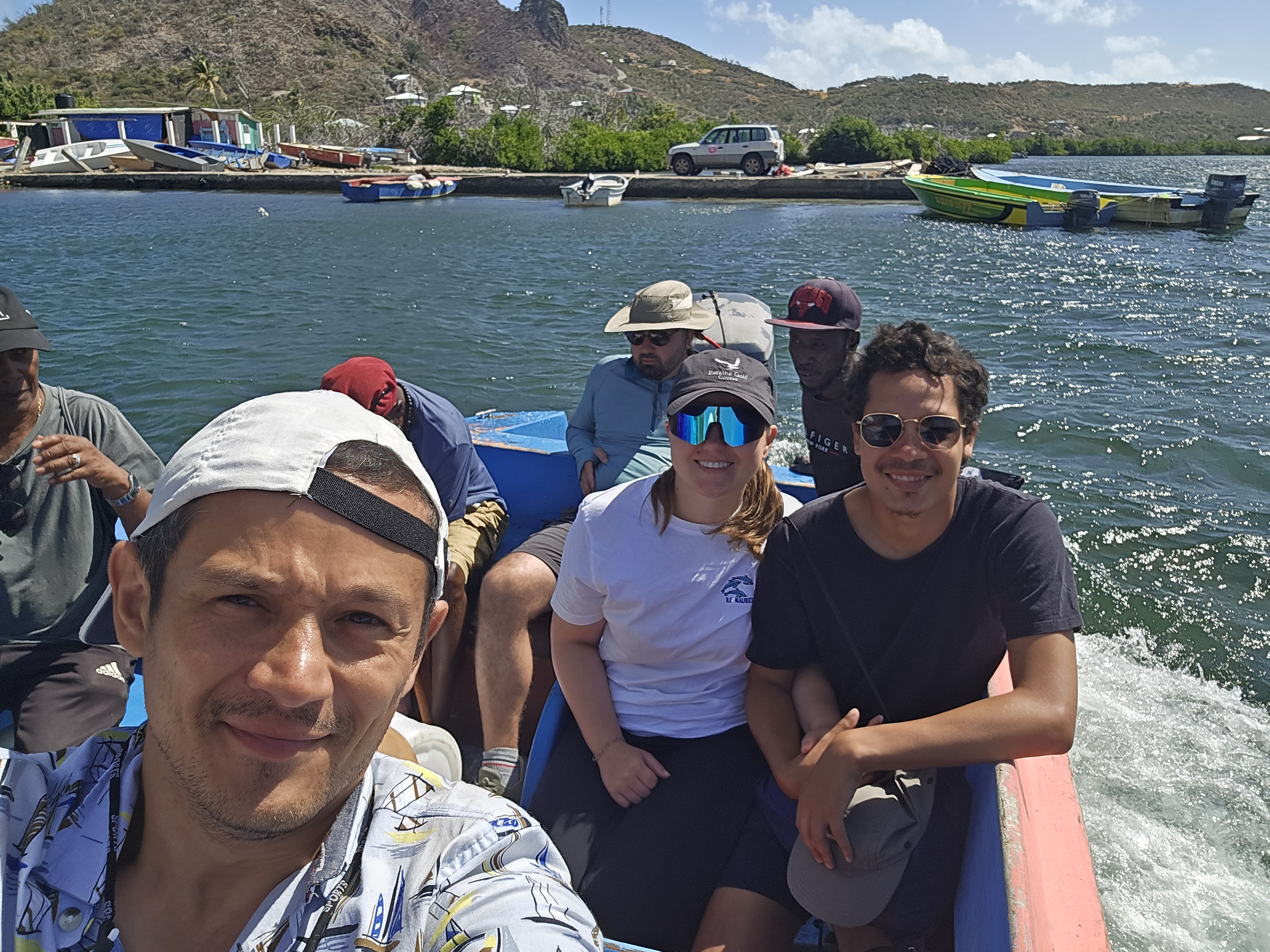
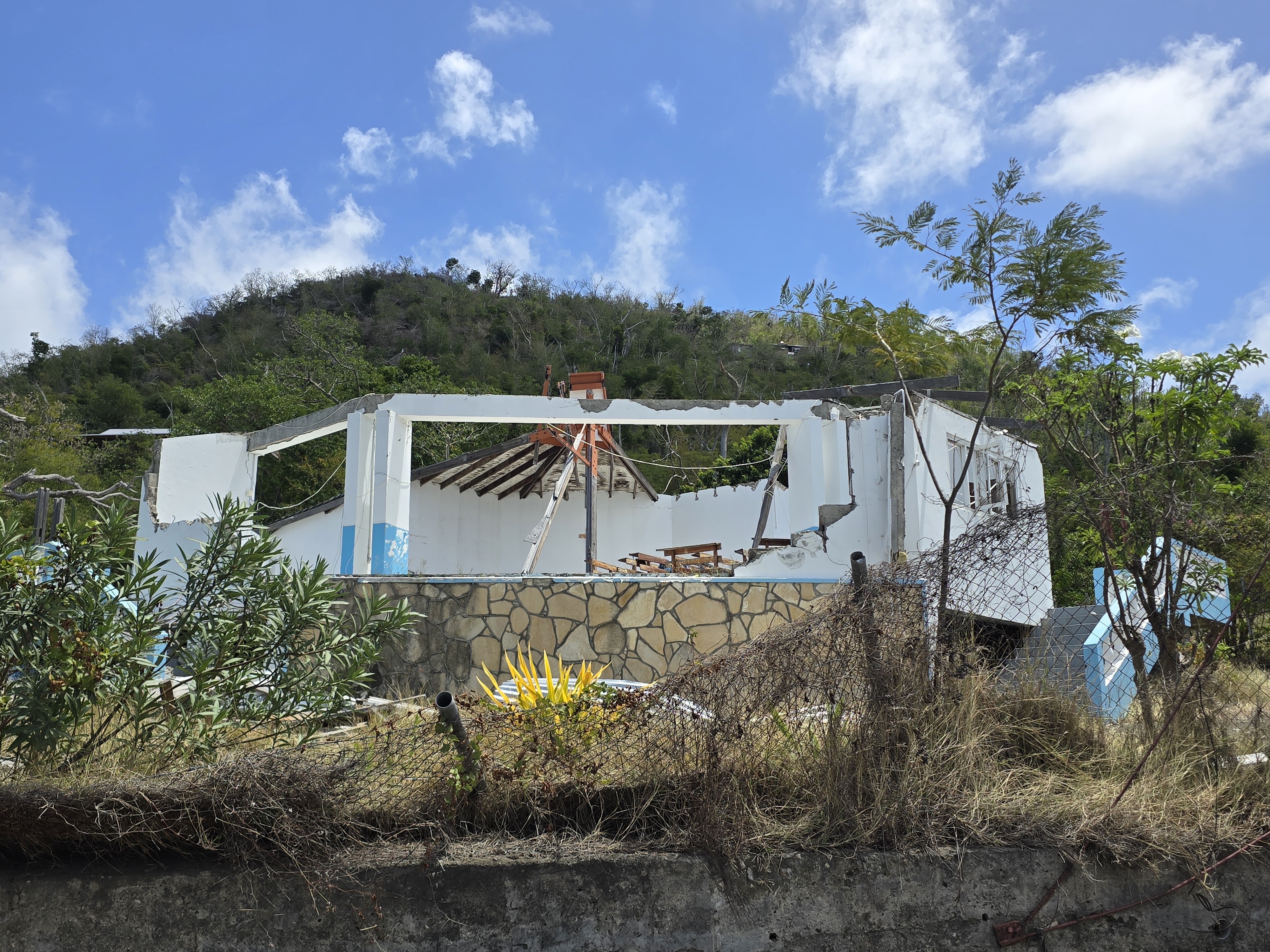
Upon arrival on the island, we checked in at the immigration office. We took a taxi and went on a tour of the island. The island was once hit by a powerful hurricane, so many buildings were destroyed.
Then we climbed up to the former fort.
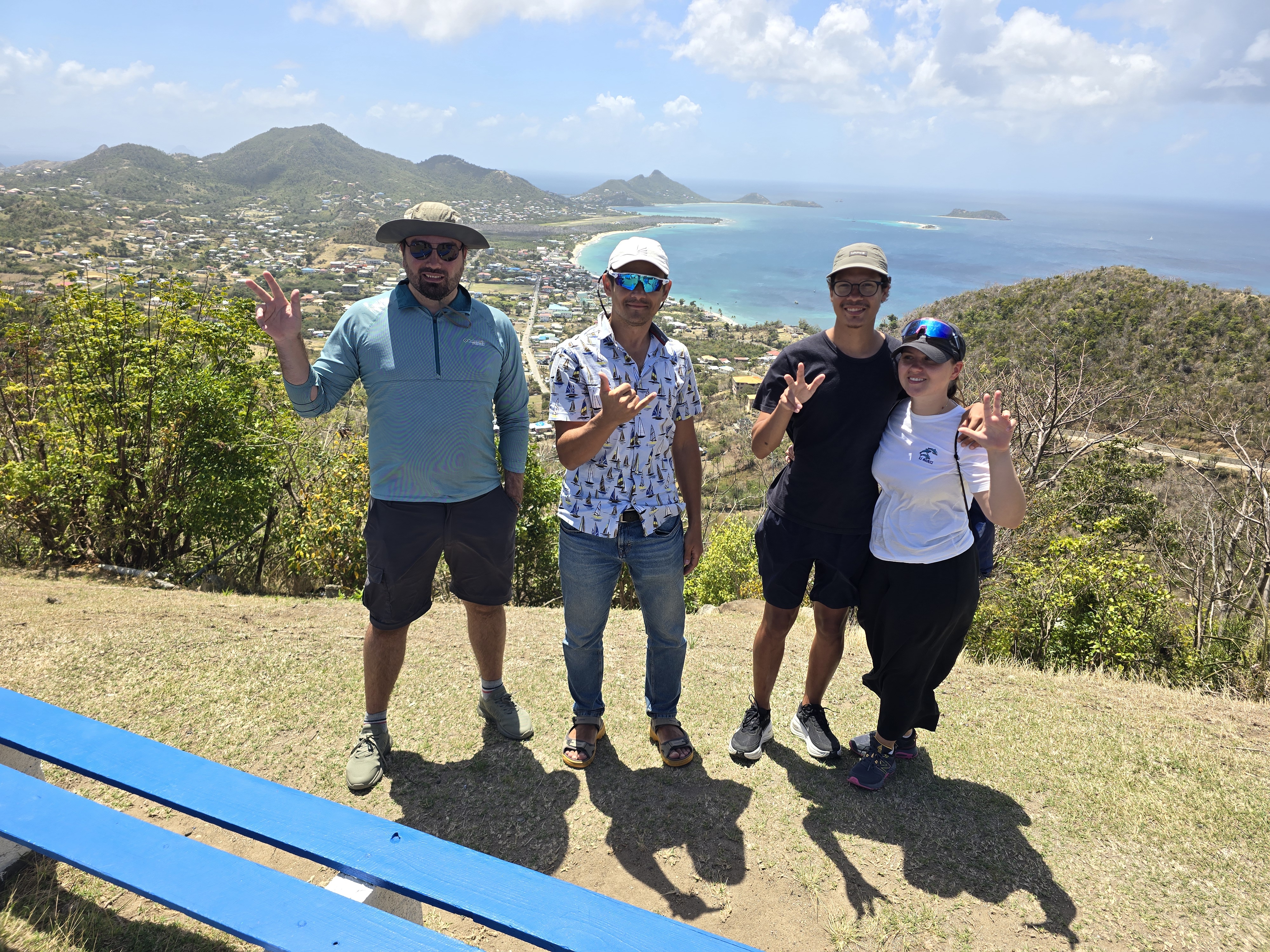
Afterwards, we went down to the spot where the motorized taxi boats depart back to Union Island. It was time to say goodbye. Sonya, Andriel, and Slava boarded the boat and headed toward Union Island.
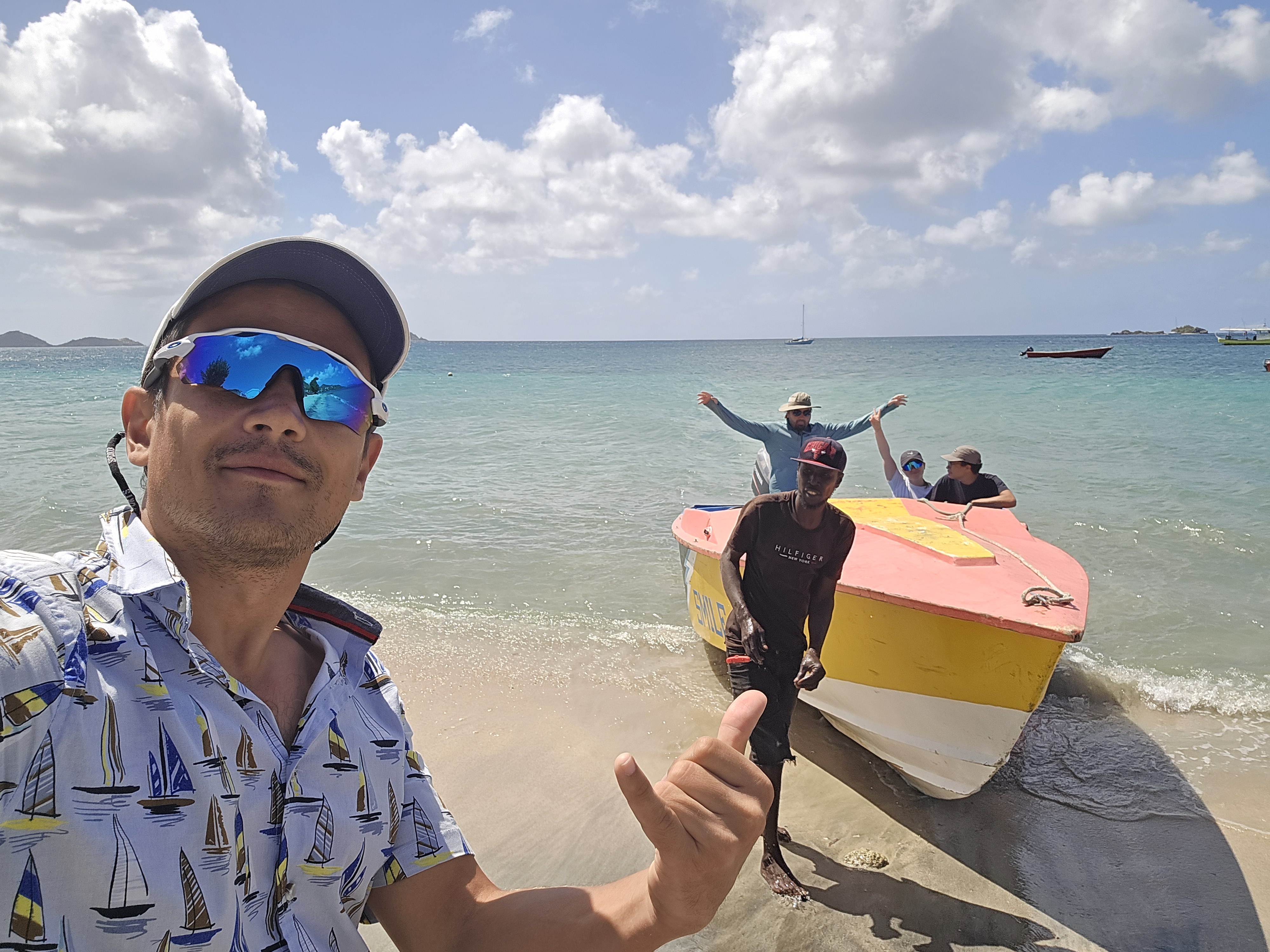
I boarded a plane and flew all the way to Granada Island, after which I flew to Barbados.
The remaining three expedition members sailed to Union Island and began their return journey to Martinique. They would be at sea for another three days and would only reach Martinique on March 13th.
Conclusions
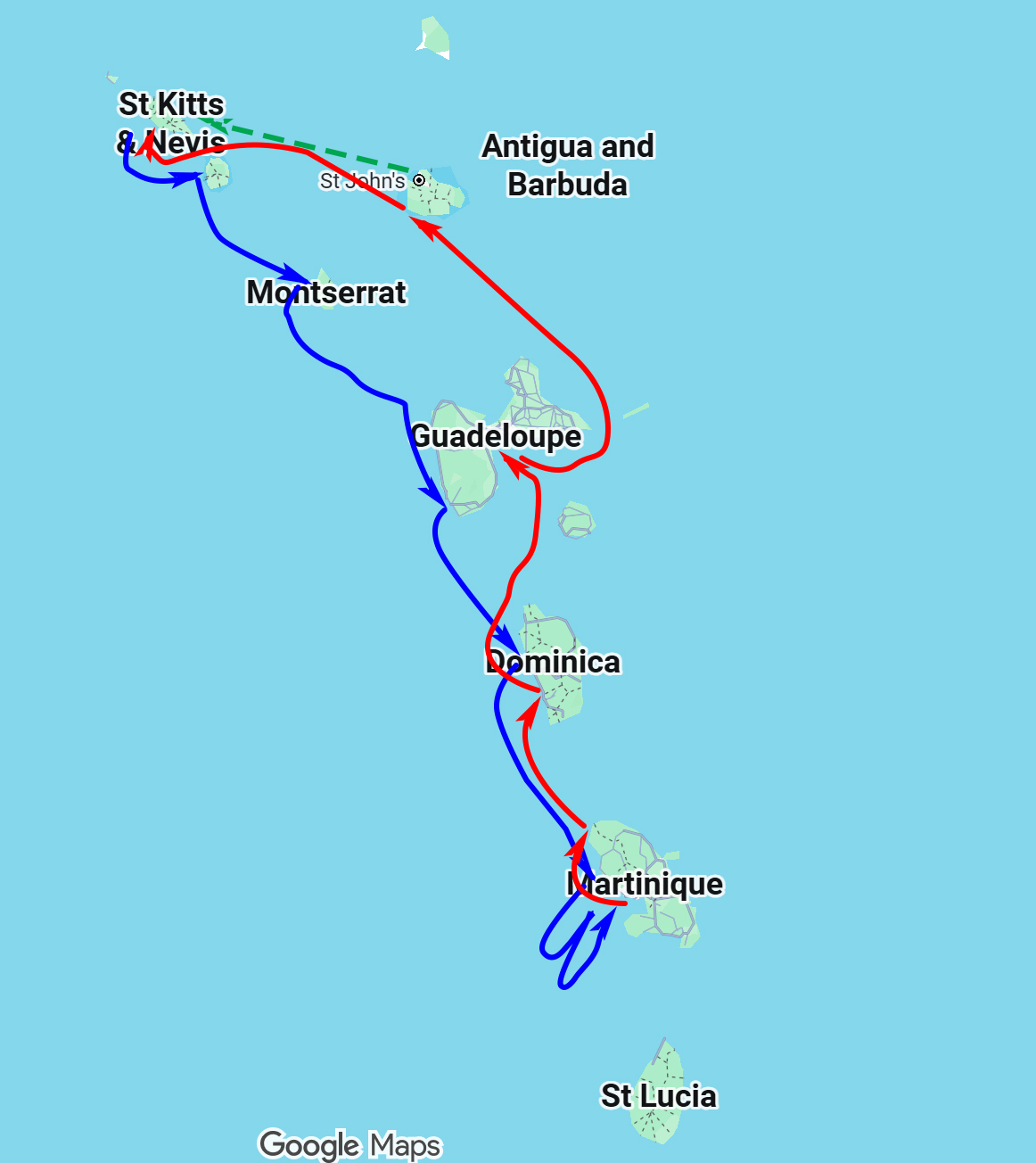
From our initial list of countries, we only missed Barbados. A breakdown off the coast of Montserrat cost us many days. Also, considering that the one-way journey to Barbados by boat alone would have taken 24 hours, there was no way we would have made it within the allotted time.
But we visited 12 islands, six UN countries, and three UN+ states. We covered about 1,000 km on a 14.7-meter catamaran. We encountered three storms, with waves up to 4 meters high. The longest non-stop passage was 20 hours, and also five days without landing. Our catamaran engine, electricity, watermaker, fresh water supply, and inflatable boat motor all broke down, and a couple of windows were leaking water into the cabins. There were two volcanic tremors on the islands.
 |
 |
Along the way and on the islands, we encountered dolphins, killer whales, sperm whales, pilot whales, lemon sharks, nurse sharks, manta rays, stingrays, numerous turtles, tarpon, black grouper, and barracuda. Three weeks at sea came to an end. It was challenging. But no less interesting.
Slava and I met again at the Panama airport a week later, when I was flying to Costa Rica and he was flying to Mexico. Andriel and I are scheduled to meet in June in Brazil at the Nomadmania conference, but that’s a whole other story.