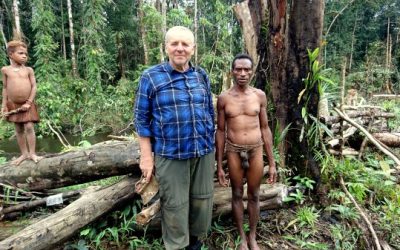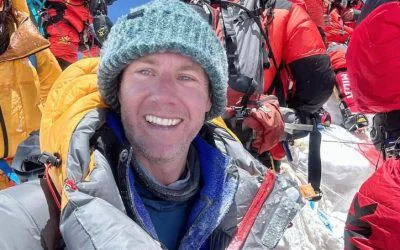
When we last spoke to Jaime Alemán in 2020 – Panamanian lawyer and explorer, he had just completed a feat few humans ever will: visiting every country in the world. But in the years since, Jaime hasn’t slowed down—in fact, he’s gone further than anyone else ever has. From racing against time and a global pandemic to reach his final country, to standing at both the South and North Poles, and finally soaring beyond Earth’s atmosphere into space with Blue Origin, Jaime has now accomplished what no one before him ever has: the “Grand Slam of Travel”—all 193 UN countries, both poles, and space.
In this candid and deeply moving update, Jaime reflects on the highs, hurdles, and historic moments of his extraordinary journey.

Jaime Alemán, we interviewed you back in 2020 when you had just completed the final country. Remind us a bit about that and your spectacular way of finalising all UN countries just before covid.
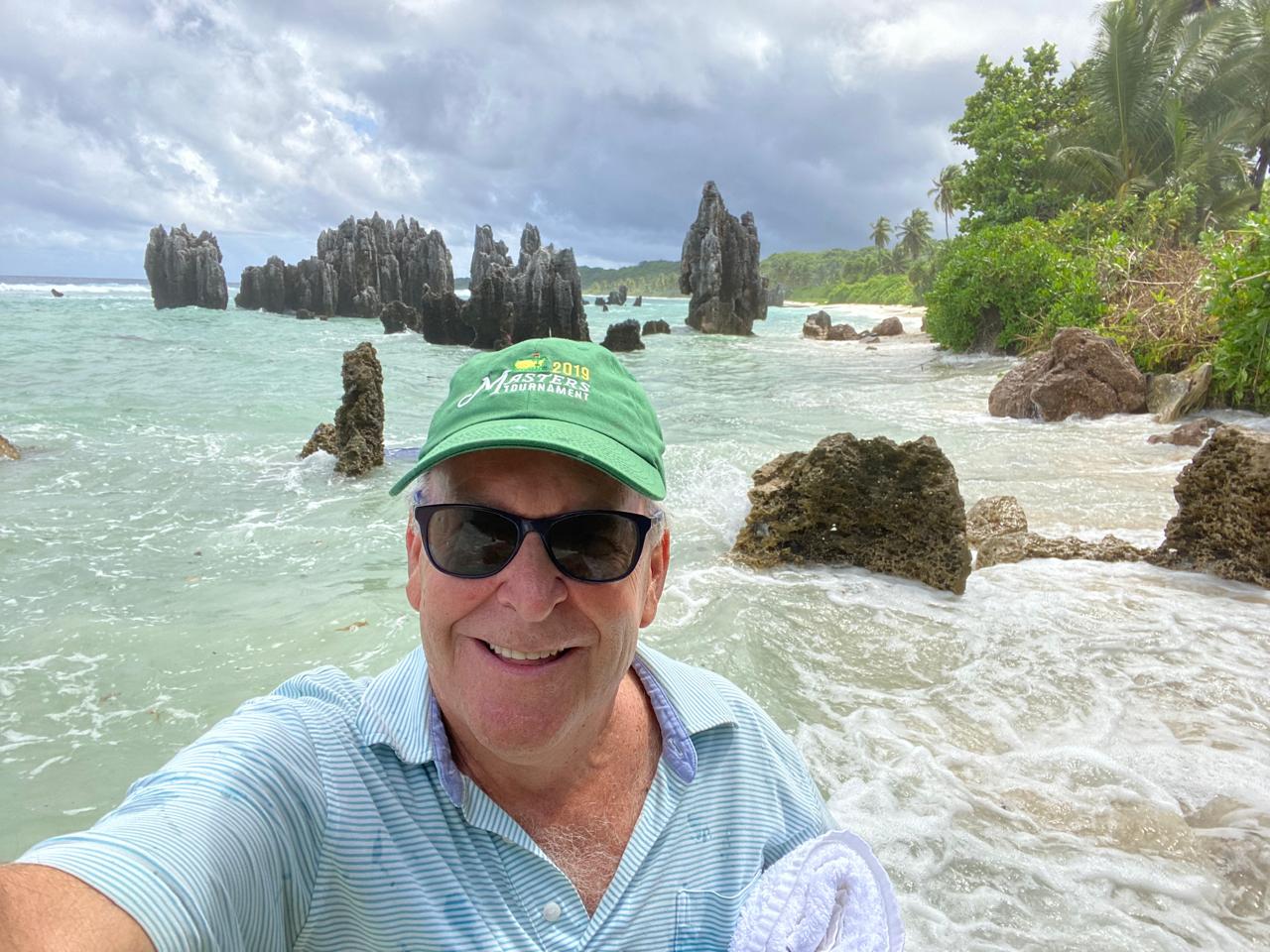
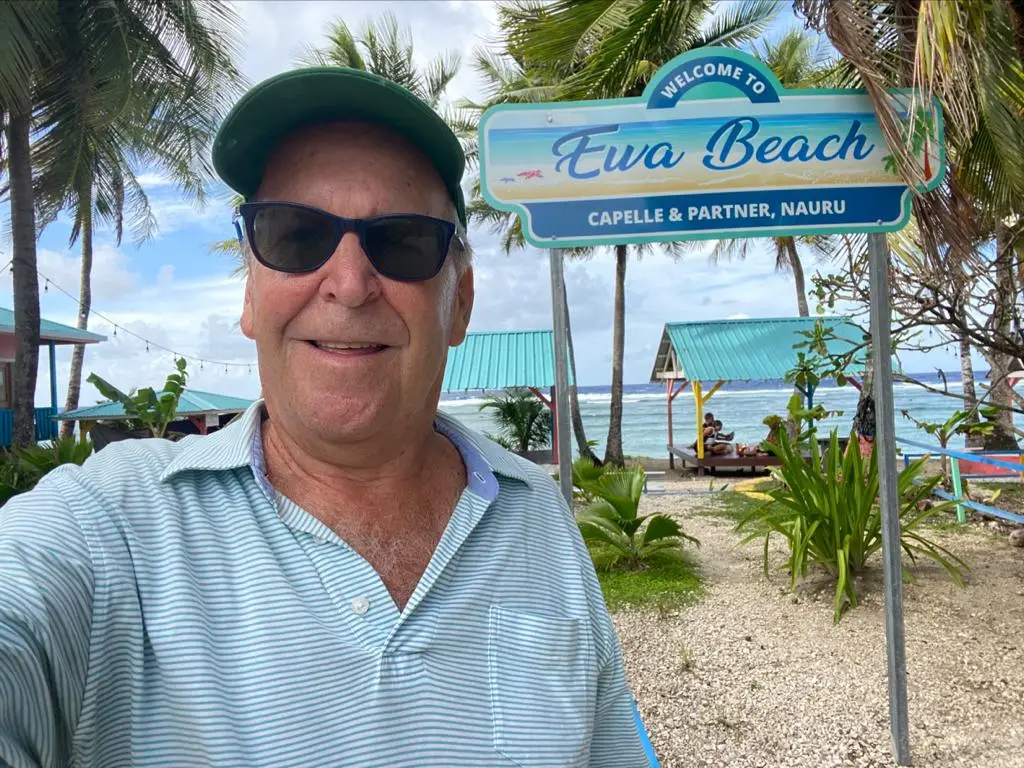
I left Panama on February 8th of 2020, when the COVID pandemic was already starting to create havoc in Asia. I only had four countries left, which I had purposefully left until the end because they were relatively safe and I figured that visiting them would be a walk in the park: Nauru, Tuvalu, Papua New Guinea and Palau. Unfortunately, COVID complicated things a lot more than I imagined. I flew from Panama to Los Angeles and then to Nadi in Fiji, which is the epicenter for flights to the Pacific island countries. As soon as I got off the plane and went to the Immigration Desk, someone came up and asked to take my temperature.
I immediately realized that the trip was going to be more complicated than I had imagined, and that if I got a fever I would be stranded for days. Thank God my health was fine and I was allowed into the country. However, when I showed up at the counter for the flight to Nauru on February 12th I saw that the Nauru Airlines counter was totally empty. I walked to the Information Desk and the person in charge told me: “Sir, there is a pandemic, and a lot of flights are being canceled.
Now there is only one weekly flight to Nauru, which departs on Saturdays”. I knew right away that I was in trouble, because I had invited my whole family to wait for me in Palau, which was supposed to be my last country, which meant I didn´t have much flexibility with my itinerary. I temporarily forgot about Nauru and went on to Tuvalu and Papua New Guinea, and then about a week later arrived in Palau where my whole family awaited me. We were all disappointed that I had been unable to reach my goal, but tried to focus on the positive.
To make matters worse, I had told my family that after Palau, we would continue our holiday by going to the Philippines, Tokyo and Lanai. My wife Pilar, who after 41 years of marriage knew me very well said to me: “You’ve already traveled enough these last few years, so forget about Nauru until after the pandemic. You have to come with the rest of us for the rest of our itinerary, and we’ll all fly back together to Panama on March 4th before they close the airport”. I meekly followed her instructions, but immediately started plotting behind the scenes to reserve a space on the flight from Fiji to Nauru on Saturday March 7th, following the advice of the guru of traveling, Harry Mitsidis, who told me that I would be crazy to return to Panama without going to Nauru.
On March 4th I flew from Hawaii to San Francisco pretending that I was going to take the flight back to Panama with Pilar and my youngest son, before telling Pilar right before getting to the check-in counter that I wasn´t going home, but instead was heading to Fiji to take the flight to Nauru on Saturday March 7th. Poor woman. She was in shock and told me I would never make it back to Panama before the airport closed for good. I took a flight from SF to LA and then to Fiji that night, and on the 7th flew to Nauru via the Solomon Islands. My dream had come true. I had visited every single country in the world, and my joy knew no limits.
However, on Sunday the 8th I received a call from my law partner Alejandro Ferrer, who was the Foreign Minister of Panama at the time. He asked me where I was, and I told him I was in Nauru. He told me I was nuts, and I replied that my wife had said exactly the same thing. He said the airport in Panama would close on Saturday the 14th, which basically meant I would never make it back on time. However, he telephoned the Ambassador of Panama to Australia, who miraculously managed to get me a transit visa, so I was able to fly from Nauru to Brisbane on Tuesday the 10th instead of having to wait until the flight to Fiji on the 14th, which in turn allowed me to get back home on the 11th, three days before the closure of the Panama airport. The good Lord had come to my rescue once again.
You since travelled to the South Pole as well. Give us an overview of that adventure.
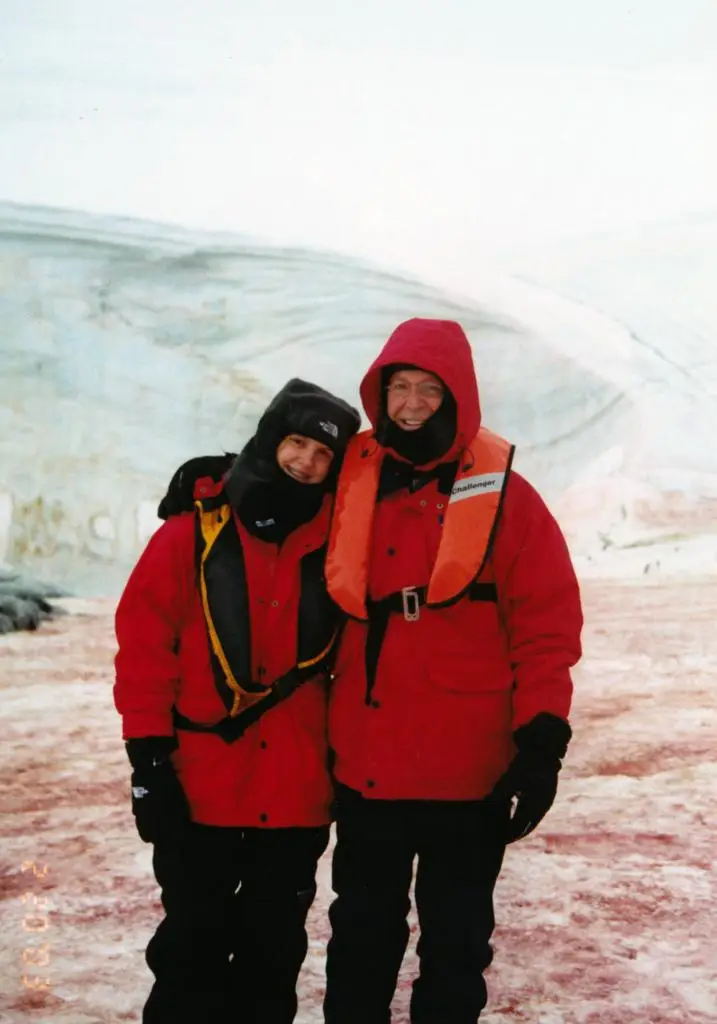
The trip to the South Pole happened by pure luck. I was on a trip on the Glacier Express in Zermatt in the Spring of 2023 and met a woman from Costa Rica who owns a renowned travel agency. She asked me whether I had ever been to the South Pole. This was something that hadn’t crossed my mind until then. I told her I had been to the Antarctic Peninsula on two occasions, but never to the Pole. She mentioned to me that there was a company called White Desert which could fly me from Cape Town to the middle of Antarctica on a private plane, and from there all the way to the South Pole on a DC3.
She immediately booked a space for me for mid-January 2024. I went with my son Jaime Eduardo, and we had the time of our lives. The interior of Antarctica is absolutely beautiful. The astronauts always like to say that the most beautiful mountains and landscape as seen from the skies are in Antarctica. We spent 7 days there and had a blast. There were only 10 people on the expedition. The accommodations were great, the food very good, the other customers very nice and interesting, and the cold weather was manageable due to the fantastic clothing you can buy from White Desert. The activities were also great. We went rappelling a couple of days in the nearby mountains, visited a cave another day, and went to the coast on the plane to see the emperor penguins.
Another day we flew on the DC3 to a refueling station. We were supposed to continue immediately afterwards to the South Pole. But in the middle of beautiful Antarctica with its freezing climate, sudden windstorms that blow snow off the ground thus producing conditions in which you can barely see as far as your hand, anything can happen, and it did. The temperature at the refueling station was minus 30 degrees Fahrenheit, and the engines basically froze. There was a heated dining salon at the station, and ten tents. But the White Desert staff had not contemplated that we would sleep there that night, but rather on the way back from the Pole, so they hadn’t heated the tents. We had to go in there and freeze our butts off while the plane’s engines were worked on.
They finally fixed the problem after a few hours and we took off for the Pole. You can’t begin to imagine the excitement we felt inside the very cold plane. After an hour and a half we landed at the Pole. There is an American science station there, but since the onset of COVID they stopped accepting visitors, so we basically walked around taking lots of pictures, enjoying the minus 35 degrees Fahrenheit weather on a sunny day with no wind, which made things a lot easier. After about 3 hours we headed back to the refueling station and then continued to our base camp and the warm comfort of our beds.
And then you also went to the North Pole. What was that like?
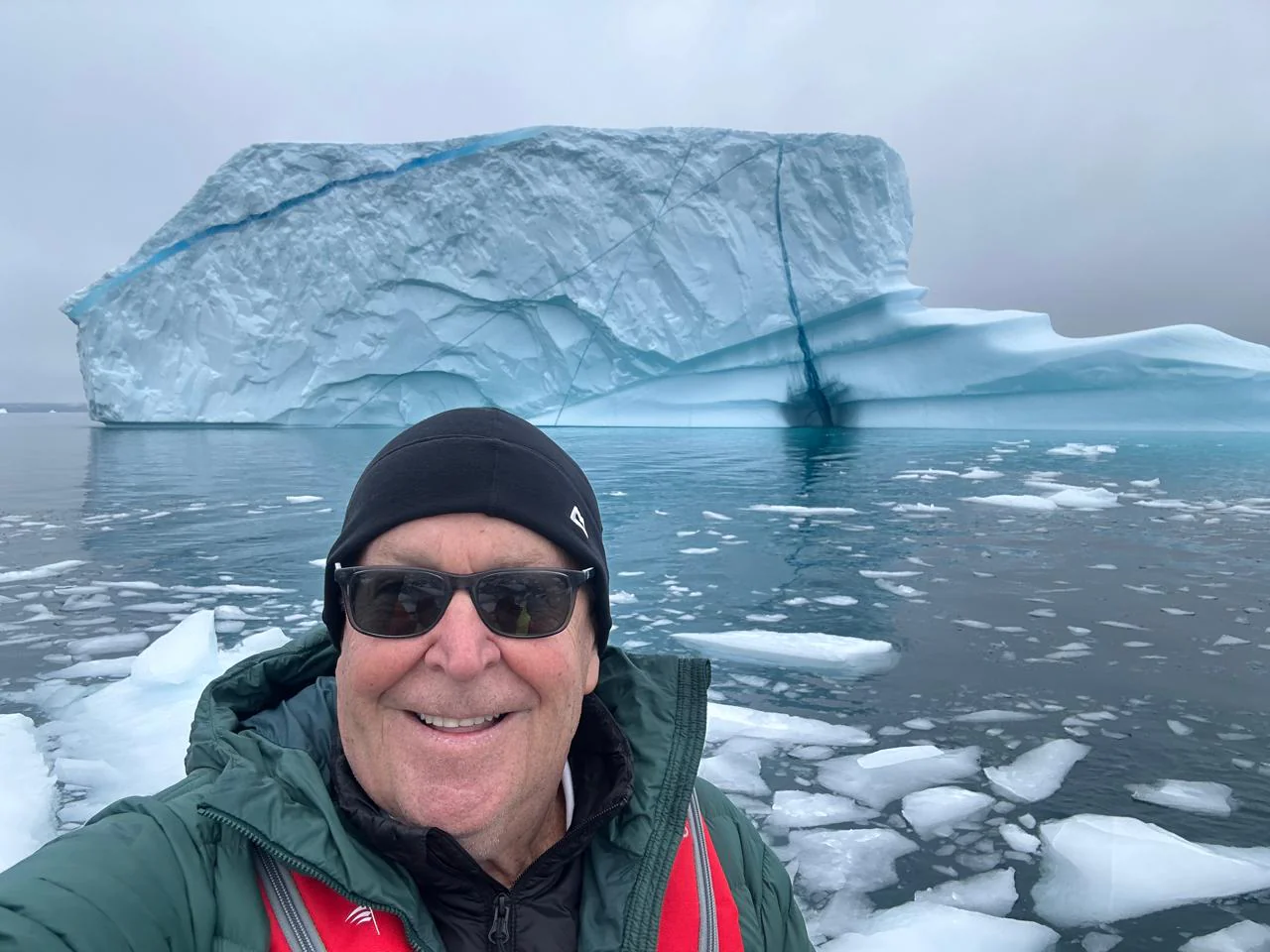
I had been planning a trip to the North Pole for years. I was supposed to visit in May of 2020 with my daughter Sofi, and had already advanced the full payment to a Finnish travel agency who had promised to fly us there from Svalbard to Barneo Camp, which was run by the Russians. However, the camp had to close down in 2020 due to Covid and has not reopened since then. Fortunately, the agency repaid the full deposit. I flew with Sofi to Svalbard in March of 2023 to see whether we could somehow find someone who could get us to the Pole. And lo and behold, we went on a snowmobile ride with a guide in the middle of a driving snowstorm, and she told us that an ice breaker run by the French company Ponant had just started taking people there the previous summer.
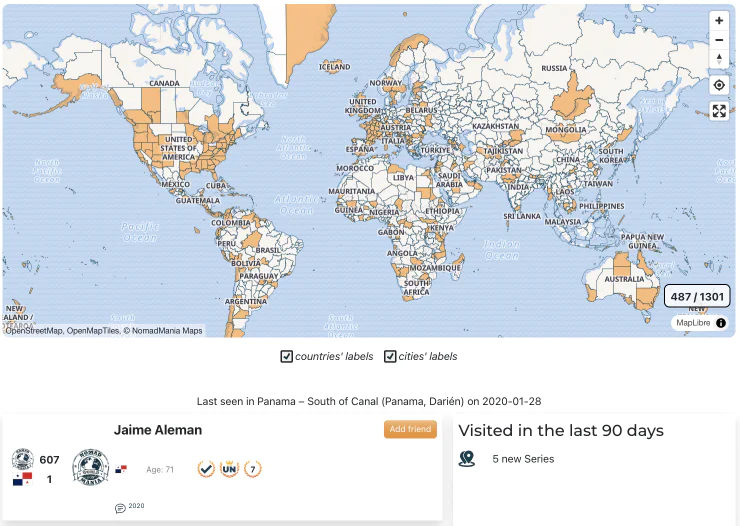
We booked our tickets right away for a 17 day trip at the end of July 2024 from Svalbard to the Pole, and then to Greenland and Iceland. We saw polar bears along the way and some beautiful snow formations above the frozen sea. But we were also saddened to see how much of the ice is melting. When we arrived at the Pole we were very happy and grateful for the experience and the achievement. Sofi all of a sudden asked me a great question: Dad, do you think any human has ever been to all 193 UN countries, both Poles and Space? That got my curiosity running right away, and as always we turned to NomadMania, which I always call the Bible of travel records. We saw that the legendary explorer Jim Kitchen had been to all the countries and to space, but not to the Poles.
We also saw that only twelve people before me had been to all the countries and the Poles, so we did a quick google search and ascertained that none of them had been to space. I was intrigued by the possibility of achieving what ChatGPT calls the “Grand Slam of travel”, and immediately contacted Blue Origin to book a ticket (I had already paid for a ticket on Virgin Galactic, but they were remodeling their spacecraft and weren’t going to fly again until the middle of 2026). In February of 2025, Blue Origin confirmed that I could fly with them and shortly thereafter told me it would be in May. It was like a miracle for me. I had never even thought of going to all the countries until September of 2015 when I reached 120 countries and my wife gave me the idea.
And now all of a sudden I had the chance of achieving something that no other human being had done, without ever having the idea cross my mind until a few months earlier when Sofi brought it up when we arrived at the North Pole. It was hard to believe that I was on the verge of making history. The most amazing thing is that I had done all this while traveling on a Panamanian passport. A true miracle, and a reflection of the insatiable thirst I have for travel and adventure, and of the endless energy which God endowed me with.
So did you prefer the South or the North Pole experience and why?
That’s an easy question. The South Pole is much more beautiful and interesting. Antarctica is the largest desert and one of the driest places on earth (its land mass is 40% larger than Europe), covered by pristine snow as far as the eyes can see, a beautiful coast line full of icebergs, clear blue skies, no human presence except for a few scattered science stations, gorgeous landscape, spectacular mountains, and a profound silence and quietness that makes you feel as if you’re on another planet. Without a doubt one of the most magical places on earth.
The North Pole is basically frozen ocean which is beginning to melt during the summers. It’s beautiful in its own way with some nice snow and ice formations, but nowhere close to the incredible landscape one sees in Antarctica.
Now, let’s turn to what you have currently become known for – your journey to space. How did you find out about the possibility and tell us about the initial steps and the preparation for the Blue Origin flight.
As soon as Blue Origin let me know that I had been chosen for one of their future flights, I started to work immediately on overcoming my mild fears of claustrophobia (fear of cramped spaces) and acrophobia (fear of heights). An expert on overcoming phobias aided me by making specific suggestions. In the case of my acrophobia, I would walk on the rooftop of my building, on the terrace of my 35th floor apartment, or climb an observation tower in the middle of the rainforest about an hour’s drive from my home, and also repeatedly watch replays of previous New Shepard flights on YouTube. But the biggest game changer was taking yoga and meditation courses with an instructor. The breathing exercises transformed me. I started feeling more and more relaxed.
One day about two weeks before I flew up to Texas for the final two and a half days of intensive training, a small miracle occurred. I was having a meditation session with my instructor at 6 am on my terrace overlooking the ocean while the sun started coming out. The instructor told me to close my eyes and imagine a ray of sunshine coming down from the sky, entering my body through the top of my head, going down my body and then down the 35 story building, and continuing all the way until it reached the middle of the earth. It was very soothing, and immediately thereafter I felt the presence of my mother coming down from heaven and penetrating my body via the top of my head and embedding herself in my chest.
Yes, the mother who had until her death drawn the sign of the cross in my forehead before every trip since I started to become a serious traveler at the age of 18, had come down from the heavens to tell me she would travel to space with me and protect me along the way. I started to shake and cry uncontrollably while trying to explain to the instructor what had just happened. My mother kept her promise and rode with me to space. It may sound strange to some people, but that’s exactly what I felt. And she stayed with me. After that, the rest was easy. I never felt any fear or trepidation.
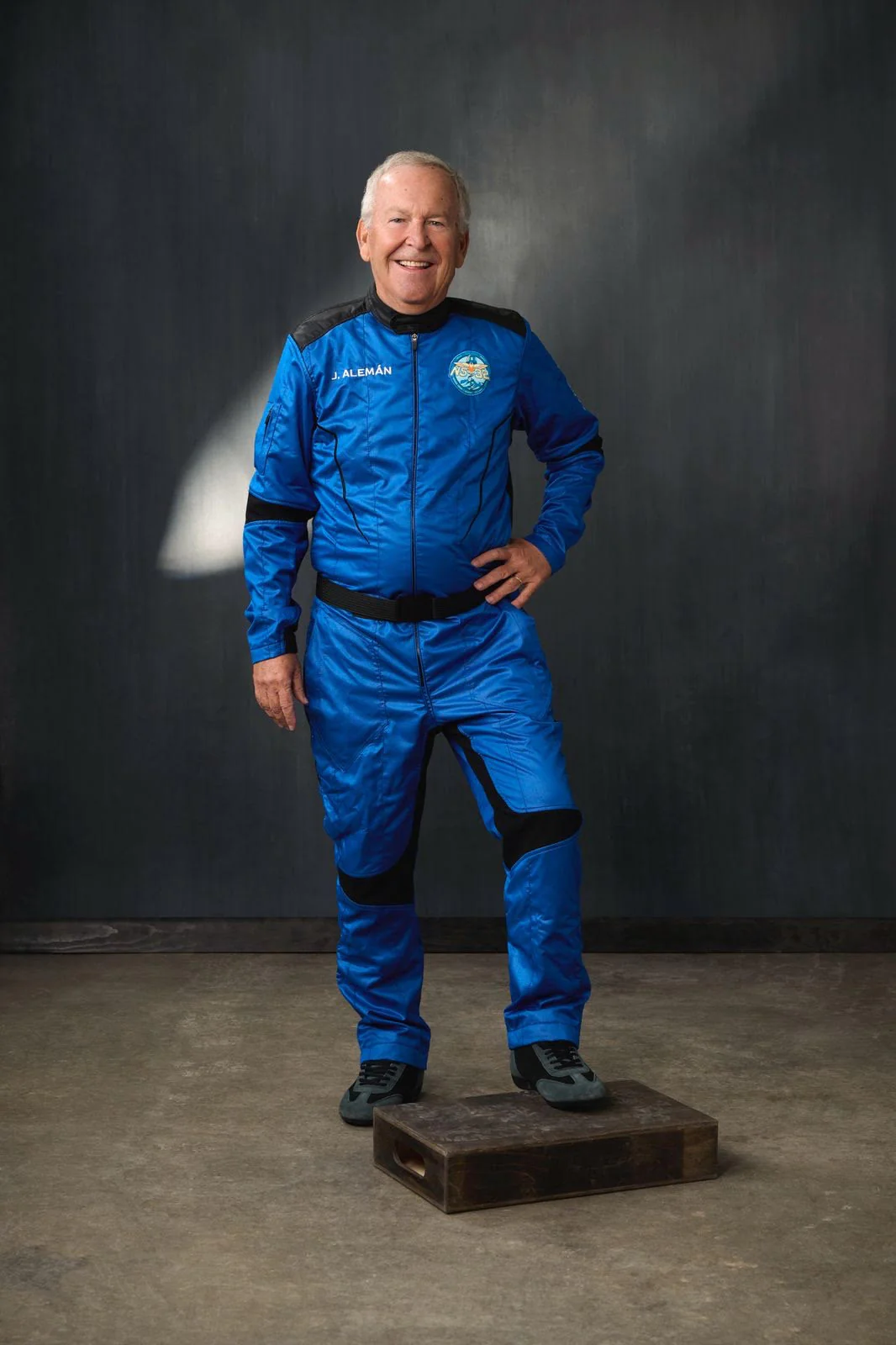
I arrived at the Blue Origin compound in West Texas on Wednesday May 28th in the morning and went straight to the plankway from which we would access the capsule. The plankway had originally terrified me when I first saw it on television because it’s quite high and open aired, but walking across it was a piece of cake. I had overcome my fears without the need to take any of the tranquilizers which one of my doctors had recommended. We trained so hard on Thursday and Friday, that my five companions and I felt totally confident that everything would be fine. Blue Origin leaves no base uncovered. They go over every little detail, so our confidence level was extremely high. They have backups for everything, and additional backups for all the backups.
What happened on the day of the flight? Give us an outline of what goes on before and during… and who the other people on board were, and how you bonded.
On the day of the flight, Saturday May 31st, I woke up at 4 am, which is when I usually wake up anyway. I took a shower, prayed and then went out for a walk while doing my breathing exercises under a gorgeous star-lined sky in the Blue Origin sleeping compound in the middle of a valley surrounded by the Guadalupe Mountains. I was surprised that I still felt so calm, even though liftoff was only four and a half hours away. I had prepared hard for weeks, and the training was paying off. My wife woke up at 5 am, and I headed to the dining room and ate a small piece of bread. At 5:30 the families of all six astronauts came to the compound to wish us a good and safe trip. It was great to be able to say hello to and embrace my three children, six grandchildren, as well as my daughter-in-law and my son-in-law.
The experience for the family can be tougher than for the astronauts. My wife in particular was very nervous, which is perfectly understandable. This was only the twelfth manned flight in the history of New Shepard. We were pioneers in the nascent industry of commercial manned space flights, and obviously there were risks involved. The five other astronauts and I were driven to the training center at 6 am for a final brush up of the instructions, and arrived there at approximately 6:10 am. We had first met a month earlier in a zoom conversation, and then personally on Wednesday when we all arrived at the compound. They immediately named me Marco, in honor of Marco Polo, given the fact that I had traveled so much. They came from different countries and backgrounds, but we bonded incredibly well during the training.
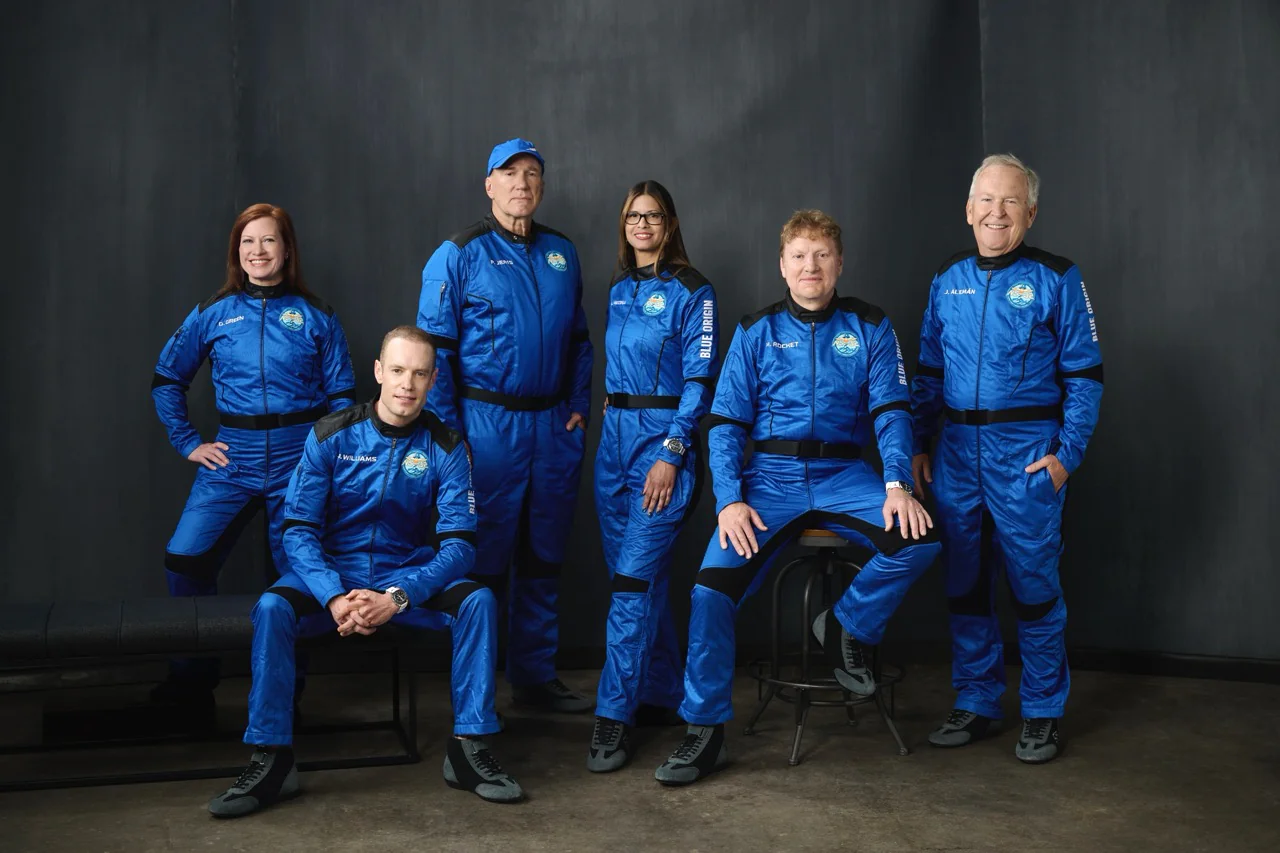
They were:
- Jesse Williams, a Canadian living in Las Vegas who had climbed 6 of the 7 highest peaks in the world;
- Mark Rocket from New Zealand, who was an aerospace expert and investor;
- Paul Jeris, a Cleveland businessman whose father had worked for NASA;
- Aymette (Amy) Medina, a native of Puerto Rico who taught classes to high school students in Galveston about building experimental rockets;
- Dr. Gretchen Green, who was a radiologist and a member of the board of directors of the US Space and Rocket Center Foundation.
- I was the sixth astronaut. We got along very well.
The launch was scheduled for 8:30 am. We left the training center at around 7:40 am in two cars, waved to our family and friends right in front of the observation tower which is about a mile and a half from the launch pad, stopped in front of the rocket to take a group picture, drove to the tower, took the elevator to the safety room we would use in case of an emergency prior to the launch, spent five minutes in the safety room while our instructor and so-called seventh astronaut Jake Mills called the control tower to make sure everything was in order and we could head to the capsule, and then walked across the plankway to the other side of the tower at approximately 7:55 am. We had practiced this so many times, that to us it didn’t really seem that this was in effect the real thing. It seemed like another rehearsal.
We accessed the capsule at around 8 am, exactly as scheduled. The clock in front of our respective seats was at T minus 30 minutes. Jake closed the hatch at T –23 minutes, which meant we were now on our own. No one spoke. We were focusing on our own thoughts, fears, anxieties, dreams, etc. I was so calm that I couldn’t believe it. My extreme desire to travel to space, my mother’s presence, my connection to God, and my intense training were paying off.
I was laughing at myself thinking how crazy I had to be to be taking off on this rocket to space. Anyone of us could decide to stop the count at any time prior to T -2:30 minutes, but no one did. I had my tranquilizer pill on the pocket of my space suit, but it never occurred to me to use it. And then we took off. It was an exhilarating feeling. We saw the orange flames surround the capsule, and suddenly we were off to the races. I remained totally calm. I loved the feeling of the G forces of up to three times my body weight that I felt on my chest as we raced up to the heavens at speeds approaching 2500 miles per hour, holding with all the force of my arms to the handles at either side of my comfortable reclining seat looking out the enormous windows next to it, which provided spectacular views of space and the earth below.
After two minutes and ten seconds, an announcement in the screen in front of each seat warned us to be prepared for MECO (the power of the main engine would be cut off), and twenty seconds later the capsule decoupled from the booster. We had been well trained for that, but it was still a bit disconcerting. Shortly thereafter, the screen across from our seats indicated that we could unharness and float. I had already gone on a Zero Gravity flight in Florida a few months earlier, and decided prior to the launch that I would loosen my harness to feel the loss of gravity, but would not float. Many of the previous astronauts had said that one the things they regretted the most was not spending more time looking out the window. I didn’t want to waste the few precious minutes unloosening my harness, floating and then rushing to get back on my seat instead of spending my time looking outside. I also decided not to take a camera with me. I wanted to enjoy the experience to the fullest without any distractions.
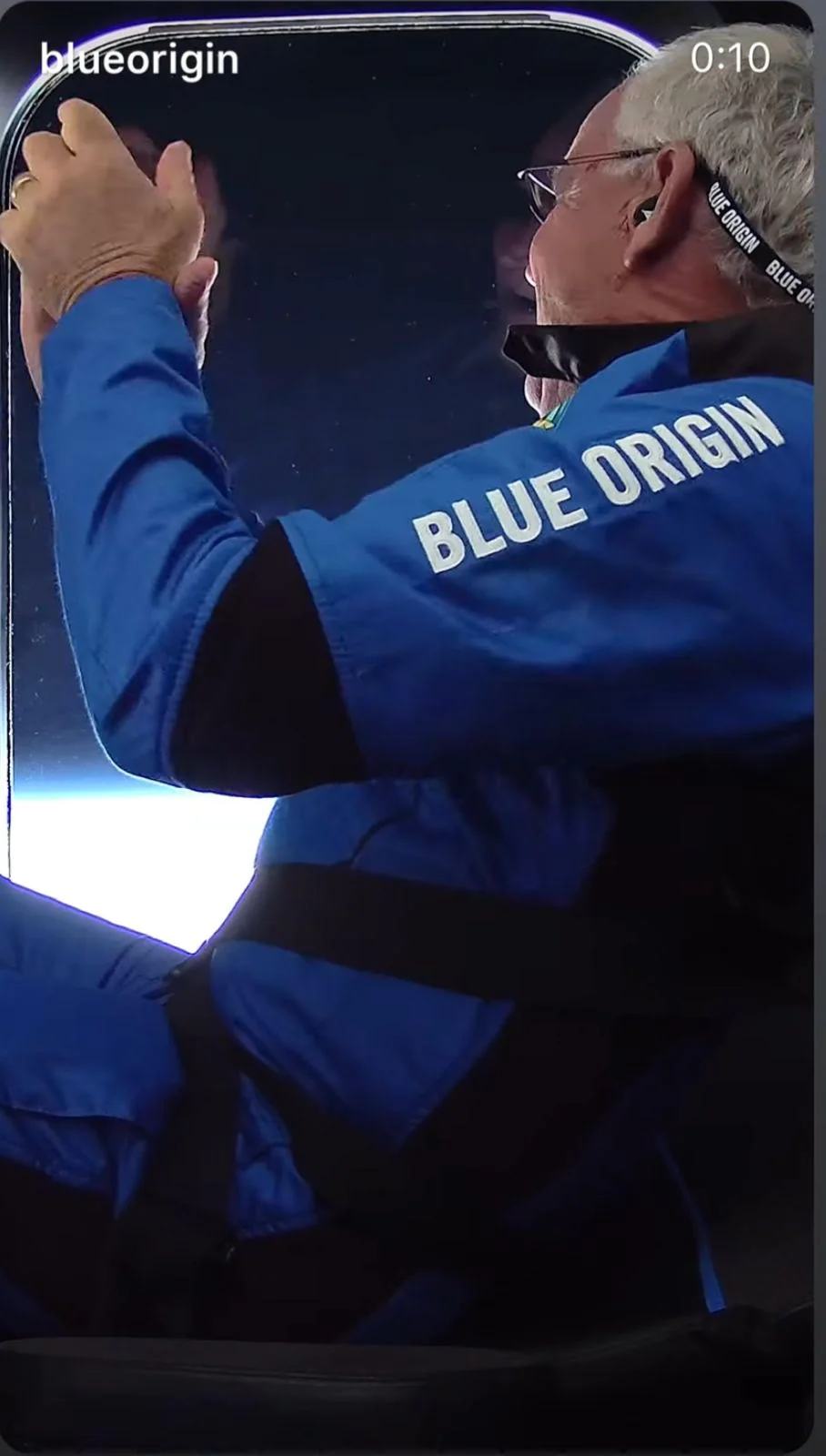
There were fixed cameras inside the capsule recording everything and that was good enough for me. The view was simply overwhelming. You could see the curvatures of our planet and its blueness below, but by far the most revealing view was seeing the blackness of space and especially its infinity. It’s like staring at a deep, endless horizon which is so close to you that you feel as if you can touch it, but at the same time so deep, faraway and impenetrable that you’re left puzzled and bewildered by what lies beyond. The signs on the screen told everyone we had crossed the Karman Line (62 miles above sea level), and everyone started congratulating me on having achieved the “Grand Slam of Travel”. In a matter of three minutes and thirty seconds the screen signs as well as a Mission Control voice message told everyone to get back on their seats and fasten their harness, and we then started our free-fall descent back to earth at speeds exceeding 3500 miles an hour, during which I temporarily experienced very strong G-forces and gazed at the beauty of the earth below. Shortly thereafter we penetrated the atmosphere, which in turn slowed down the speed of the capsule.
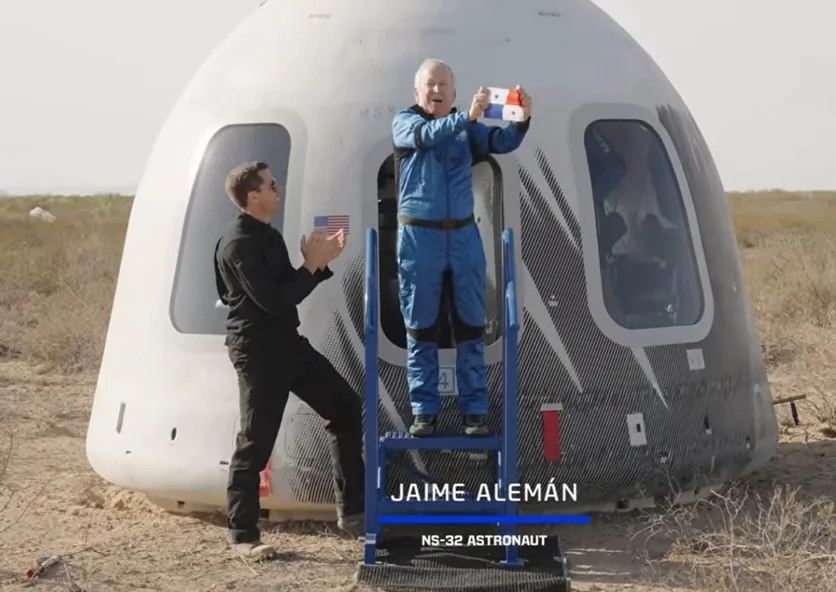
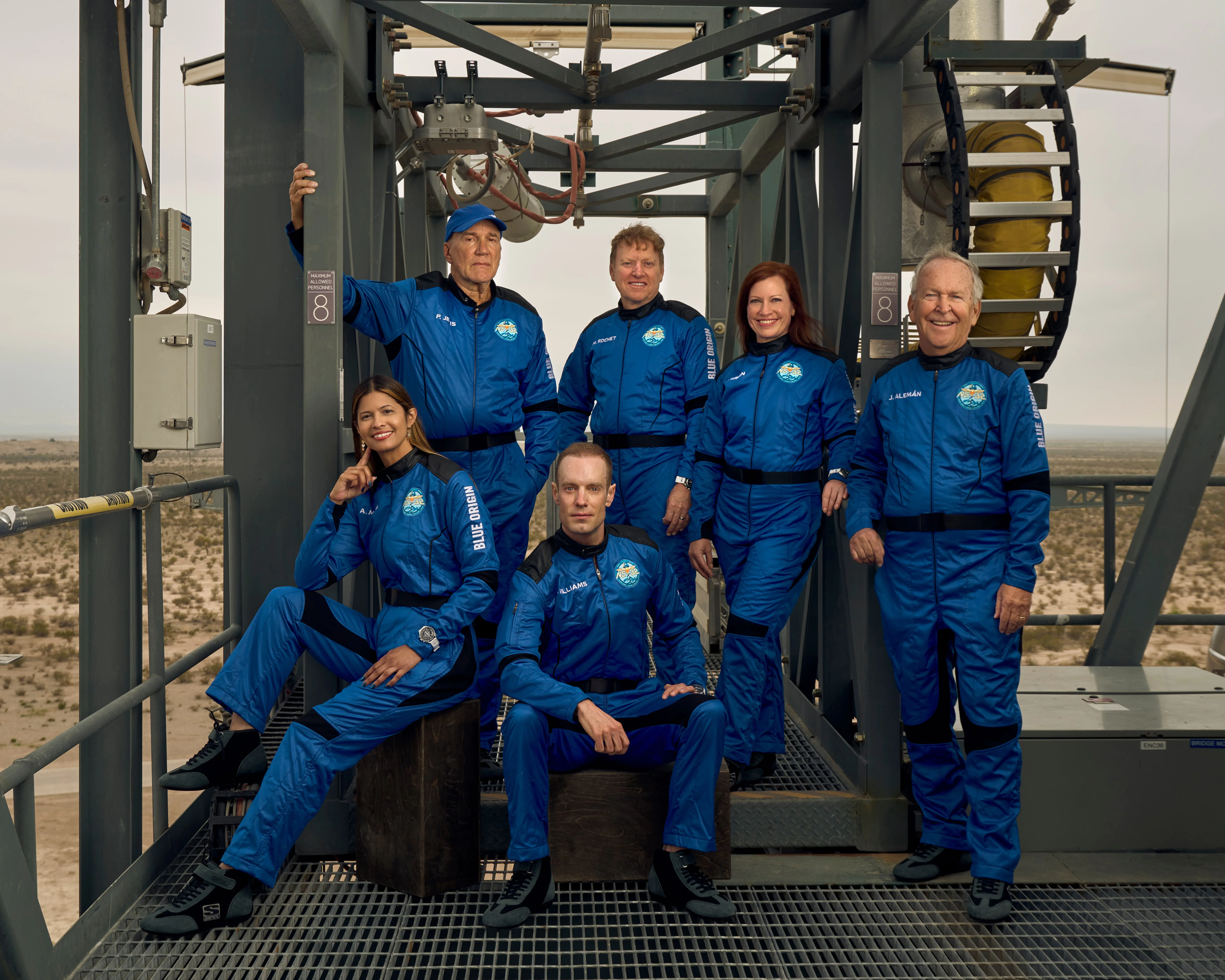
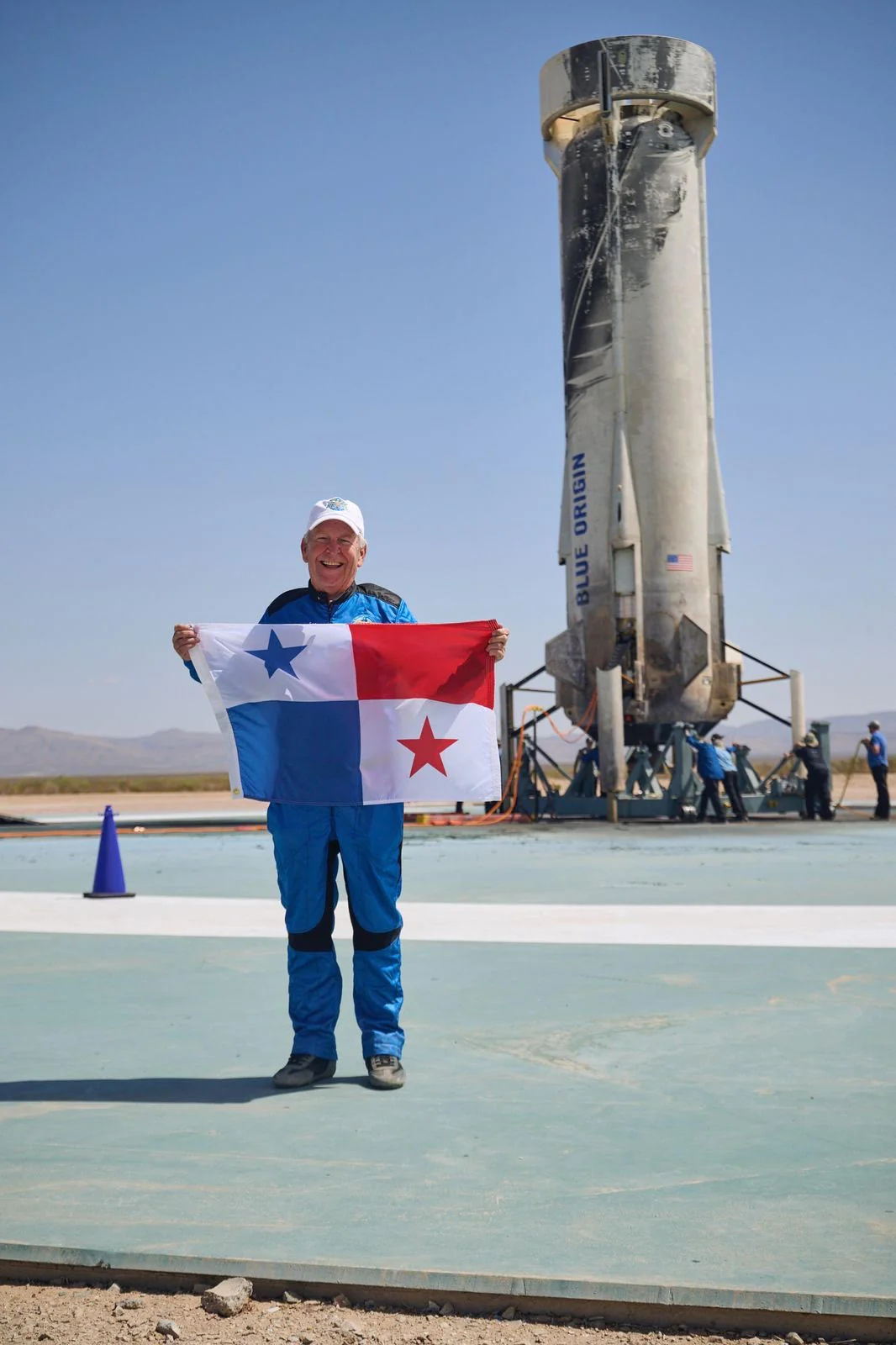
A minute later the three parachutes deployed, making a loud sound, and we descended slowly to our landing spot at a final speed of 2 miles an hour. The whole trip took exactly ten minutes. We were all ecstatic and waiting for Mission Control to give us the sign to unbuckle, at which time we stood up, took group pictures, laughed, celebrated and relaxed after an incredibly successful trip which exceeded our wildest expectations. Jake opened the hatch a few minutes later and we started descending in an orderly fashion. I raised my hands while holding the Panamanian flag as I came out, and then ran to embrace my wife. A few minutes later I gave a moving interview in which my voice cracked while I described what it had been like to be part of this wonderful experience.
I then went to greet the rest of my family, visited the Training Center to pick up my personal belongings, went back to our trailers/bedrooms to shower, gave tv and newspaper interviews, and then had a late lunch and a few vodka tonics in the company of the other astronauts and our respective families. Everything had been an unqualified success, and more thrilling and rewarding than I ever imagined. I would go back tomorrow if I could.
The next morning we woke up early, had breakfast, and then went to the Control Center to thank all of the staff for bringing us back safely home. After that, we went back to our rooms to pick up our suitcases and start our return to Panama.
So, what exactly is the feeling of heading to space? What do you see? How long does it take?
As explained above, for me the feeling of heading to space was totally overwhelming and absolutely thrilling. The biggest surprise is the calmness, peacefulness and serenity I felt from beginning to end. You see the curvatures of the earth and its blueness, and also the deepness, darkness and infinity of space.
For me, traveling has always been the best way to expand my horizons, enjoy life to the fullest, acquire experiences and knowledge, make new friends with totally different backgrounds than mine, and accumulate experiences and memories that become an intricate part of my soul and memory, thus enhancing my intellectual and spiritual wellbeing. And since I had already traveled extensively on our planet, going to space was the cherry on top of the pie and the perfect complement to a life full of thrills and adventures. Another advantage of the trip to space was that it took me totally out of my comfort zone and forced me to confront and overcome my claustrophobia and acrophobia, which I did.
Also, in space you feel the immensity of our universe, the presence of the Gods and the mysteries that lie beyond our very tiny planet. The flight only lasts 10 minutes, which is obviously a very short time, but even that is not an impediment to experiencing the feelings I described above. On the contrary, it leaves you with a desire to go back again, for a longer period, perhaps to the space station or another more exotic destination. I’m sure the future generations will get to experience that. I’m thankful to Blue Origin for having given me a small sample of what’s out there and of the wonderful opportunities for exploration that lie ahead.
Now you have completed the flight and made history. Tell us a little about the reactions – from your family, friends, the press and others. How does this make you feel?
The reaction of my family, friends, the media, and especially my fellow Panamanian countrymen has been overwhelmingly positive, which has been a pleasant surprise. I never imagined that achieving this goal would create so much excitement all over the world.
I don’t have an Instagram, Facebook, Linkedin or other social media account. I’ve done my traveling in a very private manner, always paying attention to the achievements of other NomadMania explorers, and asking for assistance or advice as needed. Only when I reached my final country in 2020 did I get any publicity. The trips to the South and North Pole were relatively quiet, with very little fanfare, as has always been my style.
But I must admit I’m humbled and ecstatic at the messages of congratulations and admiration at being the first human to go to all UN countries, the Poles and Space, and by the many television, magazine and podcasts interview requests that I have received, which I have happily accepted as I realize it’s important to leave a legacy. I have always looked up to Harry Mitsidis, Jim Kitchen and other trailblazers who have served as guides and inspiration to me and many others. If I can inspire others to follow my example, I will be very happy and fulfilled.
How do you see the future of space travel? Do you think it is something a more general number of people will be able to afford soon?
I’m very upbeat about the future of space travel. We’re at a very early stage. The first human went to space in the year 1961, and only 700 people have managed to make it past the Karman Line in the 64 years after that, which adds up to only 11 persons per year. Of those 700, only 12 have made it to the moon, all of them from the United States.
It’s a reflection of how difficult and challenging it is to travel to space. But now that the private sector (Blue Origin, Space X, Virgin Galactic, Axiom, etc.) has gotten involved, we should see more progress. And prices will inevitably come down, thus opening it up to many more people.
I envision that in approximately 50 years we will begin to see the first settlements of people living in outer space above our planet. Elon Musk has bigger dreams and plans to create settlements in Mars, but I don’t think that’s realistic until at least 100 years from now, although I hope I’m wrong about that. I always like to make the comparison with air travel.
As I previously mentioned, the first flight of the Wright Brothers lasted 20 seconds and covered 200 feet. And look where we are now. The progress has been mind-boggling. Something similar is about to happen with space travel, but we need to be realistic with our expectations. It will take a while, but we’re making tangible progress and should feel very encouraged and optimistic about the future.
Can you think of any downsides or worries about travel into space?
I don’t see any downsides or worries about travel into space. The demand is there. And look at the safety record of commercial airline travel. The probabilities of dying during a commercial flight are one in fifteen million. I foresee something similar for space travel once people start moving to space before the end of this century.
Space is so huge and the thirst of humans for discovery is so limitless, that over the next centuries we will make discoveries that we can’t even begin to imagine right now, just like our forefathers got on their boats, used their imagination, took incalculable risks and discovered the last corner of our planet. The same pattern played out with airplane travel. I have no doubt that the same will now occur with space travel.
So what are your aims now? Where are your next trips?
I have a trip planned to visit the Nazca Lines in Peru in early July, which is the perfect follow up to my recent trip to space, and am looking forward to it. I think that by then the excitement surrounding my trip to space will have leveled off somewhat, and I’ll be able to focus on writing the final chapter of my travel autobiography.
I have had a blessed life, accompanied of course by the pain, sufferings and disappointments that are part of human nature for practically everyone on earth. I want to take the next few months to let everything sink in, enjoy the moment, relieve the memories and experiences and gradually rekindle my passion and energy and search for new adventures and discoveries. Who knows what lies ahead? Perhaps the best is still to come, and I’ll surprise myself with one last epic ride like the recent one to space. Only time will tell.
We will ask our signature question again – please don’t look at your past answer, but answer again based on your current feeling – if you could invite four people to dinner from any period in human history, who would you invite and why?
Marco Polo – one of the earliest explorers.
Fernando de Magallanes – leader of the first expedition to successfully circumnavigate the earth.
Sir Edmund Hillary – first person to conquer the highest mountain in the world.
Bill Gates – the driving force of the initial growth of the internet.