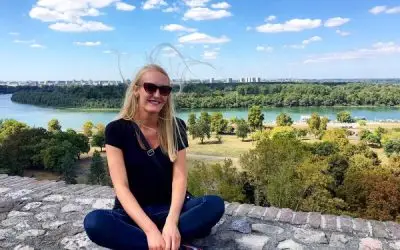
Mia Kercher is a sales copywriter and marketing consultant who currently finished her mission of a predominantly overland travel from Serbia to Vietnam with an exception of a Pakistan – Thailand flight. She writes about unconventional methods of travel, solo female outdoor adventures, marketing as a tool of feminist empowerment, and the confidence to go after your big goals and dreams.
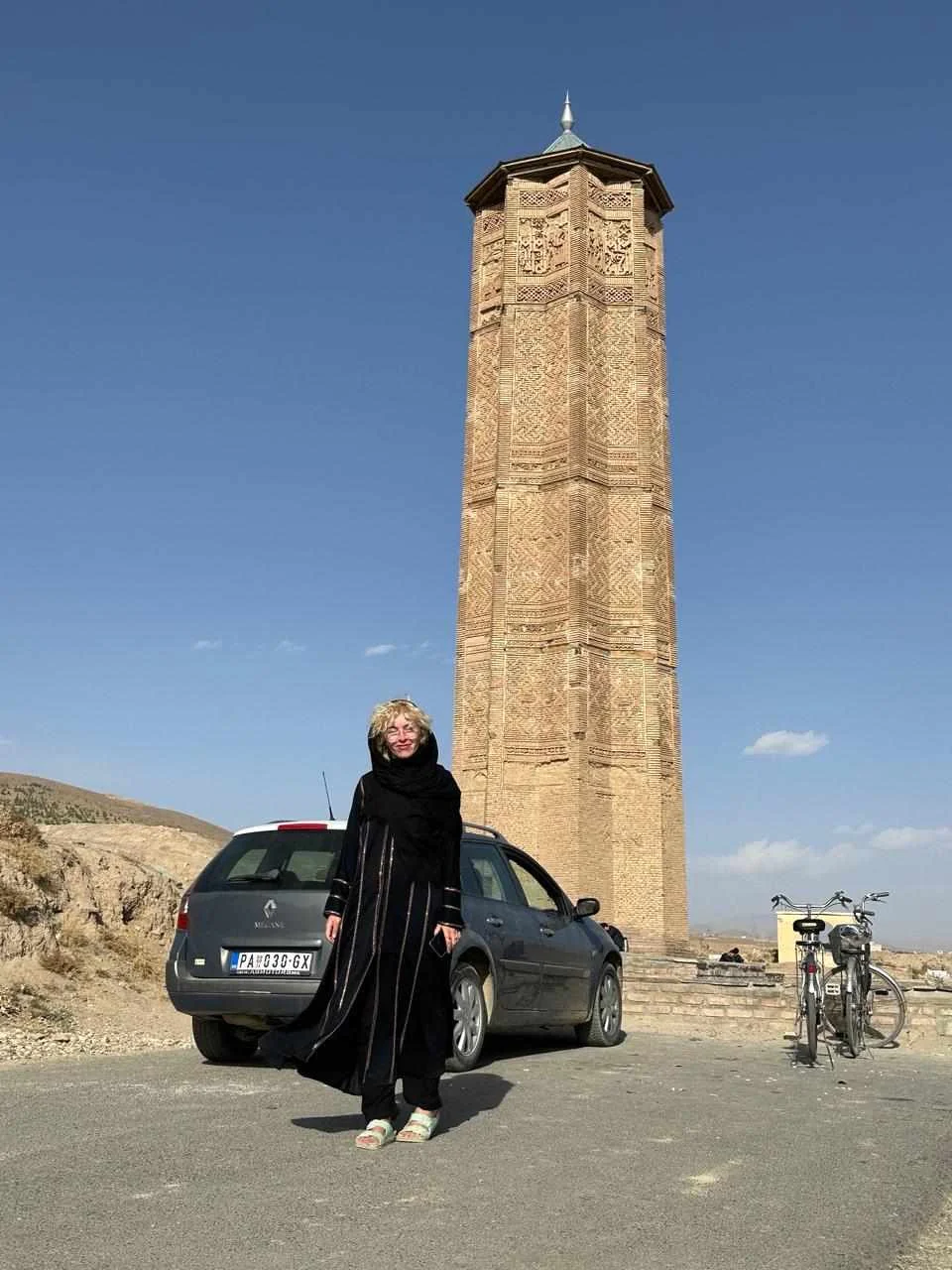
Mia tells her story:

After 4 years of living in Serbia, I realized I was bored.
After graduating from college (in Oregon, USA) and backpacking through Europe for 2.5 years in 2018-’20, I’d decided to settle down in Serbia. It was fun for awhile…
Lots of wild nature for this hiking/camping/cycling lover to explore,
Central location to fly to other countries within Europe,
And I was traveling somewhere almost every month.
It was also a low-cost location to start my online copywriting business and get it off the ground and running. But I really needed a big adventure.
And after visiting Bali with some friends in May of 2024, I realized Asia was a place full of DIFFERENT. And that’s what I was craving. Something totally different that would shake up the way I’d so far been traveling (mostly within Europe).
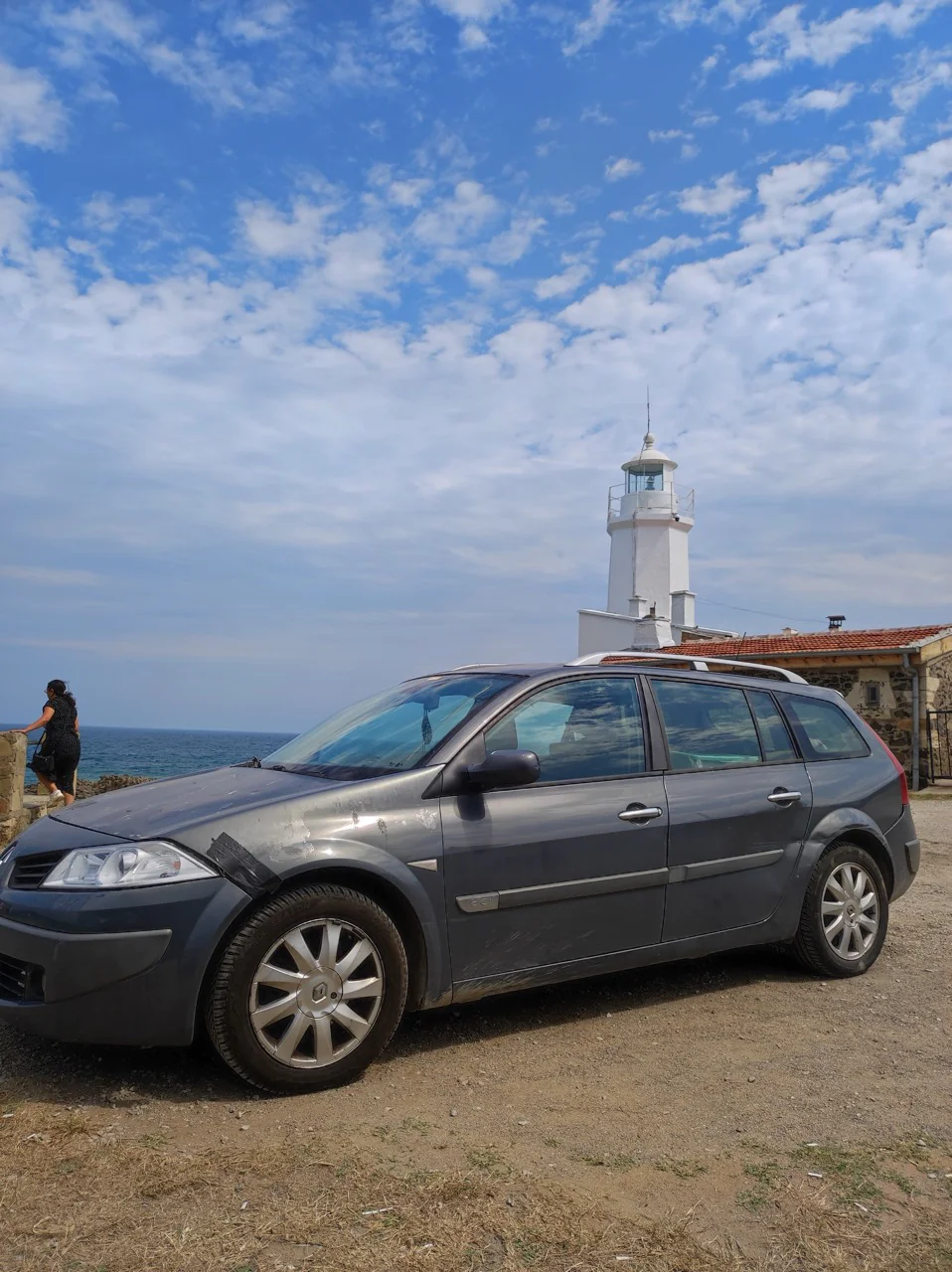
Since I was ready for a brand-new chapter in life, I gave away most of everything I had, loaded the rest in my beat-up-but-reliable Renault Megane (along with my cat who I’ve had for 11 years – so of course I’m not leaving her behind)…
Threw myself a goodbye party with my friends and then headed east to the other side of the continent – Vietnam!
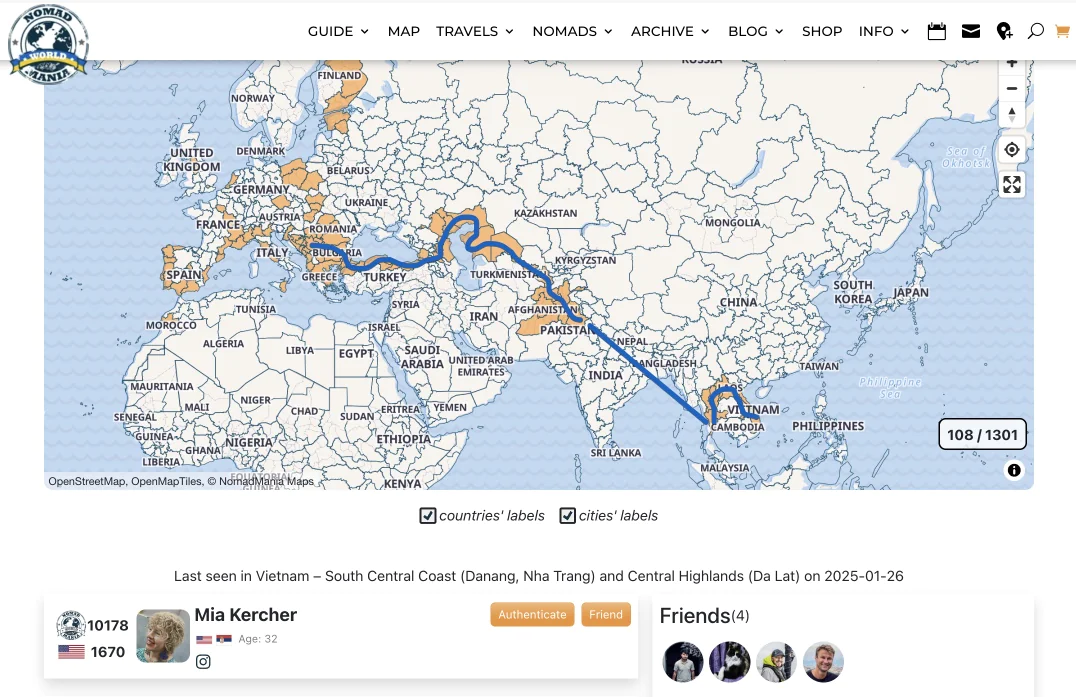
First Country: Bulgaria (For Bansko Nomad Fest)
I found out about this awesome festival which coincided with perfect timing to start my trip. That’s where I met Orest, the managing partner of NomadMania, who inspired me with his impact-focused way of traveling.
He’d also visited a lot of the countries most people are afraid to visit. Since I was receiving daily messages from friends warning me, “Don’t go to Iran or Afghanistan!” I was excited to interview him for my podcast and hear first hand that it’s perfectly fine to visit these countries.
The media can so often warp our view of what a country is like. Orest confirmed my desire to go and see what these countries are like for myself, with my own two eyes, instead of trusting the media and its biases/exaggerations.
Meeting all the other travelers and nomads at this festival was a great way to start my trip – a lot of people got excited, hearing about my upcoming journey from Serbia to Vietnam, and they sent me off with lots of positive vibes.
I highly recommend you attend in 2025 – I’d love to see you there.
Second Country: Turkey (Driving along the Black Sea)
I was pleasantly surprised to find out Turkey has a big camping culture. So I was able to drive along the Black Sea, finding gorgeous camp sites. They were perfect for parking the car and finding hiking routes to trek nearby, then coming back to the site and being welcomed by locals with incredible hospitality – offering me chai, sharing meals with me, and having great company to pass the evenings with.
I was AMAZED at Turkish hospitality. One day I hiked to the top of a mountain, and two different families at the top approached me, offering me chai and homemade bread. Yes, I brough Cleo (the cat) with me on all my hikes!
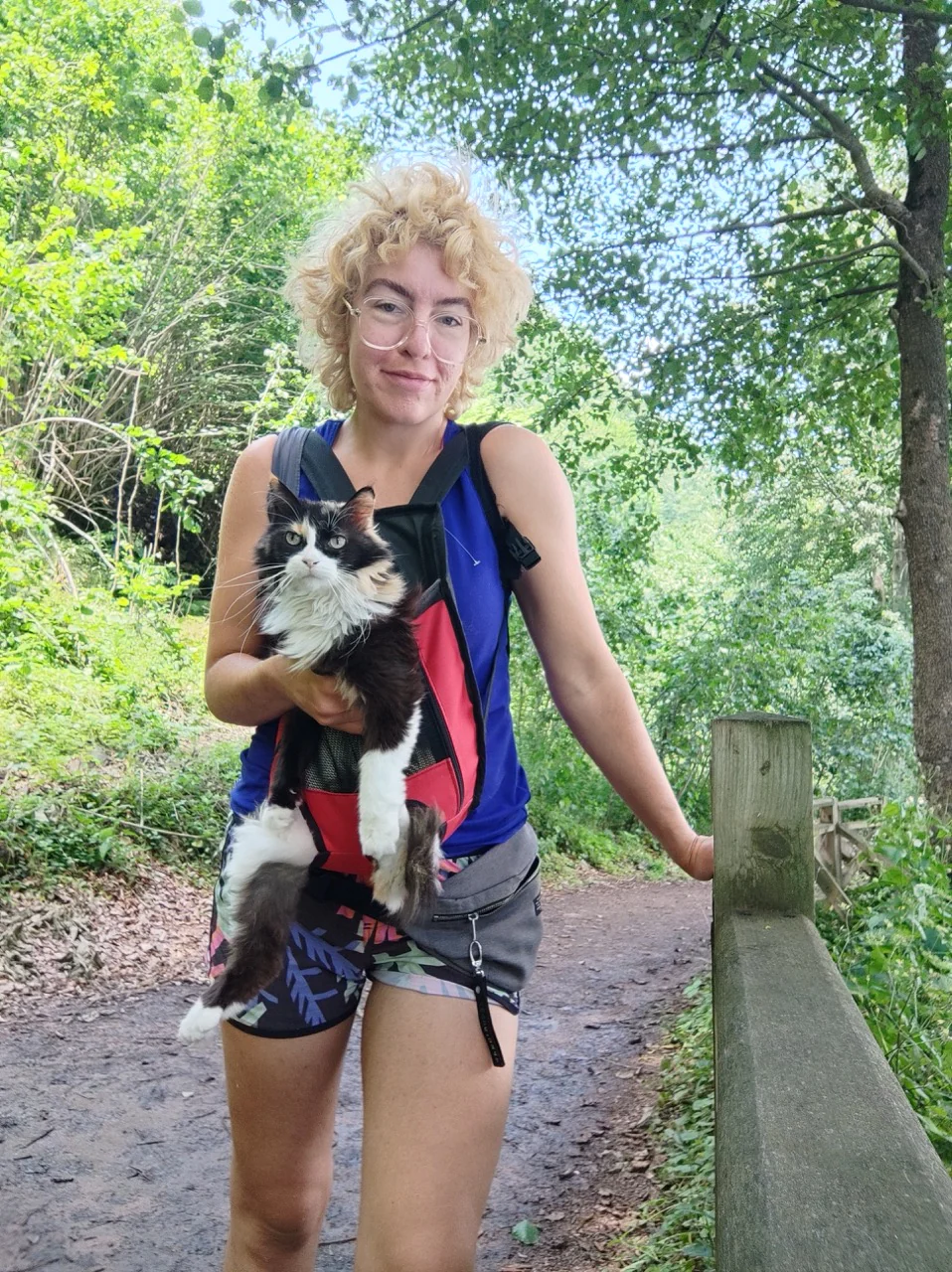
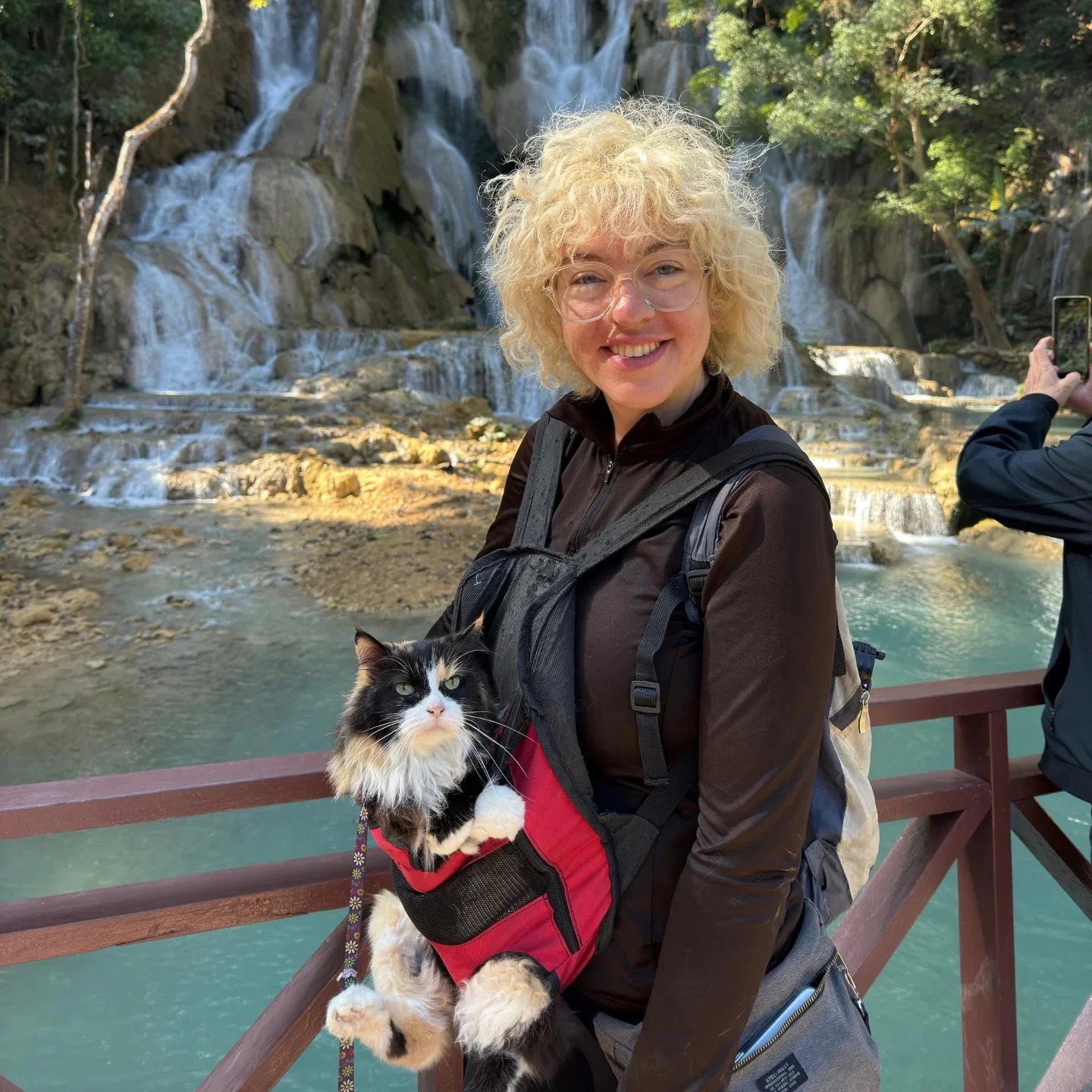
I was a little nervous, since I’d only brought her on small day hikes before this trip, but we adjusted to each other’s rhythms really nicely. She rides comfortably in my front-facing pack. She stays perfectly calm, and then tries to climb out when she needs the bathroom. So I stop, take a water break, and let her do her thing.
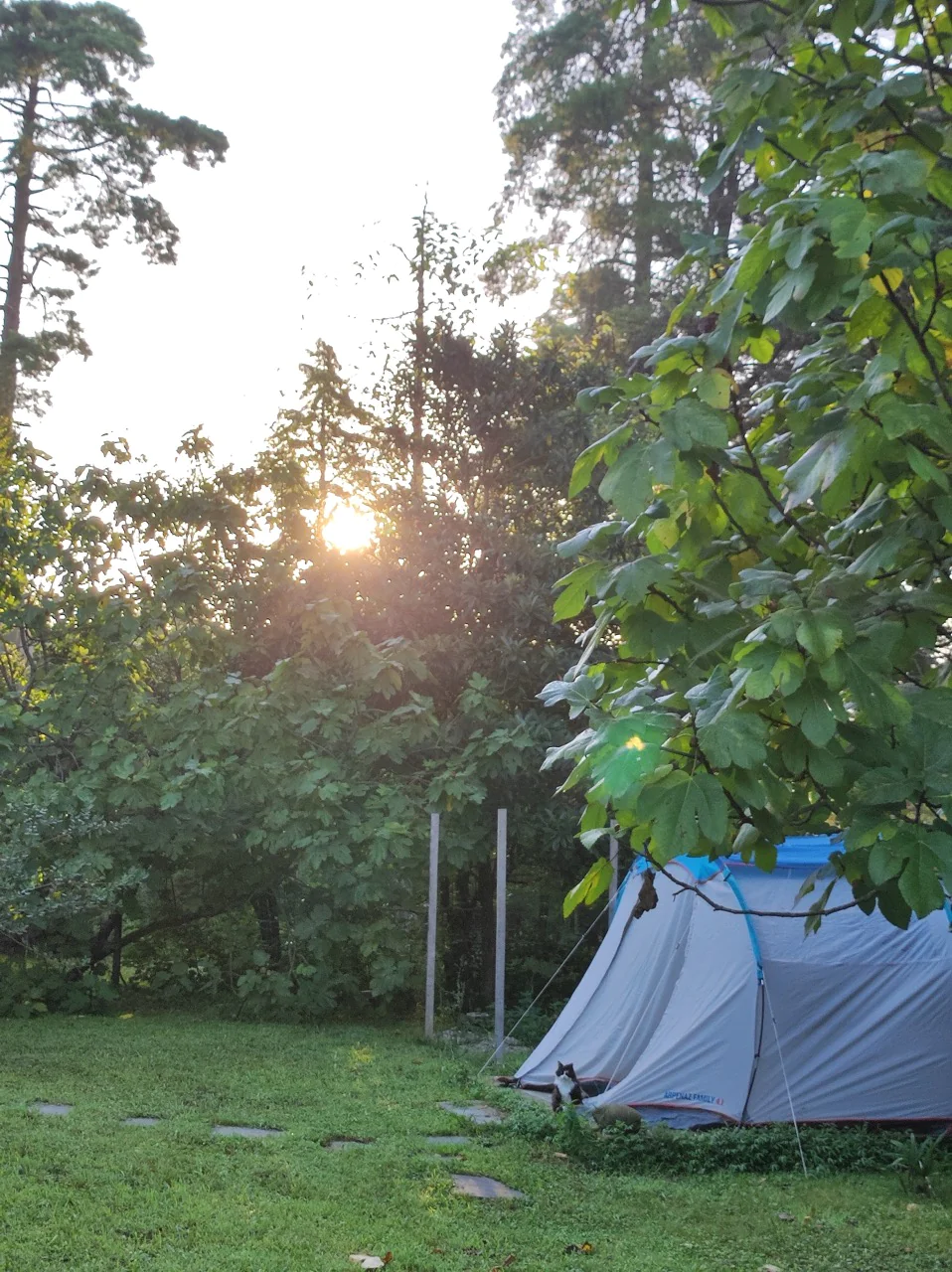
She even camps with me in my tent, and never tries to run away.
In Turkey, there were so many other cats at some of the camp sites, which was a challenge. One night I woke up to Cleo fighting with another cat outside my neighbor’s tent (the family was NOT happy about that), so I decided to keep Cleo inside the tent with me all night from then on.
Another night I camped in the wild (Yedigoller National Park), and forgot to pack up all of Cleo’s food.
In the middle of the night, a wolf came outside our tent and ate up all the leftovers, which was terrifying. Cleo and I both just layed super still inside the tent until he went away; I made sure to be more careful with her food after that.
Notes about Traveling in Turkey with a Car:
I suffered without air conditioning for the first few weeks of my trip, thinking it would be super expensive and time consuming to fix…But it got SO hot that I finally went to a mechanic. They fixed it faster than I could finish a cup of chai, and only charged me about $30. So repairs are much cheaper the further east you travel.
Another driver hit my car at one point, then tried to tell the police it was my fault. But there were a couple friendly, English-speaking guys nearby who helped me translate and advocate for myself, and I didn’t have to pay the guy any money (and there were no issues with the police).
We also had some drinks together afterward, and I ended up making new friends! Even though many people in Turkey don’t speak English, you can always find someone who can help you out. And because people are so genuinely hospitable there, they will always do their best to make sure you’re ok – even in very remote places.
My Biggest Challenge During this Trip:
Logistics and Beaurocracy of Visas and Borders
My initial plan was to travel through Iran after Turkey. But when I started seriously researching it, I found out Americans cannot travel in Iran without a certified tour guide. (This is expensive, AND it’s not my preferred way to travel. I like the freedom to explore on my own.)
I also found about the Carnet de Passage, a document many countries require to enter their border by car…something I didn’t know about before my trip, so I didn’t have it. NOTE: You need to get the CDP in whatever country you bought your car, so just use the website I linked above as a reference point.
I did a lot of research and route planning, and finally decided to go north through Georgia instead.
This wasn’t an easy decision, because the ONLY country you can pass through with a car is Russia. (A bit risky for an American citizen right now.)
What about Armenia?
You can pass through if you enter through Georgia (the border with Turkey is closed)… But Azerbaijan has closed all its land borders so it’s impossible to pass through there.
What about a ferry from Russia to Turkmenistan?
It’s possible to get into Turkmenistan, but they have a very difficult visa process, and a lot of people were also saying they’re requiring a tour guide to travel through. I still haven’t verified if that last part is true or not, but I did find out the ferry between Russia and Turkmenistan is closed.
So that left me significantly lengthening my route to go all the way up through Russia, and then around the Caspian Sea from Kazakhstan, Uzbekistan…and then finally south to continue my journey east.
I had originally thought this trip would take just 3 months and I’d end up in Vietnam by September, in time for a festival I wanted to attend…but choosing this route meant I had to significantly lengthen my trip.
Ok, so be it! It’ll take as long as it takes.
Third Country: Georgia (Applying – and waiting for – my Russian Visa)
I’ve always wanted to go to Georgia and hike in their beautiful mountains, so this was a perfect opportunity.
I skipped Batumi because I heard from several people it was very touristy and packed with people (not my preference), so instead I stopped close to the border in Gonio, where I got some work done for a few days.
Finding my Rhythm Running a Business While Traveling Fulltime:
This was much easier than I thought it would be.
I found out that I really only needed 3 days a week to keep my business running and make the income I needed to fuel my travels. This is probably due to dedicating the past 5 years of my life to learning my skills as a copywriter and coach, as well as building up a decent base of recurring clients.
Yes, I did have a couple clients drop out because my schedule became a lot less flexible.
But I also found new ones who didn’t mind at all. I find that when you live the way you want, you always push away the people who don’t fit that lifestyle anymore…but then you attract new ones who are a perfect fit.
This new schedule freed me up with 4 days per week to drive, camp, and hike.
Applying for my Russian Transit Visa in Tbilisi, Georgia
I did this at the Visa Application Center in Tbilisi, which turned out to be more complicated than I expected. At first, they told me I wouldn’t be able to get my car into Russia without the Carnet de Passage. So I spent a full week exploring options for what I could do.
I thought about selling my car in Georgia, and then flying somewhere else to buy a car in Central Asia somewhere and continue. This turned out to be a no-go, because my car was made in 2006 and Georgia is only registering cars from 2013 or newer. So no one would buy the car!
I had also thought about importing my car into Georgia, registering it there, and getting a Carnet de Passage from Georgia. But, not only was my car too old to register, I found out: If a foreigner without residency in Georgia registers a car there, they can drive it within Georgia but cannot drive it outside of Georgia.
I tried reaching out to AMSS (the department that issues Carnet de Passage in Serbia) to find out if I could get that document without having to be physically present. But bureaucracy in Serbia is notorious for making you do everything in person, and it took me a full week to find a way to even contact them. (By that time I found my solution.)
***Here’s the email that finally successfully got a response:
medjunarodna.saradnja@amss.org.rs
Finally, I went back to the Visa Application Center to tell them all my ideas had been unsuccessful. So they said, “Well, we can contact the Astrakhan border and ask them if they will accept the documents you do have.”
They emailed over the document I had…and two days later I got confirmation that they would let me cross the border after all!
So I submitted my visa application, and then I had a week to kill before the visa arrived.
I ended up driving back west again to Co-Living Gumbrini, a gorgeous little eco-friendly co-living space in a village outside of Kutaisi. I used this as a base to hike in the region and explore the natural caves scattered all over the region.
On my final day, I had to get Cleo an updated health certificate for her to be able to enter Russia.
First I went to a local veterinarian, who wrote her a health certificate,
Then I had to go to the Food and Agriculture Department to get it notarized by an official.
Because I wrote down the Co-living’s address (technically in Tskaltubo), they made me go the next day to the same department in Taskaltubo to get the certificate.
This was tricky, because it took them all day to make the certificate (which involved making my payment at a local bank, who made mistake on my payment and ended up putting it in the wrong account, and then the people who did it didn’t know how to reverse the payment and make it for someone else).
Meanwhile I needed to get back to Tbilisi (4 hour drive) by 3pm or they would be closed the next day.
Keep in mind, I had gotten a Transit Visa (valid only for 2 days), so I would have to drive through the whole country in only 2 days – a challenge of its own.
Thankfully, I was able to convince the woman at the office to leave my visa with the guard at the building, so I didn’t lose a day by missing the 3pm deadline.
Note about traveling by car in Georgia:
Plan extra time for any documents/paperwork you need to get while you’re there. Systems are slow and you often get redirected to different officies. It can be very time consuming.
.
Everyone will be as helpful as they can! Many people gave me their personal Whatsapp numbers and even checked in with me the following day to make sure I got what I needed.
Fourth Country: Russia (On a 2-Day Transit Visa)
The next morning, I stopped by a local mechanic to change a tire, and then headed to the Russian border.
I heard that tire making a funny noise on the way through the mountains, but periodically stopped to check to make sure it was fine (also calling my mechanic friend, who had been my go-to resource for any car questions I had along the way), and he thought it would be fine.
Crossing the Russian border as an American took around 6 hours.
They searched everything in the car, kept me in a lengthy interview for questioning, then kept me in customs for several hours to declare the car entering the country.
They were kind and polite – nobody was aggressive; they were just doing their job.
Finally I left with all my documents and my visa stamped…only to have my tire fall off in the middle of the highway after dark!
My only choice was to flag down some nice people, who drove me to my hotel and arranged for a tow truck for the next day.
The next morning, the tow truck picked up my car and took me to a nearby mechanic, who found out the guy who’d changed my tire in Georgia hadn’t tightened the bolts enough and that’s why the tire fell off.
But we got some new bolts, put the tire back on, and (other than a few more cracks and dents in the car) my car and I were back to normal and on the road.
For 2 days in Russia, I brought about $600 cash with me (half of that in rubles, the other half in USD/Euros), and with the extra cost of car repairs I was worried it wouldn’t be enough.
I’d planned on covering most of the distance of Russia on that first day, but because of the car repair I was behind schedule.
And on another stroke of bad luck, I damaged another tire that same day.
I knew the reason – my wheels were not properly aligned, and I would continue getting these flat tires until I fixed the problem.
So I found a mechanic in a very rural, small town who changed my tire…but the guy who did the wheel alignment service wasn’t in that day. So they found me an address in the nearest city (Kizlyar), and I made it my goal to get there by sundown.
I arrived right at sunset…only to find out the location was a dead end.
At this point, I had already used all my Russian money on my hotel for the first night, the first and second tire repairs…so I needed to change my money.
I could not find a single money exchange office in the whole city, but – luckily, someone in a nearby restaurant changed the money, and I was able to get a hotel for the night.
They had a STRICT no pet policy, so I paid for the room, then snuck Cleo upstairs wrapped in a towel so she’d look like I was carrying a pile of dirty laundry, and no one found out I had her in there.
Camping was not an option in Russia.
I found this out when I stopped on the side of the road in the middle of nowhere for an emergency bathroom break. When I got back to my car 2 policemen were waiting for me, asking what I was doing and telling me to get back in the car and drive.
So I realized there’d be no finding remote spots on the side of the road and pitching my tent, like I’ve done in all other countries I’d visited in the past.
Tips on Traveling in Russia:
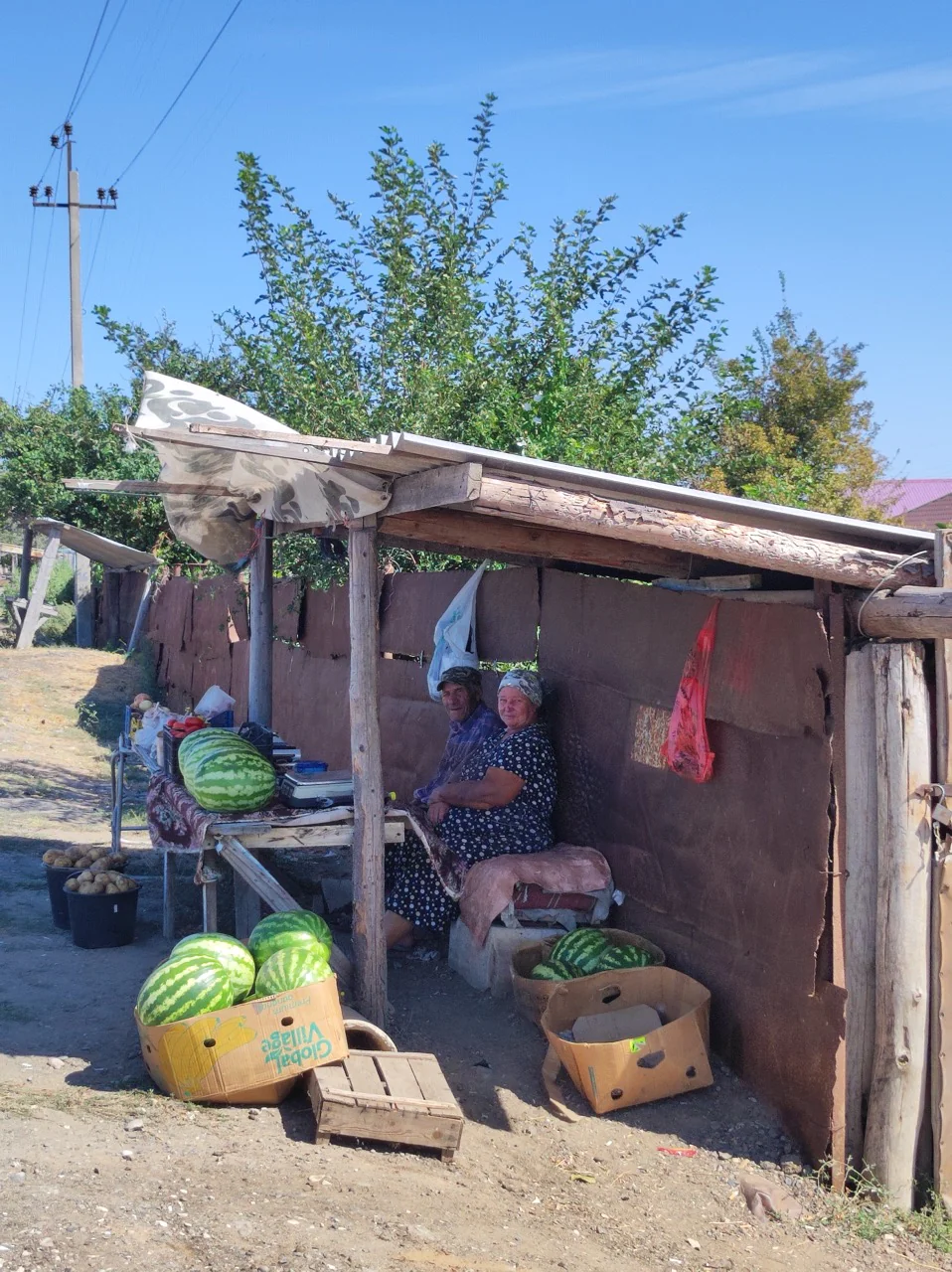
Most of the hotels do not have wifi, so you will need to get a sim card. I couldn’t get one in Vladikavkaz, because I arrived after 9pm when all the stores closed. I found a girl in a small gas station who shared her hotspot with me, and I was able to get 2GB of internet from Telenor, my Serbian pre-paid internet provider.
Bring WAY more cash than you think you’ll need. Who knows if you’ll get 2 flat tires and blow all your rubles on a mechanic!
Exiting the Russian border was much easier than entering.
But they did make me fill out a questionnaire, asking me several questions about Ukraine and Crimea. I just wrote “I don’t know” as an answer to all the questions (a compromise between my beliefs about this and making sure I didn’t get detained in Russia!), and they let me go.
Fifth Country: Kazakhstan (My First Desert Camping Experience)
It was such a relief to finally be on the other side of Russia, after about 3 weeks of complications with documents. It had been pretty stressful knowing Russia was my ONLY option to continue my trip at this point, so it had to work.
I had a lot of work to do, so I stopped in Atyrau for one week to get it done.
This is primarily an oil town (very familiar to me, since I lived in North Dakota for 3 years during the Oil Boom of 2013). The city was small and not very community-oriented (people mostly driving and not much sightseeing to do).
So I laid low and got a lot of work done, AND used the opporutnity to get my car’s wheels aligned.
The mechanic also found a couple parts that needed replacing (the steering rod, and the left wheel axle). They didn’t have one of the parts, but when I paid a bit extra, they were able to order it within 24 hours, and finally my issue with the tires was fixed.
I had no more car troubles after this – everything was smooth sailing from there on out.
I also used this time to apply for my Uzbekistan e-visa. But they had a glitch in their system, so I had about 3 extra days to wait for it to arrive. I decided to head south towards Aktau, to see the limestone canyons and have my first desert camping experience.
Camping in the Desert in Western Kazakhstan
This was about as wild as it gets. I found some GPS coordinates shared by Land Cruising Adventure blog, and that was the only information I could find about camping there.
So I just followed the coordinates…I wasn’t able to access most of them because these people have a big overland vehicle, and mine is a small 2-wheel drive with practically no clearance. But they served as starting points, and I was able to find all my own locations.
If you want to find the best camping spots in Kazakhstan, it’s best to just find something that looks interesting, and then follow one of the side roads until you find somewhere that looks good to spend the night.
The first night, I found a gorgeous viewpoint, down in the bottom of a canyon, drove the offroad path for a little while until I couldn’t see anymore people, and decided to sleep there. It was all rocks, sun, and no shade, so I slept in the car instead of pitching a tent.
It was very cool to wake up in the morning and see a herd of camels roaming around the car.
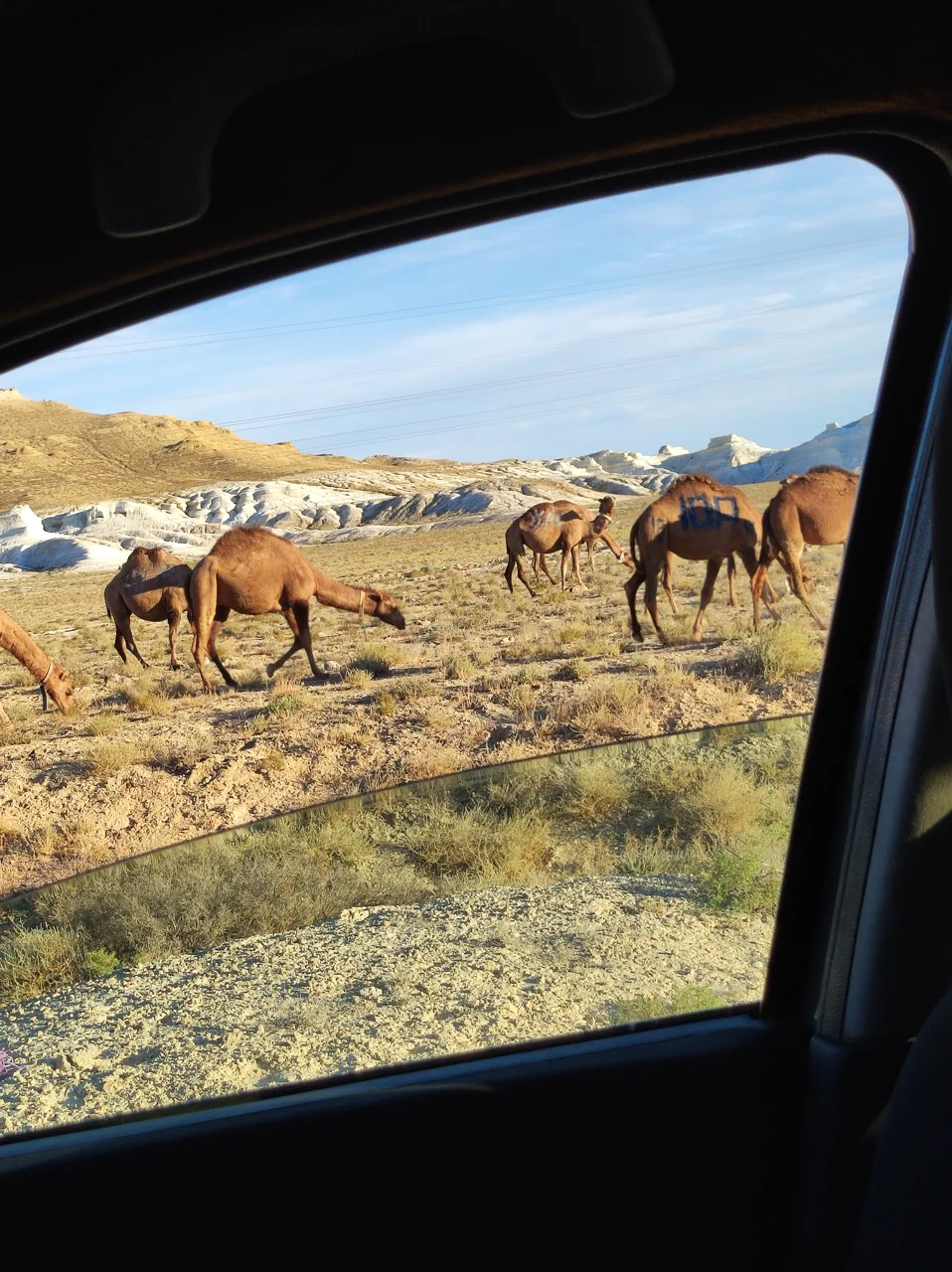
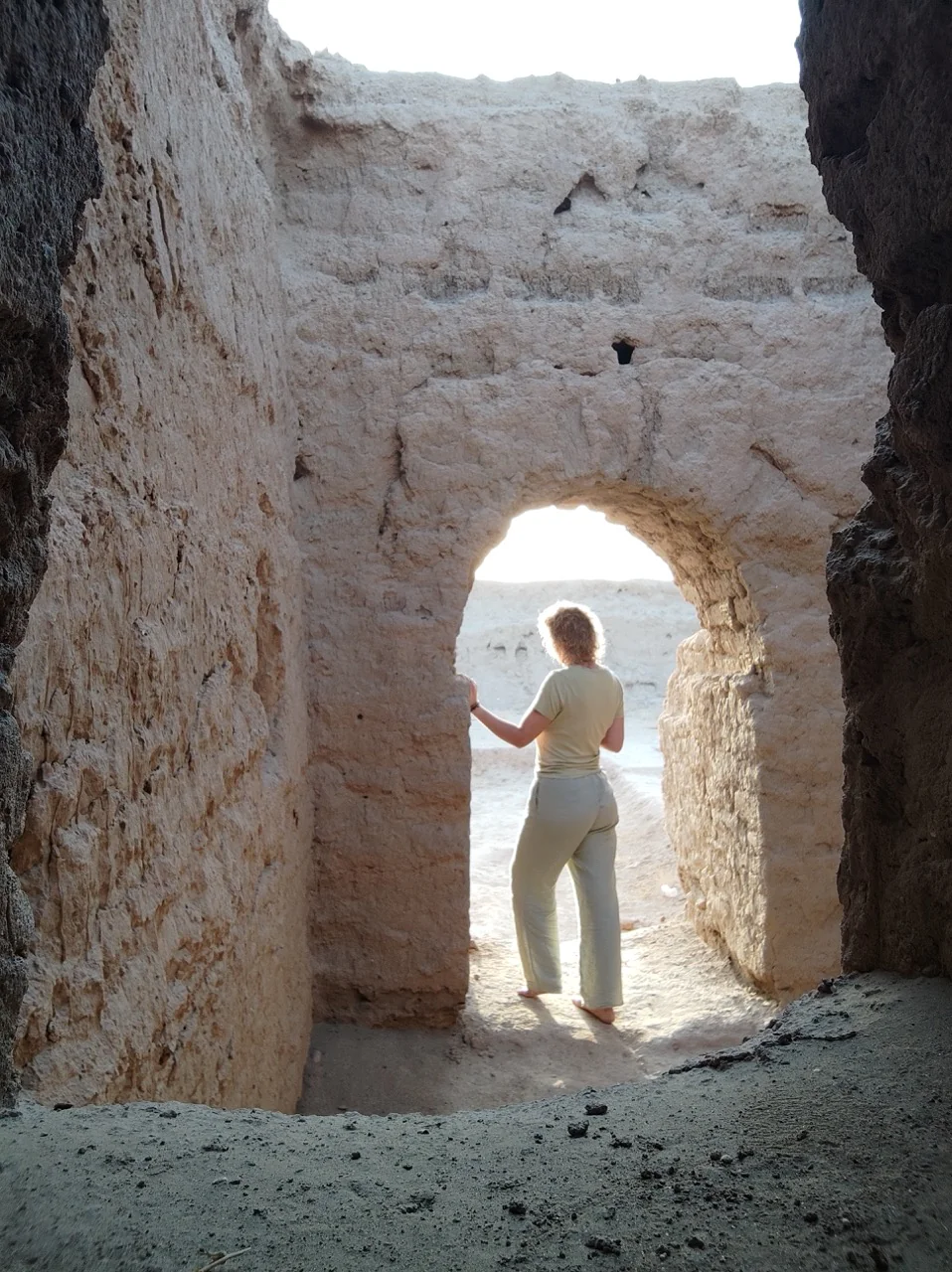
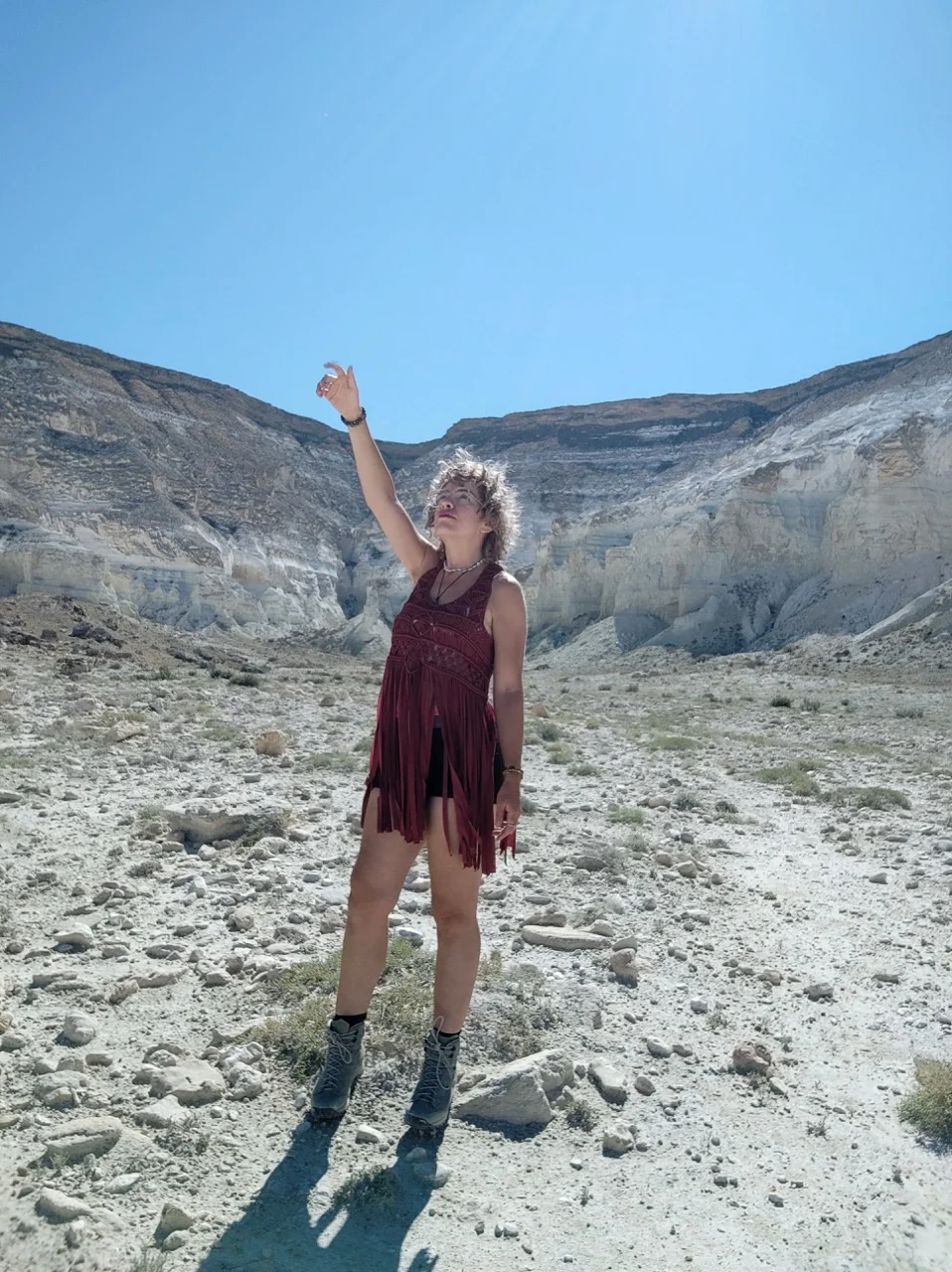
The second night, I discovered the Airakty-Shomanai Mountains, and camped in an abandoned building nearby. These mountains have ancient writing carved into the sides – an absolute majestic place with incredible limestone mountains unlike anything I’ve ever seen.
It would have been amazing to have an offroad vehicle and drive around and see all 4 mountains clustered together, but I did a fair bit of walking and still got to experience their beauty.
The third night, I explored the Valley of Balls: Huge round rock formations, some the size of large cars. They’re formed by volcanic ash and then crystalized by weather over time. When I first heard about this, I thought it would be one small area I had to look for.
But once I arrived in the Shetpe area, I realized these are EVERYWHERE in this region. Very cool to see these, peppered amongst all the cemeteries and wild camels throughout the area.
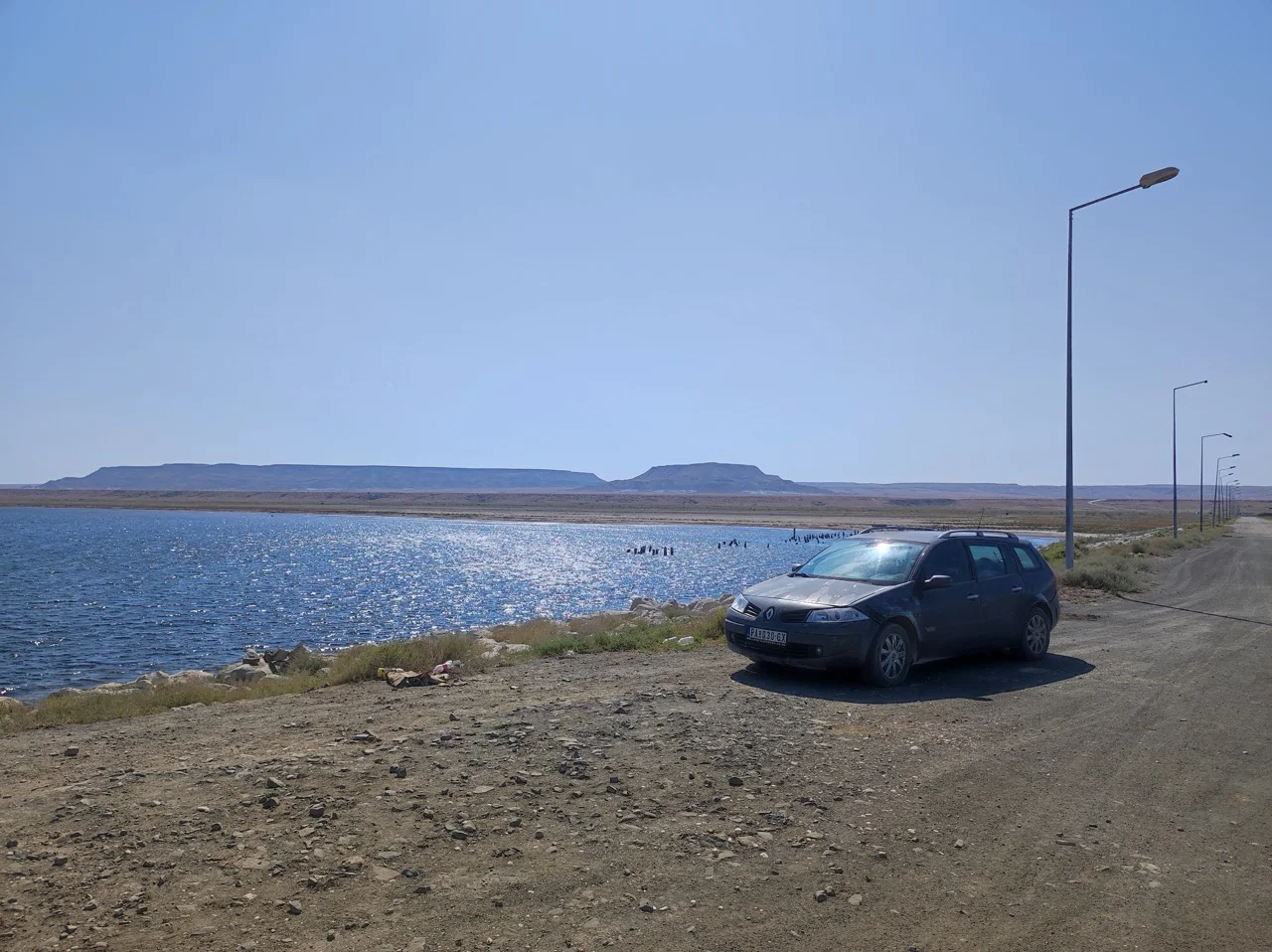
Google Maps showed a road down to a beach on the Caspian Sea, which I very much wanted to visit.
The “road” turned out to be all gravel and big rocks and craters, but I just drove along at 15 kilometers per hour, and prayed to not get a flat tire. The car made it fine, and at the end of the day I found myself right at the shore of the Sea. You cannot camp directly on the beach because there are lots of snakes and sinking sand, so I went back up the hill a ways and still found a good view of the water.
Once again, I watched the sunset with a pack of wild horses running past my campsite, and not another soul in sight.
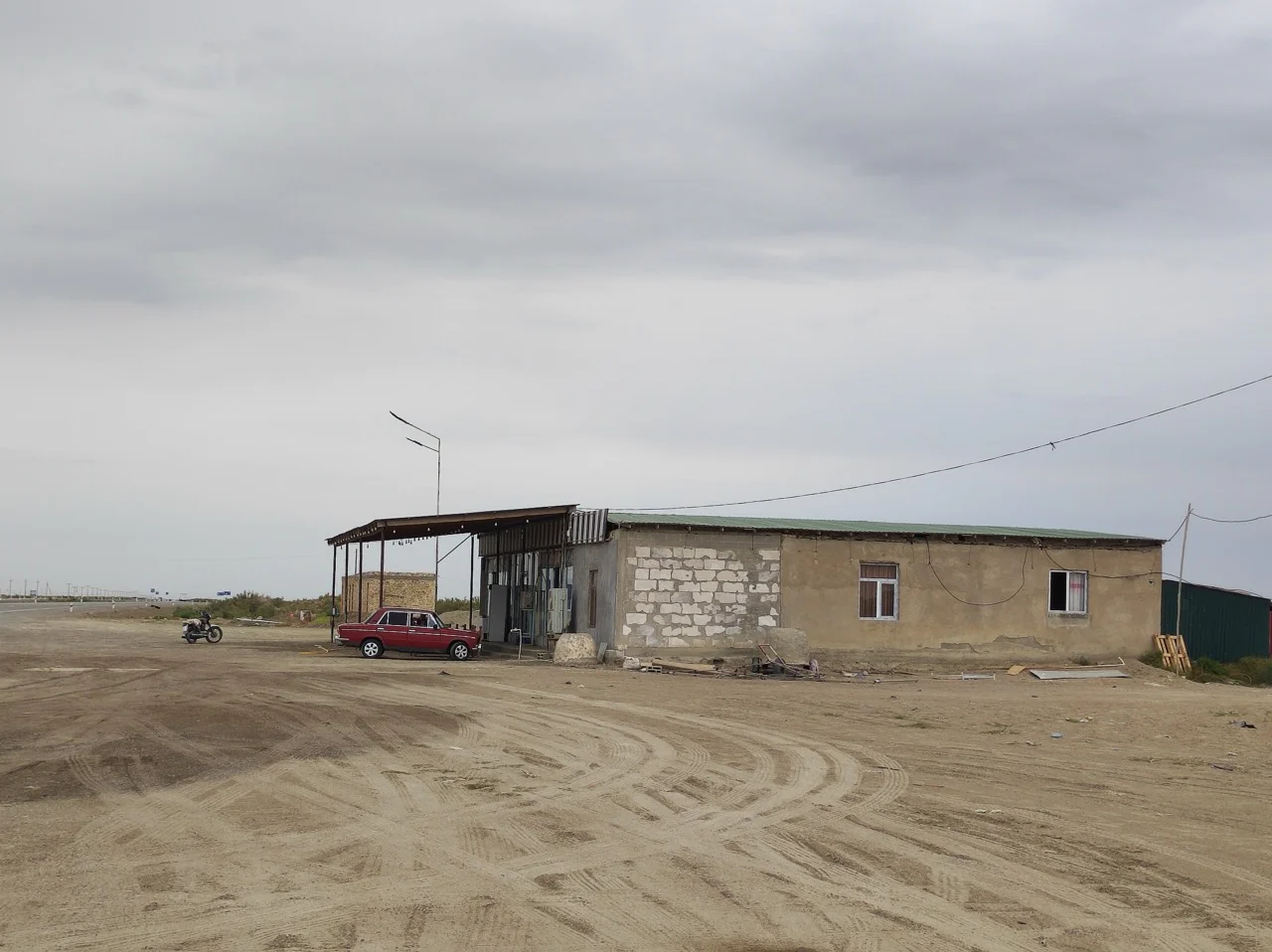
Finally, I headed back north (hoping my visa had come through – there was no internet signal for the full 4 days). I could not find a single place to buy diesel, so my car was running on empty by the time I made it back up to Beyneu (the Uzbekistan/Kazakhstan border town).
I recommend bringing a spare can of diesel with you if you do this!
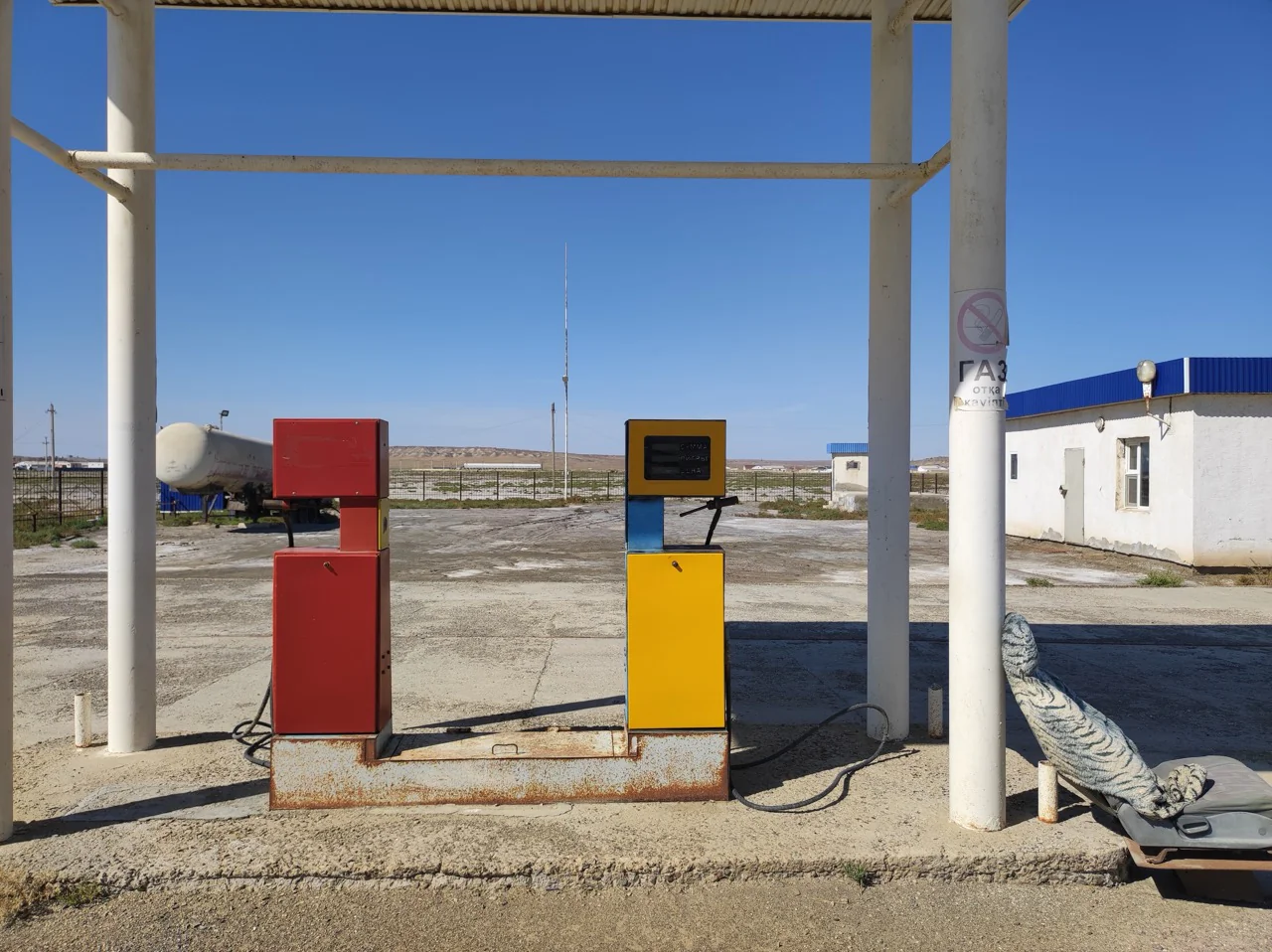
My visa was indeed waiting for me in my inbox, I spent the night in a cheap roadside hotel, and then crossed one more border the next day.
Sixth Country: Uzbekistan (The Worst Roads Yet)
I’d read online that Kazakhstan would have bad roads so I was prepared for the worst…but they were surprisingly good. That’s why I was caught by surprised when I crossed the Uzbekistan border and the road was the worst I’d encountered yet.
I drove 200+ kilometers across big rocks and potholes, sometimes just leaving the road alltogether and off-roading on the sand on the side of the road instead. At least that was more smooth and I could go a little faster.
At 15 kilometers/hour, sunset came and I was still FAR away from anywhere to stay. So I pulled over on the side of the road and car camped (it was too windy to set up a tent) for the night, then drove another full day until I arrived in Nukus.
I was surprised to see other tourists in Nukus. Western Kazakhstan had been so empty, that I wasn’t expecting Uzbekistan to be so full of travelers. But with it being part of the Silk Road, I met lots of cyclists and overland travelers there.
From there, my guest house host recommended I go to Khiva, which I’d never heard of, but was glad to visit.
It’s a very beautiful little town, with friendly people and I became good friends with the owner of my guest house – a woman my age who taught me how to cook some tasty Uzbek dishes.
Here, I had to re-think my driving route again.
The plan was to go through Afghanistan, then Pakistan, and continue east to Vietnam. But since Pakistan also requires the Carnet de Passage, I knew there was a possibility I’d get stuck in Afghanistan.
I contacted AMSS in Serbia again to revisit the idea of getting the CDP from abroad, and decided to take my chances.
Along the way I stopped in Bukhara, which was also a beautiful, historic city.
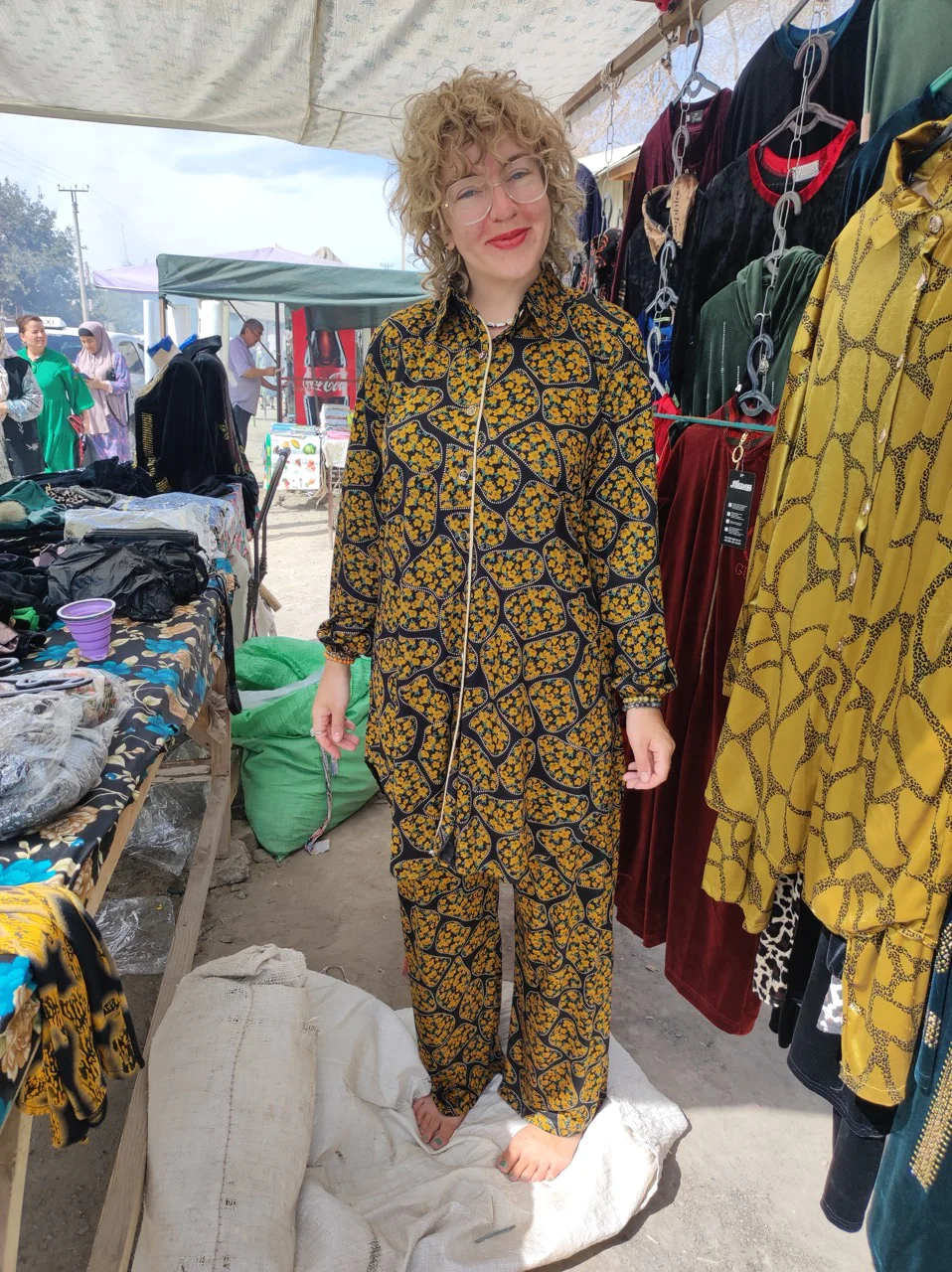
Here, I bought some more modest clothing, since being a westerner, my suitcase was full of shorts and crop tops, which had been fine up until this point…but I was starting to get a LOT of stares, and thought it would be a good idea to blend in a bit more, as I noticed that 100% of the Uzbek women were dressed according to Muslim standards.
I also got some inappropriate leg grabs and even one guy grabbing me and kissing my cheek in Uzbekistan. Even though those things are never the fault of the women (no matter what she’s wearing), I thought it would just be a good idea to wear the same clothes as the locals.
Note to Women Traveling Solo in Central Asia:
These kinds of situations can happen anywhere. The key is to be loud and firm with your boundaries. Just cringing and trying to show men with your body language that you’re not interested isn’t enough.
When the guy grabbed my leg, I physically removed his hand and told him very firmly not to touch me. He also tried to jump in my car (I had stopped to ask for directions, so he said he wanted to show me the route). But I simply locked the door and drove away quickly.
I never felt like I was in actual danger with any men on this whole trip; there were just a few encounters that made me uncomfortable.
I would still say it’s definitely safe for women to travel alone in Central Asian countries.
Seventh Country: Afghanistan (Way Safer Than You Would Expect)
Yes, everyone advised me not to go. But I just had a feeling it was different than the media portrayed it to be, and I’m so glad I went.
I got the visa in Termez, the day before I entered the country. It’s a simple process to get.
Getting a Visa for Afghanistan in Termez, Uzbekistan
You go to the consulate (which is listed in Google. As of writing this, the address they have there is correct).
You have to print our your application and bring it to the consulate. But there is also a place that will fill it out for you to make sure everything is correct. (This one took me forever to find, because the consulate does not give you the address, and it is not listed on Google.) I managed to get a phone number though, and contacted them on Telegram. They sent me the location, and I was able to find it.
Once you bring them the application, they will review it, and if you get accepted, you have to go to a special bank and pay the fee. They call this “Milliy Bank,” which is also not listed on Google and I had a VERY hard time finding it. Finally, I found out “milliy” means National, and then I was able to find the National Bank and go and pay the fee.
Then you come back with your proof of payment, and it takes the consulate about an hour or two to make your visa.
You should expect this process to take a full day. For me, I had to stay an extra night in Termez because they didn’t finish it by the time they closed for the day, but I was able to pick it up and go to the border first thing in the morning.
Here is a helpful Facebook group and Whatsapp chat for traveling in Afghanistan. Many people help out with information on permits and anything else you need to know.
Crossing the border was very easy. Everyone was very friendly, they stamped my visa with no problems, and within 15 minutes I was already across the border and even invited to someone’s house for lunch!
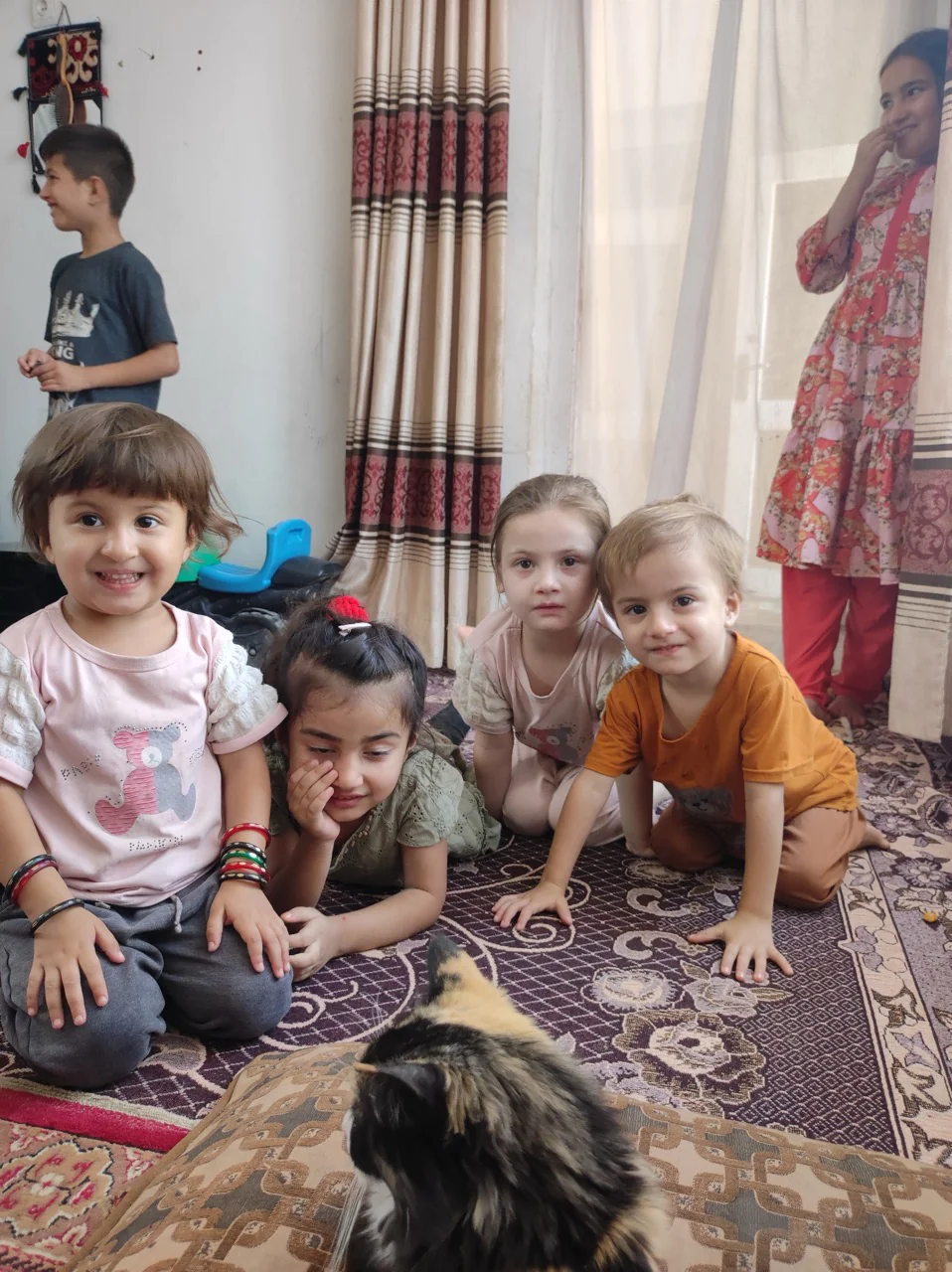
The first city I visited was Mazar-i-Sharif, an interesting historical city.
I just had a shock when I got so much attention from locals in the streets. It was very overwhelming for the first few days to have so many people looking at me, pointing at me, and lots of kids following me.
But once I got used to it, and realized everyone is very friendly and are only looking out of curiosity, I even enjoyed having such friendly interactions everywhere I went.
Dealing with the Taliban
The whole country has a lot of security and regulations now (unfortunately, we all now about the regulations on women there). But this does make it very safe to move around.
You need to get a permit in every city you visit, but the men in the offices are friendly and helpful, and they tell you everything you need to know so it goes smoothly. (Don’t bother paying any travel agencies to do this for you. It’s easy and free to do it yourself.)
There are many checkpoints along the roads, but usually I just stopped and handed them my passport, and they let me go without any problems. Of course, they were surprised to see a foreign woman driving a car! But they thought it was very cool, and would give me a thumbs up and tell me to let them know if I needed any help.
After leaving Mazar, I encountered a terrible road on the way to Kabul, which again took me two days of slow driving to pass.
On the first night, the sun set and I drove off the road and past a village out to somewhere remote, where I could sleep in the car for the night.
But some villagers saw me driving out there and reported me to the police.
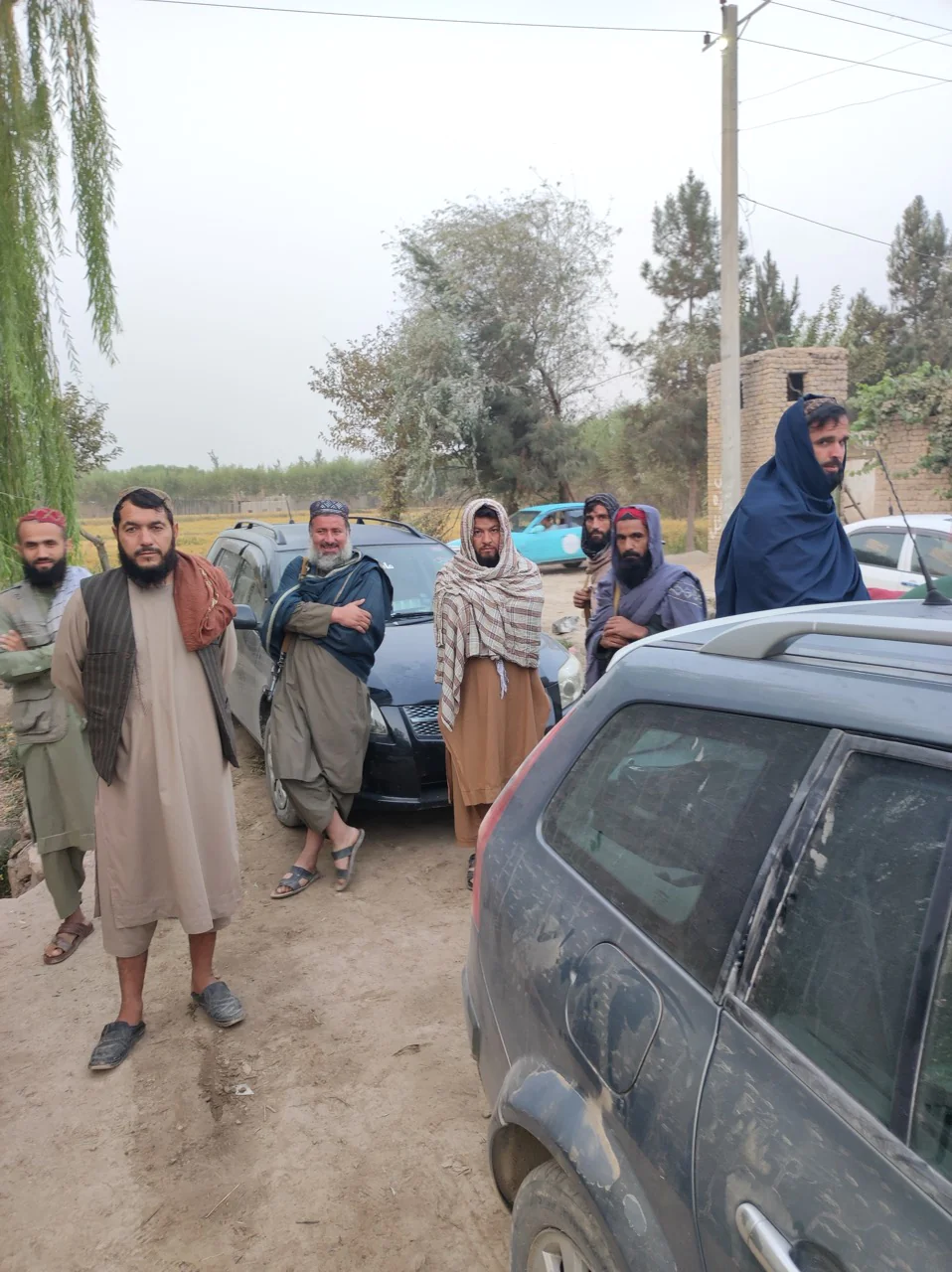
In the middle of the night, I woke up to at least 10 guys with rifles shining lights into my car, telling me to get out! I was pretty scared at first and wouldn’t get out of the car, but I finally opened up the doors and found out they were all very friendly.
I called a friend I had met in Mazar and he translated for us – basically, they said if anything bad happened to me they would be blamed for it, so they asked me to come and camp at their headquarters instead.
When we got there, they set up a bed for me outside and I was guarded all night long by about 6 guys while I slept.
All the guys were very sweet, making sure I had enough blankets, making me tea, and even bringing me food to eat. Definitely not what you would expect from Taliban, but it goes to show you never know what a situation is like until you experience it for yourself.
Life for Women in Afghanistan
Women do go out in public in Afghanistan. And yes, they are allowed to speak in public, and many of them show their faces.
Unfortunately, most women cannot work or study (there are a few exceptions), and women are not allowed in most public parks or community spaces.
They did let me go into places not allowed for local women. I believe the government is trying to improve its public image, so they try to take good care of tourists. I also saw that most of the soldiers don’t agree with the bans on womens’ rights, so it was easy to persuade them to let me go in.
Hopefully, over time the younger generation will come into power and these regulations will change.
I was able to teach a couple workshops to teach local women how to sell their jewelry and handcrafts online to an internation audience – we created a collective Instagram account to attract an international audience. Follow the account here, and reach out to support their businesses. They make some beautiful jewelry from locally sourced gemstones!
I hope to go back soon and do some more projects with them, so stay tuned for future projects.
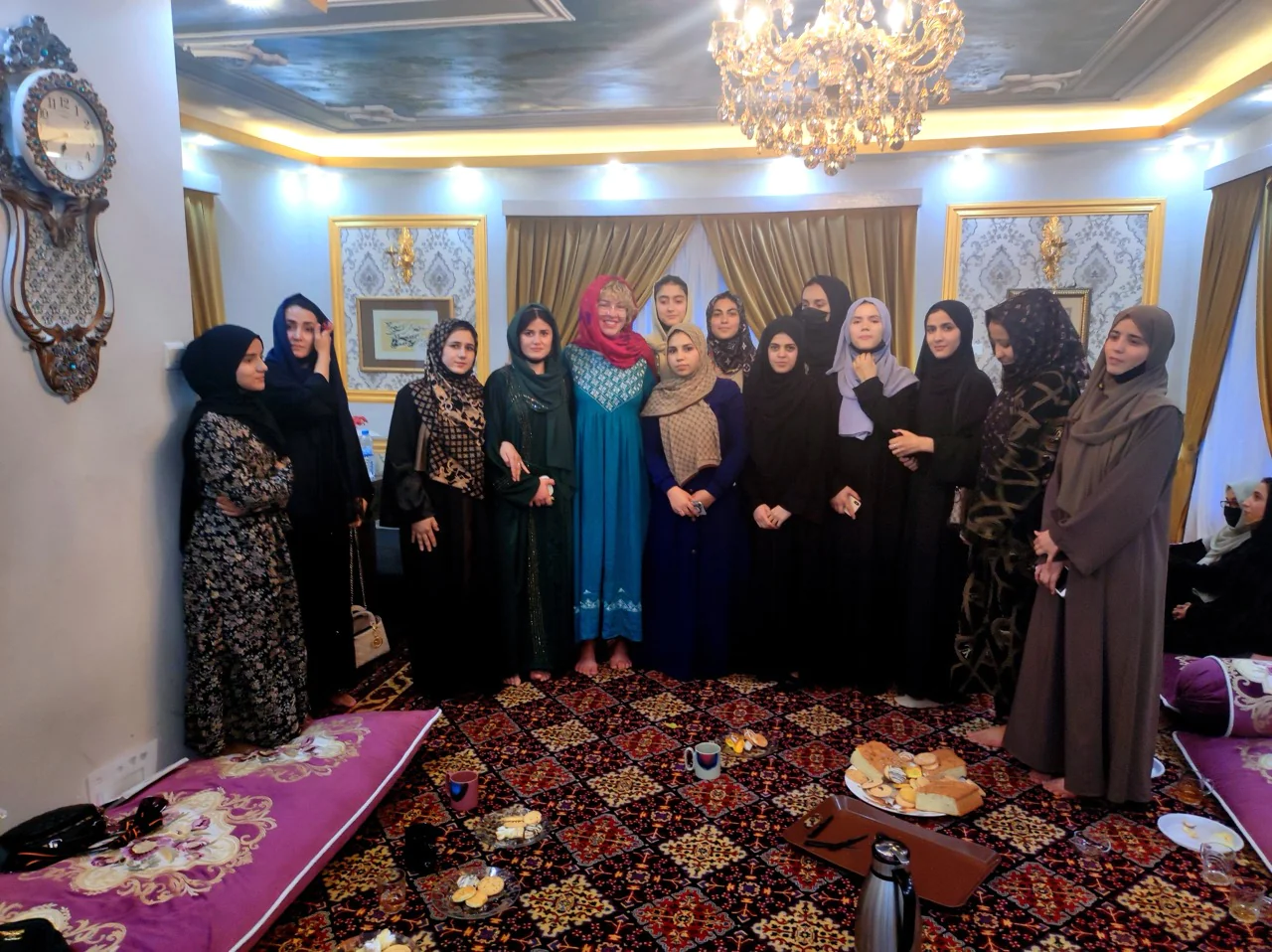
In general, people are incredibly hospitable in Afghanistan.
You will constantly get invitations to come over for tea, a meal, or even to stay the night. Shopkeepers will give you gifts (I received quite a few beautiful gemstones, paintings, and other special things because people love to treat guests well).
The Taliban will invite you to tea. (I even had lunch in the permits office when I went in to renew my visa after it expired after 30 days.)
It’s a very special experience to visit Afghanistan, and I would recommend it to anyone!
What to Do With My Car?
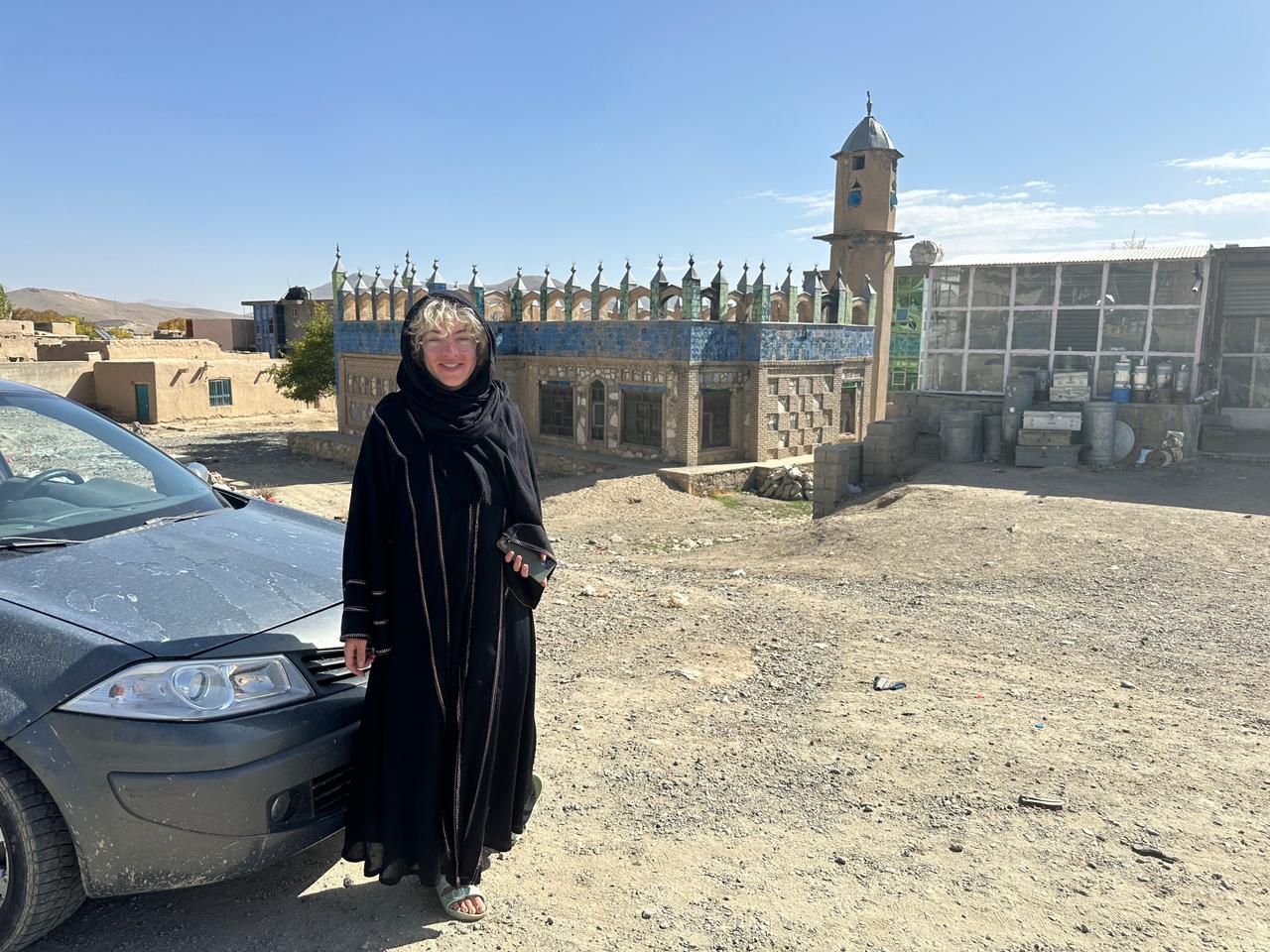
I waited for 4 weeks to hear back from AMSS about the CPD for my car. When they finally responded to me, they said I would have to pay a 12,000 euro deposit to get the document (due to Pakistan being considered a dangerous country to visit).
I wasn’t going to pay that, so once again I had to decide what my next move would be.
I didn’t want to go back north towards Tajikistan again (since my desire is really to go to east Asia and reach Vietnam).
I couldn’t go to Iran or China (which both require a CPD).
I didn’t want to stop the journey and go home.
I couldn’t buy a car in Afghanistan (because I’d still have to pay the hefty fee for the CPD).
I also couldn’t buy a car in Pakistan, since India is not allowing vehicles registered in Pakistan to enter (so I heard from some local tour guides I contacted as resources).
And I was very nervous about continuing without a car – both because of all my stuff I have with me, AND because of Cleo. I’ve never tried to take her on public transportation and I just didn’t know if she’d be able to do it.
On top of that, Pakistan very recently changed their visa regulations to cross by land via the Torkham border. They removed the option to get an e-visa with the Torkham entry port, and some people in a local Whatsapp group chat had even been turned away when trying to cross with the e-visa they’d received before the new regulation.
I also didn’t want to fly into the country, because of (again) Cleo. Many local planes do not accept cats, so it would have been very difficult to find a plane we could even take.
That’s when Orest (who happened to be traveling in Central Asia too) joined me in Kabul.
“Well,” we decided, “Let’s go to the border together and give it a try!”
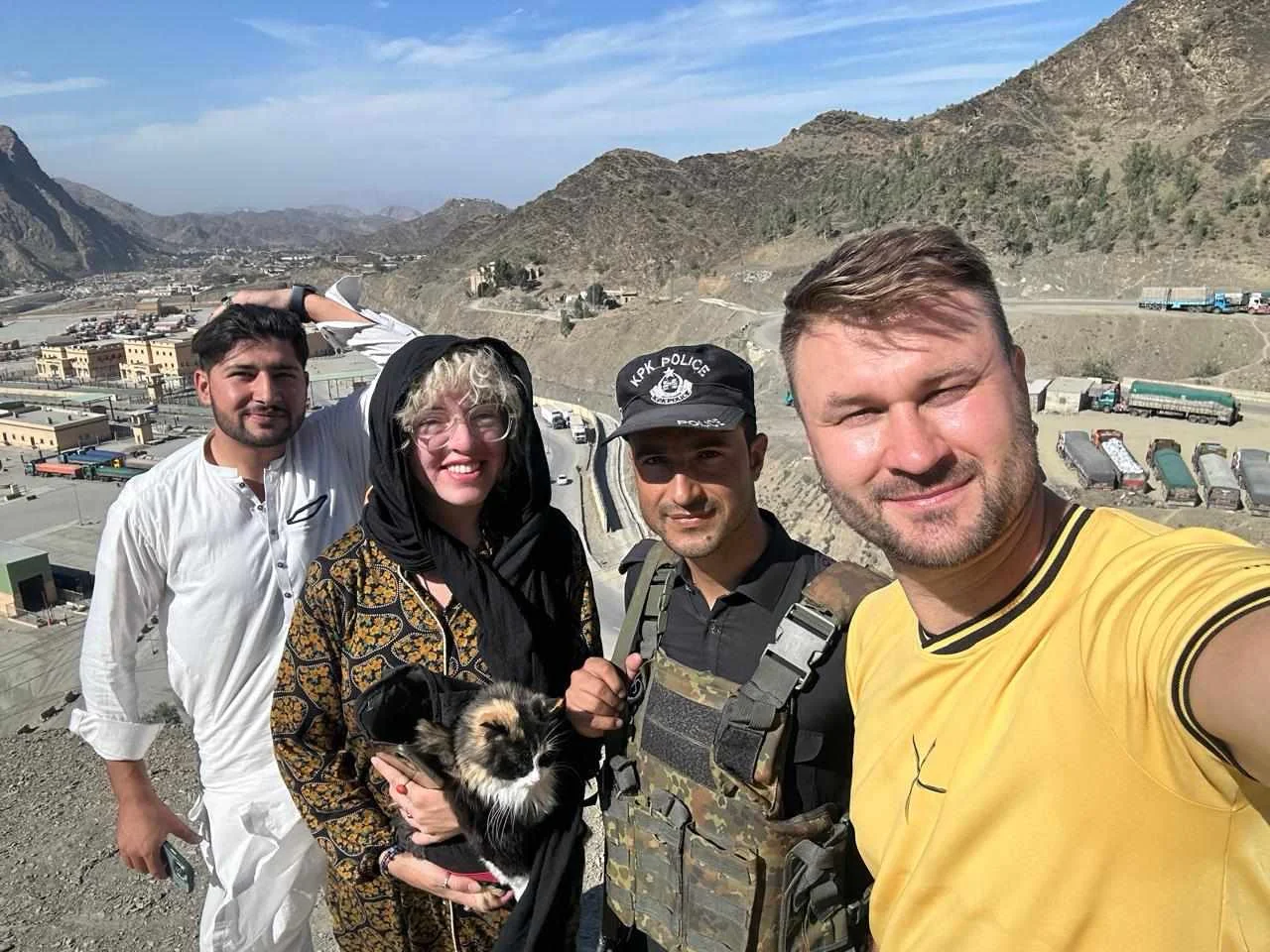
So we put “Islamabad Airport” on our e-visa applications, printed out the visas once we received them, and took a risk by taking an 8-hour taxi all the way down to the border to give it a try.
And we were successful!
Maybe it was Cleo sitting in my front pack looking adorable,
Maybe it was our positive attitudes.
But the guards let us through the border without any issues, and I was able to continue my journey without the car.
To see the rest of the journey and how Cleo is doing without a car, you can follow me on Instagram here.
Leaving my Car in Kabul
I ended up giving my car to a friend in Kabul. It wasn’t easy to part with it, after 3 years of driving the car, and it bringing me safely across almost 8,000 kilometers.
I was able to store a lot of my stuff in Kabul, and I gave away quite a bit as well.
But for now, I still have 2 large bags (one full of camping gear and the other full of clothes and things for visiting cities), in addition to Cleo and all her supplies. We already made it to Vietnam. But that’s completely another story.
Final Takeaways for Anyone Considering a Road Trip Like This
You can drive all over Central Asia without requiring any special documents, and without a fancy, rigged-up overland vehicle. I did it all without any special setup – just a car with a reliable engine, and a bit of space in the back to sleep in when it wasn’t possible to set up a tent.
Any time I had a flat tire or other minor problem with the car, I was always able to find someone to help. And repairs were very cheap (I never paid more than $75 for anything I needed to have done.)
Digital nomad-ing in Afghanistan was tricky, because finding a reliable wifi connection wasn’t easy. But I used the MTN sim card in the city, and I was able to hold successful Zoom calls with my clients. AWCC was a good sim card for outside the cities in remote areas.
I didn’t take the trip with much money in savings.
My expenses on this trip were about $2,000 a month (And I also treated myself to nice hotels here and there, and didn’t scimp on things I wanted to buy. This includes extra expenses like visas and other expenses). And with any service-based or coaching business, it’s not complicated to make that much with a handful of loyal clients.
I could have avoided some of the challenges I faced by doing a bit more research before I left. But it’s good to know that you can also just decide you want to take a trip, and leave very quickly without extensive research or planning ahead of time.
Don’t worry about doing something like this alone.
There are always helpful people anywhere you go. And the further east you go, the friendlier people get! It’s easy to make friends and have interesting conversations along the way, so you don’t feel lonely.
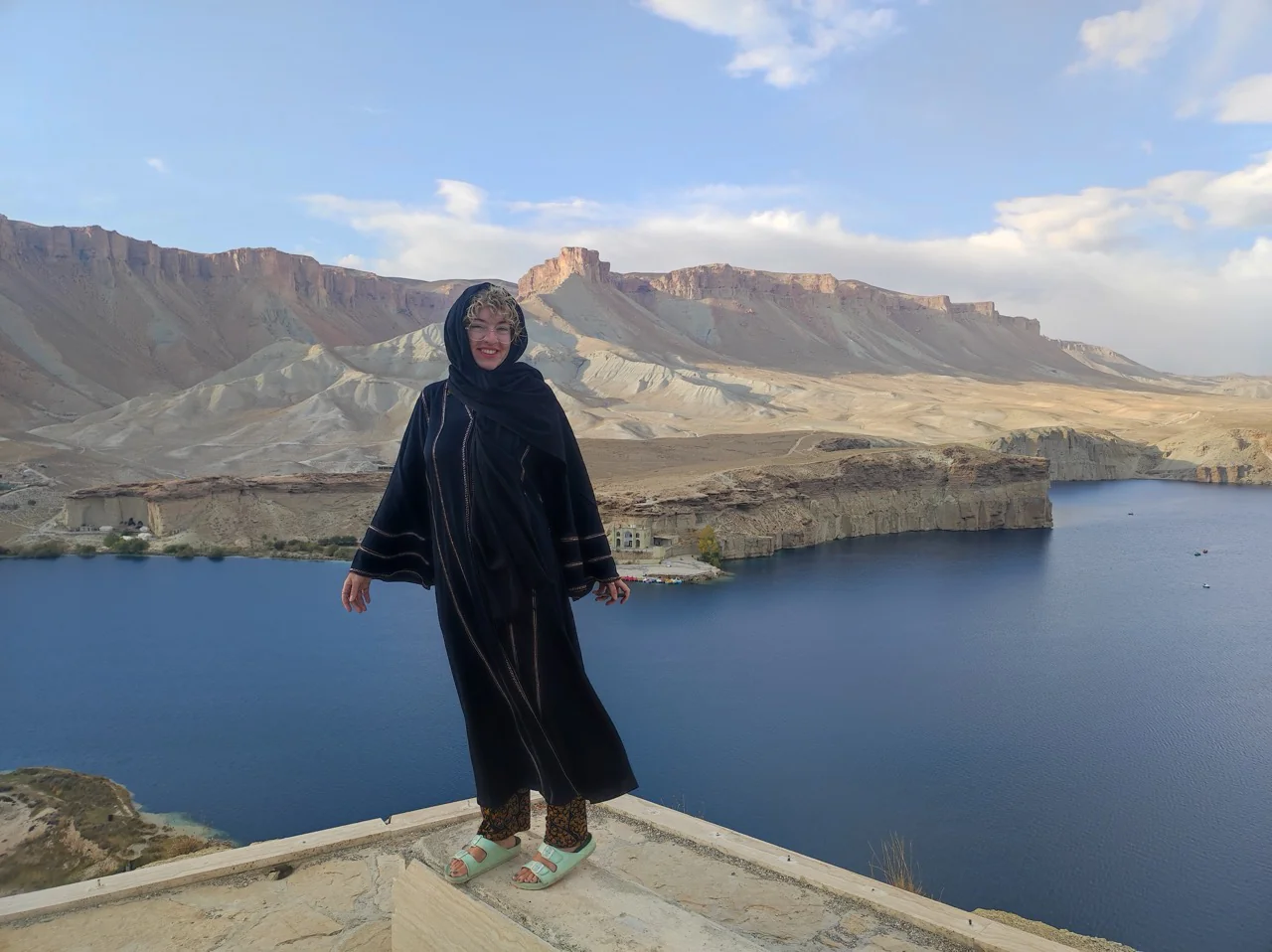
I hope this has been helpful for you. And if anyone is inspired to take a trip of your own, or you have any questions to ask – I’d love to hear from you! Write me on Instagram right here.