As we recently began the process of reviewing the NomadMania Masterlist of Regions (see this Guide to Regions Review), many members have reached out to us with thoughtful suggestions on how regional divisions could be improved in their home countries.
Below is a detailed contribution from our Latvian member Veniamins Uleiskis, who shares his perspective on the regional structure of Latvia. We are publishing his message with Veniamins’ kind consent and hope that this example will inspire other NomadMania members to actively participate in the regional review process.
Community-driven input like this is essential to our mission: enabling people to explore — and better understand — the world.
Veniamins writes:

Hello Nomadmania!
Since the Nomadmania’s team is currently working on adjusting internal state borders to improve the quality of visits and to better represent cultural diversity, I decided to contribute to this effort by providing information about Latvia.
I was born in Riga and lived in Latvia for almost 21 years. Even after moving to Germany, I continue to visit my homeland every year, traveling and discovering new things. I closely follow the political situation in the country, including the administrative division. The issue of administrative division is the reason for this letter, because the current division of Latvia in Nomadmania is confusing.
So, what is the problem?
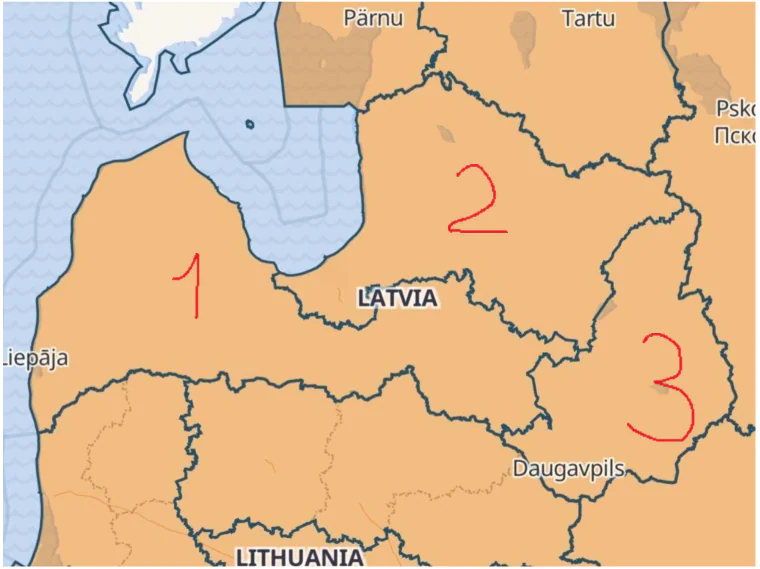
At present, Latvia is divided into three regions with an Optimal Score of 2.07, representing, however, 4 (!!!) historical regions:
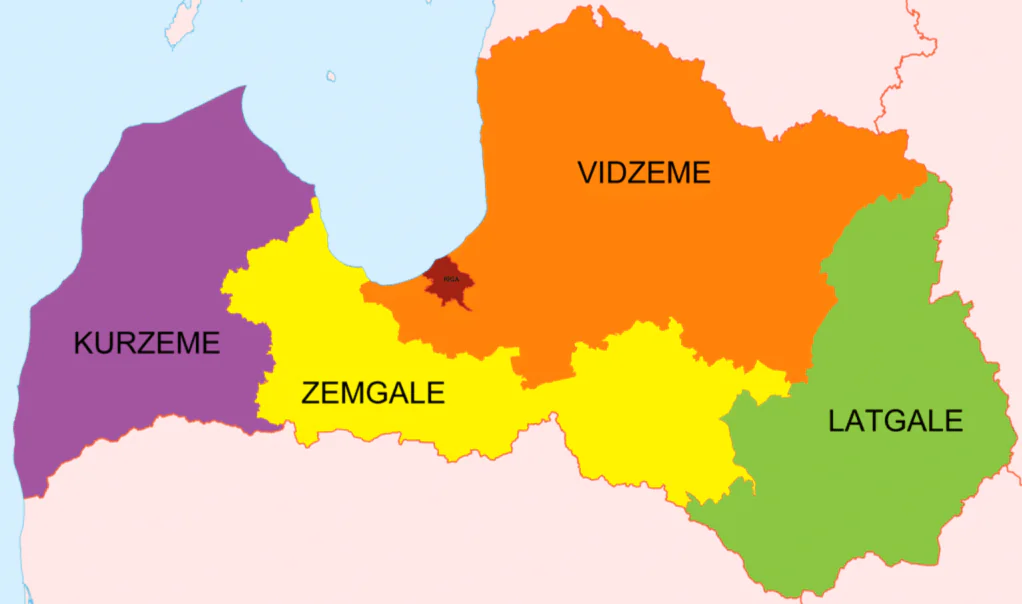
1) Kurzeme and Zemgale (Courland and Semigalia)
Two historical regions that were practically one entity for a long time. After the division of the Livonian Order, the Duchy of Courland and Semigalia was formed. For a short time, it even had two overseas colonies: Tobago in the Caribbean Sea and St. Andrew’s Island (now Kunta Kinteh Island) in Gambia. Courland also preserves the remains of Viking culture (Grobiņa archaeological ensemble – on the tentative list since 2017) and the small ethnic group of Livonian people. The Livonian language officially died out on June 2, 2013, and as of 2021, there were 153 representatives of this people in Latvia.
2) Riga, Pieriga, and Vidzeme
A single historical region that includes the capital and the main resort, Jūrmala. It is the most multinational region (mainly because migrants rarely settle outside the capital). It is also the most visited region. It is worth to say that Vidzeme variant of Latvian is the standard variant of language.
3) Latgale
The least popular by tourists region and is home to the Latgalians, an ethnic group of Latvians who have their own language, Latgalian. Due to its proximity to Belarus and Russia, there is also a large Russian-speaking population here. It is worth to say that while most of Latvia is historically Lutheran, Latgale is predominantly Catholic.
The Curious Story of Jēkabpils
Using this division, Nomadmania generally successfully distinguishes between the cultural differences of the regions, but in practice, confusion sometimes arises.
One striking example is the city of Jēkabpils (Last visited in June 2025).
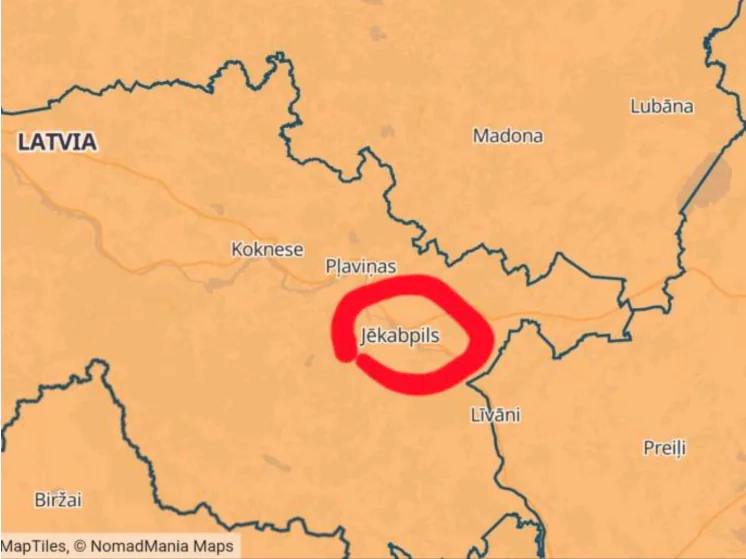
According to Nomadmania, it is located deep in the Zemgale region. But when you arrive at the main railway station in Krustpils and walk along the right bank of the city, you will notice references to Latgale, whether on signs or in souvenir shops. Then you cross the Daugava River via the bridge and are greeted by a sign for “Sēlija” (also known as Selonia).
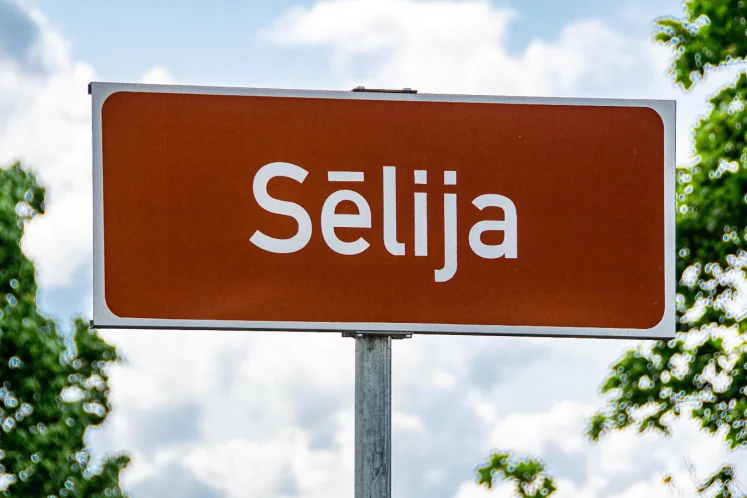
What is this? It is the fifth historical region of Latvia, which is not mentioned in Nomadmania. So where am I: in Zemgale, Latgale, or Sēlija?
New Regulations
In 2021, the Saeima (The Parliament of Latvia) officially approved Latvia’s historical administrative divisions, according to which a fifth region, Sēlija, is being created in the eastern part of Zemgale, the southwestern part of Latgale, and the southern part of Vidzeme. Previously, it only appeared in history books and nowadays was mostly absorbed by Zemgale.
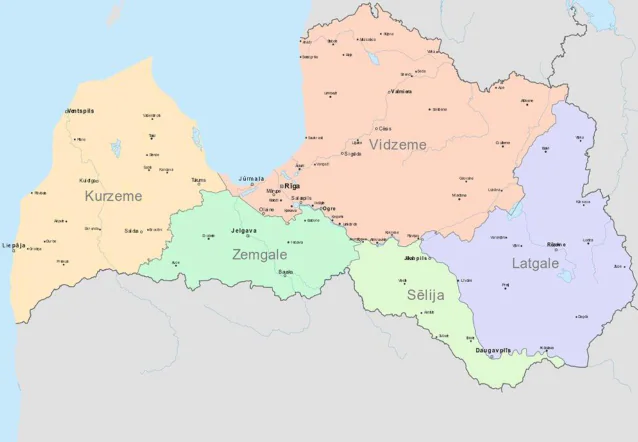
Now it is back with us. Confusion is also caused by the fact that in the same year, a map of the statistical division of Latvia (Planning regions of Latvia) was adopted, on which Sēlija is not shown, but Riga (and Pieriga) is highlighted as a separate unit. The Nomadmania map is quite similar to (but is not the same as) the second one, rather than the historical and cultural one.
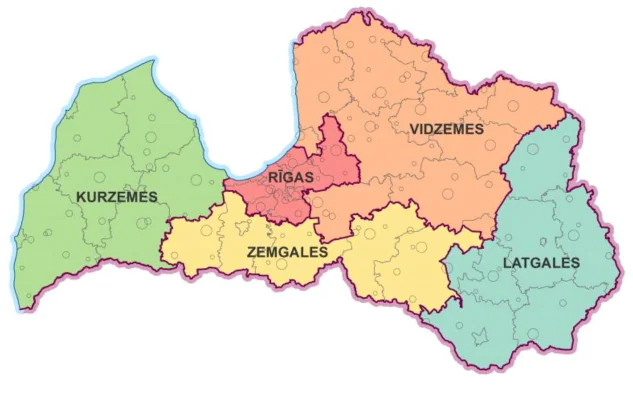
So where is Jēkabpils located?
The 2021 amendment establishes that:
1) The left bank of the cities of Jēkabpils, Daugavpils, and Krāslava is part of Sēlija. The right bank belongs to Latgale;
2) The left bank of the city of Aizkraukle is part of Sēlija. The right bank belongs to Vidzeme;
3) The cities of Jaunjelgava, Ilūkste, Subate, and Viesīte are located entirely in the Sēlija region.
For more detailed information, I recommend the Wikipedia articles (the article in Latvian is slightly more detailed):
- https://en.wikipedia.org/wiki/Selonia
- https://en.wikipedia.org/wiki/Vidzeme
- https://en.wikipedia.org/wiki/Latgale
- https://en.wikipedia.org/wiki/Courland
- https://en.wikipedia.org/wiki/Semigallia
NomadMania Solution
What changes will the emergence of a fifth region bring, and how can NomaMania regions best be divided?
I completely agree that 3 NM regions will be more than enough for Latvia. The only question is the borders. Since Sēlija covers a large number of towns populated by Latgalians and Russian speakers, it would be logical to combine them with Latgale.
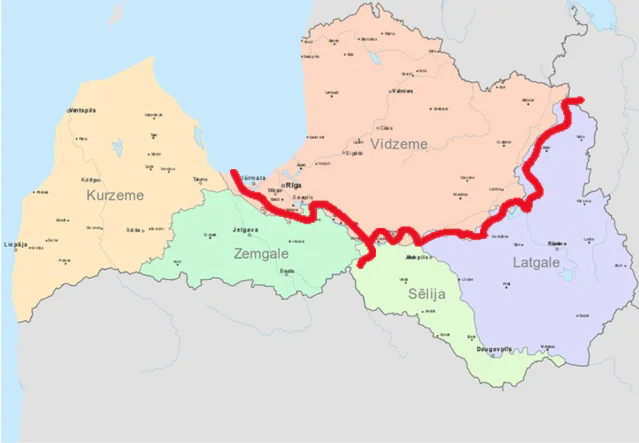
From a logistical standpoint, this division also appears well balanced. In doing so, we are following the Guide to Regions Review, where — for the sake of clarity — referring to internal administrative borders is one of the main principles.
Sincerely, your nomad,
Veniamins Uleiskis 🙂