Knut Jostein Berglyd’s life has been one long, extraordinary journey—starting with a trip abroad before his first birthday and unfolding into decades of bold, purposeful exploration across the globe. From hitchhiking across the Tibetan Plateau to backpacking through Latin America for 15 months, he’s not just visited the world—he’s lived it. A seasoned traveler with a sharp mind for politics, languages, and human connection, Knut now brings his passion full circle as the vice-chair of the Norwegian Travel Society, inspiring others to travel not just far, but deep.
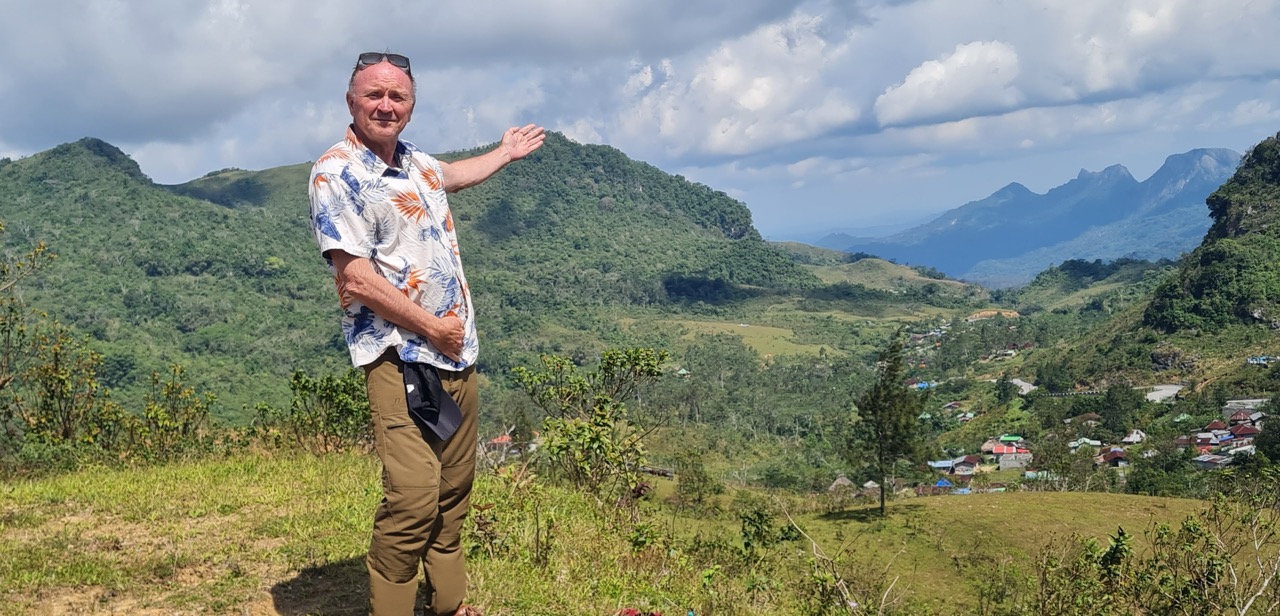 Landscape in East Timor – Southeast Asia

Knut, tell us something about yourself and how your love for travel developed.
My parents took me on my first trip abroad to Sweden and Denmark when I was about one year old – definitely not common back in 1963. Can’t say I remember much, but I do treasure a photo of myself driving a bus. Since then I have enjoyed all kinds of travelling, and I did my first-without-parents-trip at age 14. It was a group tour to Finland, but I will never forget the excitement of moving across borders to new cultures and people.
After that there was no going back. Inter Rail in Europe was the name of the game. I went multiple times with the marvels of Western Europe literally at my feet. Such a privilege for youngsters like me, indeed a great tool for mutual understanding and intercultural learning.
There was still always the dream of America, and my parents encouraged me to make it happen. One year at St Olaf College in Minnesota turned into three. Almost, at least, as I figured that if I committed academic overload, I could finish a semester early and save both time and money that could be better spent backpacking in Latin America along the Gringo trail. My longest ever non-stop journey somehow ended up taking 15 months, and I picked up Spanish and Portuguese along the way.
After further studies in political science and languages, I somehow always ended up in NGO type of work, before I took on professional jobs with international focus and perspective. I was lucky to manage a combination of business and pleasure.
I never really counted my countries, but in the 90s I suddenly realized that five of my visited countries no longer existed. Everyone knew that I travelled a lot, and I was often asked how many countries I had actually visited, so I turned to Excel. This was of course before other means of registration turned up on the horizon.
Covid was a terrible time for most people. I actually managed to get most of my many flight bookings refunded, thereafter I tried to suppress the thought of travelling. A small price to pay, most people were much more affected by the pandemic than me. During those days my life did not feel complete. I drew comfort in my father’s comment that “This pandemic must be extraordinarily difficult for you, because for you travel is not a holiday or even a hobby, it is your whole life.”
The joy of travelling again after those couple of years has really been palpable.
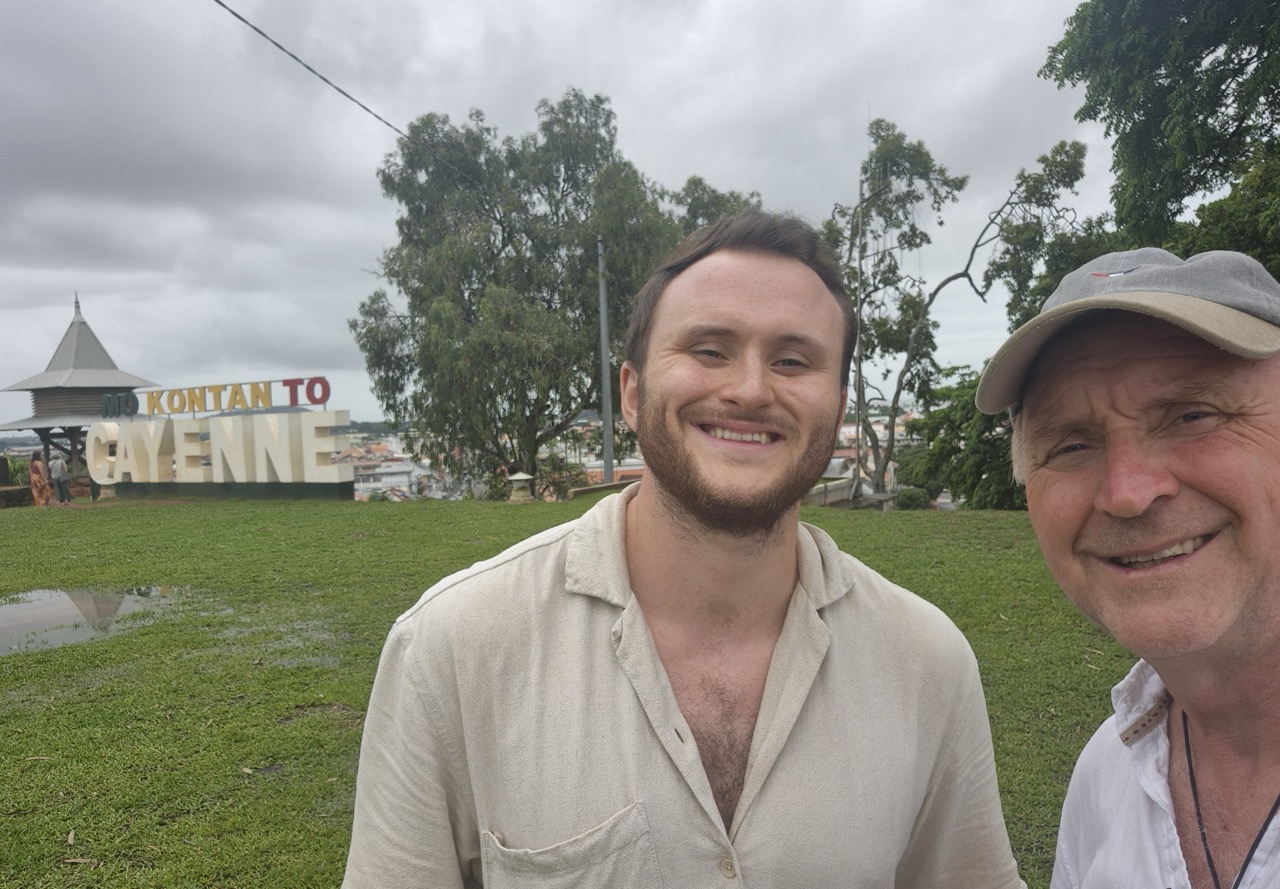
Father and son in Cayenne, New Years 2024.
What kind of traveler would you say you are? (hint: slow/fast, overland/flying, luxury/budget etc.)
In short I would say I am a medium fast overland traveler, meaning that I have had limitations both on time and financial means, always having worked full time, and been married with two kids that are now in their 20s. Many compromises needed to be made, but I never stopped travelling in any kind of combinations; all four family members, alone with two kids and with one. My 27 years old son is still today my favorite travel buddy. Together we have explored the five Stans, West Africa and the Caribbean together.
Of all your travels, which one is most memorable and why?
I love to talk about it, but at the same time as it makes me a bit sad, because it can no longer be done the way I did it back in 1987 when I visited Tibet! What a marvel of history, culture, people and scenery. I think I emphatically can say that Tibet at that time was at its most open and liberal, and I will never forget the exchanges I had with
the monks in the monasteries who told me about their suffering during Mao’s Cultural Revolution.
Nor will I forget the week long trek with a local guide, donkey and yak to Rongbuk Monastery at the feet of Chomolungma, Mount Everest, staying in the local villages along the way. I continued my journey alone waiting for more than 24 hours on the Tibetan Plateau for a ride hitchhiking to the Nepalese border, only to learn in Kathmandu from BBC that the first uprising in Lhasa had been firmly and crudely dealt with by the Peoples Republic of China.
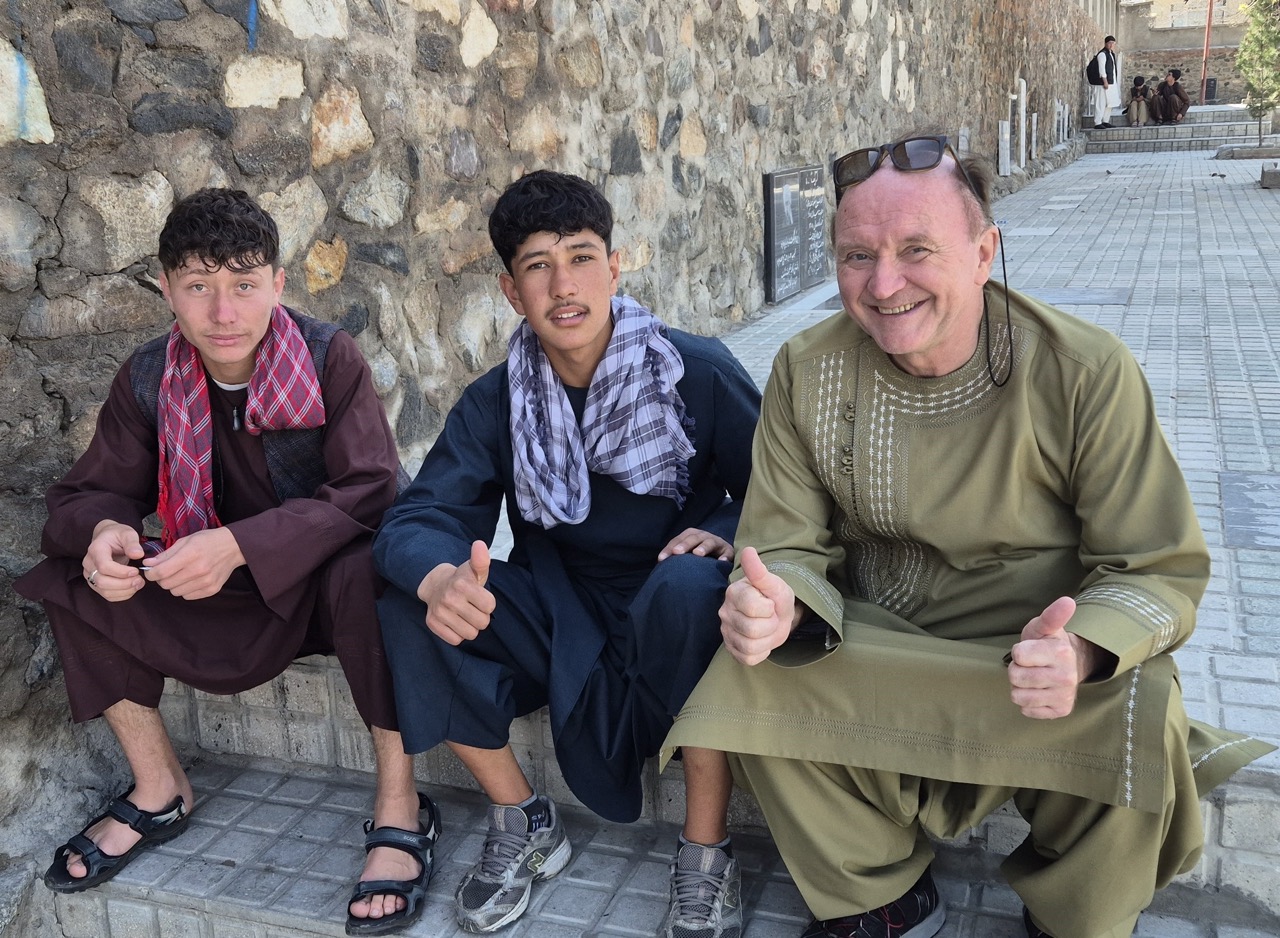 Kabul chatting with the boys
How do people around the world react when you tell them you’re Norwegian?
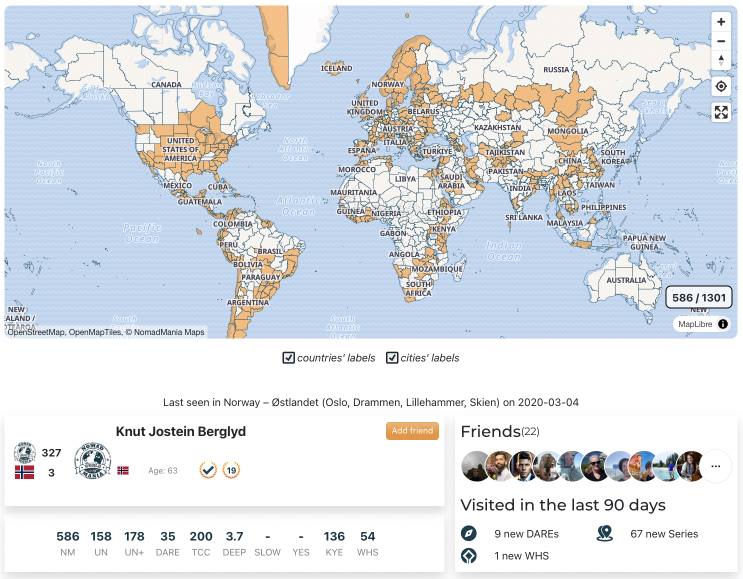
Most people in the world have absolutely no clue as to where our beautiful country is located up in the High Artic North. So, in order to facilitate some global understanding while travelling, I have found the travel app “Countries been” to be helpful as it shows the world as a globe you can rotate. On that globe Norway is still in “a small corner of the world”.
This is still no hinderance for my fellow countrymen to often think they represent the center of the universe. Alas, some globetrotting might do wonders to cure this misconception.
And what are some hidden gems in Norway that many travellers may not know about?
Norway does not only site on top of the world, but can boast absolutely world class natural beauty. In my opinion only New Zealand and Iceland are (relative in size) comparable.
Because Norway was colonized by its neighbors for almost 500 years, it never developed as many impressive culture and historic sights as Europe is so full of. With the notable exception of the viking ships and stave churches that are truly unique.
But in order to see this most dramatic and attractive part of Norway, you have to visit the Western part of Norway starting in Bergen with all its fjords, islands and mountains. You may find the long stretched coastline of Norway even more dramatic The total coastal line of the country is over 2.500 kilometers if measured in straight rough lines, but with the ins and outs of 3.000 fjords it is actually over 100.000 kilometers encompassing no less than 320.000 islands. No country has more islands than Norway, and only huge Canada has a longer coastline. Everyone has heard about Lofoten, but the neighbouring regions of Vesterålen, Ofoten and Senja are equally impressive, and much less touristy.
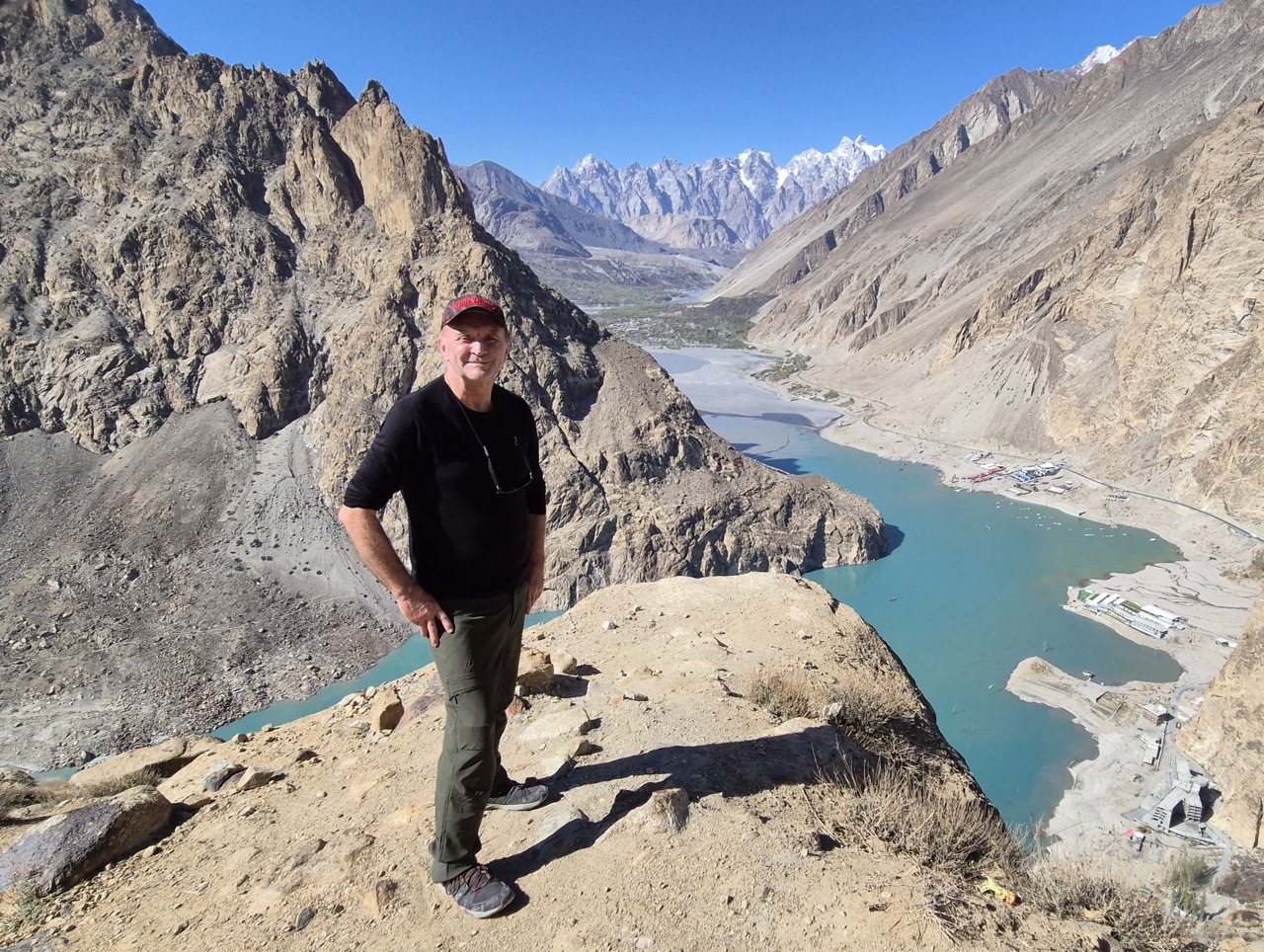
Views from 3.900 m. over Attabad Lake, also known as Hunza Lake, located in Pakistan
Now, the big news is that a new Norwegian travel club has just been launched. Tell us a bit about it (hint: give us the background and how it is built).
In Norway we have for way too long been lacking an organization for any traveler and globetrotter, regardless of gender. Some of us decided to do something about this, and we started Norwegian Travel Society (NTS) earlier this year. Our purpose is to inspire ethical and respectful travel as well as exchanging knowledge, experiences and stories. NTS hopes to achieve this through organizing meet-ups, presentations and trips, and the initial feedback has been very positive.
Denmark, Finland and Sweden have had travel clubs but not Norway. Why do you think this is?
Well, this one is a bit hard to answer. The clubs you mention are a bit different in kind, but we decided from the Norwegian perspective that we will try to aim for a concept that fits “our size”, so to speak. And as they say, better late than never.
Another reason is of course that we were way too busy travelling to actually go through the bureaucracy of actually setting up a travel club.
So, what will the ‘rules’ of participation be and what kind of events and activities do the club propose?
In order to be a full member of the Norwegian Travel Society you must be over 18 years, and have properly visited 65 countries (1/3 of UN members and observers), or over 10 countries to join as an aspiring member. We are trying to encourage travellers to do more than just observe the countries and places they visit, and rather take part in activities and engage with those that live there. We believe that travel should be about exchanging cultures, mindsets and ideas. In a world of more and more conflicts, travellers have an important role to play when it comes to building bridges, making friends and lowering conflict levels.
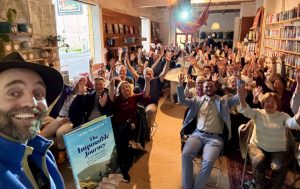
We will have our first open gathering and launch of NTS on June 11th in Oslo, at the well-known and renowned travel shop Nomaden. We will be hosting a joint NTS info session along with an extraordinary travel presentation with Thor Pedersen, the Danish adventurer, who recently made history by becoming the first person to visit every country in the world without flying, in a single unbroken journey. His book “The Impossible Journey” just came out and it is a powerful account of a virtually endless trip.
We believe this will be an inspiring and exciting launch of NTS for fellow travelers in the land of the midnight sun.
What will your role be in this club and who are some other people involved in its creation?
Four well-travelled people got together in late February to found Norwegian Travel Society, which is now properly registered with the Norwegian authorities as a membership organization. The steering board is headed by Nomadmania’s Most Intrepid Traveller 2022, Jacqui Kunz. She is very easily travelled and has lived in the US, Sudan, South Sudan, Denmark, Palestine and Norway. Melissa Greve Mitruen is also on the board, she is a curious globetrotter with 20 years experience in the tourism industry. She has taken her twins to a number of very interesting destinations, they have gone to places their classmates haven’t even heard about. The guys on the steering board are author and journalist Gunnar Garfors who was the first person to visit every country twice, and myself. I formally serve as vice-chair of the organization. I am the oldest of the lot, so I’ll do my best to deliver on experience and keep track of the three youngsters…
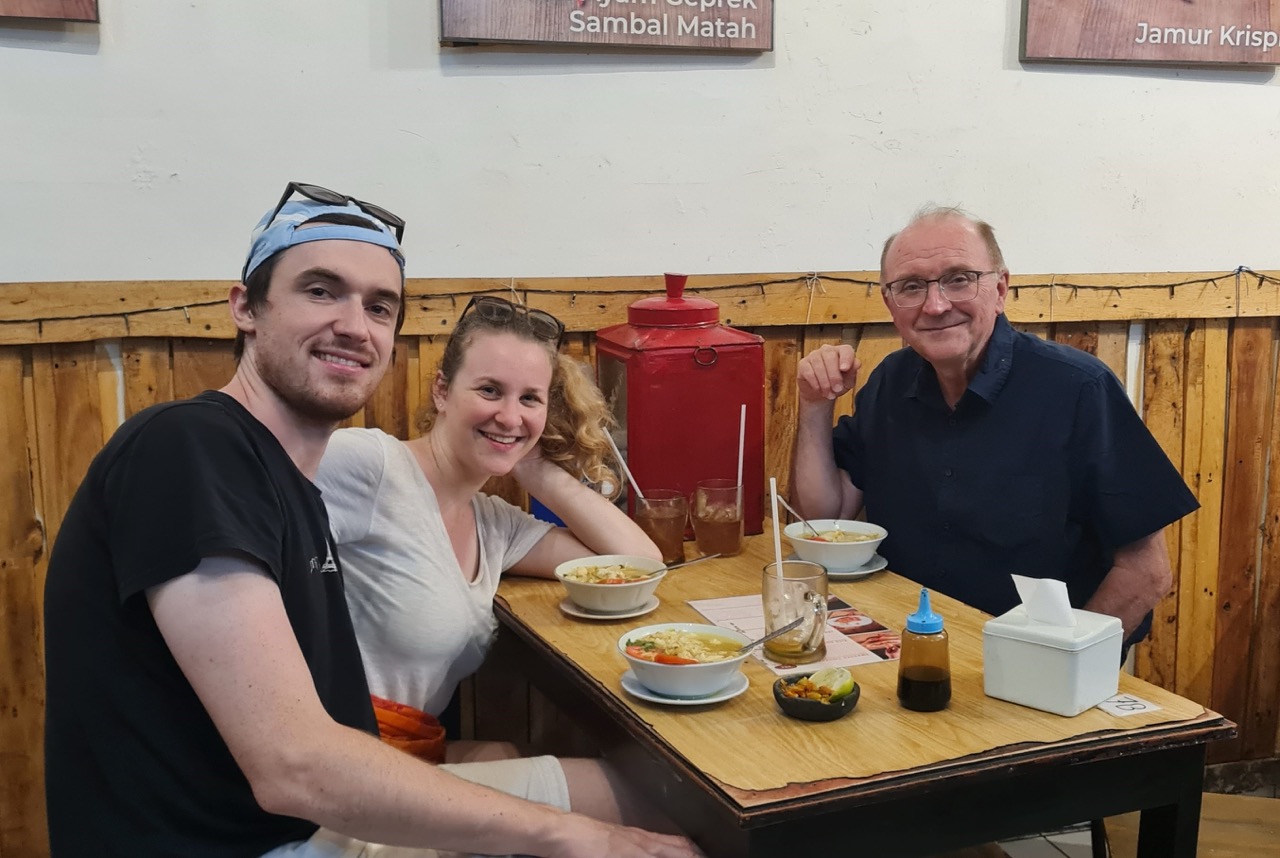
Yogyakarta – Indonesian island
What do you think will make this club different to the others? (tough question, I know).
The main difference is related to geography, we focus on members with a formal connection to Norway. The reason we started NTS was to help bring together any avid traveller, without discrimination. The organization is not affiliated with any other national nor international communities, but we are open-minded and have already met with similar clubs from various countries.
We welcome anyone who is easily travelled.
Can we announce a partnership between your club and NomadMania? In that case, what can both sides do in order to be good partners (think about this one)
We are pretty easy going and happy to talk about ways of working together. Maybe we should discuss this over a cup or a glass.
Coming back to us, what do you like most about NomadMania?
The statistics, the community, the dynamism, the relevance. In essence, bringing so many diverse people together both virtually and physically is a great thing and very impressive.
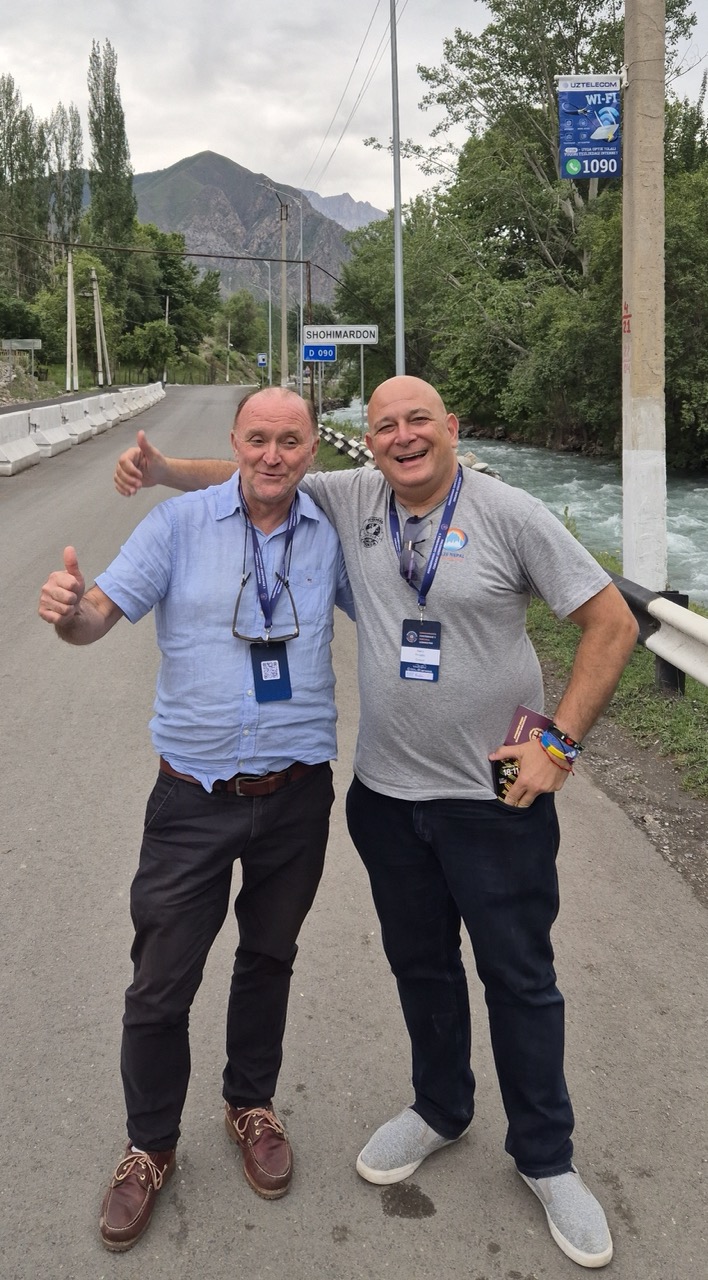
When I went to the 5th International Conference of Nomadmania recently in Fergana Valley, I had only met one person previously. After a week I felt as part of a global community. It is certainly diverse, but also with many common values, interests and goals.
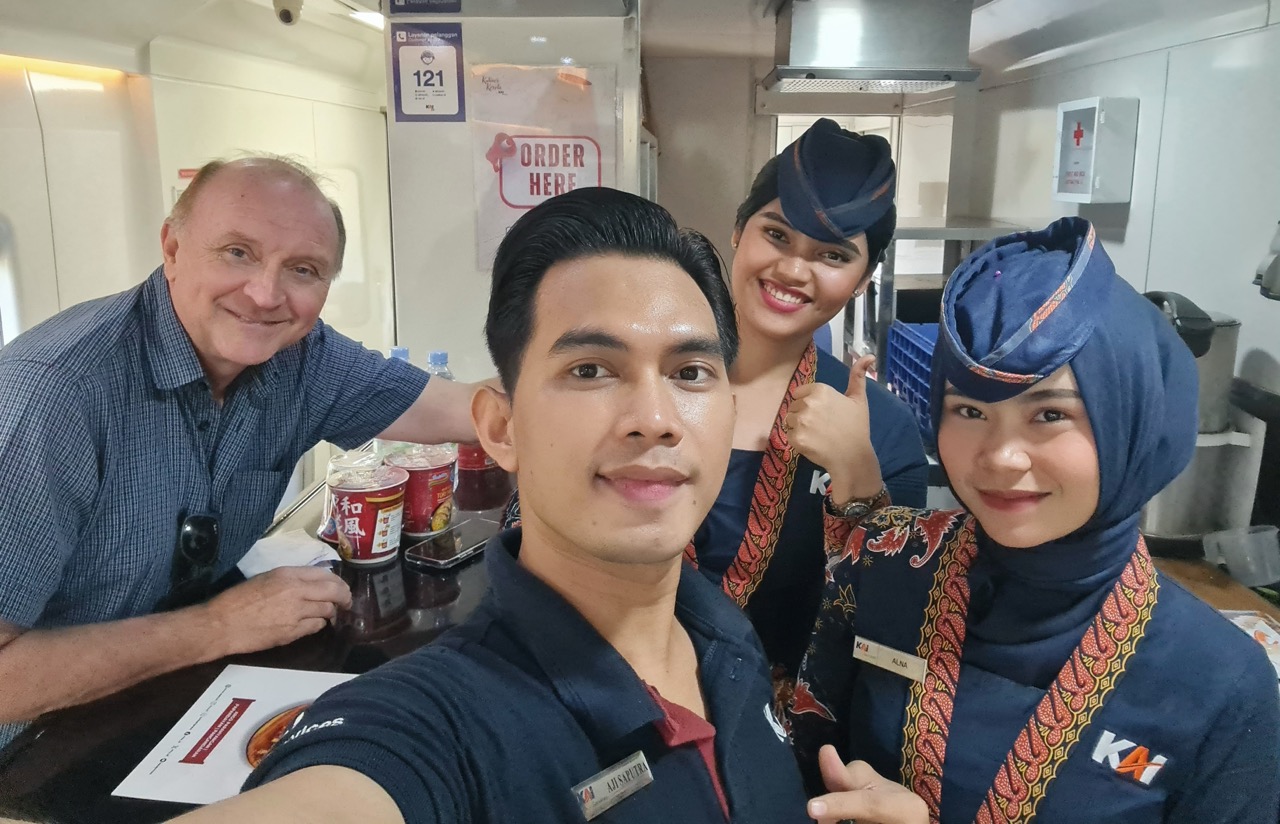
In train – favorite mode of travel
And finally our signature question – if you could invite any 4 people to an imaginary dinner, from any period in human history, who would they be and why?
William Shakespeare (is the genius really only one person, or did he have extraordinary smart assistants?), Bob Dylan (the modern Shakespearean genius is the living person I most would like to share an evening meal with, but alas…it ain’t me Babe), James Joyce (how did he come up with my favorite novel…Ulysses?) and finally Winston Churchill (the 20th century’s most intelligent and intriguing political personality (I am disregarding a couple of dictators).
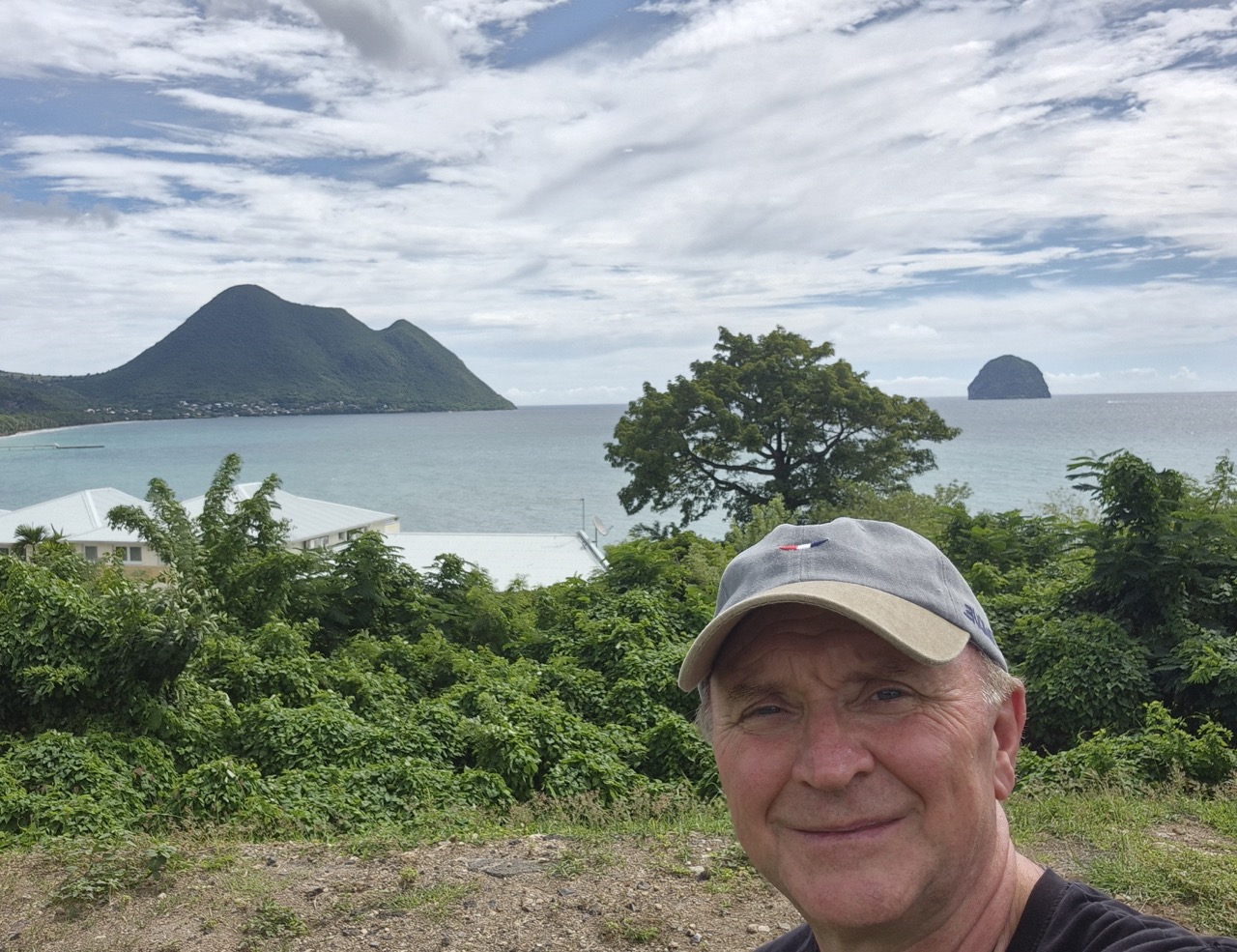
Southern Martinique- an island in the Lesser Antilles of the West Indies